Context of the Controversies: Historical Development
| 🤓 Admin Zone 🛠️ hidden to non-admins | |
Description
In this essay, Viehbeck shows how these debates connected scholars from different cultural regions and monastic centers across Tibet, illustrating the interconnectedness of Tibetan intellectual circles and the impact of their philosophical discussions. His overview demonstrates the complexities of reconstructing historical events from limited sources and offers insights into the nature and history of scholastic debates in Tibet.
Featured on
The reconstruction of an event or a series of events that might be called "historical" is of course problematic. The term suggests that we are concerned with incidents that really happened and that are – at least to some extent – independent of the respective perceiver. In actuality, however, historical descriptions are a highly selective process, where the credibility of one specific piece of information is weighted against that of another. A common strategy is to assume that reliability rises with the number of sources and their diversity (i.e., an event that is confirmed by two or more sources, ideally of different origins, is more likely to have actually happened than an event attested by a single source or sources of a common origin).
As for the present case, such an endeavour is first of all limited by the scarcity of information. A historiographical work that deals with the precise course of events is not known. Some information can be gained from the scattered remarks in various hagiographies (rnam thar), encomia, etc.[1] While these reports are often very vague themselves, one also has to be aware of the genre-immanent shortcomings when using such texts as historical sources in general. This means that, for example, the account of the Dge lugs monks' attempt to kill Mi pham through sorcery and exorcism and the latter's triumph over it, presented in a biography by one of his staunch followers, Mkhan po 'Jigs med phun tshogs,[2] could be regarded as a precise record of a historical incident or – and I would say this is more credible for a Western academic audience[3] – is to be seen as a quite typical element of this specific kind of literature, concerned with depicting the person under consideration as an ideal role model, rather than recording minute events in history. That said, one should not be misled into thinking that rnam thars do not contain historical elements. A similar problem arises with oral accounts, which are often closely related to their scriptural counterparts.[4]
The debates that erupted after Mi pham's composition of his Nor bu ke ta ka lasted for a period of almost thirty years and involved scholars from all over Tibet, who engaged in both personal and written exchanges with Mi pham. With regard to the personal encounters there is hardly any documentation. Some scanty remarks, however, can be found in the different rnam thars. Most importantly, a debate between Mi pham and a scholar of the New Translation (Gsar ma) tradition, 'Ja' pa Mdo sngags, is mentioned. It is said that the latter was critical of Mi pham's explanations in the Nor bu ke ta ka and hence a debate lasting several days developed, with Mi pham's teacher Dpal sprul acting as a referee.[5] Referring mostly to Mkhan po 'Jigs med phun tshogs's biography of Mi pham, Karma Phuntsho mentions personal debates with various other scholars, of which, however, further details are unknown.[6] While this shows clearly that disputes were perceived as a central element in Mi pham's life, the content and historicity of the encounters mentioned remain uncertain.
As concerns the debates in written form, the available rnam thars provide, again, only very little information. Yet here we are in a better position, as the texts themselves can be used as a source. The colophons, as well as the introductory parts of the texts concerned, give details such as the date and place of the composition of a certain text, the text it argues against, its date of reception, etc. Certainly the authors differ in their perception of the quality of a certain work (usually arguing that their own writing is better than that of their opponents), but there seems to be no reason to question the factuality of the basic developments of the debates that can be reconstructed according to the works exchanged among the different parties of the debate.
As stated in the colophon of his work,[7] Mi pham started to write his Nor bu ke ta ka on the first day of the seventh Tibetan month (ston ra ba) of the Earth-Tiger year and completed it on the thirteenth day of the same month, i.e., September 9, 1878.[8] His work bears the full title Shes rab kyi le'u'i tshig don go sla bar rnam par bshad pa nor bu ke ta ka ("Nor bu ke ta ka: A Detailed Explanation for an Easy Comprehension of the Words and Meaning of the Chapter of Insight") and is thereby clearly disclosed as a commentary on the ninth chapter of the BCA. Mi pham points out that he had received explanations about the BCA from his master Dpal sprul and that he had also read all available Indian and the major Tibetan works on this topic.[9] Also the rnam thars suggest that the content of his commentary is related to explanations of his master with whom Mi pham had studied the ninth chapter of the BCA over a period of five days.[10] A place of composition of Mi pham's commentary is not mentioned and remains unclear; we can, however, safely assume that it was composed somewhere in the wider area of Sde dge.[11]
About ten years afterwards it was attacked with a critical letter, Zab mo dbu ma'i gnad cung zad brjod pa Blo gsal dga' ba'i gtam ("Advice that Pleases a Clear Mind: A Short Statement of the Essential Points of Profound Madhyamaka"),[12] written by Brag dkar Sprul sku Dpal ldan bstan 'dzin snyan grags (1866–1928), a Dge lugs scholar residing at Blo gsal gling college of 'Bras spungs, one of the three major Dge lugs monasteries in Central Tibet. According to its colophon, Brag dkar Sprul sku composed his work at 'Bras spungs at the age of twenty-three,[13] so about 1888/9. This work seems to have reached Mi pham immediately since he responded to it in 1889. Mi pham's work is called Brgal lan nyin byed snang ba ("Illumination of the Sun: An Answer to an Objection")[14] and addresses his opponent and his critical work by their full names.[15] Mi pham wrote his reply "quickly in the break of practice sessions of ten days," starting on the fourth day of the fourth Tibetan month of the Earth-Ox year, and completing it on the thirteenth day of the month,[16] i.e., June 11, 1889.[17] Again, an exact location of composition is not mentioned, but in the colophon the following comment is found: "Also this [was accomplished by] a Rnying ma monk called Mi pham rnam rgyal who had slept a few years in the midst of solitary mountains. At that time he was residing at a mountain that was white in all directions, carrying a long and ragged mane."[18] Here, sleeping is used as a synonym for resting in meditation and Mi pham is obviously referring to a period of intensive religious practice in solitude. According to Schuh, Mi pham was staying in retreat at a place called Dkar mo stag tshang ("The White Tiger Nest") during the years 1881–1893.[19] This is a complex of caves in the Rong me valley located near, and affiliated with, Rdzong gsar Monastery, south of Sde dge. The time of composition, as well as Mi pham's description of his abode – a white mountain, where he was abiding in retreat, his hair wild like a lion's mane, – clearly point to this place.
Brag dkar Sprul sku further wrote a second letter against Mi pham, which developed as a by-product of the first and summarises its essential points.[20] It is entitled 'Jam dbyangs rnam rgyal gyi 'dod tshul la klan ka bgyis pa zab mo'i gtam ("Profound Advice: Criticising the Viewpoint of 'Jam dbyangs rnam rgyal").[21] This was followed by a third work called Mi pham rnam rgyal gyis rtsod pa'i yang lan log lta'i khong khrag 'don pa'i skyug sman ("Emetic that Brings out the Inner Blood of Wrong Views: A Further Answer to the Objections of Mi pham rnam rgyal"),[22] a title that suggests that it contains harsh polemics against Mi pham. The colophons of neither of these latter responses mention a date or place of composition. It is likely that both of these treatises were composed at 'Bras spungs, since at least Brag dkar Sprul sku's last work was recorded by a monk from 'Bras spungs.[23] This work mentions further that it was written "several years" (lo du ma) after Mi pham's answer had been received.[24] In a later letter, directed at another opponent, Mi pham mentioned that he had received – among others – two letters from Lhasa, to which he did not reply.[25] It may well be that this refers to Brag dkar Sprul sku's later two treatises.
In 1897, nineteen years after the composition of the Nor bu ke ta ka, Mi pham was further criticised by Dpa' ris Blo bzang rab gsal, a Dge lugs scholar residing at the great monastery of Sku 'bum in A mdo, the birthplace of Tsong kha pa, close to present-day Xining. Rab gsal started his dispute by sending Mi pham a short verse composition called Rigs 'phrul dpyid kyi pho nya ("The Cuckoo: Magic for [Entering] Reasoning").[26] The name certainly plays upon the function of the text: the Tibetan expression dpyid kyi pho nya ("messenger of the spring") is commonly used as a poetic way of denoting a cuckoo bird (who announces the spring by its characteristic cry); here, however, the messenger reveals something else, namely the beginning of an extended debate. Rab gsal also made this clear at the end of his work, where he wrote that these verses were intended as a "mere preparation" (sbyor ba tsam) for the actual debate.[27] The colophon explicitly mentions Mi pham as the target of this letter. It was composed at the "Great Dharma Centre Sku 'bum byams pa gling" on the third day of the third Tibetan month of the Fire-Bird year (1897).[28] The actual criticism followed later in the same year and is entitled 'Jam dpal dbyangs kyi dgongs rgyan rigs pa'i gzi 'bar gdong lnga'i sgra dbyangs ("The Lion's Melody, Radiance of Reasoning, an Adornment of Mañjuśrī").[29] Again, Mi pham's Nor bu ke ta ka is pointed out as the target of its refutations. The work was also completed in Sku 'bum, on the fifth day of the ninth Tibetan month.[30] As Mi pham expounds in the introductory part of his answer to this criticism,[31] he only received this text over five years later, in the twelfth month of the Water-Tiger year, thus at the beginning of the Gregorian year 1903. Again, explicit mention is made of Rab gsal[32] and the work he had written. Mi pham explains further that he had also received three other critical letters: two from the direction of Lhasa (lha ldan phyogs) and one from Byang kha.[33] As already mentioned, the earlier may well refer to the two letters that Brag dkar Sprul sku had sent from Lhasa. The whereabouts of the letter from Byang kha, its composer, or its content, remain unknown. Mi pham did not respond to these three letters, since they "focused mainly on the scriptures and [contained] many lines of pseudo-reasoning." He did, however, single out Rab gsal's work as worth replying to, as it "investigates mainly through reasoning."[34] Mi pham finished his response, entitled Gzhan gyis brtsad pa'i lan mdor bsdus pa rigs lam rab gsal de nyid snang byed ("Illuminator of Suchness: A Path of Reasoning, a Short Answer to the Objections of Others"),[35] on the eighth day of the fourth Tibetan month of the Water-Rabbit year (1903), after eighteen days of writing during the breaks of his practice sessions, in an impaired state of health.[36] Although the title indicates brevity, the work stretches over 272 pages. Mi pham's work reached Rab gsal quickly, on the eighth day of the seventh Tibetan month in the same year.[37] Rab gsal also wrote a polemical letter in reply to it, the Shes ldan yid kyi gdung sel rigs lam ga bur chu rgyun ("Camphor Stream: A Path of Reasoning that Eliminates the Mental Suffering of an Intelligent Person")[38] dated the third day of the twelfth Tibetan month of Water-Rabbit year, thus at the beginning of 1904, according to the Gregorian calculation. According to its colophon, it was composed in Dpal ldan bshad sgrub gling, a debate college of Sku 'bum. Mi pham confirmed the reception of this work, together with two verses by Rab gsal and a present of silk, in the Wood-Snake year (1905). His short note was composed in the same year and accompanied by presents of silk, the Prajñāpāramitāsūtra and other sūtras. A precise date and location are not specified.[39] This mutual exchange of presents, as well as the often amicable tone of the disputes, suggests a mutual attitude of general respect and appreciation. Mi pham further wrote an actual answer to the criticism made by Rab gsal. This short text has no proper title; the date and place of composition are not mentioned.[40] With this, the dispute between Mi pham and Rab gsal comes to an end, a debate that, in view of the number of texts exchanged directly between two opponents, is most likely the most extended example for this type of debate in the history of Tibet prior to the Chinese invasion in the twentieth century.
Another critical work, called 'Ju mi pham 'jam dbyangs rnam rgyal rgya mtsho'i rtsod yig gi lan blo dman snying gi gdung sel ga bur thig pa'i spun zla ("Brotherly Companion, a Drop of Camphor that Eliminates the Cardiac Suffering of a Person of Little Intelligence: An Answer to the Critical Letter of 'Ju Mi pham 'jam dbyangs rnam rgyal rgya mtsho"),[41] was written by Ldan ma Blo bzang chos dbyings (1890–1949), who – just like Brag dkar Sprul sku – was associated with 'Bras spungs monastery in Central Tibet. A date of composition of this text is not mentioned, and Mi pham did not write an answer to it. If the life dates mentioned in Blo bzang chos dbyings' short biography[42] are correct, he probably wrote his criticism only at the end of Mi pham's life, or even after his death (1912). The text itself mentions the debate between Mi pham and Brag dkar Sprul sku and also Mi pham's Brgal lan nyin byed snang ba,[43] but not the debate between Mi pham and Blo bzang rab gsal. Its title, however, clearly alludes to Rab gsal's second critique. Whereas the title of Rab gsal's letter uses the metaphor of a stream of camphor that can eliminate the mental suffering of an intelligent person, Blo bzang chos dbyings presents his work as a drop of camphor that removes cardiac suffering of a dull person. One can therefore safely assume that he had also knowledge of Rab gsal's works. Blo bzang chos dbyings also authored another polemical text on key points of Madhyamaka philosophy, titled Brgal lan legs pa'i gtam 'byed.[44] While it is concerned with similar issues as were the earlier debates, it seems to be addressed to Go rams pa and his followers, rather than to Mi pham.[45]
In his last letter to Mi pham, Rab gsal mentioned that he had seen another critical work addressed to Mi pham, called Rgol ngan 'joms pa'i rdo rje pha lam.[46] Apart from the name and a short remark about its erudition, no further information is provided. Mi pham also seems to have taken no special note of this work.
In the more than thirty years from the beginning of the debates with Mi pham's composition of the Nor bu ke ta ka and their end with Mi pham's death,[47] several scholars from various institutions were affected.
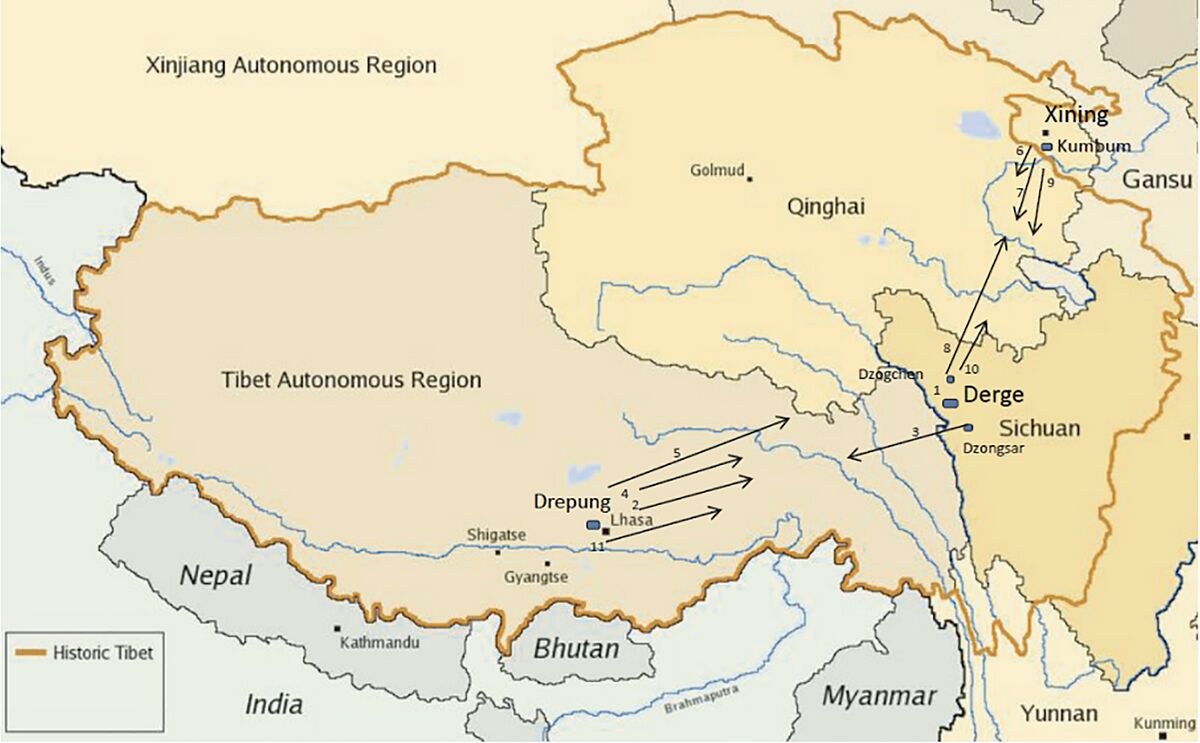
Table 1.1: Texts exchanged in the controversies
| No. | Author | Text | Location | Year |
|---|---|---|---|---|
| 1 | Mi pham | Nor bu ke ta ka | ? | 1878 |
| 2 | Brag dkar Sprul sku | Blo gsal dga' ba'i gtam | 'Bras spungs | 1888/9 |
| 4 | Brag dkar Sprul sku | Zab mo'i gtam | 'Bras spungs(?) | ? |
| 5 | Brag dkar Sprul sku | Skyug sman | 'Bras spungs(?) | ? |
| 6 | Rab gsal | Pho nya | Sku 'bum | 1897 |
| 7 | Rab gsal | 'Ju lan | Sku 'bum | 1897 |
| 8 | Mi pham | Rab lan | ? | 1903 |
| 9 | Rab gsal | Ga bur chu rgyun | Sku 'bum | 1904 |
| 10 | Mi pham | Yang lan | ? | 1905(?) |
| 11 | Blo bzang chos dbyings | Ga bur thig pa'i spun zla | 'Bras spungs | ? |
Most important for the present investigation are the exchanges in textual form, as they allow for a detailed reconstruction of the development of the debates. Altogether eleven proper letters or treatises[48] and two short notes give ample witness of the controversies. Surely, more works must have been involved. Mi pham mentioned another letter from Byang kha, Rab gsal a work named Rgol ngan 'joms pa'i rdo rje pha lam of which we have no further information.[49] However, while the one or other letter may have been written against Mi pham by a little-known author whose works remained unnoticed, we can assume that the majority of the textual material is known and extant today. As these texts show, the present debate with its involvement of (at least) three major scholastic centres in three different cultural regions must be seen as a pan-Tibetan issue. Mi pham, as the most important philosophical exponent of his tradition in recent times, represents the various scholastic institutions of the Rnying ma school, that began to flourish in the nineteenth century in the area of Sde dge, the cultural heart of Khams province. All three of his opponents, mentioned above, belonged to the Dge lugs school. The educational home of Brag dkar Sprul sku and Blo bzang chos dbyings is 'Bras spungs, one of the three great monastic centres of the Dge lugs school in Central Tibet. Blo bzang rab gsal, on the other hand, was located in Sku 'bum, one of the most important institutions of the Dge lugs school in A mdo. For their debate, remarkable distances had to be covered. While a personal encounter was therefore – at least in many cases – out of question, an exchange of texts could be facilitated through the employment of messengers, who embarked on the tedious journey, instead of their principals. The medium of dgag lan texts thus offered a platform for negotiating philosophy on a highly interregional level, as illustrated on the map in fig. 1.1.
Notes
- ↑ Pettit 1999: 22 gives a short survey of the available accounts of Mi pham's life, with regard to both traditional Tibetan rnam thars and accounts by Western scholars. He also provides a translation of one important biography of Mi pham, Gangs ri'i khrod kyi smra ba'i seng ge gcig pu 'jam mgon mi pham rin po che'i rnam thar snying po bsdus pa dang gsung rab kyi dkar chag snga 'gyur bstan pa'i mdzes rgyan, written by Mi pham's main disciple Mkhan po Kun dpal (see Pettit 1999: 23ff.).
- ↑ See below, p.73.
- ↑ Here, of course, the expectations of the audience matter: what a Western academic audience might regard as credible differs greatly from what a Tibetan traditional scholar or a non-academic reader might expect and accept.
- ↑ Influence can occur in both ways, i.e., an oral account might be the base for a later textual record, or a written rnam thar inspires oral narratives about the person in question.
- ↑ See Schuh 1973: XXXI and the episode concerned in Mkhan po Kun dpal's rnam thar in Pettit 1999: 30f.
- ↑ See Phuntsho 2005: 53f. Referring to Mkhan po 'Jigs med phun tshogs' praise of Mi pham, Kun mkhyen mi pham rgya mtsho la gsol ba 'debs tshul g.yul las rnam par rgyal ba'i rnga sgra, Karma Phuntsho lists the following figures as debate partners of Mi pham: Mongolian Dge bshes Blo bzang phun tshogs, Bum gsar Dge bshes, Gung thang 'Jam pa'i dbyangs, Rnga ban Kun dga', Nor bu bstan 'dzin, and Khang dmar Rin chen (see also Mi pham gsol 'debs 105 and 109f.). Matthew Kapstein further reported a local story from 'Go log, according to which Mi pham engaged in a personal debate with the A mdo scholar 'Ba' mda' Dge legs rgya mtsho (1844–1904). Unlike the other accounts, this depicts Mi pham as being defeated in debate (see Kapstein 2001: 308, esp. n.21). According to yet another account, presented by the famous Rnying ma scholar Mkhas Btsun bzang po (and translated by Jeffrey Hopkins), Mi pham did not engage in personal debate with any other scholars apart from 'Ja' pa Mdo sngags: "Ja-ba Do-ngak was the only person who actually met in debate with Mi-pam-gyatso." (Mi-pam-gya-tso 2006: 25).
- ↑ See Nor bu ke ta ka 94.5ff.
- ↑ According to Schuh 1973: 115
- ↑ See Nor bu ke ta ka 94.5ff. For a commentary on Mi pham's Nor bu ke ta ka, see Nor bu'i sgron me, the work of his student Padma rnam rgyal, the fourth Zhe chen rgyal tshab.
- ↑ See, e.g., Pettit 1999: 24. The issue of the relation between Mi pham's commentary and Dpal sprul's explanations has already been touched upon elsewhere (see Viehbeck 2009a: 4, n. 9). While Dpal sprul's explanations obviously influenced the writing of his disciples (sometimes probably even to the degree that their works might be seen as mere notes of the master's voice), there is no extensive written commentary by Dpal sprul. There is, however, a sa bcad, a detailed structural outline of the BCA, that is attributed to him (see Viehbeck 2005: 91–157, for this outline; this work also translates and investigates a rather short sgom rim text on the BCA that Dpal sprul had written). Assuming that this attribution is correct, it can thus be used as a criterion to determine the relationship between Dpal sprul's approach to the BCA and the ones proposed by his students. A comparison shows that Mkhan po Kun dpal's structure (see Kun dpal 'grel pa 1–21) follows rather strictly the sa bcad of Dpal sprul, while Mi pham deviates from this, not only with regard to the designation of the various chapters, but also – at least occasionally – in the way the BCA is structured. Surely, Mi pham's views on the BCA are heavily influenced by his master; his commentary, however, seems be more than just a record of his teacher's words.
- ↑ In interviews with scholars of the local monasteries conducted in September 2009, different opinions were mooted in this regard. Rdzogs chen Rin po che Bstan 'dzin lung rtogs nyi ma (a scholar who also wrote an extensive history of the Rdzogs chen tradition, see Rdzogs chen chos 'byung) argued that a copy of the BCA, as a work belonging to the Sūtra portion of the Buddhist teaching, was only available at Rdzogs chen Monastery at the time Mi pham wrote his commentary, while the other monasteries of the Rnying ma school focused mainly on collections of tantric works. Mkhan po Padma rdo rje from Zhe chen Monastery thought that the Nor bu ke ta ka was composed somewhere in the Rdza chu kha valley, even though he was unsure about the precise location. According to Mkhan po Bzang stobs from 'Ju Me hor Monastery, Mi pham wrote his Nor bu ke ta ka at 'Ju Me hor Monastery, but the woodblocks used to print it were carved at Rdzogs chen
- ↑ For bibliographical details, see Blo gsal dga' ba'i gtam.
- ↑ Cf. Blo gsal dga' ba'i gtam 432.4
- ↑ For bibliographic details, see Brgal lan nyin snang.
- ↑ See Brgal lan nyin snang 101.1f.
- ↑ See Brgal lan nyin snang 188.5f.
- ↑ According to Schuh 1973: 116.
- ↑ Brgal lan nyin snang 188.4f.: 'di yang rnying ban mi pham rnam rgyal zhes bya ba lo shas dben pa'i ri sul na nyal zhing/ skabs 'dir phyogs kyi mtha' gru dkar ba'i ri la gnas shing ral pa'i zar bu ring po dang ldan par gyur pa.
- ↑ Schuh 1973: XXXII.
- ↑ See Skyug sman 452.3.
- ↑ For bibliographical details, see Zab mo'i gtam
- ↑ For bibliographical details, see Skyug sman.
- ↑ Cf. Skyug sman 742.1
- ↑ See Skyug sman 740.6.
- ↑ See Rab lan 193.3f.
- ↑ For bibliographical details, see Pho nya. The title is very condensed and its precise meaning open to interpretation. My reading is based on a line in the text itself, where Rab gsal is clearly referring to the title; see Pho nya 365.5: rigs lam phyogs kyi 'jug pa mang 'phrul mtsho byung rol pa'i blo gros spros//.
- ↑ See Pho nya 365.6.
- ↑ See Pho nya 365.6f.
- ↑ For bibliographical details, see 'Ju lan.
- ↑ See 'Ju lan 420.5ff.
- ↑ See Rab lan 193.2f
- ↑ Even though Mi pham spells Rab gsal's native area as Dpal ri instead of Dpa' ris (see Rab lan 193.2).
- ↑ See Rab lan 193. 3. The designation "Byang kha" is rather problematic. Literally it translates as "The Northern District." It could refer to an area in the Byang thang region (on this usage of Byang kha, see Vitali 2003: n. 4 and 5, and Bellezza 2010: n. 148), or, and I think this is more likely, it refers to a region in the Northern direction seen from Mi pham's perspective. Thus, it might refer to a location in the A mdo province.
- ↑ See Rab lan 193.3–194.1: snga ma rnams lung tsam gtso bor byas shing rigs pa ltar snang ba mang bas re zhig lan gyi spros pa dgos pa med par mthong nas ma byas la/ de dag gi nang na rab gsal gyi rtsod lan 'di phal cher rigs pas dpyad pa byas shing gzhan gyi drod nyul ba tsam du mthong nas 'di la bsten te chags sdang sogs rkyen du mi 'gyur bar nyams mtshar tsam du lan cung zad brjod na [...].
- ↑ For bibliographical details, see Rab lan.
- ↑ See Rab lan 463.2ff.
- ↑ See Ga bur chu rgyun 430.6.
- ↑ For bibliographical details, see Ga bur chu rgyun.
- ↑ Rab gsal's two verses, as well as Mi pham's confirmatory note, are contained in Mi pham's Gsung 'bum as an appendix to his Rab lan; see Rab lan 463.5ff.
- ↑ This text is also appended to Mi pham's Rab lan (pp. 464.4ff.). In the following, we refer to it as Yang lan.
- ↑ For bibliographical details, see Ga bur thig pa'i spun zla.
- ↑ See earlier, p.13.
- ↑ See Ga bur thig pa'i spun zla: 131.
- ↑ For bibliographical details, see Legs pa'i gtam 'byed.
- ↑ Karma Phuntsho's exposition (Phuntsho 2005: 53, which in turn refers to the earlier remarks of Smith 2001: 328) seems to suggest that both of Blo bzang chos dbyings's letters were written to refute Mi pham. While such can be indeed confirmed for the Ga bur thig pa'i spun zla (see p. 131.14ff.), a cursory review of the Legs pa'i gtam 'byed did not reveal any direct reference to Mi pham, but to Go rams pa and his followers (see ff. 2a3f. and 29a1).
- ↑ See Ga bur chu rgyun 428.5f. Since Rab gsal is located north of Mi pham, it could be that it was this letter Mi pham was referring to when he mentioned another letter from "The Northern Region" (Byang kha). Without any further information, however, this is highly speculative.
- ↑ This is an end only in terms of a direct exchange between Mi pham and his opponents. The issues that were raised in those debates had considerable influence on later disputes and continue to be discussed to the present day, as will be shown in the following chapter.
- ↑ Note that I did not distinguish between "letters" and "treatises" in my descriptions. In a way, the works under consideration are both: they are intended as a personal reply to a specific text of the opponent. On the other hand, their sheer size (some of them contain hundreds of pages) makes them appear to be "treatises" rather than "letters."
- ↑ As speculated earlier, it is possible that the letter Mi pham mentioned is identical with the Rgol ngan 'joms pa'i rdo rje pha lam.