Bodhicittavivaraṇanāma

From Bodhicitta
LibraryTextsBodhicittavivaraṇanāmaFull text
< Texts

Texts/RKTST 664

बोधिचित्तविवरणनाम
Bodhicittavivaraṇanāma
བྱང་ཆུབ་སེམས་ཀྱི་འགྲེལ་པ་ཞེས་བྱ་བ།
byang chub sems kyi 'grel pa zhes bya ba
A Commentary on Bodhicitta (84000)
Text


Please note that many items in our library are simply pages that represent a detailed library catalog entry and citation of someone else's work, presentation, or performance. Read our General Disclaimer for more information.

Description

The Bodhicittavivaraṇa (Tib. བྱང་ཆུབ་སེམས་ཀྱི་འགྲེལ།, Eng. Commentary on the Awakening Mind) is a foundational Mahāyāna text comprising 112 verses, originally composed in Sanskrit, preceded by a prose introduction, traditionally attributed to the second-century master Nāgārjuna. This work serves as both a comprehensive Madhyamaka analysis and a practical guide for cultivating bodhicitta in its two dimensions: conventional bodhicitta as the compassionate aspiration for all beings' enlightenment, and ultimate bodhicitta as the direct realization of emptiness (śūnyatā). The text grounds ethical aspiration in ontological analysis, demonstrating how understanding the empty nature of phenomena naturally generates universal compassion, while also refuting competing philosophical positions including Vijñānavāda idealism, the tīrthika conception of self, and the śrāvaka understanding of the skandhas. Although scholarly questions persist regarding its authorship—particularly given the text’s apparent tantric elements, critique of Vijñānavāda, and absence of citation by Nāgārjuna’s principal commentators Buddhapālita, Candrakīrti, and Bhāvaviveka—the Bodhicittavivaraṇa has exerted profound influence across Indian and Tibetan Buddhist traditions. Its remarkable interpretive flexibility has allowed it to serve as a scriptural foundation for diverse philosophical schools and contemplative practices, from strict Prāsaṅgika philosophy to mahāmudrā and mind training (lojong), making it an essential text for both monastic and lay bodhisattvas throughout the history of Mahāyāna Buddhism.


Recensions

 
Bodhicittavivaraṇa (BV) (Lindtner 1982)
A study and English translation of the Bodhicittavivaraṇa (BV), attributed to Nāgārjuna. Contains a discussion of the text's authenticity and a synopsis. Also contains the Tibetan version and Sanskrit fragments.
Article
 
Nagarjuniana: Studies in the Writings and Philosophy of Nāgārjuna
The author deals with the thirteen works attributed to Nāgārjuna. The first six are mainly dialectical works such as Mūlamadhyamakakārikā, Śūnyatāsaptati, Vigrahavyāvartanī, Vaidalyaprakaraṇa, Vyavahārasiddhi, Yuktiṣaṣṭikā followed by the remaining seven which are chiefly didactic texts - Catuḥstava, Ratnāvali, Pratītyasamutpādahṛdayakārikā, Sūtrasamuccaya, Bodhicittavivaraṇa, Suhṛllekha, and Bodhisaṃbhāra (ka). Thus he roughly follows the prescriptive distinction between Yukti and Agama.
Book

Full translations

 
A Commentary on the Awakening Mind
The Bodhicittavivaraṇa (Commentary on the Awakening Mind) is a seminal work by the second-century Indian philosopher Nāgārjuna, widely regarded as the founder of the Madhyamaka school of Buddhist philosophy. In this concise yet profound treatise, Nāgārjuna elucidates the nature of bodhicitta—the altruistic aspiration to attain enlightenment for the benefit of all sentient beings—weaving together both the conventional and ultimate dimensions of this awakened intention. The text explores how the cultivation of bodhicitta serves as the foundation of the bodhisattva path while simultaneously pointing to its ultimate nature as inseparable from emptiness (śūnyatā). Thupten Jinpa's English translation makes this important work accessible to modern readers seeking to understand the philosophical underpinnings of Mahāyāna Buddhist practice.
Article
 
Arya Nagarjuna's Praise to Satisfying Sentient Beings (and) A Commentary on the Awakening Mind (14th Dalai Lama 2015)
English translation of A Commentary on the Awakening Mind by Geshe Thupten Jinpa, 2006; revised 2007. Chinese translation of Praise to Satisfying Sentient Beings by Sera Je Trehor Lharampa Geshe Choewang. Chinese translation of A Commentary on the Awakening Mind by Jamyang Rinchen (Chun Yuan Huang).
Book
 
Bodhicittavivaraṇa (BV) (Lindtner 1982)
A study and English translation of the Bodhicittavivaraṇa (BV), attributed to Nāgārjuna. Contains a discussion of the text's authenticity and a synopsis. Also contains the Tibetan version and Sanskrit fragments.
Article
 
Nagarjuna: Un Comentario sobre la Mente de la Iluminación (Bodhicittavivarana)
Spanish translation of the Bodhicittavivaraṇanāma by Nāgārjuna.
Article
 
Nagarjuniana: Studies in the Writings and Philosophy of Nāgārjuna
The author deals with the thirteen works attributed to Nāgārjuna. The first six are mainly dialectical works such as Mūlamadhyamakakārikā, Śūnyatāsaptati, Vigrahavyāvartanī, Vaidalyaprakaraṇa, Vyavahārasiddhi, Yuktiṣaṣṭikā followed by the remaining seven which are chiefly didactic texts - Catuḥstava, Ratnāvali, Pratītyasamutpādahṛdayakārikā, Sūtrasamuccaya, Bodhicittavivaraṇa, Suhṛllekha, and Bodhisaṃbhāra (ka). Thus he roughly follows the prescriptive distinction between Yukti and Agama.
Book
 
Pútíxīn lí xiāng lùn
The Pu ti xin li xiang lun (菩提心離相論) in Taishō 1661, meaning "Treatise on the Awakening Mind Free of Characteristics," was translated by the Kashmiri monk Dānapāla in 1005 CE during the Song Dynasty.
 
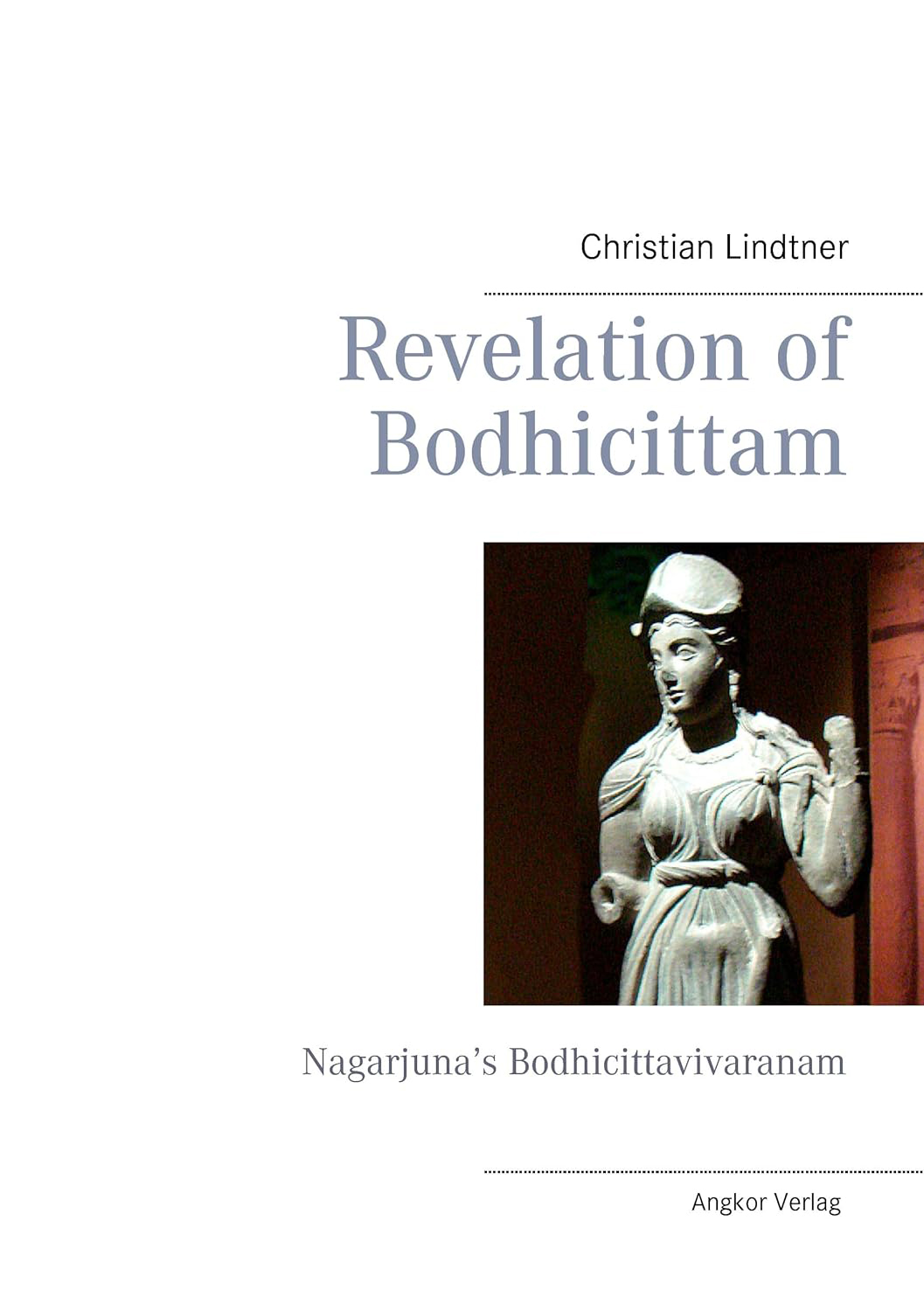
Revelation of Bodhicittam (Lindtner 2015)
This text comprises 112 stanzas introduced by a brief prologue in prose. None of Nagarjuna's other works exhibit such a well-balanced and coherent structure as the Bodhicittavivarana. This is to some extent a natural consequence of the fact that the theme is at once simple and comprehensive: bodhicitta. It has a relative aspect consisting in the desire for the bodhi (awakening) of all living beings, and an absolute consisting in the unlimited cognition of shunyata (emptiness). The Bodhicittavivarana thus provides us with a compendium of the practice and theory of Mahayana Buddhism. This book consists of an introduction, the English translation of Bodhicittavivarana, the Tibetan transcription, Sanskrit fragments, additional notes and a new essay about the Greek roots. (Source Accessed Jan 9, 2025)
Book
 
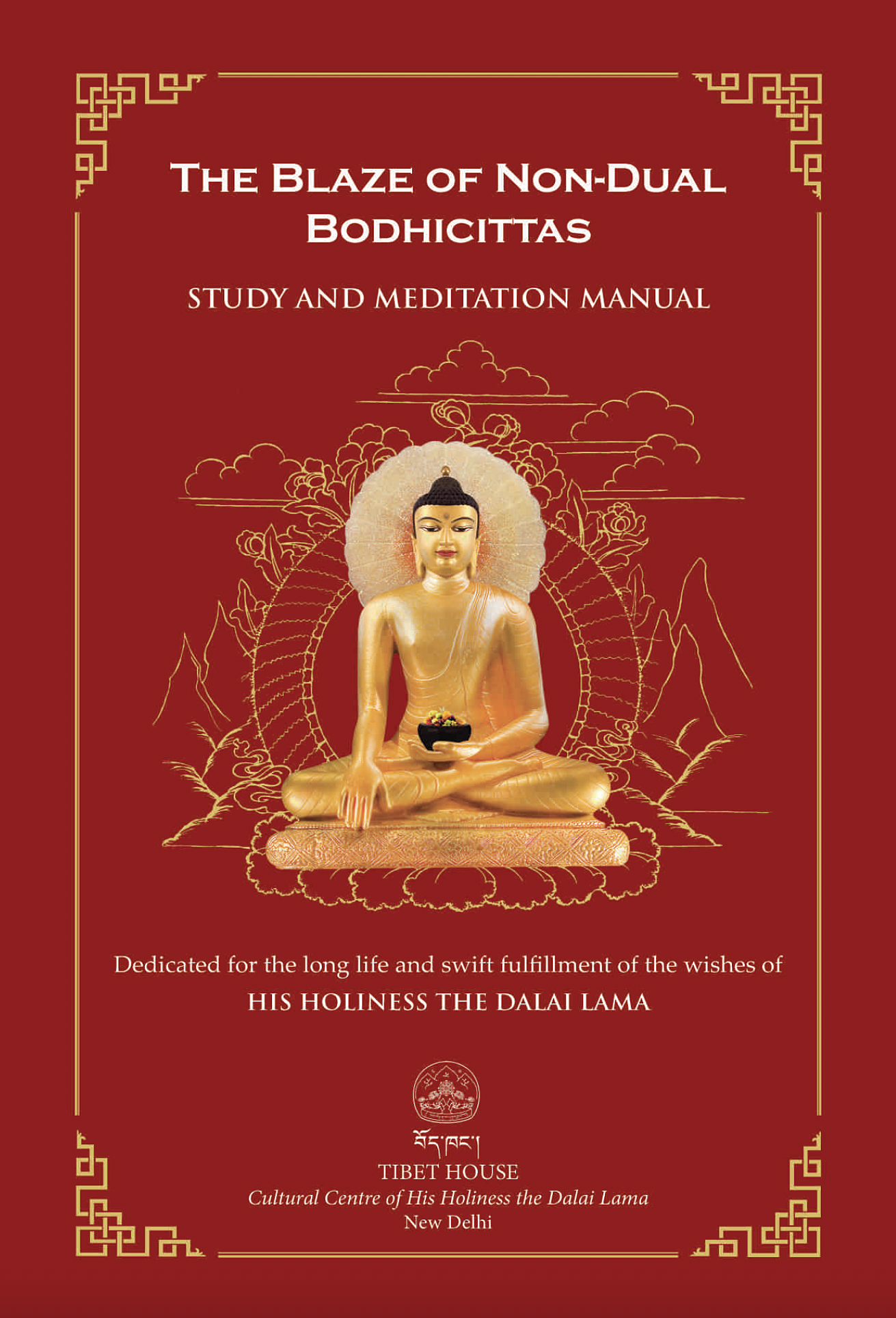
The Blaze of Non-Dual Bodhicittas (Damdul 2019)
The initial idea for this study, reflection and meditation manual took seed in 2004, when I first started to translate for His Holiness the Dalai Lama. I found many of the Nalanda texts frequently taught by His Holiness to be very useful; it occurred to me that a compilation of these in the English language would greatly benefit many seekers who might otherwise lack the opportunity to access them. It is only now, after many years of sharing the working drafts of this manual at Tibet House in New Delhi, as well as in many other places that the idea has finally come to fruition.

The book is divided into five parts:

I. Daily Recitation and Practice
II. Selected Texts for Study, Reflection and Meditation
III. Additional Prayers, Vows and Commitments
IV. Daily Dedication Prayers
V. Appendix

Part I and Part IV serve as a useful guide for all, who have an inclination towards dharma practice, but do not know how to start and design a daily practice session. It is also useful for those seekers who might be misguided and surmise that dharma practice comprises only of mantra recitation and so forth, thereby missing its essence.

Part II helps strengthen the practitioner’s dharma practice on the basis of selected compositions of great scholars and yogis. The actual breakthrough in the mental transformation happens through changes in the thought process, for which study and reflection are the cornerstones. Any of these profound texts and short extracts may be selected for study, reflection or meditation, on an on-going basis.

Part III reinforces and rejuvenates dharma practice and to that end, may be undertaken on a regular or occasional basis.

Part V introduces the reader to meditation practices, both shamatha (calm abiding) and vipasyana (special insight), including meditation on the breath, as well as methods to cultivate Bodhicitta and the wisdom of emptiness. While there are many texts on the wisdom of emptiness, the meditation included here is designed for all those who are not thoroughly introduced to this subject and still want to familiarise and habituate themselves with the wisdom of emptiness.

Brief notes, Endnotes and Glossary have been added to help the readers unfold the meanings of the texts with ease. (preface, xiv–xv)
Book
 
The Bodhicittavivāraṇa by Ārya Nāgārjuna
Nāgārjuna's Bodhicittavivaraṇa is a seminal work rooted in the Guhyasamāja Tantra which presents incrementally and critically the philosophical systems of all 4 Buddhist schools of tenets in matchless, albeit arcane, verse culminating in a presentation of the Madhyamaka-Prāsaṇgika view of emptiness. Its publication, in conjunction with an exceedingly rare 14th century commentary, Ngawang Dragpa's "Garland of Jewels," as well as the oral commentary of the lineage holder of the Tripiṭaka, Khensur Kangyur, sets it at the confluence of the scriptural, commentarial, and experiential traditions for which the Tibetan Buddhist tradition is justly famous.

The document is a transcript of teachings on “The Bodhicittavivarana” by Nagarjuna, with commentary by Dagpo Gomchen Ngawang Dragpa and oral commentary by The Venerable Khensur Kangurwa Geshe Lobsang Thubten Rinpoche, translated by Lotsawa Ilia Durovic. Here’s a detailed summary of the key teachings:

1. Good Motivation and Benefiting Others: The transcript begins by emphasizing the importance of generating a good mind and motivation, particularly one focused on benefiting others. This virtuous motivation enhances all deeds and leads to the accumulation of excellence.

2. Empathy, Love, and Bodhicitta: It stresses the generation of empathy and love towards oneself and others. This forms the basis of bodhicitta, the mind striving to benefit others, which is the path to full enlightenment. The text encourages making each day meaningful by cultivating these qualities.

3. The Path to Enlightenment and Bodhicitta: The teachings describe the path to full enlightenment as the perfection of wisdom, which includes conventional and ultimate bodhicitta. Arya Nagarjuna’s commentary on bodhicitta is highlighted as a guide for this journey.

4. Importance of Dharma Teachings and Mindful Listening: The document underscores the fortune of receiving precious human rebirth and the opportunity to attend Dharma teachings. It advises listening to teachings with a concentrated and uncontaminated mind and retaining their essence for meditation and personal growth.

5. Dharma, Virtue, and Overcoming Afflictions: Dharma is defined as the means to end desire, hatred, and ignorance. Virtuous actions and their results, such as happiness and liberation, are contrasted with non-virtuous actions leading to suffering.

6. Role of Bodhicitta in Achieving Enlightenment: Bodhicitta is portrayed as pivotal in purifying non-virtuous deeds and avoiding rebirth in lower realms. It’s described as a powerful force that, once generated, leads to the accumulation of vast virtue and propels one towards enlightenment.

7. The Mahayana Path and Compassion: The Mahayana path is introduced, with bodhicitta as its gateway. Compassion, essential for Mahayana practice, arises from contemplating the suffering of countless sentient beings and wishing to free them from it.

8. Practical Aspects of Dharma Practice: The text advises on the practicality of Dharma practice, likening it to taking medicine or eating food. It emphasizes regular practice, faith in Dharma, and the importance of understanding the teachings of Buddha.

9. Antidotes to Afflictions and Path to Enlightenment: Specific antidotes to afflictions like anger, desire, and ignorance are discussed. The path to enlightenment is described as a gradual process, requiring ethics, generosity, patience, and the realization of emptiness.

10. Continuous Practice and Progression: Finally, the transcript highlights the need for continuous practice and gradual progression on the path to enlightenment. It compares spiritual progress to walking a path with steady steps, emphasizing empathy and love as foundational practices.

This transcript offers a comprehensive overview of Buddhist teachings on bodhicitta, compassion, and the path to enlightenment, with practical advice on how to incorporate these principles into daily life for spiritual growth and the benefit of all beings.
Book

Commentaries

 
Bodhicittavivaraṇatīkā
The commentary on the Bodhicittavivaraṇa by the eleventh-century Indian paṇḍita Smṛtijñānakīrti, the Bodhicittavivaraṇaṭīkā, represents one of the most sophisticated tantric interpretations of Nāgārjuna's treatise. From its opening verses, where the author humbly states his intention to eliminate conceptual elaborations (rtog pa kun spangs pa) motivated purely by faith (dad pas) rather than worldly concerns, the commentary positions itself as a profound integration of Madhyamaka philosophy with Vajrayāna practice. Significantly, Smṛtijñānakīrti immediately frames the Bodhicittavivaraṇa's instructions as originating from the Guhyasamājatantra and being specifically intended for "yogis and yoginis" (rnal 'byor pha dang ma), thereby establishing the text not as a general Mahāyāna treatise but as an essential guide for tantric practitioners.
Text
 
Byang chub kyi sems kyi 'grel bshad nyi ma'i 'od zer
Rongtön Sheja Kunrik's fifteenth-century commentary, titled A Commentary on the Bodhicittavivaraṇa Called Rays of the Sun (Byang chub kyi sems kyi 'grel bshad nyi ma'i 'od zer), was composed at Nalendra Monastery during a period when Rongtön perceived significant deficiencies in contemporary Tibetan scholarship. It reflects Rongtön's formation in Sangphu Monastery's analytical tradition as well as his deep engagement with multiple meditation lineages. The commentary follows the root text's classical division between conventional and ultimate bodhicitta. While the opening section on conventional bodhicitta provides systematic instruction for generating compassionate aspiration, the extensive second section on ultimate bodhicitta becomes both philosophical centerpiece and practical manual. Rongtön defines ultimate bodhicitta as "the primordial wisdom that realizes the two types of selflessness" (bdag med gnyis rtogs pa'i ye shes), establishing it as nondual awareness rather than conceptual understanding.
Text
 
Byang chub sems 'grel gyi rnam par bshad pa tshig don gsal ba
The commentary was composed in 1515 CE at the renowned Dechen Yangpachen Monastery, responding to the repeated requests of Rongtönpa, who is described in the colophon as someone "endowed with devotion to this treatise and engaged in the two-stage yoga practice." This detail suggests the commentary was intended for serious tantric practitioners, not merely academic scholars. As revealed in his colophon, the Fourth Shamarpa's approach was one of authoritative validation, privileging an Indian scholastic authority as his primary foundation. He states that he took the commentary by the Indian master Smṛtijñānakīrti as his principal basis. For points that remained unclear, he turned to the direct lineage transmission of his own guru, the great scholar Gö Lotsāwa Zhönnu Pal (1392–1481). While demonstrating full awareness of at least four Tibetan translations of the Bodhicittavivaraṇa, including those by Patsab Lotsāwa and Khu Lotsāwa, he neither collated them like Rongtön nor exclusively selected one like Śākya Chokden. Instead, he established his root text by aligning the version transmitted with Smṛti's commentary against what he calls a "pure old manuscript" (yig rnying dag pa). This unique method—relying first on an Indian master, second on his direct guru, and finally on an ancient manuscript for validation—highlights a meticulous concern for establishing a pure and authoritative textual basis for his own interpretation of the Bodhicittavivaraṇa.
Text
 
Don dam byang chub sems 'grel gyi bshad pa dbu ma'i snying po bsdus pa
Śākya Chokden's commentary on Nāgārjuna's Bodhicittavivaraṇa, titled The Essence of the Middle Way (Dbu ma'i snying po), is a prime example of the author's original approach. It is presented not as a simple exegesis but as a crucial intervention to clarify Nāgārjuna's ultimate intent.

Śākya Chokden makes clear that his purpose is to eliminate a comprehensive list of "wrong views" (log par rtog pa) that were prevalent in the understanding of the Bodhicittavivaraṇa. He presents twenty-four specific errors that he aims to correct, viewing these as significant obstacles to proper realization. Among the most critical misunderstandings he sought to rectify were: failing to recognize that the text's subject is ultimate bodhicitta and not its conventional counterpart; misinterpreting the described ritual as a standard ceremony for generating conventional bodhicitta; incorrectly asserting that ultimate bodhicitta generation rituals don't exist in the Pāramitāyāna; and fundamentally misunderstanding the nuanced relationship between the Madhyamaka and Yogācāra schools.

He specifically refutes several philosophical positions, including the assertion that appearances are merely mind (snang ba sems su khas len pa), misunderstandings about the ālayavijñāna in Madhyamaka contexts, and the view that emptiness itself is conventional (stong nyid kun rdzob pa). He argues forcefully against confining Nāgārjuna's thought to a worldly, conventional Madhyamaka, instead asserting that it encompasses the profound view of Yogācāra-Madhyamaka. To ground his corrective project, Śākya Chokden specifies that his analysis is based on the esteemed Tibetan translation of the Bodhicittavivaraṇa by Patsab Lotsāwa, though he also references other translations. Most strikingly, he makes the bold claim that his commentary is based on his own direct analysis (rang gis rnam dpyod) of the root text, independent of prior commentaries ('grel byed la ma rten pa), positioning his work as a fresh, unmediated, and authoritative reading.
Text
 
Rgyal ba gnyis pa klu sgrub zhabs kyis mdzad pa'i byang chub sems kyi 'grel pa'i rnam par bshad pa nor bu'i phreng ba
Gomchen Ngawang Drakpa's commentary on Nāgārjuna's Bodhicittavivaraṇanāma.
Text

Similar title

Teachings

 
A Teaching on Nagarjuna's Bodhicittavivarana by His Holiness the Dalai Lama
Teaching in New York, NY, USA on October 4: His Holiness gives a half-day afternoon teaching on Nagarjuna’s Commentary on Bodhicitta (Jangchup Semdrel) organized by a Vietnamese group at the Manhattan Center.
Article
 
Nagarjuna's Bodhicittavivarana: Introduction: Teaching by the 14th Dalai Lama (Part 1)
Commentary on Nagarjuna's text on the mind of awakening (Bodhicitta). In this particular text the ultimate awakening mind practices are presented first and are then followed by practices for cultivating the conventional awakening mind.
 
Nāgārjuna's Commentary on the Awakening Mind by Geshe Dorji Damdul (1 of 4)
Nagarjuna's Commentary on the Awakening Mind (Bodhicittavivārana)
A happy mind is tranquil indeed;
A tranquil mind is not confused;
To have no confusion is to understand the truth;
By understanding the truth one attains freedom.
Nagarjuna, A Commentary On The Awakening Mind (v. 70)

The Greek word eudaimonia (literally "the state of having a good indwelling spirit") refers to a state of optimal flourishing and well-being that is independent of circumstances. From a Buddhist perspective, the components of eudaimonia encompass both: insight into the nature of reality and unbiased compassion for all beings.

With profound insight and wisdom, Geshe Dorji Damdul will guide us through Nagarjuna's Commentary on the Awakening Mind (Bodhicittavivāraṇa) so that we can cultivate tranquility and awaken (bodhi) to the actual nature of existence. Please join us for this rare opportunity to cultivate great compassion and wisdom with an exceptional scholar and practitioner.

Scholarship

 
Bodhicittavivaraṇa (BV) (Lindtner 1982)
A study and English translation of the Bodhicittavivaraṇa (BV), attributed to Nāgārjuna. Contains a discussion of the text's authenticity and a synopsis. Also contains the Tibetan version and Sanskrit fragments.
Article
 
Citations from the Ratnāvalī and Bodhicittavivaraṇa in the Abhayapaddhati
This article reports newly discovered Sanskrit quotations from Nāgārjuna's Ratnāvalī and Bodhicittavivaraṇa found in Abhayākaragupta's twelfth-century Abhayapaddhati commentary. The author identifies one previously unpublished Ratnāvalī verse and four Bodhicittavivaraṇa verses not yet known in Sanskrit, expanding our knowledge of these important texts.
Article
 
Nagarjuniana: Studies in the Writings and Philosophy of Nāgārjuna
The author deals with the thirteen works attributed to Nāgārjuna. The first six are mainly dialectical works such as Mūlamadhyamakakārikā, Śūnyatāsaptati, Vigrahavyāvartanī, Vaidalyaprakaraṇa, Vyavahārasiddhi, Yuktiṣaṣṭikā followed by the remaining seven which are chiefly didactic texts - Catuḥstava, Ratnāvali, Pratītyasamutpādahṛdayakārikā, Sūtrasamuccaya, Bodhicittavivaraṇa, Suhṛllekha, and Bodhisaṃbhāra (ka). Thus he roughly follows the prescriptive distinction between Yukti and Agama.
Book
 
On the Authenticity of the Bodhicittavivaraṇa Attributed to Nāgārjuna
Dragonetti responds to Christian Lindtner's criticism of her argument that the Bodhicittavivaraṇa is not authentically by Nāgārjuna. She maintains three main points: (1) Verse 71 of the Bodhicittavivaraṇa was borrowed from Maitreya's Madhyāntavibhāga, not vice versa, because it appears organically integrated in Maitreya's work but awkwardly inserted in the Bodhicittavivaraṇa without proper grammatical connection; (2) While accepting that Maitreya may have referenced Nāgārjuna elsewhere, this doesn't prove the Bodhicittavivaraṇa's authenticity if it's a late work; (3) She disputes Lindtner's claim that the Laṅkāvatārasūtra predates Nāgārjuna, arguing instead that similarities between it and the Bodhicittavivaraṇa support her thesis of inauthenticity.
Article
 
On the Bodhicittavivaraṇa of Nāgārjuna
Yoshimizu, Chizuko. "On the Bodhicittavivaraṇa of Nāgārjuna." (In Japanese.) Journal of Indian nad Buddhist Studies (Indogaku Bukkyogaku Kenkyu) 36, no. 2 (1988): 80–84.
Article
 
Some Text-Historical Issues with the Bodhicittavivāraṇa by a Nāgārjuna and the Tibetan Commentarial Literature
Van der Kuijp examines textual transmission problems in the Bodhicittavivaraṇa (Exposition of the Resolve to Become Buddha), attributed to Nāgārjuna. He argues that the work's authorship is ambiguous—likely not by the famous Nāgārjuna I (2nd-3rd century) but possibly by a later author given textual evidence. The essay demonstrates how multiple Tibetan and Chinese translations contain significant variations, creating philological challenges. Van der Kuijp analyzes different manuscript versions, commentaries, and translation lineages to show how the text evolved through transmission. His detailed comparison of the first three verses illustrates specific textual corruptions and interpretive difficulties that arose across different recensions, highlighting broader issues in Buddhist textual scholarship.
Article
 
The Role of the Bodhicittavivaraṇa in the Mahāmudrā Tradition of the Dwags po bka’ brgyud
The Commentary on Enlightened Attitude (Bodhicittavivaraṇa), which is attributed to the tantric Nāgārjuna (fl. 200 CE), takes the ultimate enlightened attitude (bodhicitta) as a direct realization of emptiness, and follows a positive approach to the ultimate, like the sūtras of and commentaries on the third wheel of the doctrine (dharmacakra). Taking this as Nāgārjuna's final position, the Commentary on Enlightened Attitude gains an important status for those who see in the third wheel of the doctrine teachings of definitive meaning. The present paper shows that 'Gos lo tsā ba gzhon nu dpal (1392-1481) and his disciple the Fourth Zhwa dmar pa Chos grags ye shes (1453-1524) follow this approach, but take positive descriptions of the ultimate in the third wheel of the doctrine as the result of a direct experience of emptiness beyond the duality of perceiving subject and perceived object. Standing in the Great Seal (Mahāmudrā) tradition of the Dwags po bka' brgyud, an ultimate existence of mind, such that self-awareness or the perfect nature exists as an entity, is not accepted by them. (Source Accessed Sep 24, 2025)
Article

Number 664
Canon rgyud
Sanskrit bodhicittavivaraṇa (D)
Alternate Titles byang chub sems kyi 'grel pa zhes bya ba
Alternate Titles - Sanskrit bodhicittavivaraṇa-nāma
Relationships
Text Relationship
T664 SameTitle
Text Relationship
T665 SameTitle

Author Nāgārjuna
Author (Tibetan) slob dpon bdag nyid chen po 'phags pa klu sgrub
Translator bod kyi lo tsA ba pa chab nyi ma grags;lo tsA ba rab zhi bshes gnyen
Translator Pandita rgya gar gyi mkhan po gu Na A ka ra;rgya gar gyi mkhan po ka na ka wa rma
Colophon byang chub sems kyi 'grel pa slob dpon bdag nyid chen po 'phags pa klu sgrub kyis mdzad pa rdzogs so// //rgya gar gyi mkhan po gu na A ka ra dang/ lo tsA ba rab zhi bshes gnyen gnyen gyis bsgyur cing zhus/ /slad kyi rgya gar gyi mkhan po ka na ka wa rma dang/ bod kyi lo tsA ba pa tshab nyi ma grags kyis bcos pa'o//
Title from Colophon byang chub sems kyi 'grel pa


Texts/RKTST 664/Full text