Abhisamayālaṃkāranāmaprajñāpāramitopadeśaśāstrakārikā
Texts/Abhisamayālaṃkāranāmaprajñāpāramitopadeśaśāstrakārikā
| 🤓 Admin Zone 🛠️ hidden to non-admins | |


Description

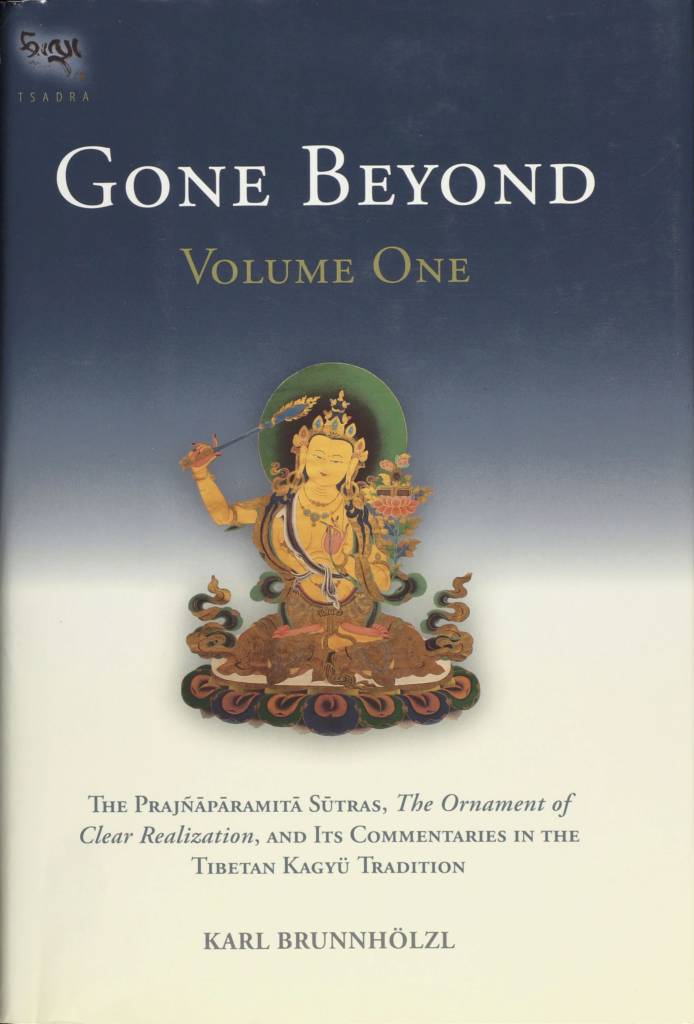
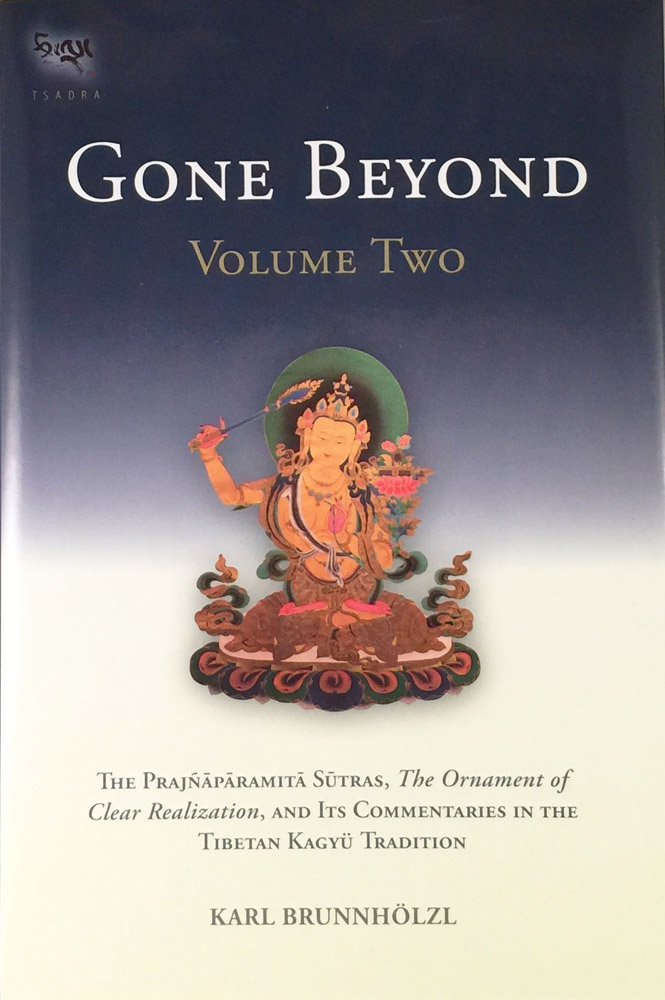
Gone Beyond contains the first in-depth study of the Abhisamayalamkara (the text studied most extensively in higher Tibetan Buddhist education) and its commentaries in the Kagyu School. This study (in two volumes) includes translations of Maitreya's famous text and its commentary by the Fifth Shamarpa Goncho Yenla (the first translation ever of a complete commentary on the Abhisamayalamkara into English), which are supplemented by extensive excerpts from the commentaries by the Third, Seventh, and Eighth Karmapas and others. Thus it closes a long-standing gap in the modern scholarship on the Prajnaparamita Sutras and the literature on paths and bhumis in mahayana Buddhism.
The first volume presents an English translation of the first three chapters of the Abhisamayalamkara and its commentary by the Fifth Shamarpa. The second volume presents an English translation of the final five chapters and its commentary by the Fifth Shamarpa. (Source: Shambhala Publications)-front.jpg)
Gone Beyond contains the first in-depth study of the Abhisamayalamkara (the text studied most extensively in higher Tibetan Buddhist education) and its commentaries in the Kagyu School. This study (in two volumes) includes translations of Maitreya's famous text and its commentary by the Fifth Shamarpa Goncho Yenla (the first translation ever of a complete commentary on the Abhisamayalamkara into English), which are supplemented by extensive excerpts from the commentaries by the Third, Seventh, and Eighth Karmapas and others. Thus it closes a long-standing gap in the modern scholarship on the Prajnaparamita Sutras and the literature on paths and bhumis in mahayana Buddhism.
The first volume presents an English translation of the first three chapters of the Abhisamayalamkara and its commentary by the Fifth Shamarpa. The second volume presents an English translation of the final five chapters and its commentary by the Fifth Shamarpa. (Source: Shambhala Publications)


With some exceptions, the text parallels the structure of the other Perfection of Wisdom sūtras, especially the Prajñāpāramitā in 10,000 Lines, yet it has traditionally been regarded as more influential, analyzing the bodhisattvas’ transcendent perfections in considerably greater detail, and showing how bodhisattvas should practise them without ever considering either their practice, or any other phenomena whatsoever, as truly existing.
An original Sanskrit version found in Gilgit exists, as well as four distinct Chinese translations. There is also an important recast Sanskrit manuscript, possibly of 5th century origin, which divides the text according to the eight sections of Asaṅga-Maitreya’s famous treatise, the Abhisamayālaṃkāra. The Tibetan text dates from the 9th century. There are several important commentaries on the text in the Tengyur, by Haribhadra, Smṛtijñānakīrti, Vimuktasena and others. (Source: 84000)
From ancient times, the origin of "tathāgata", which has been usually translated as 如 來 (one who comes thus), is not unknown. This has been used as the title of Buddha, chiefly in Buddhism from the start.
Now, I will consider the meaning of "tathāgata" in the Abhisamayālaṃkārālokā Prajñāpāramitā-vyākhyā of Haribhadra (ed. by Wogihara) (W.). This includes the Aṣṭasāhasrikā-Prajñāpāramitā-sūtra (As.), Maitreya's Abhisamayālaṃkāraśāstra-kārikā (A.) which is a summary of the Pañcaviṃśatisāhasrikā-Prajñāpāramitā-sūtra (P.), and Haribhadra's commentary which is based on the P. and the As. Accordingly at first, I point out sentences of "tathāgata", which I think as the etymological explanations, and then survey the character of it. (Mano, "'Tathāgata' in Haribhadra's Commentary," 22)

This work by Haribhadra was not only a key treatise of the late-8th-century Prajñāpāramitā-Madhyamaka synthesis within Indian Buddhism, but it was also a crucial source which shaped how Prajñāpāramitā philosophy was understood by generation after generation of Tibetan scholiasts.
Since the time of Rngog Io-tsa-ba Blo-Idan-shes-rab (1059-1109), the Prajñāpāramitā philosophy expounded in the Abhisamayālaṃkāra and its main commentaries such as Haribhadra's had been a fundamental topic for Tibetan scholars of Mahāyāna philosophy. Its study, together with the study of elementary dialectics (bsdus grwa) and Buddhist logic-epistemology (Pramāṇa, especially Dharmakīrti's Pramāṇaviniścaya), was considered in the tradition of Rngog's seminary Gsang-phu Ne'u-thog to be one of the three prerequisite subjects for Buddhist scholarship - this triad being sometimes referred to as phar tshad bsdus gsum. The fundamental importance of these subjects remains more or less unchanged today in the main surviving offshoot of that tradition — i.e. modern Dge-lugs-pa scholasticism.
Rong-ston's exegesis was the culmination of three centuries of intensive studies by scholars in the Gsang-phu Ne'u-thog and allied traditions, and it stands in the mainstream of Tibetan exegesis of this work. Not only did he receive detailed instruction on this subject during his early studies in the 1380s at Gsang-phu under Blo-gros-dbang-phyug, but he also studied it as a more mature scholar in the 1390s under the Sa-skya-pa teacher G.yag-ston Sangs-rgyas-dpal (1348–1414), a master of Prajñāpāramitā studies who at that time was almost unrivalled in this field. The lineage he received from G.yag-ston had been successively transmitted through such great masters as Tshad-ma'i-skyes-bu Bsod-nams-mgon, Bu-ston Rin-chen-grub (1290–1364), and G.yag-ston's teacher Sgra-tshad-pa Rin-chen-rnam-rgyal (1318–1388). (Jackson, introduction, I)From ancient times, the origin of "tathāgata", which has been usually translated as 如 來 (one who comes thus), is not unknown. This has been used as the title of Buddha, chiefly in Buddhism from the start.
Now, I will consider the meaning of "tathāgata" in the Abhisamayālaṃkārālokā Prajñāpāramitā-vyākhyā of Haribhadra (ed. by Wogihara) (W.). This includes the Aṣṭasāhasrikā-Prajñāpāramitā-sūtra (As.), Maitreya's Abhisamayālaṃkāraśāstra-kārikā (A.) which is a summary of the Pañcaviṃśatisāhasrikā-Prajñāpāramitā-sūtra (P.), and Haribhadra's commentary which is based on the P. and the As. Accordingly at first, I point out sentences of "tathāgata", which I think as the etymological explanations, and then survey the character of it. (Mano, "'Tathāgata' in Haribhadra's Commentary," 22)

Gone Beyond contains the first in-depth study of the Abhisamayalamkara (the text studied most extensively in higher Tibetan Buddhist education) and its commentaries in the Kagyu School. This study (in two volumes) includes translations of Maitreya's famous text and its commentary by the Fifth Shamarpa Goncho Yenla (the first translation ever of a complete commentary on the Abhisamayalamkara into English), which are supplemented by extensive excerpts from the commentaries by the Third, Seventh, and Eighth Karmapas and others. Thus it closes a long-standing gap in the modern scholarship on the Prajnaparamita Sutras and the literature on paths and bhumis in mahayana Buddhism.
The first volume presents an English translation of the first three chapters of the Abhisamayalamkara and its commentary by the Fifth Shamarpa. The second volume presents an English translation of the final five chapters and its commentary by the Fifth Shamarpa. (Source: Shambhala Publications)Gone Beyond contains the first in-depth study of the Abhisamayalamkara (the text studied most extensively in higher Tibetan Buddhist education) and its commentaries in the Kagyu School. This study (in two volumes) includes translations of Maitreya's famous text and its commentary by the Fifth Shamarpa Goncho Yenla (the first translation ever of a complete commentary on the Abhisamayalamkara into English), which are supplemented by extensive excerpts from the commentaries by the Third, Seventh, and Eighth Karmapas and others. Thus it closes a long-standing gap in the modern scholarship on the Prajnaparamita Sutras and the literature on paths and bhumis in mahayana Buddhism.
The first volume presents an English translation of the first three chapters of the Abhisamayalamkara and its commentary by the Fifth Shamarpa. The second volume presents an English translation of the final five chapters and its commentary by the Fifth Shamarpa. (Source: Shambhala Publications)