Rong-ston on the Prajñāpāramitā Philosophy of the Abhisamayālaṃkāra

From Bodhicitta
Books/Rong-ston on the Prajñāpāramitā Philosophy of the Abhisamayālaṃkāra

🤓 Admin Zone 🛠️ hidden to non-admins
Rong-ston on the Prajñāpāramitā Philosophy of the Abhisamayālaṃkāra: His Sub-commentary on Haribhadra's 'Sphuṭārthā'
Book


Please note that many items in our library are simply pages that represent a detailed library catalog entry and citation of someone else's work, presentation, or performance. Read our General Disclaimer for more information.

Description

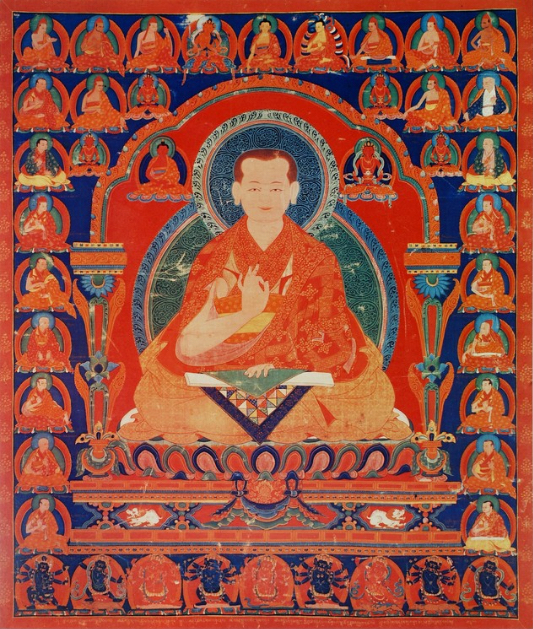
The "Rong ston Phar phyin" is an important commentarial work of Tibetan Buddhist scholasticism. Its author, Rong-ston Shes-bya-kun-rig (1367–1449), was one of Tibet's greatest scholars, and the subject he expounded in it was Haribhadra's brief "Sphuṭārthā" commentary on the Abhisamayālaṃkāra.

This work by Haribhadra was not only a key treatise of the late-8th-century Prajñāpāramitā-Madhyamaka synthesis within Indian Buddhism, but it was also a crucial source which shaped how Prajñāpāramitā philosophy was understood by generation after generation of Tibetan scholiasts.

Since the time of Rngog Io-tsa-ba Blo-Idan-shes-rab (1059-1109), the Prajñāpāramitā philosophy expounded in the Abhisamayālaṃkāra and its main commentaries such as Haribhadra's had been a fundamental topic for Tibetan scholars of Mahāyāna philosophy. Its study, together with the study of elementary dialectics (bsdus grwa) and Buddhist logic-epistemology (Pramāṇa, especially Dharmakīrti's Pramāṇaviniścaya), was considered in the tradition of Rngog's seminary Gsang-phu Ne'u-thog to be one of the three prerequisite subjects for Buddhist scholarship - this triad being sometimes referred to as phar tshad bsdus gsum. The fundamental importance of these subjects remains more or less unchanged today in the main surviving offshoot of that tradition — i.e. modern Dge-lugs-pa scholasticism.

Rong-ston's exegesis was the culmination of three centuries of intensive studies by scholars in the Gsang-phu Ne'u-thog and allied traditions, and it stands in the mainstream of Tibetan exegesis of this work. Not only did he receive detailed instruction on this subject during his early studies in the 1380s at Gsang-phu under Blo-gros-dbang-phyug, but he also studied it as a more mature scholar in the 1390s under the Sa-skya-pa teacher G.yag-ston Sangs-rgyas-dpal (1348–1414), a master of Prajñāpāramitā studies who at that time was almost unrivalled in this field. The lineage he received from G.yag-ston had been successively transmitted through such great masters as Tshad-ma'i-skyes-bu Bsod-nams-mgon, Bu-ston Rin-chen-grub (1290–1364), and G.yag-ston's teacher Sgra-tshad-pa Rin-chen-rnam-rgyal (1318–1388). (Jackson, introduction, I)

Citation
Jackson, David, ed. Rong-ston on the Prajñāpāramitā Philosophy of the Abhisamayālaṃkāra: His Sub-commentary on Haribhadra's 'Sphuṭārthā'. A facsimile reproduction of the earliest known blockprint edition, from an exemplar preserved in the Tibet House library, New Delhi. In collaboration with Shunzo Onoda. Biblia Tibetica Series 2. Kyoto: Nagata Bunshodo, 1988.
Interconnections
1 Recension of
Classical WorksAbout this item
The Moonlight of the Crucial Points of Profound Meaning: A Thorough Analysis of the Difficult Points of the Abhisamayālaṃkāra and Its Commentaries by Rong ston shes bya kun rig (1367-1449).
2 Related
Classical WorksAbout this item
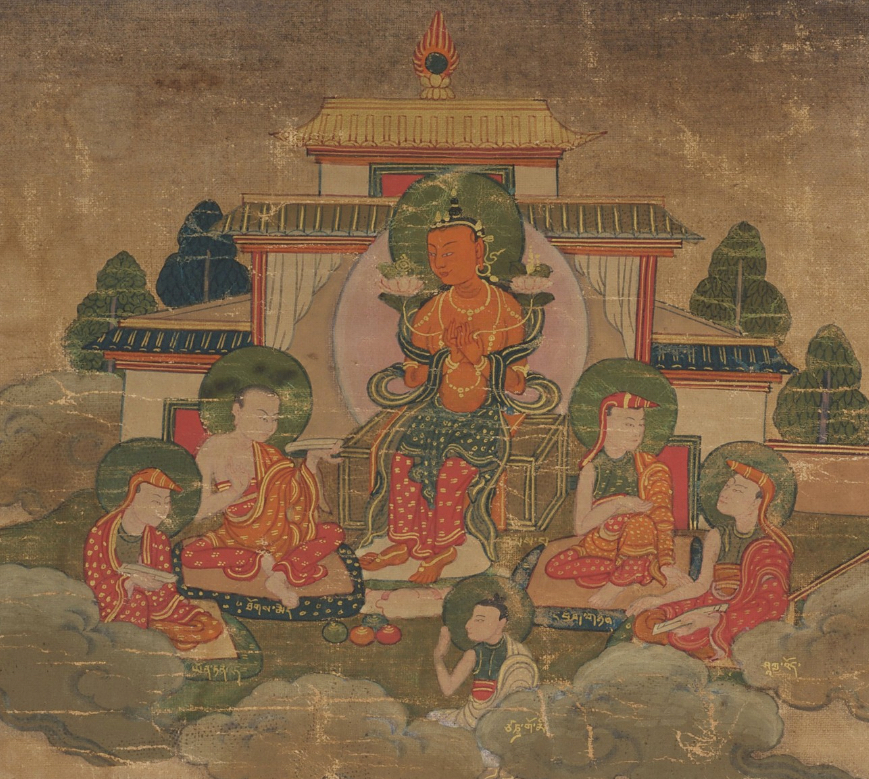
In Sanskrit, "Ornament of Realization"; a major scholastic treatise of the Mahāyāna, attributed to Maitreyanātha (c. 330 ce). Its full title is Abhisamayālaṃkāra-prajñāpāramitā upadeśa-śāstra (T. Shes rab kyi pha rol tu phyin pa'i man ngag gi bstan bcos mngon par rtogs pa'i rgyan) or “Treatise Setting Forth the Perfection of Wisdom called ‘Omament for Realization.’” In the Tibetan tradition, the Abhisamayālaṃkāra is counted among the five treatises of Maitreya (Byams chos sde lnga). The 273 verses of the Abhisamayālaṃkāra provide a schematic outline of the perfection of wisdom, or prajñāpāramitā, approach to enlightenment, specifically as delineated in the Pañcaviṃśati-sāhasrikā Prajñāpāramitā ("Perfection of Wisdom in Twenty-Five Thousand Lines"). This detailed delineation of the path is regarded as the "hidden teaching" of the prajñāpāramitā sūtras. Although hardly known in East Asian Buddhism (until the modern Chinese translation by Fazun), the work was widely studied in Tibet, where it continues to hold a central place in the monastic curricula of all the major sects. (Source: "Abhisamayālaṃkāra." In The Princeton Dictionary of Buddhism, 11. Princeton University Press, 2014. http://www.jstor.org/stable/j.ctt46n41q.27.)
Classical WorksAbout this item
The Āryāṣṭasāhasrikāprajñāpāramitāvyākhyānābhisamayālaṃkārāloka (Tib. Shes rab kyi pha rol tu phyin pa brgyad stong pa'i bshad pa/ mngon par rtogs pa'i rgyan gyi snang ba, "Illumination of the Ornament of Realization"), also known as the Abhisamayālaṃkārālokā, is a commentary by Haribhadra (Tib. Seng ge bzang po; late 8th century), an Indian paṇḍita active under the Pāla emperor Dharmapāla. It works by taking Maitreya's Abhisamayālaṃkāra—traditionally read as an outline of the Prajñāpāramitā sūtras' structure—and showing where each of its categories is being taught within the actual text of the Aṣṭasāhasrikāprajñāpāramitāsūtra, making it at once a commentary on the sūtra and one of the traditional twenty-one Indian commentaries on the Abhisamayālaṃkāra. It is distinct from Haribhadra's other, better-known work in that same set of 21, the Sphuṭārthā ("Clear Meaning"), which instead explains the Abhisamayālaṃkāra,'s verses directly, without correlating them to any one sūtra's wording. This commentary was translated into Tibetan by Rinchen Zangpo, with a subsequent revision involving Atiśa Dīpaṃkaraśrījñāna and a further translation by Ngok Loden Sherab.