Mngon par rtogs pa'i rgyan gyi 'grel ba nyung ngu rnam gsal

From Bodhicitta

🤓 Admin Zone 🛠️ hidden to non-admins
མངོན་པར་རྟོགས་པའི་རྒྱན་གྱི་འགྲེལ་བ་ཉུང་ངུ་རྣམ་གསལ།
mngon par rtogs pa'i rgyan gyi 'grel ba nyung ngu rnam gsal
A Concise Elucidation of the Ornament of Realization
Text
Library[[Mngon par rtogs pa&#39i rgyan gyi &#39grel ba nyung ngu rnam gsal]]Bibliography Full text available


Please note that many items in our library are simply pages that represent a detailed library catalog entry and citation of someone else's work, presentation, or performance. Read our General Disclaimer for more information.

Description

The Fifth Shamarpa's commentary on the Abhisamayālaṃkāra.

Recensions

Mngon par rtogs pa'i rgyan gyi 'grel ba nyung ngu rnam gsall. (A Concise Elucidation of the Ornament of Realization). Recension information:
Tibetan Shamarpa, 5th (Dkon mchog yan lag). མངོན་པར་རྟོགས་པའི་རྒྱན་གྱི་འགྲེལ་བ་ཉུང་ངུ་རྣམ་གསལ།, Mngon par rtogs pa'i rgyan gyi 'grel ba nyung ngu rnam gsal.
Interconnections
2 Full translations
Books2010About this item
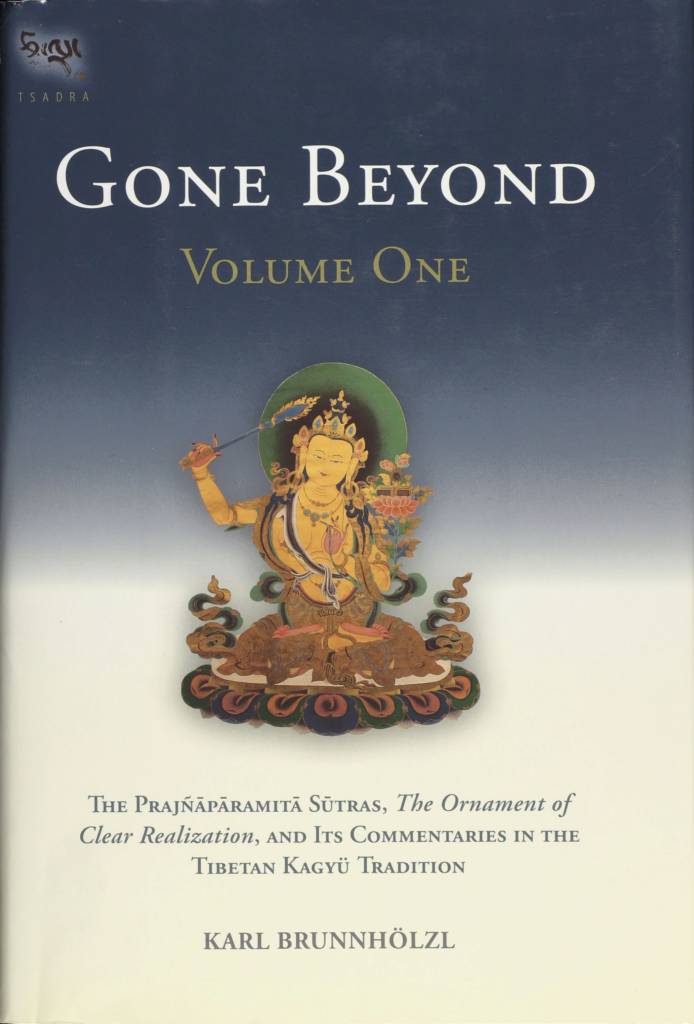
The Abhisamayalamkara summarizes all the topics in the vast body of the Prajnaparamita Sutras. Resembling a zip-file, it comes to life only through its Indian and Tibetan commentaries. Together, these texts not only discuss the "hidden meaning" of the Prajnaparamita Sutras—the paths and bhumis of sravakas, pratyekabuddhas, and bodhisattvas—but also serve as contemplative manuals for the explicit topic of these sutras—emptiness—and how it is to be understood on the progressive levels of realization of bodhisattvas. Thus these texts describe what happens in the mind of a bodhisattva who meditates on emptiness, making it a living experience from the beginner's stage up through buddhahood.

Gone Beyond contains the first in-depth study of the Abhisamayalamkara (the text studied most extensively in higher Tibetan Buddhist education) and its commentaries in the Kagyu School. This study (in two volumes) includes translations of Maitreya's famous text and its commentary by the Fifth Shamarpa Goncho Yenla (the first translation ever of a complete commentary on the Abhisamayalamkara into English), which are supplemented by extensive excerpts from the commentaries by the Third, Seventh, and Eighth Karmapas and others. Thus it closes a long-standing gap in the modern scholarship on the Prajnaparamita Sutras and the literature on paths and bhumis in mahayana Buddhism.

The first volume presents an English translation of the first three chapters of the Abhisamayalamkara and its commentary by the Fifth Shamarpa. The second volume presents an English translation of the final five chapters and its commentary by the Fifth Shamarpa. (Source: Shambhala Publications)
Books2011About this item
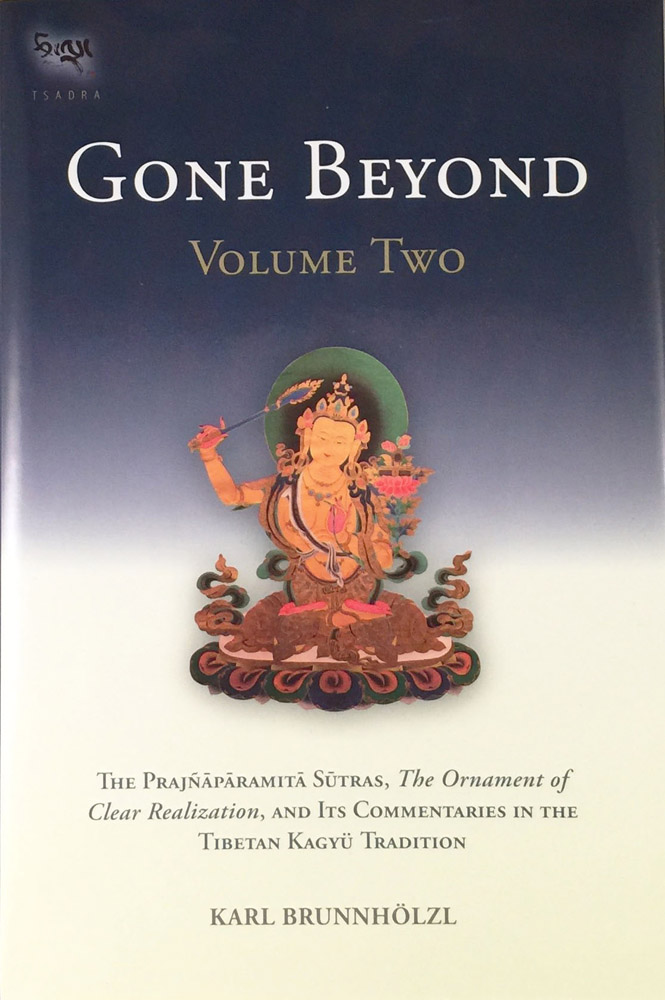
The Abhisamayalamkara summarizes all the topics in the vast body of the Prajnaparamita Sutras. Resembling a zip-file, it comes to life only through its Indian and Tibetan commentaries. Together, these texts not only discuss the "hidden meaning" of the Prajnaparamita Sutras—the paths and bhumis of sravakas, pratyekabuddhas, and bodhisattvas—but also serve as contemplative manuals for the explicit topic of these sutras—emptiness—and how it is to be understood on the progressive levels of realization of bodhisattvas. Thus these texts describe what happens in the mind of a bodhisattva who meditates on emptiness, making it a living experience from the beginner's stage up through buddhahood.

Gone Beyond contains the first in-depth study of the Abhisamayalamkara (the text studied most extensively in higher Tibetan Buddhist education) and its commentaries in the Kagyu School. This study (in two volumes) includes translations of Maitreya's famous text and its commentary by the Fifth Shamarpa Goncho Yenla (the first translation ever of a complete commentary on the Abhisamayalamkara into English), which are supplemented by extensive excerpts from the commentaries by the Third, Seventh, and Eighth Karmapas and others. Thus it closes a long-standing gap in the modern scholarship on the Prajnaparamita Sutras and the literature on paths and bhumis in mahayana Buddhism.

The first volume presents an English translation of the first three chapters of the Abhisamayalamkara and its commentary by the Fifth Shamarpa. The second volume presents an English translation of the final five chapters and its commentary by the Fifth Shamarpa. (Source: Shambhala Publications)

1 Classical commentary of
Classical WorksAbout this item
In Sanskrit, "Ornament of Realization"; a major scholastic treatise of the Mahāyāna, attributed to Maitreyanātha (c. 330 ce). Its full title is Abhisamayālaṃkāra-prajñāpāramitā upadeśa-śāstra (T. Shes rab kyi pha rol tu phyin pa'i man ngag gi bstan bcos mngon par rtogs pa'i rgyan) or “Treatise Setting Forth the Perfection of Wisdom called ‘Omament for Realization.’” In the Tibetan tradition, the Abhisamayālaṃkāra is counted among the five treatises of Maitreya (Byams chos sde lnga). The 273 verses of the Abhisamayālaṃkāra provide a schematic outline of the perfection of wisdom, or prajñāpāramitā, approach to enlightenment, specifically as delineated in the Pañcaviṃśati-sāhasrikā Prajñāpāramitā ("Perfection of Wisdom in Twenty-Five Thousand Lines"). This detailed delineation of the path is regarded as the "hidden teaching" of the prajñāpāramitā sūtras. Although hardly known in East Asian Buddhism (until the modern Chinese translation by Fazun), the work was widely studied in Tibet, where it continues to hold a central place in the monastic curricula of all the major sects. (Source: "Abhisamayālaṃkāra." In The Princeton Dictionary of Buddhism, 11. Princeton University Press, 2014. http://www.jstor.org/stable/j.ctt46n41q.27.)