| 🤓 Admin Zone 🛠️ hidden to non-admins | |
-front.jpg)
Description
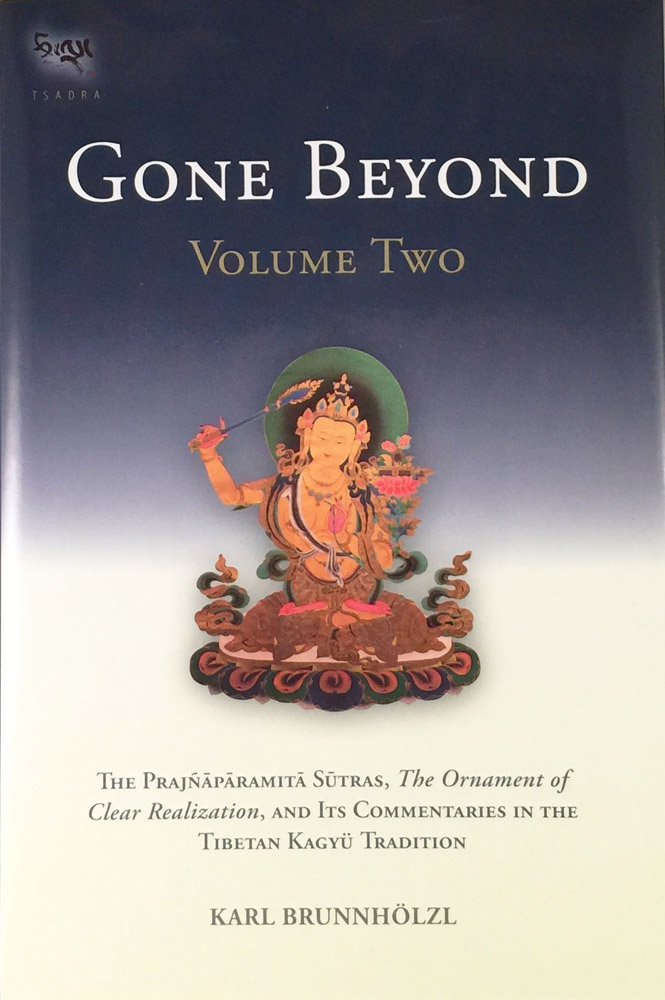
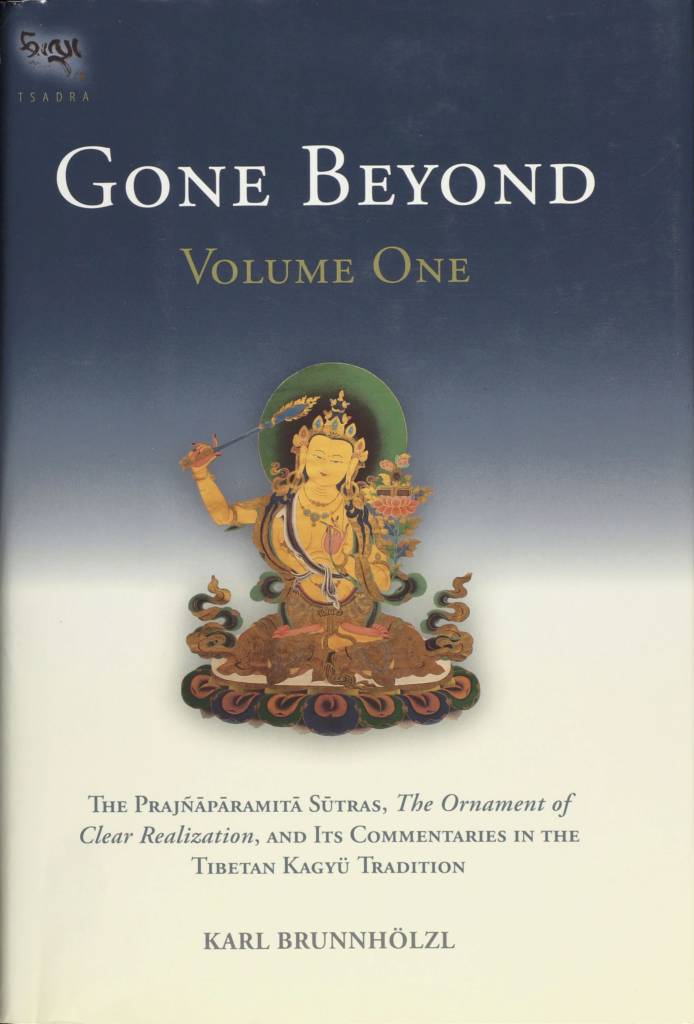
Gone Beyond contains the first in-depth study of the Abhisamayalamkara (the text studied most extensively in higher Tibetan Buddhist education) and its commentaries in the Kagyu School. This study (in two volumes) includes translations of Maitreya's famous text and its commentary by the Fifth Shamarpa Goncho Yenla (the first translation ever of a complete commentary on the Abhisamayalamkara into English), which are supplemented by extensive excerpts from the commentaries by the Third, Seventh, and Eighth Karmapas and others. Thus it closes a long-standing gap in the modern scholarship on the Prajnaparamita Sutras and the literature on paths and bhumis in mahayana Buddhism.
The first volume presents an English translation of the first three chapters of the Abhisamayalamkara and its commentary by the Fifth Shamarpa. The second volume presents an English translation of the final five chapters and its commentary by the Fifth Shamarpa. (Source: Shambhala Publications)
- An Aspiration By H.H. The Seventeenth Karmapa, Ogyen Trinley Dorje 11
- Foreword By H.H. The Seventeenth Karmapa, Ogyen Trinley Dorje 13
- Introduction 15
- Translation: A Concise Elucidation Of The Abhisamayālaṃkāra (Topics Four To Eight) 27
- 2.3.1.2.2. The four trainings (the means) 29
- 2.3.1.2.2.1. The complete training in all aspects (familiarizing with the aspects of the three knowledges in a combined manner) 29
- 2.3.1.2.2.1.1. Presenting the connection 29
- 2.3.1.2.2.1.2. Detailed explanation of the clear realizations 30
- 2.3.1.2.2.1.2.1. The general presentation of the training 30
- 2.3.1.2.2.1.2.2. Instruction on the complete training in all aspects proper 76
- 2.3.1.2.2.2. The culminating training (the consummation of the [complete training in all aspects]) 105
- 2.3.1.2.2.2.1. Presenting the connection 105
- 2.3.1.2.2.2.2. Detailed explanation of the clear realizations 105
- 2.3.1.2.2.2.2.1. The culminating training of the path of preparation 105
- 2.3.1.2.2.2.2.2. The culminating training of the path of seeing 109
- 2.3.1.2.2.2.2.3. The culminating training of the path of familiarization 128
- 2.3.1.2.2.2.2.4. The culminating training of the uninterrupted path 138
- 2.3.1.2.2.3. The serial training (familiarizing with the [aspects of the three knowledges] in a sequential manner) 146
- 2.3.1.2.2.3.1. Presenting the connection 146
- 2.3.1.2.2.3.2. Explaining the clear realization 146
- 2.3.1.2.2.4. The instantaneous training (familiarizing with the [aspects of the three knowledges] in a simultaneous manner) 150
- 2.3.1.2.2.4.1. Presenting the connection 150
- 2.3.1.2.2.4.2. Explaining the clear realization 150
- 2.3.1.2.2.4.2.1. The instantaneous training in terms of nonmaturation (being in the process of becoming free from the stains of the impregnations of negative tendencies) 150
- 2.3.1.2.2.4.2.2. The instantaneous training in terms of maturation (being about to become buddha wisdom after being free from these [stains]) 151
- 2.3.1.2.2.4.2.3. The instantaneous training in terms of the lack of characteristics 153
- 2.3.1.2.2.4.2.4. The instantaneous training in terms of nonduality 153
- 2.3.1.2.2.1. The complete training in all aspects (familiarizing with the aspects of the three knowledges in a combined manner) 29
- 2.3.1.2.3. Explaining the dharmakāya (the fruition) 156
- 2.3.1.2.3.1. Presenting the connection 156
- 2.3.1.2.3.2. Detailed explanation of the divisions 156
- 2.3.1.2.3.2.1. General topic 156
- 2.3.1.2.3.2.1.1. Presenting the enlightened mind that represents the dharmakāya 156
- 2.3.1.2.3.2.1.2. The manner in which it knows what is to be known 157
- 2.3.1.2.3.2.2. Meaning of the text 158
- 2.3.1.2.3.2.2.1. Explaining the svābhāvikakāya 158
- 2.3.1.2.3.2.2.2. Explaining the sāmbhogikakāya 168
- 2.3.1.2.3.2.2.3. Explaining the nairmāṇikakāya 180
- 2.3.1.2.3.2.2.4. Explaining enlightened activity 181
- 2.3.1.2.3.2.1. General topic 156
- 2.3.2. Teaching the [eight topics] as six for persons interested in the intermediate version 186
- 2.3.3. Teaching them as three for persons interested in the brief version 186
- 2.3.1.2.2. The four trainings (the means) 29
- 3. Conclusion 187
- Appendix I: Selected General Topics From JNS 190
- 4) The training in the complete realization of all aspects 190
- A) The focal objects and aspects of this training 190
- B) Afflictive obscurations, cognitive obscurations, and obscurations of meditative absorption 195
- C) The one hundred and ten aspects of the knowledge of all aspects 210
- D) The signs of irreversibility 237
- E) The twenty-two faculties 243
- F) Ultimate reality and buddhahood as permanent entities that perform functions 250
- 1) Emptiness, the nature of phenomena, and the sugata heart as existing functional entities 250
- 2) Buddhahood and enlightened activity 253
- G) Training in the equality of saṃsāra and nirvāṇa 265
- H) The meaning of "vanquishing māras” 272
- 5) The culminating training 278
- A) The four conceptions to be relinquished on the path of seeing and their remedies 278
- B) Enlightenment 292
- C) The five great reasonings 295
- D) The four stages of yoga 304
- E) Dependent origination 332
- F) The nature of the path of familiarization (lion’s sport and crossing in one leap) 361
- G) The six causes and the four conditions 390
- 6) The serial training 397
- 7) The instantaneous training 401
- 8) The dharmakāya 407
- A) The general presentation of the kāyas 407
- 1) The nature of just the dharmakāya in general 407
- 2) The natures of the different kāyas 410
- 3) The distinctions in terms of the kāyas being fully qualified or nominal and the manner in which knowable objects are seen 420
- B) Enlightened activity 432
- A) The general presentation of the kāyas 407
- 4) The training in the complete realization of all aspects 190
- Appendix II: Charts 434
- Appendix III: The Third Karmapa’s Synopsis Of The Eight Chapters Of Prajñāpāramitā 448
- Appendix IV: The Third Karmapa’s Stanzas That Express Realization 499
- Appendix V: The Definitions Of The Eight Topics And The Seventy Points Of The AA According To JG, JNS, CE, STT, SLG/PK, and LSSP/PSD 506
- Appendix VI: TOK’s Presentation Of The Paths, Bhūmis, And Fruitions In The Causal Yāna Of Characteristics 544
- Appendix VII: Short Biographies Of The Third, Seventh, And Eighth Karmapas And The Fifth Shamarpa 677
- Appendix VIII: The Abhisamayālaṃkāra 687
- Glossary English–Sanskrit–Tibetan 749
- Glossary Tibetan–Sanskrit–English 755
- Bibliography 761
- Endnotes 826


Gone Beyond contains the first in-depth study of the Abhisamayalamkara (the text studied most extensively in higher Tibetan Buddhist education) and its commentaries in the Kagyu School. This study (in two volumes) includes translations of Maitreya's famous text and its commentary by the Fifth Shamarpa Goncho Yenla (the first translation ever of a complete commentary on the Abhisamayalamkara into English), which are supplemented by extensive excerpts from the commentaries by the Third, Seventh, and Eighth Karmapas and others. Thus it closes a long-standing gap in the modern scholarship on the Prajnaparamita Sutras and the literature on paths and bhumis in mahayana Buddhism.
The first volume presents an English translation of the first three chapters of the Abhisamayalamkara and its commentary by the Fifth Shamarpa. The second volume presents an English translation of the final five chapters and its commentary by the Fifth Shamarpa. (Source: Shambhala Publications)