Sum pa lo tsA ba'i snyan brgyud kyi blo sbyong
Texts/Sum pa lo tsA ba'i snyan brgyud kyi blo sbyong
| 🤓 Admin Zone 🛠️ hidden to non-admins | |

Description
- If you can tolerate anything, whatever you do brings happiness;
If your mind rests where it's placed, you can journey anywhere;
If your mind is fused with Dharma, it's okay even if you die;
If you have recognized the mind as unborn, there is no death.
Something similar to these four lines is actually cited in [this] text. So far I have failed to locate any significant information on the life of Sumpa Lotsāwa. In the information on the transmission of the lineage at the end of this short work, it states that Sumpa Lotsāwa himself transmitted the instruction of this practice to the famous Tibetan master Sakya Paṇḍita. Furthermore, there is a brief reference to Sumpa Lotsāwa as Dharma Yönten in The Blue Annals (vol. 1, pp. 469-70: English translation: pp. 388–89), where he is listed as having translated several important texts composed by the Indian master Jayasena (Toh 1516 and 1521) from whom the Sakya patriarch Drakpa Gyaltsen received teachings as well. This would place Sumpa Lotsāwa between late twelfth and early thirteenth century, which fits well with the time of Sakya Paṇḍita. As for the identity of the author of this mind training text based on Sumpa Lotsāwa's instructions, the question must remain open. (Thupten Jinpa, Mind Training: The Great Collection, 604–5n338)

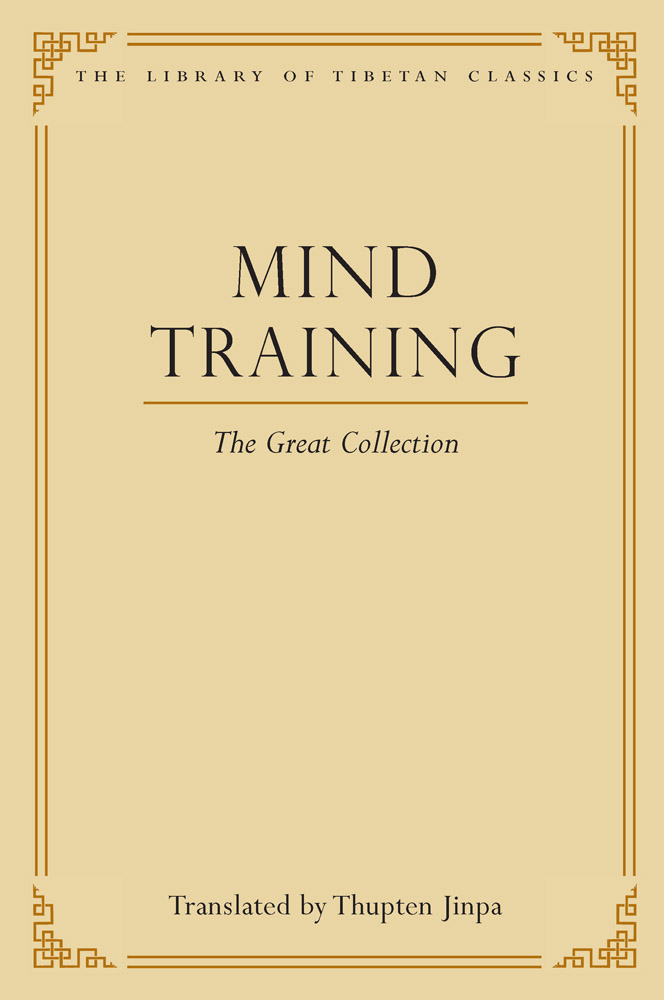
Compiled in the fifteenth century, Mind Training: The Great Collection is the earliest anthology of a special genre of Tibetan literature known as "mind training," or lojong in Tibetan. The principal focus of these texts is the systematic cultivation of such altruistic thoughts and emotions as compassion, love, forbearance, and perseverance.
The mind-training teachings are highly revered by the Tibetan people for their pragmatism and down-to-earth advice on coping with the various challenges and hardships that unavoidably characterize everyday human existence. The volume contains forty-four individual texts, including the most important works of the mind training cycle, such as Serlingpa's well-known Leveling Out All Preconceptions, Atisha's Bodhisattva’s Jewel Garland, Langri Thangpa's Eight Verses on Training the Mind, and Chekawa's Seven-Point Mind Training together with the earliest commentaries on these seminal texts. (Source Accessed Apr 30, 2025)-front.jpg)
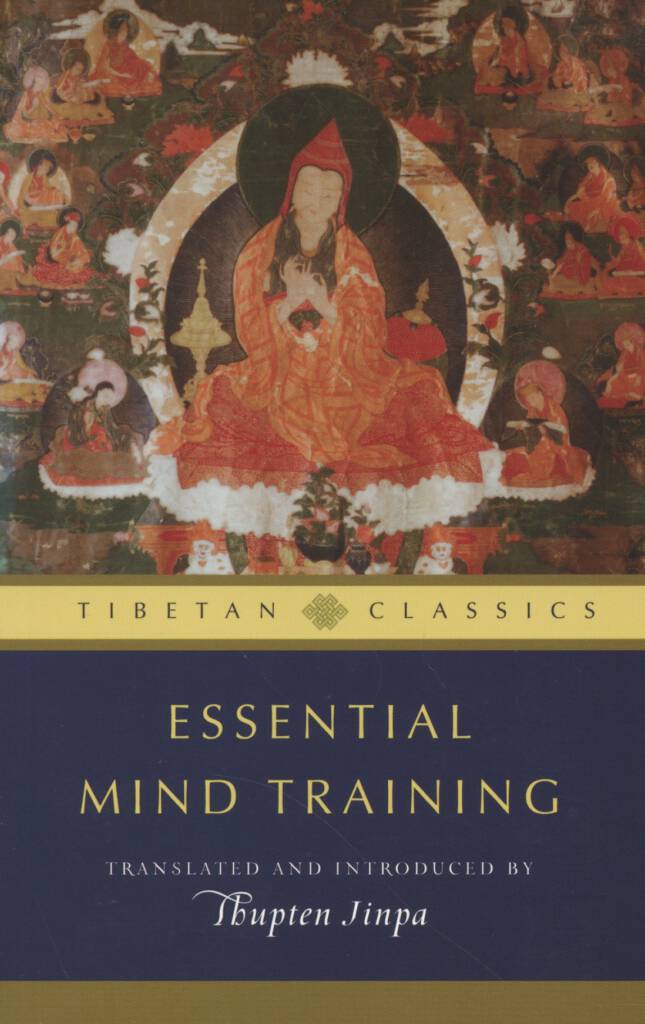
This volume contains eighteen individual works selected from Mind Training: The Great Collection, the earliest compilation of mind-training (lojong) literature. The first volume of the historic Tibetan Classics series, Essential Mind Training includes both lesser-known and renowned classics such as Eight Verses on Mind Training and The Seven-Point Mind Training. These texts offer methods for practicing the golden rule of learning to love your neighbor as yourself and are full of practical and down-to-earth advice.
The techniques explained here, by enhancing our capacity for compassion, love, and perseverance, can give us the freedom to embrace the world. (Source: Wisdom Publications)

Compiled by Shonu Gyalchok (ca. fourteenth-fifteenth centuries) and Konchok Gyaltsen (1388-1469)
Compiled in the fifteenth century, Mind Training: The Great Collection (Theg pa chen po blo sbyong rgya rtsa) represents the earliest anthology of a special genre of Tibetan spiritual literature known simply as "mind training" or lojong in Tibetan. Tibetans revere the mind training tradition for its pragmatic and down-to-earth advice, especially the teachings on "transforming adversities into favorable opportunities." This volume contains forty-three individual texts, including the most important works of the mind training cycle, such as Serlingpa's Leveling out All Conceptions, Atisa's Bodhisattva's Jewel Garland, Langri Thangpa's Eight Verses on Mind Training, and Chekawa's Seven-Point Mind Training, together with the earliest commentaries on these seminal texts as well as other independent works. These texts expound the systematic cultivation of such altruistic thoughts and emotions as compassion, love, forbearance, and perseverance. Central to this discipline are the diverse practices for combating our habitual self-centeredness and the afflictive emotions and way of being that arise from it. (Source: Mind Training: The Great Collection translated by Thupten Jinpa)