Dam chos yid bzhin gyi nor bu thar pa rin po che'i rgyan

From Bodhicitta
< Texts(Redirected from Jewel Ornament of Liberation)
Texts/Dam chos yid bzhin gyi nor bu thar pa rin po che'i rgyan

🤓 Admin Zone 🛠️ hidden to non-admins
དམ་ཆོས་ཡིད་བཞིན་གྱི་ནོར་བུ་ཐར་པ་རིན་པོ་ཆེའི་རྒྱན།
dam chos yid bzhin gyi nor bu thar pa rin po che'i rgyan
Ornament of Precious Liberation: A Wish-Fulfilling Gem of Sublime Dharma
Text


Please note that many items in our library are simply pages that represent a detailed library catalog entry and citation of someone else's work, presentation, or performance. Read our General Disclaimer for more information.

Description

One of Gampopa's (b. 1079–d. 1153) most enduring works. It was one of the first "stages of the path" (lam rim) texts to be written by a Tibetan after the genre was introduced by Atiśa through his famous composition Bodhipathapradīpa, The Lamp for the Path to Enlightenment. Sometimes called the Dakpo Targyen (དྭགས་པོ་ཐར་རྒྱན།), Tharpa Rinpoche Gyen (ཐར་པ་རིན་པོ་ཆེའི་རྒྱན།) or simply Targyen (ཐར་རྒྱན། ) for short, it is one of the core Lamrim treatises of the Kagyu school by one of the early founders of the Kagyu tradition. The text presents a graduated path to enlightenment, synthesizing the Kadam teachings of Atiśa and the Mahāmudrā teachings of Milarepa and Marpa.
Reference
Sgam po pa (སྒམ་པོ་པ་). dam chos yid bzhin gyi nor bu thar pa rin po che'i rgyan [དམ་ཆོས་ཡིད་བཞིན་གྱི་ནོར་བུ་ཐར་པ་རིན་པོ་ཆེའི་རྒྱན།]. [Ornament of Precious Liberation: A Wish-Fulfilling Gem of Sublime Dharma].

Recensions

Dam chos yid bzhin gyi nor bu thar pa rin po che'i rgyan. (Ornament of Precious Liberation: A Wish-Fulfilling Gem of Sublime Dharma). Recension information:
Tibetan Sgam po pa bsod nams rin chen. དམ་ཆོས་ཡིད་བཞིན་གྱི་ནོར་བུ་ཐར་པ་རིན་པོ་ཆེའི་རྒྱན།, (Dam chos yid bzhin gyi nor bu thar pa rin po che'i rgyan).
  • Dwags po thar rgyan. In Jinpa, Thupten, ed. Bstan pa la 'jug pa'i rim pa ston pa'i gzhung gces btus. Delhi: Bod kyi gtsug lag zhib 'jug khang, 2009: 95-295. Compiled & edited by the Institute of Tibetan Classics. Buda by BDRC Logo.jpg
  • Dam chos yid bzhin nor bu thar pa rin po che'i rgyan. Chengdu: Si khron mi rigs dpe skrun khang, 1990; reprinted in 2008. Buda by BDRC Logo.jpg
  • Dwags po thar rgyan. In 'Bri gung bka' brgyud chos mdzod chen mo, Vol. 11: 277-510. Lhasa: Unknown Publisher, 2004. BDRC note: Massive collection of texts from the Drikung Kagyu, as well as some texts from other Kagyu orders. Edited by Agon Rinpoche (19th and 20th cent.). Buda by BDRC Logo.jpg
  • Dam chos yid bzhin nor bu thar pa rin po che'i rgyan. In Dwags po'i bka' 'bum, (Khams gsum chos kyi rgyal po mnyam med sgam po pa 'gro mgon bsod nams rin chen mchog gi gsung 'bum yid bzhin nor bu). Kathmandu: Khenpo S. Tenzin and Lama T. Namgyal, 2000: 185-652. Buda by BDRC Logo.jpg
  • Dam chos yid bzhin gyi nor bu thar pa rin po che'i rgyan zhes bya ba bka' phyag chu bo gnyis kyi theg pa chen po'i lam rim gyi bshad pa. In 'Brug lugs chos mdzod chen mo. Kathmandu: Drukpa Kagyu Heritage Project, 200?: 493-868. Buda by BDRC Logo.jpg
  • Dam chos yid bzhin gyi nor bu thar pa rin po che'i rgyan. In Dkar rnying gi skyes chen du ma'i phyag rdzogs kyi gdams ngag gnad bsdus nyer mkho rin po che'i gter mdzod (Rtsibs ri'i par ma), Vol. 1: 33-479. Collected and arranged by La dwags Khrid dpon 'Khrul zhig Padma chos rgyal. Darjeeling: Kargyu Sungrab Nyamso Khang, 1978-1985. Collection of essential practice texts of the Drukpa Kagyu and Nyingma orders. Represents the syncretism taught by Tokden Shakya Shri (1853-1919). Collection was put together and carved on woodblocks by the Ladakhi scholar Tripon Pema Chogyal (1876/1878-1958/1959). Buda by BDRC Logo.jpg
  • Dam chos yid bzhin nor bu thar pa rin po che'i rgyan. Rumtek, Sikkim: Karma chos sgar, 1972. Buda by BDRC Logo.jpg
  • Dam chos yid bzhin gyi nor bu thar pa rin po che'i rgyan. No Date, No Publisher. 403 fols. Poor quality microfilm exists in ZJ22 006459-(zj000363/2-zj000566) Buda by BDRC Logo.jpg
  • Dwags po thar rgyan. Delhi: Dkon mchog lha bris pa, n.d. Block Print, 161 fols. 322 p. Buda by BDRC Logo.jpg

Citations of Related Scholarship

Interconnections
All 15Books 10Multimedia 2Tibetan Publications 3
1 Recensions
Dwags po thar rgyan (Rigpe Dorje 2022)-front.jpg
Tibetan Publications2022About this item
Sometimes called the Dakpo Targyen (དྭགས་པོ་ཐར་རྒྱན།), Thar pa rin po che'i rgyan (ཐར་པ་རིན་པོ་ཆེའི་རྒྱན།) or simply Targyen (ཐར་རྒྱན། ) for short, is one of the core Lamrim treatises of the Kagyu school by one of the early founders of the Kagyu tradition, Gampopa (b. 1079 - d. 1153), student of Milarepa in the 12th century. The text presents a graduated path to enlightenment, synthesizing Kadam teachings of Atisha and Mahamudra teachings of Milarepa and Marpa.
4 Full translations
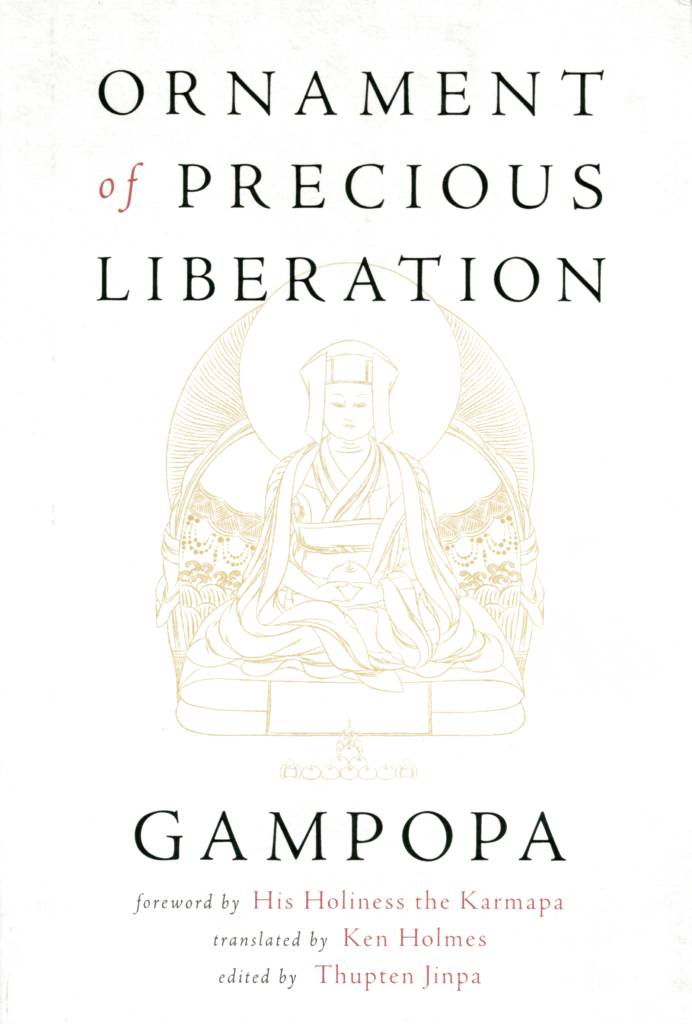
Ornament of Precious Liberation (Holmes)-front.jpg
Books2017About this item
Ornament of Precious Liberation is a spiritual and literary treasure of Tibetan Buddhism and of the Kagyü lineage in particular. Laying out step by step the path to buddhahood that is open to us all, to read Gompopa's text is like receiving the teachings directly from the master himself.

      It is a quintessential guide to enlightenment that students will return to again and again for its insights into living an awakened life. (Source: Wisdom Publications)

This publication is an updated version of the translation found in Stages of the Buddha's Teachings: Three Key Texts.
Stages of the Buddha’s Teachings-front.jpg
Books2015About this item
The "Stages of the Teachings," or tenrim, genre of Tibetan spiritual writing expounds the Mahayana Buddhist teachings as a systematic progression, from the practices required at the start of the bodhisattva's career to the final perfect awakening of buddhahood. The texts in the present volume each exerted seminal influence in the Tibetan Buddhist tradition. The first text, The Blue Compendium, presents the instructions of the Kadam teacher Potowa (1027/31-1105) as recorded by his student Dölpa (1059-1131). This verse work is followed by Gampopa's (1079-1153) revered Ornament of Precious Liberation, which, with its extensive quotations from the Indian scriptures, remains the most authoritative text on the path to enlightenment within the Kagyü school. The final selection is Clarifying the Sage's Intent, a masterwork by the preeminent sage of the Sakya tradition, Sakya Pandita (1182-1251). (Source: Wisdom Publications) Another version of Holmes's translation of Gampopa's Ornament of Precious Liberation is found in Ornament of Precious Liberation (Holmes).
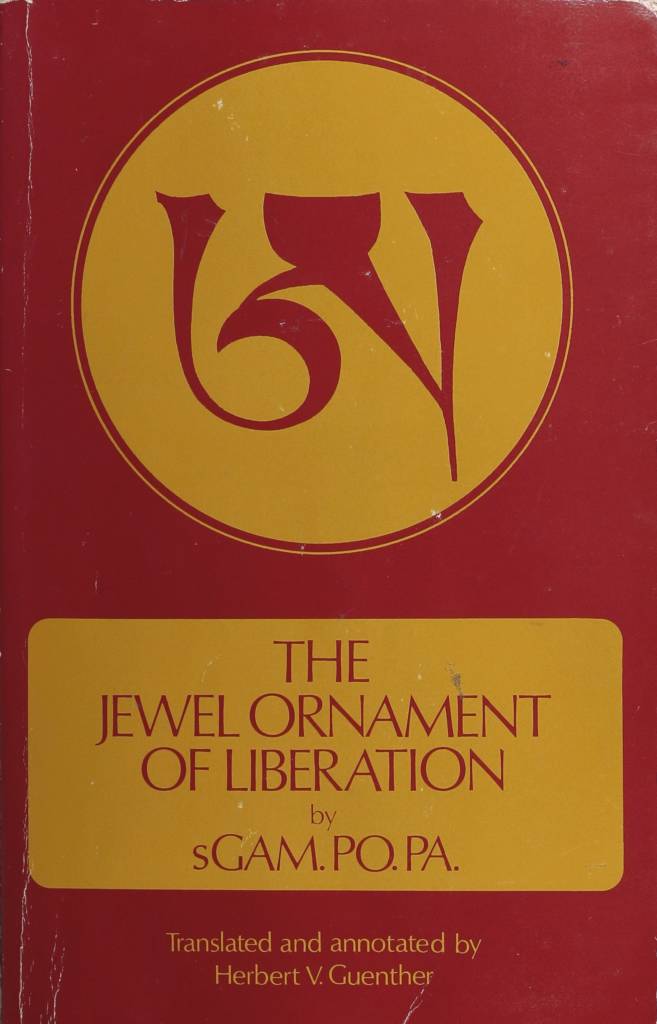
The Jewel Ornament of Liberation (Guenther)-front.jpg
Books1986About this item
In this skillful translation, Herbert Guenther offers English-speaking readers sGam.po.pa's comprehensive and authoritative exposition of the stages of the Buddhist path. A masterly survey of Tibetan Buddhism, The Jewel Ornament of Liberation explains how an enlightened attitude is strengthened by practicing the six perfections (generosity, discipline, patience, exertion, meditation, and knowledge) and offers a concise presentation of Buddhism as a living experience.

As Chögyam Trungpa writes in his foreword: "It is in the flow of karma that this book materialized in 1959 on the very eve of the destruction of the spiritual land of Tibet. Professor Guenther was instrumental in making available the only commentary and guide in English to the bodhisattva tradition of Tibet, Japan, and China. The book remains the classic text of all Buddhists."

sGam.po.pa, who lived in the eleventh and twelfth centuries, was the organizer of the Kagyü order of Tibetan Buddhism.

Herbert V. Guenther is Professor Emeritus in the Department of Far Eastern Studies at the University of Saskatchewan.

(Source: back cover)
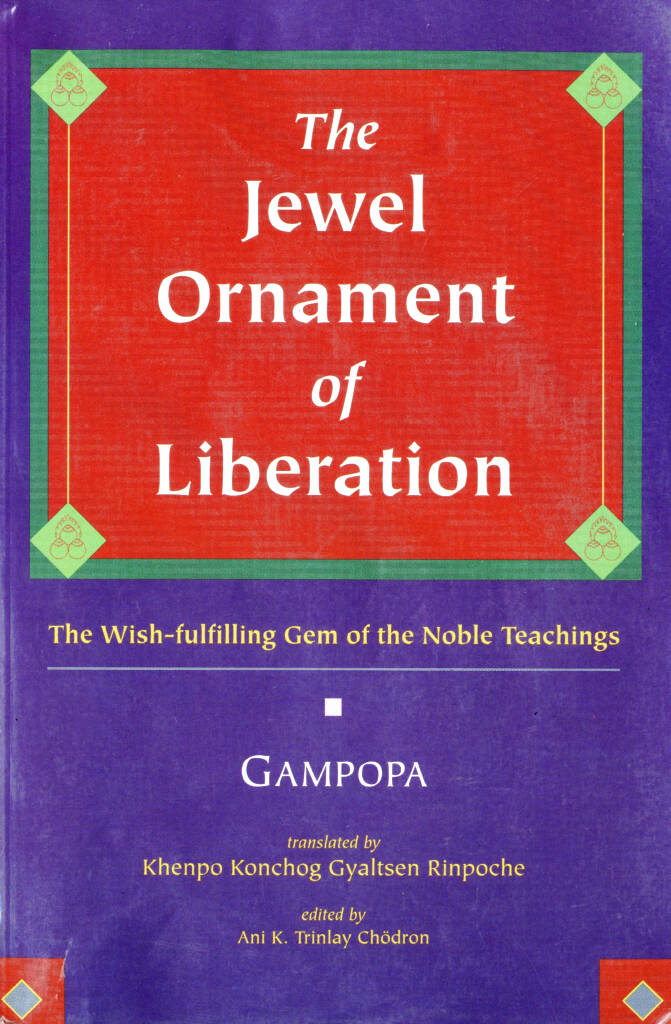
The Jewel Ornament of Liberation (Konchog Gyaltsen)-front.jpg
Books1998About this item
The Jewel Ornament of Liberation is a masterwork of Tibetan Buddhism. For more than eight centuries, this text has provided a complete foundation for Buddhist study and practice–covering the initial entry into the path and continuing through to the achievement of Buddhahood. It includes teachings on Buddha-nature, finding a spiritual master, impermanence, karma, the cultivation of bodhicitta, the development of the six perfections, the ten Bodhisattva bhumis, Buddhahood, and the activities of a buddha. (Source: back cover)
1 Teachings
Sangye Nyenpa.jpg
MultimediaAbout this item
Sangye Nyenpa Rinpoche talks about LOVING KINDNESS AND COMPASSION cont., BODHICITTA and REFUGE in this video .

Motivation ! (E 00:24 )
LOVING KINDNESS AND COMPASSION cont. (T 01:03 E 01:46 )
3 Types of Compassion (T 02:47 E 05:27 )
Objects of Compassion: All Sentient beings ... (T 10:04 E 11:50 )
BODHICITTA. 7 Points of Atisha. (T 14:31 E 17:03 )
... 1. All Beings have been our Mothers (E 18:02 )
... 2. Immeasureably kind to us (E 18:21 )
... 3. Time has come to repay (E 18:31 )
... 4. Loving Kindness towards These (E 18:57 )
... 5. Giving Rise to Compassion (E 19:14 )
... 6. Immaculate Intention ( free from self-regard) (E 19:27 )
... 7. True Bodhicitta (E 21:11 )
Gampopa's 12 Points of Bodhicitta (T 22:06 E 22:28 )
REFUGE . 9 Categories. (T 23:37 E 24:36 )
... Refuge to Buddha - Dharma - Sangha (T 26:55 E 30:16 )
... Time Aspects, (T 34:42 E 38:35 )

... Benefits ... Protection (E 42:17 )
1 Works containing teachings
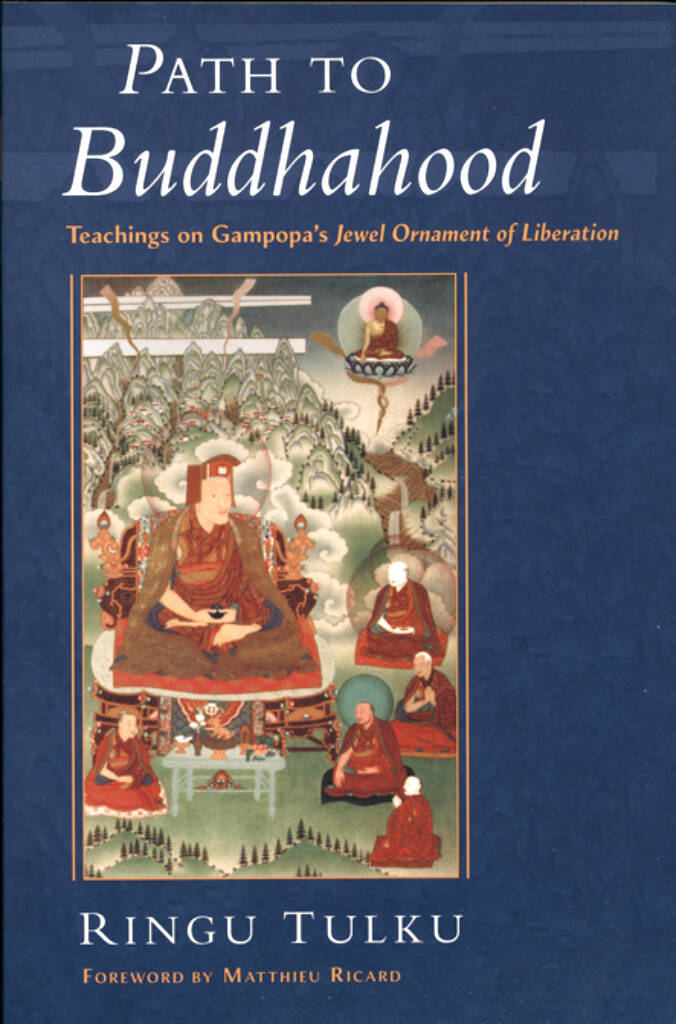
Path to Buddhahood-front.jpg
Books2003About this item
The Jewel Ornament of Liberation is regarded by all Tibetan Buddhist schools as one of the most inspiring and comprehensive works of the tradition. Written by Gampopa (born 1079 CE), the main spiritual son of the great hermit Milarepa, this important text lays out the stages of the Buddhist path and explains how an enlightened attitude is strengthened by practicing the six perfections of generosity, discipline, patience, exertion, meditation, and knowledge. (Source: Shambhala Publications)
8 A topic of
Bstan pa la 'jug pa'i rim pa ston pa'i gzhung-front.jpg
Tibetan Publications2009About this item
glang ri ba thub bstan sbyin pa. Bstan pa la 'jug pa'i rim pa ston pa'i gzhung. bod kyi gtsug lag gces btus, 10. bod kyi gtsug lag zhib dpyod khang, 2009.

གླང་རི་བ་ཐུབ་བསྟན་སྦྱིན་པ། བསྟན་པ་ལ་འཇུག་པའི་རིམ་པ་སྟོན་པའི་གཞུང་། བོད་ཀྱི་གཙུག་ལག་གཅེས་བཏུས། ༡༠ བོད་ཀྱི་གཙུག་ལག་ཞིབ་དཔྱོད་ཁང་།

Thupten Jinpa. Stages of the Doctrine: 3 Works. Tibetan Classics Series, 10. New Delhi: Institute of Tibetan Classics, 2009.
Dwags po thar rgyan (Rigpe Dorje 2022)-front.jpg
Tibetan Publications2022About this item
Sometimes called the Dakpo Targyen (དྭགས་པོ་ཐར་རྒྱན།), Thar pa rin po che'i rgyan (ཐར་པ་རིན་པོ་ཆེའི་རྒྱན།) or simply Targyen (ཐར་རྒྱན། ) for short, is one of the core Lamrim treatises of the Kagyu school by one of the early founders of the Kagyu tradition, Gampopa (b. 1079 - d. 1153), student of Milarepa in the 12th century. The text presents a graduated path to enlightenment, synthesizing Kadam teachings of Atisha and Mahamudra teachings of Milarepa and Marpa.
Sangye Nyenpa.jpg
MultimediaAbout this item
Sangye Nyenpa Rinpoche talks about LOVING KINDNESS AND COMPASSION cont., BODHICITTA and REFUGE in this video .

Motivation ! (E 00:24 )
LOVING KINDNESS AND COMPASSION cont. (T 01:03 E 01:46 )
3 Types of Compassion (T 02:47 E 05:27 )
Objects of Compassion: All Sentient beings ... (T 10:04 E 11:50 )
BODHICITTA. 7 Points of Atisha. (T 14:31 E 17:03 )
... 1. All Beings have been our Mothers (E 18:02 )
... 2. Immeasureably kind to us (E 18:21 )
... 3. Time has come to repay (E 18:31 )
... 4. Loving Kindness towards These (E 18:57 )
... 5. Giving Rise to Compassion (E 19:14 )
... 6. Immaculate Intention ( free from self-regard) (E 19:27 )
... 7. True Bodhicitta (E 21:11 )
Gampopa's 12 Points of Bodhicitta (T 22:06 E 22:28 )
REFUGE . 9 Categories. (T 23:37 E 24:36 )
... Refuge to Buddha - Dharma - Sangha (T 26:55 E 30:16 )
... Time Aspects, (T 34:42 E 38:35 )

... Benefits ... Protection (E 42:17 )
Ornament of Precious Liberation (Holmes)-front.jpg
Books2017About this item
Ornament of Precious Liberation is a spiritual and literary treasure of Tibetan Buddhism and of the Kagyü lineage in particular. Laying out step by step the path to buddhahood that is open to us all, to read Gompopa's text is like receiving the teachings directly from the master himself.

      It is a quintessential guide to enlightenment that students will return to again and again for its insights into living an awakened life. (Source: Wisdom Publications)

This publication is an updated version of the translation found in Stages of the Buddha's Teachings: Three Key Texts.
Path to Buddhahood-front.jpg
Books2003About this item
The Jewel Ornament of Liberation is regarded by all Tibetan Buddhist schools as one of the most inspiring and comprehensive works of the tradition. Written by Gampopa (born 1079 CE), the main spiritual son of the great hermit Milarepa, this important text lays out the stages of the Buddhist path and explains how an enlightened attitude is strengthened by practicing the six perfections of generosity, discipline, patience, exertion, meditation, and knowledge. (Source: Shambhala Publications)
Stages of the Buddha’s Teachings-front.jpg
Books2015About this item
The "Stages of the Teachings," or tenrim, genre of Tibetan spiritual writing expounds the Mahayana Buddhist teachings as a systematic progression, from the practices required at the start of the bodhisattva's career to the final perfect awakening of buddhahood. The texts in the present volume each exerted seminal influence in the Tibetan Buddhist tradition. The first text, The Blue Compendium, presents the instructions of the Kadam teacher Potowa (1027/31-1105) as recorded by his student Dölpa (1059-1131). This verse work is followed by Gampopa's (1079-1153) revered Ornament of Precious Liberation, which, with its extensive quotations from the Indian scriptures, remains the most authoritative text on the path to enlightenment within the Kagyü school. The final selection is Clarifying the Sage's Intent, a masterwork by the preeminent sage of the Sakya tradition, Sakya Pandita (1182-1251). (Source: Wisdom Publications) Another version of Holmes's translation of Gampopa's Ornament of Precious Liberation is found in Ornament of Precious Liberation (Holmes).
The Jewel Ornament of Liberation (Guenther)-front.jpg
Books1986About this item
In this skillful translation, Herbert Guenther offers English-speaking readers sGam.po.pa's comprehensive and authoritative exposition of the stages of the Buddhist path. A masterly survey of Tibetan Buddhism, The Jewel Ornament of Liberation explains how an enlightened attitude is strengthened by practicing the six perfections (generosity, discipline, patience, exertion, meditation, and knowledge) and offers a concise presentation of Buddhism as a living experience.

As Chögyam Trungpa writes in his foreword: "It is in the flow of karma that this book materialized in 1959 on the very eve of the destruction of the spiritual land of Tibet. Professor Guenther was instrumental in making available the only commentary and guide in English to the bodhisattva tradition of Tibet, Japan, and China. The book remains the classic text of all Buddhists."

sGam.po.pa, who lived in the eleventh and twelfth centuries, was the organizer of the Kagyü order of Tibetan Buddhism.

Herbert V. Guenther is Professor Emeritus in the Department of Far Eastern Studies at the University of Saskatchewan.

(Source: back cover)

The Jewel Ornament of Liberation (Konchog Gyaltsen)-front.jpg
Books1998About this item
The Jewel Ornament of Liberation is a masterwork of Tibetan Buddhism. For more than eight centuries, this text has provided a complete foundation for Buddhist study and practice–covering the initial entry into the path and continuing through to the achievement of Buddhahood. It includes teachings on Buddha-nature, finding a spiritual master, impermanence, karma, the cultivation of bodhicitta, the development of the six perfections, the ten Bodhisattva bhumis, Buddhahood, and the activities of a buddha. (Source: back cover)