The Jewel Ornament of Liberation (Konchog Gyaltsen)
From Bodhicitta
< BooksBooks/The Jewel Ornament of Liberation (Konchog Gyaltsen)
| 🤓 Admin Zone 🛠️ hidden to non-admins | |
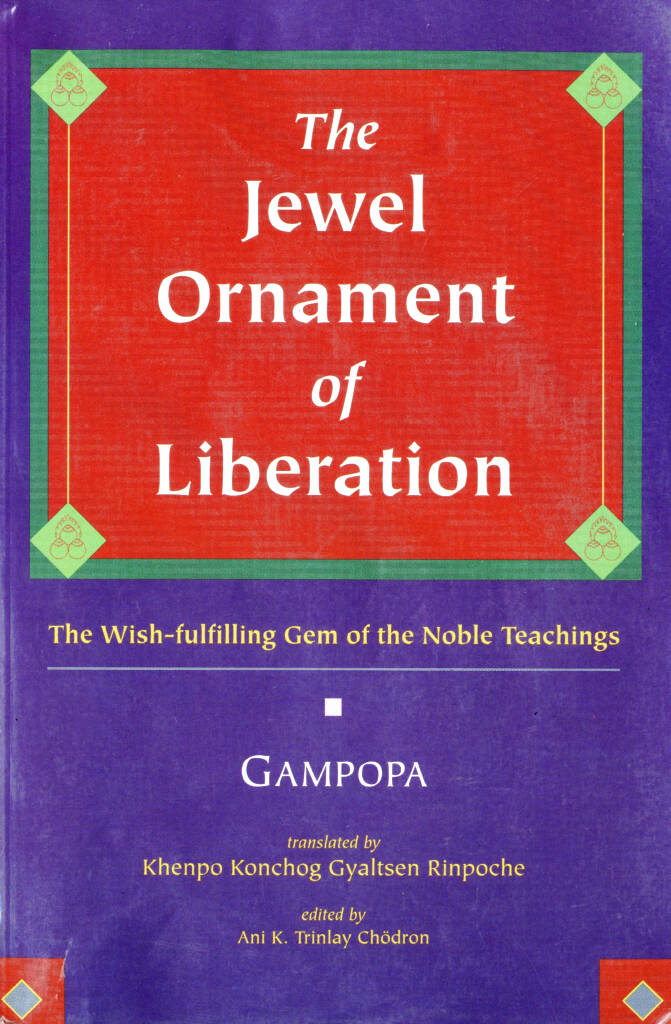
The Jewel Ornament of Liberation: The Wish-fulfilling Gem of the Noble Teachings
Book
Please note that many items in our library are simply pages that represent a detailed library catalog entry and citation of someone else's work, presentation, or performance. Read our General Disclaimer for more information.
-front.jpg)
Description
The Jewel Ornament of Liberation is a masterwork of Tibetan Buddhism. For more than eight centuries, this text has provided a complete foundation for Buddhist study and practice–covering the initial entry into the path and continuing through to the achievement of Buddhahood. It includes teachings on Buddha-nature, finding a spiritual master, impermanence, karma, the cultivation of bodhicitta, the development of the six perfections, the ten Bodhisattva bhumis, Buddhahood, and the activities of a buddha.
(Source: back cover)
Citation
Gyaltsen, Khenpo Könchog, trans. The Jewel Ornament of Liberation: The Wish-fulfilling Gem of the Noble Teachings. By Gampopa (sgam po pa). Edited by Ani K. Chodron. Ithaca, NY: Snow Lion Publications, 1998. https://www.amnyitrulchung.org/teachings/materials/pdf/Gampopa%20-%20Jewel%20Ornament%20of%20Liberation%20-%20Complete.pdf.
Table of contents
- Foreword by His Holiness the 14th Dalai Lama13
- Acknowledgments14
- Translator's Introduction15
- Homage44
- Introduction45
- Part 1: The Primary Cause47
- Chapter 1: Buddha-Nature49
- I. Disconnected Family50
- II. Indefinite Family51
- III. Hearer Family51
- IV. Solitary Realizer Family51
- V. Mahayana Family53
- A. Classification53
- B. Definition53
- C. Synonyms53
- D. Superiority54
- E. Causal Characteristics54
- F. Marks54
- Part 2: The Working Basis 57
- Chapter 2: The Precious Human Life59
- I. Leisure59
- II. Endowment60
- III. Trusting Faith65
- IV. Longing Faith65
- V. Clear Faith65
- Part 3: The Contributory Cause 67
- Chapter 3: The Spiritual Master 69
- I. Reason69
- II. Classification71
- III. Characteristics of Each Classification72
- IV. Method73
- V. Benefits75
- Part 4: The Method 77
- Introduction to Part 479
- Antidote to Attachment to this Life81
- Chapter 4: Impermanence83
- I. Classification83
- II. Method of Meditation84
- III. Beneficial Effects of Meditation91
- Antidote to Attachment to Samsara's Pleasure93
- Chapter 5: The Suffering of Samsara95
- I. All-Pervasive Suffering95
- II. The Suffering of Change96
- III. The Suffering of Suffering97
- A. Hell Realm97
- B. Hungry Ghost Realm102
- C. Animal Realm102
- D. Human Realms103
- E. Demi-God Realm108
- F. God Realm108
- Chapter 6: Karma and its Result111
- I. Classification112
- II. Primary Characteristics of Each Classification112
- A. Non-Meritorious Karma and its Result112
- 1. Taking Life112
- 2. Stealing113
- 3. Sexual Misconduct113
- 4. Lying114
- 5. Divisive Speech114
- 6. Harsh Words114
- 7. Idle Talk115
- 8. Covetousness115
- 9. Harmful Thought116
- 10. Wrong Views116
- B. Meritorious Karma and Result117
- C. Karma and Result of Unshakable Meditative Concentration118
- A. Non-Meritorious Karma and its Result112
- III. Ascription119
- IV. Strict Result120
- V. Increase from the Small120
- VI. Inevitability121
- Antidote to Attachment to the Pleasure of Peace123
- Chapter 7: Loving-Kindness and Compassion125
- I. The Practice of Loving-Kindness125
- A. Classification126
- B. Object126
- C. Identifying Characteristic126
- D. Method of Practice126
- E. Measure of the Practice129
- F. Qualities of the Practice129
- II. The Practice of Compassion129
- A. Classification130
- B. Object130
- C. Identifying Characteristic130
- D. Method of Practice130
- E. Measure of the Practice131
- F. Qualities of the Practice131
- I. The Practice of Loving-Kindness125
- Antidote to Not Knowing the Method of Practice for Achieving Buddhahood133
- Introduction to the Antidote to Not Knowing the Method of Practice135
- Chapter 8: Refuge and Precepts137
- I. Foundation137
- A. Mahayana Family138
- B. Taking Refuge in the Three Jewels138
- 1. Classification139
- 2. Working Basis139
- 3. Objects139
- 4. Time141
- 5. Motivation141
- 6. Ceremony141
- 7. Activities143
- 8. Training143
- 9. Beneficial Effects143
- C. Pratimoksa Precepts 144
- I. Foundation137
- Chapter 9: Cultivation of Bodhicitta147
- II. Essence147
- III. Classification147
- IV. Objectives151
- V. Cause151
- VI. From Whom You Receive It152
- VII. Method (Ceremony)153
- VIII. Beneficial Effects168
- IX. Disadvantages of Losing It171
- X. The Cause of Losing It171
- XI. The Method of Repairing172
- Chapter 10: Training in Aspiration Bodhicitta173
- XII. Training173
- A. Training in Aspiration Bodhicitta173
- 1. Not Forsaking Sentient Beings from One's Heart173
- 2. Recollecting the Beneficial Effects of Bodhicitta174
- 3. Gathering the Two Accumulations175
- 4. Practicing the Enlightened Mind175
- 5. Rejection of the Four Unwholesome
- Deeds and Acceptance of the Four Wholesome Deeds176
- A. Training in Aspiration Bodhicitta173
- XII. Training173
- Chapter 11: Training in Action Bodhicitta179
- B. Training in Action Bodhicitta179
- 1. Definite Number180
- 2. Definite Order180
- 3. Characteristics181
- 4. Definition181
- 5. Division181
- 6. Grouping182
- B. Training in Action Bodhicitta179
- Chapter 12: The Perfection of Generosity183
- I. Reflection on the Faults and Virtues183
- II. Definition185
- III. Classification185
- IV. Characteristics of Each Classification185
- V. Increase191
- VI. Perfection191
- VII. Result192
- Chapter 13: The Perfection of Moral Ethics195
- I. Reflection on the Faults and Virtues195
- II. Definition197
- III. Classification197
- IV. Characteristics of Each Classification197
- V. Increase202
- VI. Perfection202
- VII. Result202
- Chapter 14: The Perfection of Patience205
- I. Reflection on the Faults and Virtues205
- II. Definition207
- III. Classification207
- IV. Characteristics of Each Classification207
- V. Increase211
- VI. Perfection211
- VII. Result211
- Chapter 15: The Perfection of Perseverance213
- I. Reflection on the Faults and Virtues213
- II. Definition214
- III. Classification216
- IV. Characteristics of Each Classification216
- V. Increase218
- VI. Perfection218
- VII. Result218
- Chapter 16: The Perfection of Meditative Concentration219
- I. Reflection on the Faults and Virtues219
- II. Definition220
- III. Classification229
- IV. Characteristics of Each Classification229
- V. Increase230
- VI. Perfection230
- VII. Result231
- Chapter 17: The Perfection of Wisdom Awareness233
- I. Reflection on the Faults and Virtues233
- II. Definition235
- III. Classification235
- IV. Characteristics of Each Classification235
- V. What is to be Known236
- VI. What is to be Practiced247
- VII. Result255
- Chapter 18: The Aspects of the Five Paths257
- I. Path of Accumulation257
- II. Path of Application258
- III. Path of Insight259
- IV. Path of Meditation259
- V. Path of Perfection260
- Chapter 19: The Ten Bodhisattva Bhumis263
- I. Definition264
- II. Significance of the Bhumis264
- III. The Reason Their Classification Is Tenfold264
- A. First Bhumi265
- B. Second Bhumi267
- C. Third Bhumi268
- D. Fourth Bhumi269
- E. Fifth Bhumi270
- F. Sixth Bhumi271
- G. Seventh Bhumi272
- H. Eighth Bhumi273
- I. Ninth Bhumi274
- J. Tenth Bhumi275
- K. Buddhahood277
- Part 5: The Result279
- Chapter 20: Perfect Buddhahood281
- I. Nature281
- II. Significance of the Name286
- III. Classification287
- IV. Definition287
- V. Reason There Are Definitely Three Kayas288
- VI. Characteristics of the Three Kayas288
- VII. Special Traits292
- Part 6: The Activities 295
- Chapter 21: Activities of the Buddha297
- I. Activities of the Body297
- II. Activities of Speech298
- III. Activities of Mind299
- Appendices 303
- Appendix A: Dharma Lord Gampopa 305
- Section 1: A Brief Account of Dharma Lord Gampopa's Life305
- Section 2: Miraculous Manifestations323
- Section 3: Gampopa's Method of Teaching325
- Appendix B: Stories Referred to in the Text333
- Sudhana335
- Sadaprarudita340
- King Anala348
- Maudgalyayana351
- Sangharakshita357
- Nawa Chewari362
- Old Born366
- King Krika's Daughters368
- Mahadatta371
- King Bala Maitreya379
- Angulimala381
- Udayana385
- Nanda388
- Ajatashatru393
- Appendix C: Outline of the Text397
- Appendix D: A Brief Biography of the Translator413
- Titles of Works Quoted417
- Glossary427
- Notes437
- Bibliography459
- Index467
Interconnections
1 Full translation of

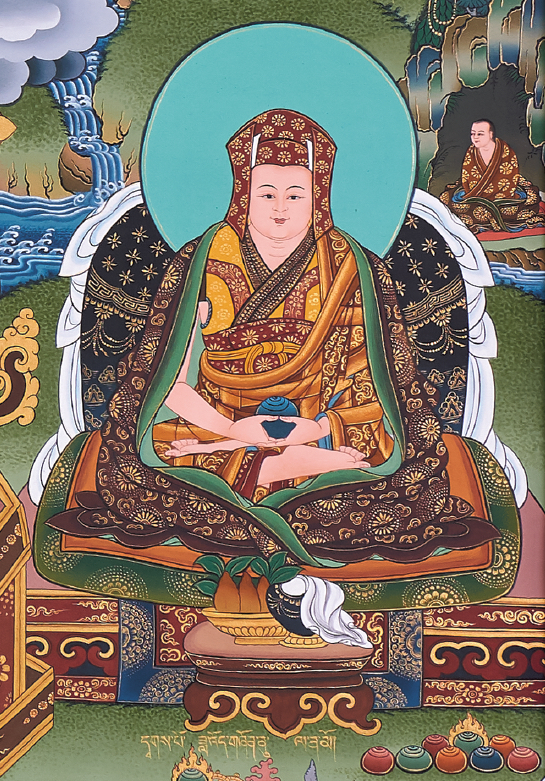
One of Gampopa's (b. 1079–d. 1153) most enduring works. It was one of the first "stages of the path" (lam rim) texts to be written by a Tibetan after the genre was introduced by Atiśa through his famous composition Bodhipathapradīpa, The Lamp for the Path to Enlightenment. Sometimes called the Dakpo Targyen (དྭགས་པོ་ཐར་རྒྱན།), Tharpa Rinpoche Gyen (ཐར་པ་རིན་པོ་ཆེའི་རྒྱན།) or simply Targyen (ཐར་རྒྱན། ) for short, it is one of the core Lamrim treatises of the Kagyu school by one of the early founders of the Kagyu tradition. The text presents a graduated path to enlightenment, synthesizing the Kadam teachings of Atiśa and the Mahāmudrā teachings of Milarepa and Marpa.