Stages of the Buddha’s Teachings
From Bodhicitta
| 🤓 Admin Zone 🛠️ hidden to non-admins | |
Stages of the Buddha’s Teachings: Three Key Texts
Book
Please note that many items in our library are simply pages that represent a detailed library catalog entry and citation of someone else's work, presentation, or performance. Read our General Disclaimer for more information. You can find more information about this item on the publisher website.

Description
The "Stages of the Teachings," or tenrim, genre of Tibetan spiritual writing expounds the Mahayana Buddhist teachings as a systematic progression, from the practices required at the start of the bodhisattva's career to the final perfect awakening of buddhahood. The texts in the present volume each exerted seminal influence in the Tibetan Buddhist tradition. The first text, The Blue Compendium, presents the instructions of the Kadam teacher Potowa (1027/31-1105) as recorded by his student Dölpa (1059-1131). This verse work is followed by Gampopa's (1079-1153) revered Ornament of Precious Liberation, which, with its extensive quotations from the Indian scriptures, remains the most authoritative text on the path to enlightenment within the Kagyü school. The final selection is Clarifying the Sage's Intent, a masterwork by the preeminent sage of the Sakya tradition, Sakya Pandita (1182-1251). (Source: Wisdom Publications)
Another version of Holmes's translation of Gampopa's Ornament of Precious Liberation is found in Ornament of Precious Liberation (Holmes).
Citation
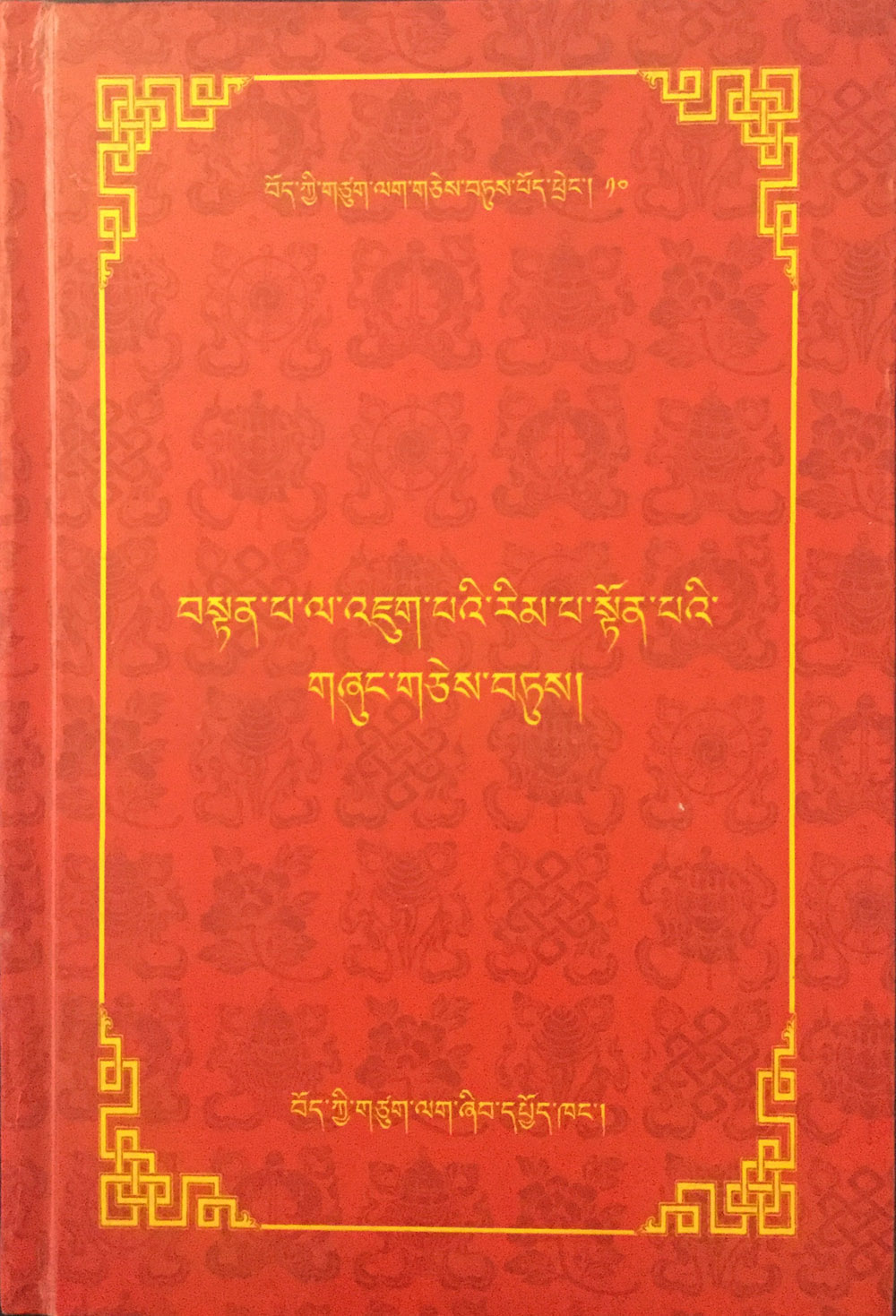
Roesler, Ulrike, Ken Holmes, and David P. Jackson, trans. Stages of the Buddha's Teachings: Three Key Texts. By Dölpa (Dol pa shes rab rgya mtsho), Gampopa (Sgam po pa), and Sakya Paṇḍita (Sa skya paN+Di ta). Library of Tibetan Classics 10. Somerville, MA: Wisdom Publications, 2015.
Publisher Link
Table of contents
- General Editor's Prefacexiii
- Translators’ Introductioni
- Acknowledgments29
- Technical Note31
- Abbreviations35
- PART I: THE BLUE COMPENDIUM
- Dölpa Sherap Gyatso (1059-1131)
- Translated by Ulrike Roesler
- 1. Preliminaries39
- 2. The Training for Individuals at the Initial Level51
- 3. The Training for Individuals at the Middle Level63
- 4. The Training for Excellent Individuals67
- 5. The Practice of the Perfections73
- 6. Wisdom85
- 7. Enhancing the Conditions for Practice97
- PART II: ORNAMENT OF PRECIOUS LIBERATION
- Gampopa (1079-1153)
- Translated by Ken Holmes and edited by Thupten Jinpa
- Author’s Preface121
- I. The Prime Cause
- 1. Buddha Nature123
- II. The Basis
- 2. A Precious Human Existence131
- III. The Condition
- 3. Relying on the Spiritual Teacher141
- IV. The Means: The Dharma Master’s Instruction
- 4. The Impermanence of Conditioned Existence149
- 5. The Suffering of Samsara161
- 6. Karma and Its Effects177
- 7. Loving Kindness and Compassion189
- 8. Taking Refuge199
- 9. The Proper Adoption of Bodhicitta211
- 10. Precepts for Generating Aspiring Bodhicitta243
- 11. Presentation of the Six Perfections249
- 12. The Perfection of Generosity253
- 13. The Perfection of Moral Discipline265
- 14. The Perfection of Patience277
- 15. The Perfection of Diligence285
- 16. The Perfection of Meditative Concentration293
- 17. The Perfection of Wisdom309
- 18. The Presentation of the [Five] Paths339
- 19. The Presentation of the Levels343
- V. The Result
- 20. The Bodies of Perfect Buddhahood363
- VI. Buddha Activity
- 21. Enlightened Activities of the Buddhas377
- PART III: CLARIFYING THE SAGE'S INTENT
- Sakya Paṇḍita Kunga Gyaltsen (1182-1251)
- Translated by *David P. Jackson
- 1. Spiritual Potential385
- 2. Taking Refuge389
- 3. Generating the Resolve to Attain Awakening401
- 4. The Perfection of Generosity415
- 5. The Perfection of Moral Discipline427
- 6. The Perfection of Patience437
- 7. The Perfection of Diligence447
- 8. The Perfection of Meditative Concentration457
- 9. The Perfection of Wisdom485
- 10. The Four Means of Attraction529
- 11. The Paths and Levels537
- 12. The Ultimate Fruit571
- The Conclusion of the Treatise601
- Appendix 1. Table of Tibetan Transliteration603
- Appendix 2. Outline of Clarifying the Sage’s Intent613
- Notes631
- Glossary717
- Bibliography729
- Index752
- About the Contributors793
Interconnections
4 Full translation of

One of Gampopa's (b. 1079–d. 1153) most enduring works. It was one of the first "stages of the path" (lam rim) texts to be written by a Tibetan after the genre was introduced by Atiśa through his famous composition Bodhipathapradīpa, The Lamp for the Path to Enlightenment. Sometimes called the Dakpo Targyen (དྭགས་པོ་ཐར་རྒྱན།), Tharpa Rinpoche Gyen (ཐར་པ་རིན་པོ་ཆེའི་རྒྱན།) or simply Targyen (ཐར་རྒྱན། ) for short, it is one of the core Lamrim treatises of the Kagyu school by one of the early founders of the Kagyu tradition. The text presents a graduated path to enlightenment, synthesizing the Kadam teachings of Atiśa and the Mahāmudrā teachings of Milarepa and Marpa.

Clarifying the Sage's Intent (Thub pa’i dgongs pa rab tu gsal ba) is one of the major doctrinal treatises of Sakya Pandita Kunga Gyaltsen (1182-1251). Among all the writings of Sakya Pandita (or Sapan, for short), it formulates most completely the theory and practice of the Mahāyāna. It was meant to gradually lead and inspire the student to practice the bodhisattva’s path, and its perennial importance within the Sakya tradition is underlined by the fact that it is the required text for the first teaching of each new Sakya Trizin after his enthronement. (Adapted from Stages of the Buddha's Teachings: Three Key Texts, 16)

The Blue Compendium contains lamrim instructions from the lineage of Dromtönpa and Potowa. These early teachers did not commit their instructions to writing. However, a tradition of written lamrim and tenrim as well as lojong ("mind training") works emerged within the next two generations of Kadampa teachers. This development went hand in hand with a transition from individual instructions for selected disciples (Ikog chos) to public teachings for a wider audience (tshogs chos). It can therefore be viewed as an attempt to preserve the teaching in an authentic form while at the same time making it accessible to a larger public. It is in this context that the Blue Compendium was composed, not long after its sister text, the Dharma Exemplified: A Heap of Jewels (Dpe chos rin chen spungs pa), which stems from the same generation and teaching lineage. Tradition regards these two works as the seminal treatises of their genre, and they have been described as complementing each other, containing the meaning and the examples, respectively, of the lamrim teachings. Both were composed in the early twelfth century by disciples of Potowa following his death in order to preserve his teachings. (Stages of the Buddha's Teachings: Three Key Texts, translator's introduction, 6)

glang ri ba thub bstan sbyin pa. Bstan pa la 'jug pa'i rim pa ston pa'i gzhung. bod kyi gtsug lag gces btus, 10. bod kyi gtsug lag zhib dpyod khang, 2009.
གླང་རི་བ་ཐུབ་བསྟན་སྦྱིན་པ། བསྟན་པ་ལ་འཇུག་པའི་རིམ་པ་སྟོན་པའི་གཞུང་། བོད་ཀྱི་གཙུག་ལག་གཅེས་བཏུས། ༡༠ བོད་ཀྱི་གཙུག་ལག་ཞིབ་དཔྱོད་ཁང་།
Thupten Jinpa. Stages of the Doctrine: 3 Works. Tibetan Classics Series, 10. New Delhi: Institute of Tibetan Classics, 2009.