| 🤓 Admin Zone 🛠️ hidden to non-admins | |
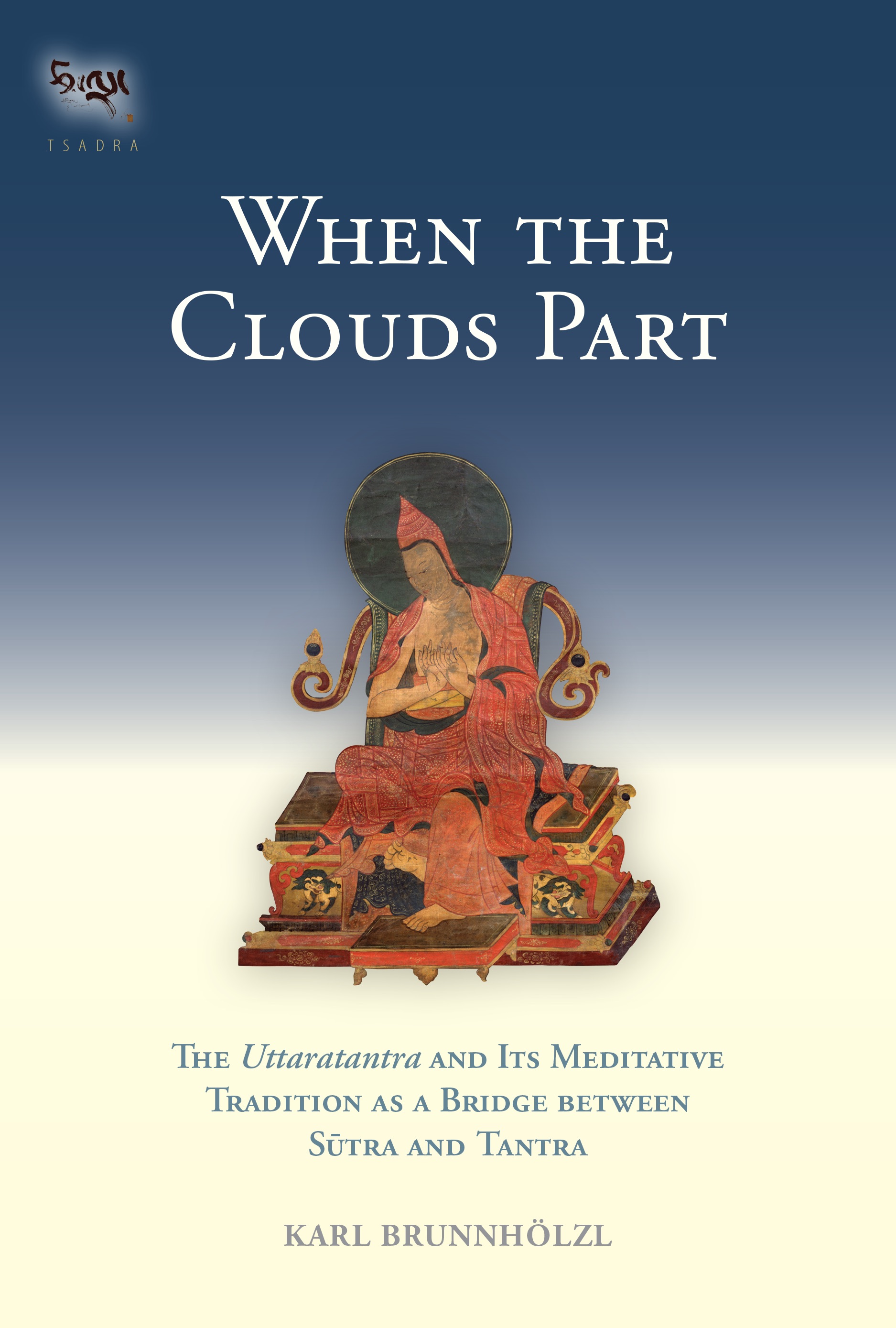
When the Clouds Part: The Uttaratantra and Its Meditative Tradition as a Bridge between Sūtra and Tantra
Book
Please note that many items in our library are simply pages that represent a detailed library catalog entry and citation of someone else's work, presentation, or performance. Read our General Disclaimer for more information. You can find more information about this item on the publisher website.

Description
"Buddha nature" (tathāgatagarbha) is the innate potential in all living beings to become a fully awakened buddha. This book discusses a wide range of topics connected with the notion of buddha nature as presented in Indo-Tibetan Buddhism and includes an overview of the sūtra sources of the tathāgatagarbha teachings and the different ways of explaining the meaning of this term. It includes new translations of the Maitreya treatise Mahāyānottaratantra (Ratnagotravibhāga), the primary Indian text on the subject, its Indian commentaries, and two (hitherto untranslated) commentaries from the Tibetan Kagyü tradition. Most important, the translator’s introduction investigates in detail the meditative tradition of using the Mahāyānottaratantra as a basis for Mahāmudrā instructions and the Shentong approach. This is supplemented by translations of a number of short Tibetan meditation manuals from the Kadampa, Kagyü, and Jonang schools that use the Mahāyānottaratantra as a work to contemplate and realize one’s own buddha nature. (Source: Shambhala Publications)
Citation
Brunnhölzl, Karl. When the Clouds Part: The Uttaratantra and Its Meditative Tradition as a Bridge between Sūtra and Tantra. Tsadra Foundation Series. Boston: Snow Lion Publications, 2014.
Publisher Link
Table of contents
- Abbreviationsix
- Prefacexi
- Acknowledgmentsxiii
- Translator's Introduction1
- The Sūtra Sources of the Tathāgatagarbha Teachings3
- Different Ways of Explaining the Meaning of Tathāgatagarbha 53
- Explanations of Tathāgatagarbha in Indian Texts 54
- Tathāgatagarbha as the Emptiness That Is a Nonimplicative Negation 55
- Tathāgatagarbha as Mind’s Luminous Nature 57
- Tathāgatagarbha as the Ālaya-Consciousness 63
- Tathāgatagarbha as a Sentient Being 63
- Tathāgatagarbha as the Dharmakāya, Suchness, the Disposition, and Nonconceptuality 64
- Tibetan Assertions on Tathāgatagarbha 65
- The History and Transmission of “The Five Dharmas of Maitreya” from India to Tibet 81
- The Mahāyānottaratantra (Ratnagotravibhāga) and the Ratnagotravibhāgavyākhyā 93
- Texts and Authorships 93
- The Meanings of the Titles Ratnagotravibhāga and Mahāyānottaratantraśāstra 95
- The Uttaratantra and Its Relationship with Yogācāra 105
- The Meditative Tradition of the Uttaratantra and Shentong 123
- The Two Approaches of Explaining the Uttaratantra 123
- The Shentong Lineages and the Meditative Tradition of the Uttaratantra in the Jonang, Kagyü, and Nyingma Schools 131
- Indian Forerunners of Shentong, Early Tibetan Shentongpas, and Their Connection to the Uttaratantra 140
- The Uttaratantra and Mahāmudrā 151
- Sūtra Mahāmudrā, Tantra Mahāmudrā, and Essence Mahāmudrā 151
- The Sūtra Sources of Mahāmudrā 165
- Maitrīpa’s Mahāmudrā of “Mental Nonengagement” 167
- Connections between Maitrīpa’s Mahāmudrā and the Uttaratantra 177
- Other Indian Nontantric Treatises on Mahāmudrā 184
- Gampopa’s Mahāmudrā and the Uttaratantra 190
- The Third Karmapa, Rangjung Dorje 202
- The Eighth Karmapa, Mikyö Dorje 206
- Tagpo Dashi Namgyal 212 Padma Karpo 214
- The Eighth Situpa, Chökyi Jungné 216
- Other Kagyü Masters on Mahāmudrā and the Uttaratantra 227
- Gö Lotsāwa’s Unique Mahāmudrā Interpretation of the Uttaratantra 243
- The Geden Kagyü Tradition of Mahāmudrā 278
- Overview of the Indian and Tibetan Texts Presented in This Book 283
- The Uttaratantra and Ratnagotravibhāgavyākhyā 283
- The Indian Texts on the Uttaratantra 288
- The Tibetan Commentaries 301
- Instruction Manuals 314
- Different Ways of Explaining the Meaning of Tathāgatagarbha 53
- TRANSLATIONS 329
- Ratnagotravibhāga Mahāyānottaratantraśāstra—An Analysis of the Jewel Disposition, A Treatise on the Ultimate Continuum of the Mahāyāna 331
- Chapter 1: The Three Jewels and the Tathāgata Heart 337
- Chapter 2: Awakening 415
- Chapter 3: The Buddha Qualities 429
- Chapter 4: Buddha Activity 437
- Chapter 5: The Benefit 455
- Pith Instructions on “The Treatise on the Ultimate Continuum of the Mahāyāna” by Sajjana 461
- A Commentary on the Meaning of the Words of the “Uttaratantra” 473
- A Commentary on “The Treatise on the Ultimate Continuum of the Mahāyāna,” The Heart of the Luminous Sun by Dashi Öser 695
- Instructions on “The Ultimate Continuum of the Mahāyāna” by Mönlam Tsültrim 777
- The Repository of Wisdom by Mönlam Tsültrim 789
- The Heart of the Matter of Luminosity by Mönlam Tsültrim 797
- Pith Instructions on the Wisdom at the Point of Passing when about to Die by Mönlam Tsültrim 801
- The Lamp That Excellently Elucidates the System of the Proponents of Shentong Madhyamaka by the Eighth Karmapa 803
- Guiding Instructions on the View of Great Shentong Madhyamaka— Light Rays of the Stainless Vajra Moon by Jamgön Kongtrul 831
- Ratnagotravibhāga Mahāyānottaratantraśāstra—An Analysis of the Jewel Disposition, A Treatise on the Ultimate Continuum of the Mahāyāna 331
- Appendix 1: Selected Indian and Tibetan Comments on Uttaratantra I.27–28 855
- Appendix 2: Selected Indian and Tibetan Comments on Uttaratantra I.154–55 901
- Appendix 3: Indian and Tibetan Comments on Abhisamayālaṃkāra V.21 943
- Appendix 4: The Emptiness Endowed with All Supreme Aspects 953
- Appendix 5: The General Explanation of Tathāgatagarbha in Yeshé Dorje’s Commentary on the Uttaratantra 963
- Appendix 6: The Presentation of the Purpose of Teaching Tathāgatagarbha in Yeshé Dorje’s Commentary on the Uttaratantra 969
- Appendix 7:Comparison of the First Six Topics of the Fourth and Fifth Vajra Points in the Uttaratantra with the Same Six Topics in the Mahāyānasūtrālaṃkāra and the Mahāyānasaṃgraha 979
- Appendix 8: A Letter from Stainless Expanse and Awareness— a Casual Summary of the “Uttaratantra” 983
- Notes 985
- English–Sanskrit–Tibetan Glossary 1227
- Tibetan–Sanskrit–English Glossary1231
- Selected Bibliography 1235
- Index 1259
Interconnections
1 Full translation of
.jpg)
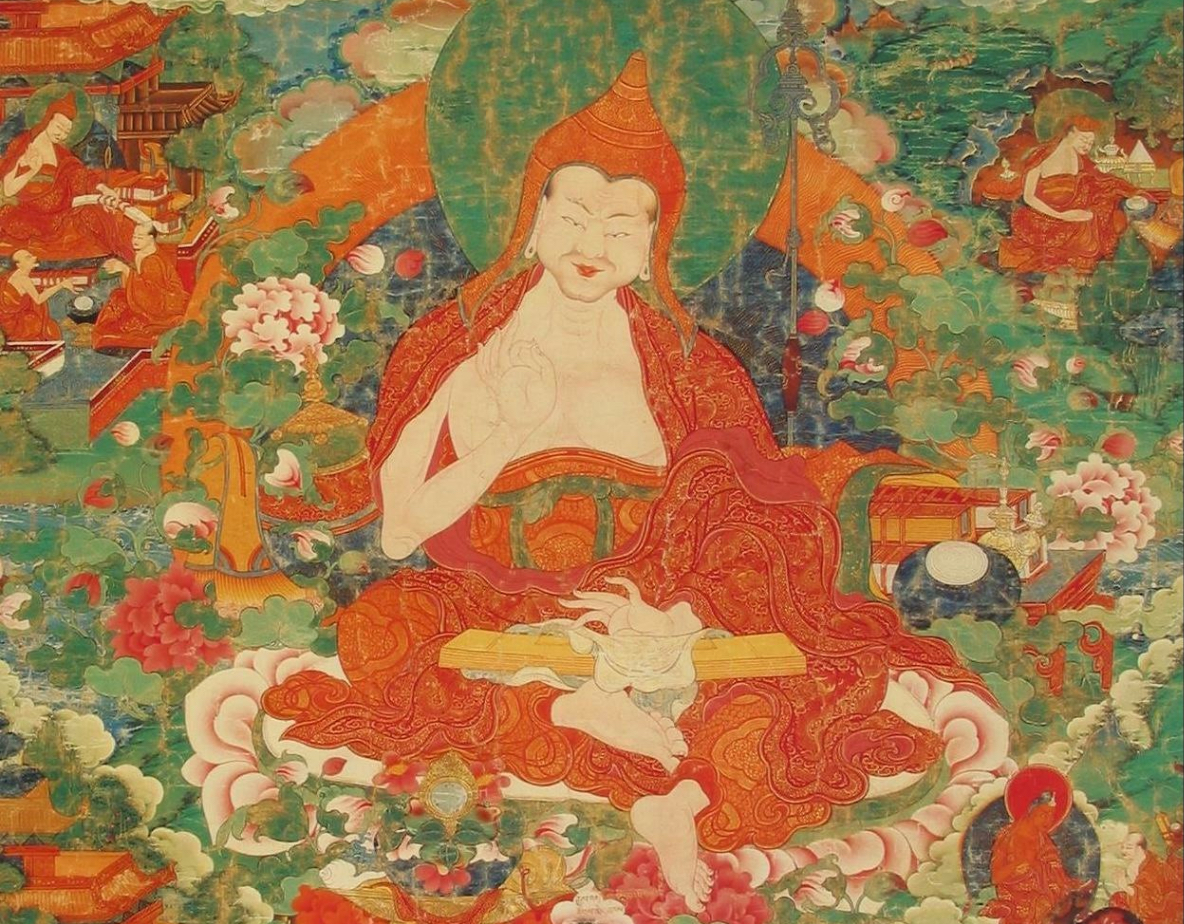
The Ratnagotravibhāga, commonly known as the Uttaratantra, or Gyu Lama in Tibetan, is one of the main Indian scriptural sources for buddha-nature theory. It was likely composed during the fifth century, by whom we do not know. Comprised of verses interspersed with prose commentary, it systematizes the buddha-nature teachings that were circulating in multiple sūtras such as the Tathāgatagarbhasūtra, the Mahāparinirvāṇasūtra, and the Śrīmaladevisūtra. The Tibetan tradition attributes the verses to the Bodhisattva Maitreya and the commentary to Asaṅga, and treats the two as separate texts, although this division is not attested to in surviving Indian versions. The Chinese tradition attributes the text to *Sāramati (娑囉末底), but the translation itself does not include the name of the author, and the matter remains unsettled. It was translated into Chinese in the early sixth century by Ratnamati and first translated into Tibetan by Atiśa, although this text is not known to survive. Ngok Loden Sherab translated it a second time based on teachings from the Kashmiri Pandita Sajjana, and theirs remains the standard translation. It has been translated into English several times, and recently into French. See the Ratnagotravibhāgavyākhyā, read more about the Ratnagotravibhāga, or take a look at the most complete English translation in When the Clouds Part by Karl Brunnholzl.