| 🤓 Admin Zone 🛠️ hidden to non-admins | |
देशनास्तव
Deśanāstava
བཤགས་པའི་བསྟོད་པ
bshags pa'i bstod pa
Praise in the Form of a Confession (84000)
Text
Please note that many items in our library are simply pages that represent a detailed library catalog entry and citation of someone else's work, presentation, or performance. Read our General Disclaimer for more information.

Description
The Deśanāstava is a fifth-century Buddhist hymn written by the poet and scholar Candragomin. It is also known by its English translation, the "Confessional Praise."
The hymn's 52 verses are a form of confession. The author confesses his own faults while also praising the Buddha. It is one of several surviving Sanskrit writings by Candragomin, who is regarded as one of the most important Buddhist poets of India.
Quoted in the aligned translations
Reference
Candragomin (slob dpon tsan+d+ra go mi). deśanāstava [देशनास्तव]. bshags pa'i bstod pa [བཤགས་པའི་བསྟོད་པ]. [Praise in the Form of a Confession (84000)]. Tengyur, RKTST 48 http://www.rkts.org/cat.php?id=48&typ=2.
Interconnections
1 Full translations

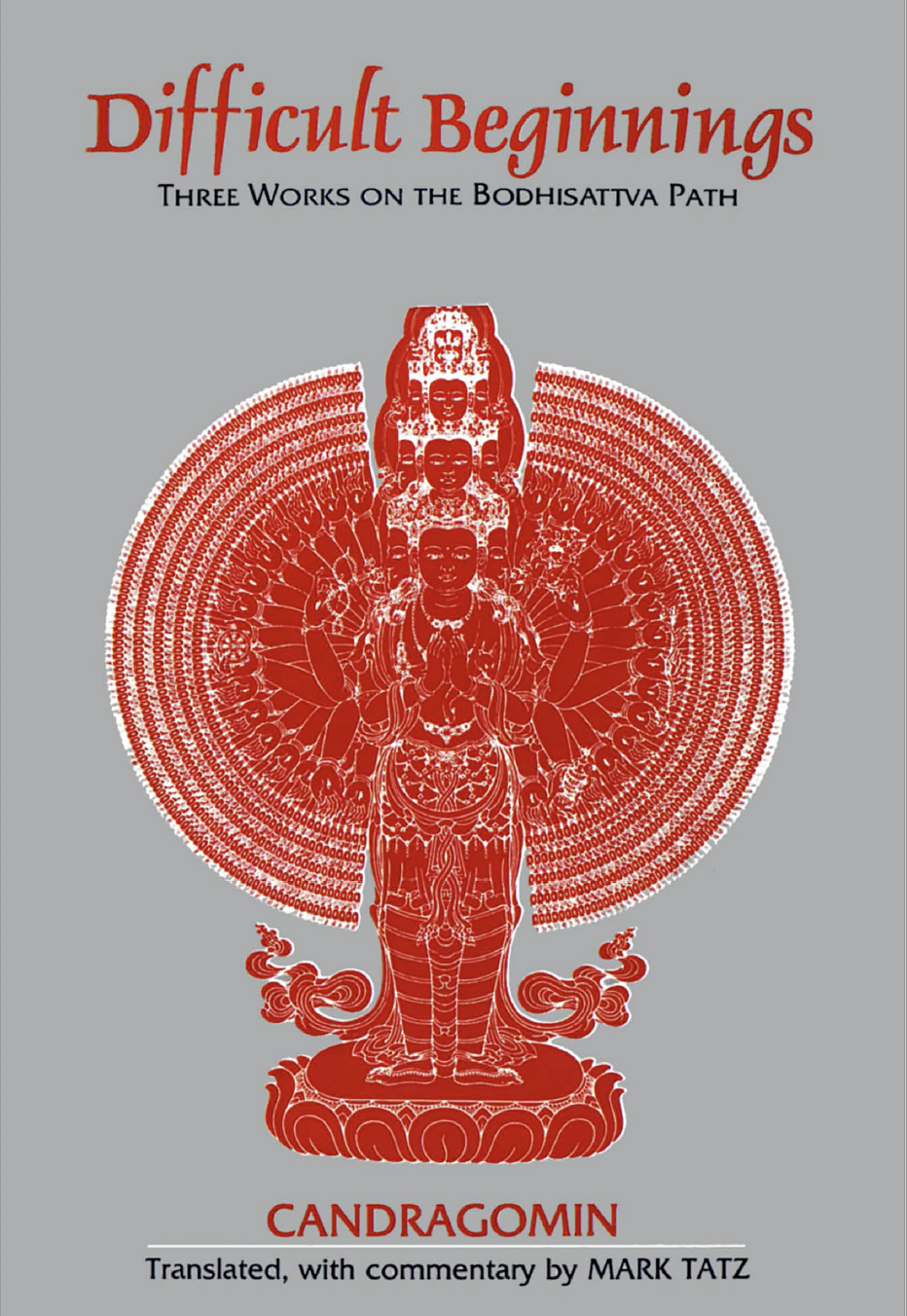
This is the first English translation of the works of Candragomin—a seventh-century Indian philosopher and poet—which have been highly influential in the practice of Buddhism over the past twelve centuries. The book provides an excellent introduction to Mahayana, the "middle way" of the Buddhist path. It will appeal to anyone interested in Eastern Religion.
Candragomin is regarded in the Indo-Tibetan tradition as an exemplar of the bodhisattva ideal. Difficult Beginnings presents three of the most important works. "Candragomin's Resolve" is a short verse aspiration. "Twenty Verses on the Bodhisattva Vow" is a basis for exposition of the bodhisattva vow. "Praise in Confession" recounts the problems that Candragomin encountered in his spiritual practice.
Dr. Tatz provides an excellent introduction to the theory and practice of the bodhisattva path, the ideal of attaining buddhahood—awakening—as well as the commitment to teach and guide others on this path. Also included is a fascinating account of Candragomin's life, and lengthy commentary on the three works presented here. (Source Source: Shambhala Publications)