A Feast of the Nectar of the Supreme Vehicle

From Bodhicitta
LibraryBooksA Feast of the Nectar of the Supreme VehicleGlossary
< Books
Books/A Feast of the Nectar of the Supreme Vehicle

A Feast of the Nectar of the Supreme Vehicle
Book


Please note that many items in our library are simply pages that represent a detailed library catalog entry and citation of someone else's work, presentation, or performance. Read our General Disclaimer for more information.
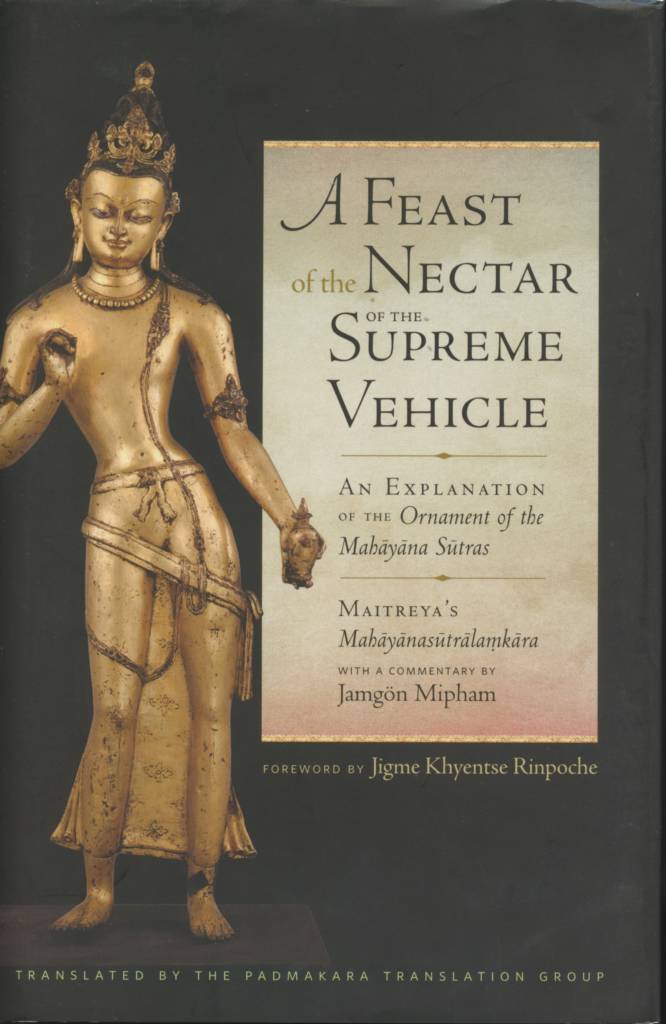
A Feast of the Nectar of the Supreme Vehicle-front.jpg

Description

A monumental work and Indian Buddhist classic, the Ornament of the Mahāyāna Sūtras (Mahāyānasūtrālamkāra) is a precious resource for students wishing to study in-depth the philosophy and path of Mahāyāna Buddhism. This full translation and commentary outlines the importance of Mahāyāna, the centrality of bodhicitta or the mind of awakening, the path of becoming a bodhisattva, and how one can save beings from suffering through skillful means.

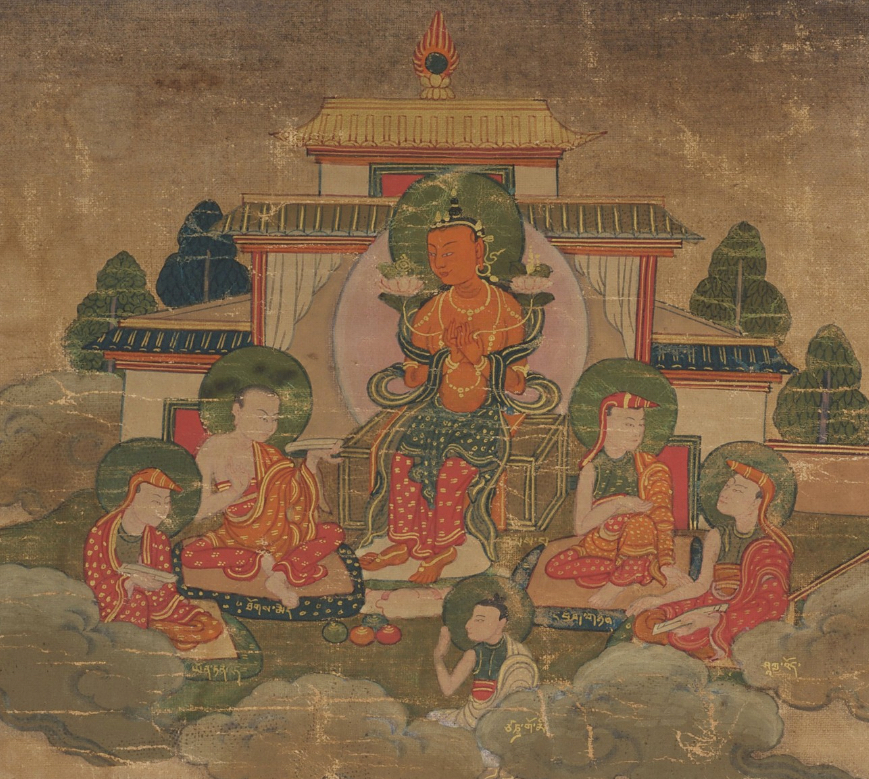
This definitive composition of Mahāyāna teachings was imparted in the fourth century by Maitreya to the famous adept Asanga, one of the most prolific writers of Buddhist treatises in history. Asanga’s work, which is among the famous Five Treatises of Maitreya, has been studied, commented upon, and taught by Buddhists throughout Asia ever since it was composed.

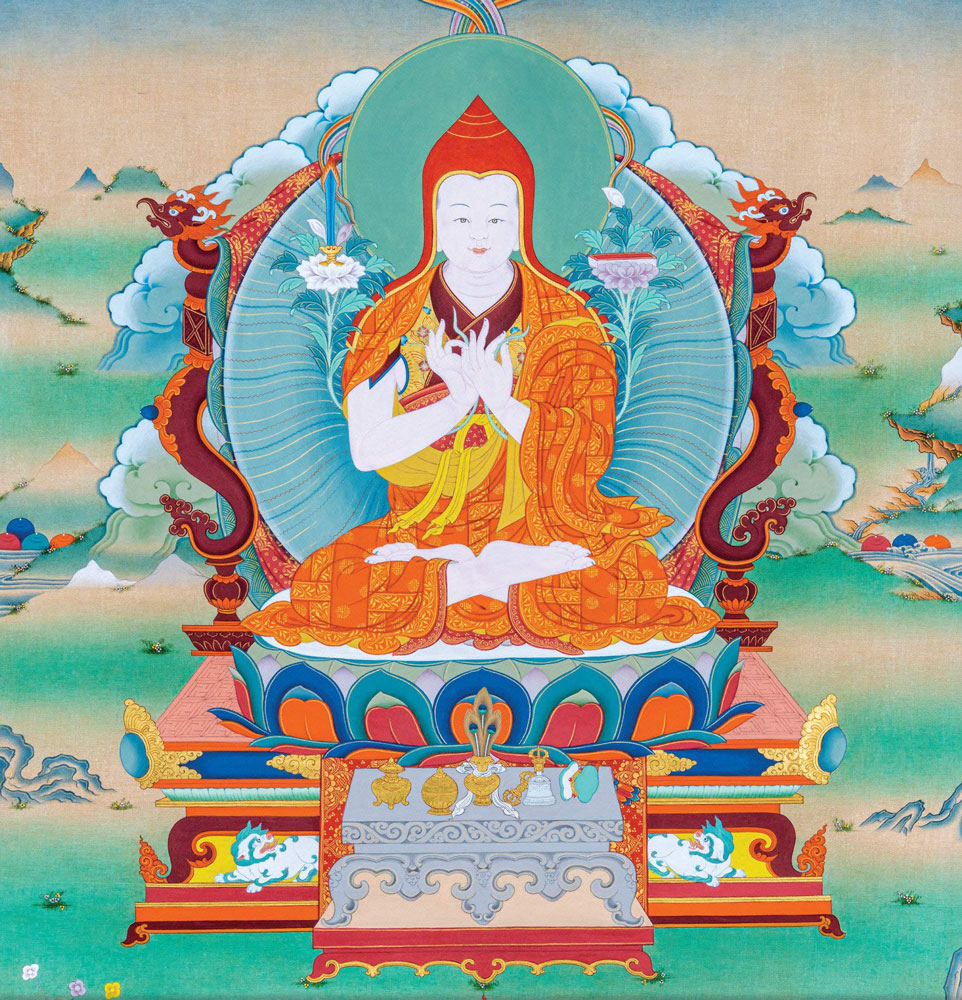
In the early twentieth century, one of Tibet’s greatest scholars and saints, Jamgön Mipham, wrote A Feast of the Nectar of the Supreme Vehicle, which is a detailed explanation of every verse. This commentary has since been used as the primary blueprint for Tibetan Buddhists to illuminate the depth and brilliance of Maitreya’s pith teachings. The Padmakara Translation Group has provided yet another accessible and eloquent translation, ensuring that English-speaking students of Mahāyāna will be able to study this foundational Buddhist text for generations to come. (Source: Shambhala Publications)

Citation
Gethin, Stephen (Padmakara Translation Group), trans. A Feast of the Nectar of the Supreme Vehicle: An Explanation of the Ornament of the Mahāyāna Sūtras; Maitreya's Mahāyānasūtrālaṃkāra with a Commentary by Jamgön Mipham. Boulder, CO: Shambhala Publications, 2018.
Texts Translated


Translation of

 
Theg pa chen po mdo sde'i rgyan gyi dgongs don rnam par bshad pa theg mchog bdud rtsi'i dga' ston
Mipam's (1846-1912) commentary on the Mahāyānasūtrālaṃkāra, one of the Five Dharma Treatises of Maitreya (byams chos sde lnga) said to have been presented to Asaṅga by the bodhisattva Maitreya in the Tuṣita heaven.
Text
 
Mahāyānasūtrālaṃkāra
In Sanskrit, the “Ornament for the Mahāyāna Sūtras”; one of the Five Dharma Treatises of Maitreya (byams chos sde lnga) said to have been presented to Asaṅga by the bodhisattva Maitreya in the Tuṣita heaven. Written in verse, the text offers a systematic presentation of the practices of the bodhisattva from the standpoint of the Yogācāra school and is one of the most important of the Indian Mahāyāna śāstras. Its twenty-one chapters deal with (1) the proof that the Mahāyāna sūtras are the word of the Buddha; (2) taking refuge in the three jewels (ratnatraya); (3) the lineage (gotra) of enlightenment necessary to undertake the bodhisattva path; (4) the generation of the aspiration to enlightenment (bodhicittotpāda); (5) the practice of the bodhisattva; (6) the nature of reality, described from the Yogācāra perspective; (7) the attainment of power by the bodhisattva; (8) the methods of bringing oneself and others to maturation; (9) enlightenment and the three bodies of a buddha (trikāya); (10) faith in the Mahāyāna; (11) seeking complete knowledge of the dharma; (12) teaching the dharma; (13) practicing in accordance with the dharma; (14) the precepts and instructions received by the bodhisattva; (15) the skillful methods of the bodhisattva; (16) the six perfections (pāramitā) and the four means of conversion (saṃgrahavastu), through which bodhisattvas attract and retain disciples; (17) the worship of the Buddha; (18) the constituents of enlightenment (bodhipākṣikadharma); (19) the qualities of the bodhisattva; and (20-21) the consummation of the bodhisattva path and the attainment of buddhahood. (Source: The Princeton Dictionary of Buddhism, p. 514)
Text

  • Foreword by Jigme Khyentse Rinpoche xiii
  • Translator’s Introduction xv
  • Ornament of the Mahāyāna Sūtras: The Root Verses
    • 1. The First Chapter 3
    • 2. Establishing the Great Vehicle as the Buddhas Word 5
    • 3. Refuge 9
    • 4. The Potential 13
    • 5. The Spiritual Intent: Bodhicitta 15
    • 6. Practice 19
    • 7. Thatness 21
    • 8. Powers 23
    • 9. Full Maturation 25
    • 10. Enlightenment 29
    • 11. Interest 41
    • 12. Thorough Investigation 45
    • 13. Teaching the Dharma 57
    • 14. Practicing the Dharma 61
    • 15. Instructions and Follow-Up Teachings 67
    • 16. Skillful Activity 75
    • 17. Transcendent Perfections and Ways of Attracting Disciples 77
    • 18. Offering, Reliance, and Boundless Attitudes 89
    • 19. Elements Leading to Enlightenment 99
    • 20. Qualities 113
    • 21. Conduct and Consummation 125
  • A Feast of the Nectar of the Supreme Vehicle: The Commentary
    • Preamble, Title, and Translator’s Homage 137
    • Introduction 139
  • Part One: What Is to Be Established: Establishingthe Great Vehicleas the Buddha’s Word
    • 1. General Presentation 151
    • 2. Specific Explanations 155
  • Part Two: What Is to Be Specifically Known
    • 3. Refuge 171
    • 4. The Potential 183
    • 5. The Spiritual Intent: Bodhicitta 197
    • 6. Practice 221
  • Part Three: What Is to Be Reflected Upon
    • 7. Thatness 133
    • 8. Powers 149
    • 9. Full Maturation 259
  • Part Four: The Inconceivable, That Which Is beyond Reflection
    • 10. Enlightenment 279
    • Recapitulation 339
  • Part Five: The Approach to Enlightenment
  • Preliminaries
    • 11. Interest 345
    • 12. Thorough Investigation 359
    • 13. Teaching the Dharma 447
    • 14. Practicing the Dharma 473
    • 15. Instructions and Follow-Up Teachings 491
    • Intermediate Summary 519
  • Main Explanation
    • 16. Skillful Activity 521
    • 17. Transcendent Perfections and Ways of Attracting Disciples 525
    • 18. Offering, Reliance, and Boundless Attitudes 579
    • 19. Elements Leading to Enlightenment 629
    • 20. Qualities 731
    • 21. Conduct and Consummation 797
    • Conclusion 843
  • Appendix 1: Structural Outline 847
  • Appendix 2: The Five Bodhisattva Paths and the Thirty-Seven Elements Leading to Enlightenment 863
  • Appendix 3: The Three Worlds and Six Realms 867
  • Glossary 871
  • Works Cited 887
  • Bibliography 891
  • Index 893