Calling into Question the Gelug Interpretation of the Wisdom Chapter
| 🤓 Admin Zone 🛠️ hidden to non-admins | |
Description
This exploration of Mipham's motivations, his approach to doctrinal debates, and the challenges faced by non-Geluk traditions provides insight into the complex interplay between different schools of thought and the political landscape of Tibet. It sheds light on the complex relationship between historical and political conditions and the arising of doctrinal interpretations, offering context for understanding the philosophical debates that shaped Tibetan Buddhism.
Featured on
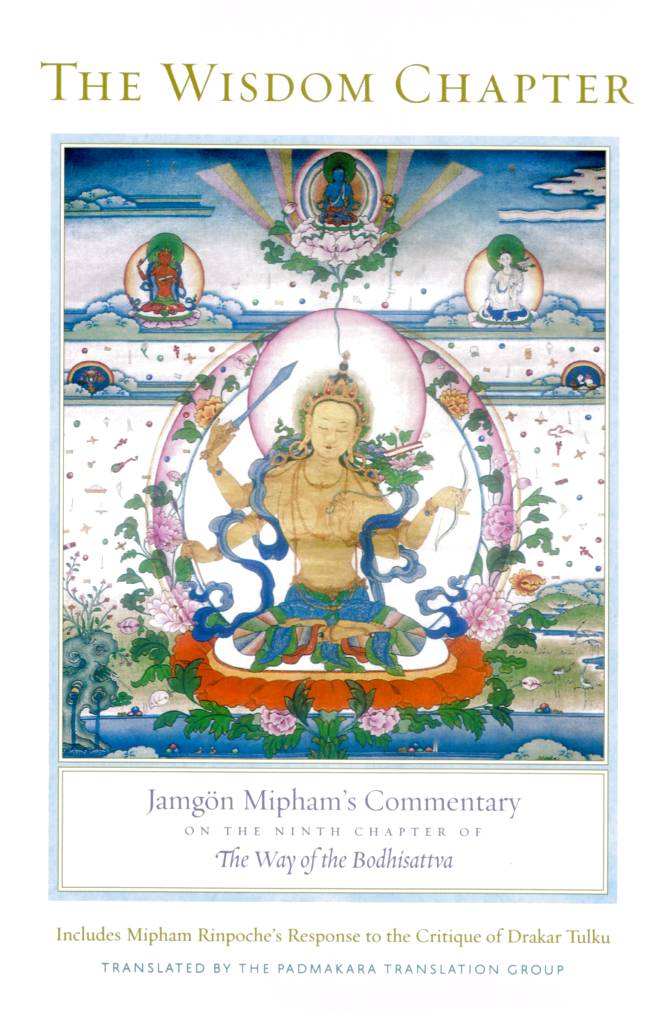
The Ketaka Jewel, the first of the two texts translated in this book, is Mipham Rinpoche's commentary on the ninth chapter of the Bodhicaryāvatāra. This chapter, the "Wisdom Chapter," is Shāntideva's exposition of the perfection of wisdom in terms of Madhyamaka, the view of the Middle Way, considered to express the essence of the wisdom teachings of the Prajñāpāramitā sūtras, which are themselves the very heart of Mahayana Buddhism.
Mipham's commentary, which he composed in 1878 at the age of 32., explained Shāntideva's text according to the more or less shared tradition of the older schools of Tibetan Buddhism: Nyingma, Sakya, and Kagyu, and in so doing, it implicitly called into question the prevailing interpretation of the Gelug school, which, at that time in Tibet, occupied a position of overwhelming religious and political dominance. As an incisive and articulate expression of the earlier tradition, the Ketaka provoked a controversy that would effectively last for over three decades.
The Ketaka was not, however, Mipham's first, or even his most extensive, exposition of Madhyamaka. The Beacon of Certainty[1] which he is said to have composed at a prodigiously young age,[2] is itself an exposition of the Madhyamaka view in close association with the teachings of the Great Perfection. Despite its extraordinary precocity, the Beacon of Certainty discusses many of the philosophical issues that would remain of central interest to Mipham throughout his life. Later, in 1876, two years before the Ketaka, Mipham produced another major work on Madhyamaka, this time an exposition of Shāntarakshita's Madhyamakālaṃkāra, the Adornment of the Middle Way—a text that was little studied at that time, being the work of an author who, despite his eminence and historical importance, was rather sidelined in the mainstream Gelugpa curriculum. It was no doubt for this reason that Mipham's commentary, which was of a profundity and authority that would have done considerable credit to a scholar twice his age, passed comparatively unnoticed outside Nyingma circles, even though it constituted a detailed and explicit challenge to official Gelugpa doctrine. By contrast, the Ketaka, Mipham's shorter but nevertheless provocative commentary on Shantideva's well-known and influential text, created much more of a stir.
Of the many scholars, including some from Mipham's own Nyingma school, who protested against his "old," but by then unfamiliar, interpretation of Madhyamaka, some challenged him to public debate. Of these personal encounters, we have only anecdotal evidence. There are several stories of public contests between Mipham and his opponents in the presence of Mipham's teachers. For example, in Khenpo Kunzang Pelden's account of the confrontation between Mipham and a scholar named Japa Dongak,[3] the debate, supervised by Patrul Rinpoche, began with a discussion of points expressed in the Ketaka, in which the parties seem to have been evenly matched. When, however, the debate switched to a discussion of an exposition of the Great Perfection composed by Japa, Mipham quickly triumphed, at which point Japa was required to burn his treatise and is said to have wept in shame.[4]
Other, possibly more numerous, critics sent written refutations; and of the three that have escaped oblivion, two received answers in writing from Mipham himself.[5] These in turn provoked responses, stimulating, in one case, a further reply from Mipham, thus providing us with an example of extended controversial interchange that is rare in Tibetan literature. The first of these critiques, A Pleasurable Discourse for Those of Clear Understanding,[6] was submitted by the third Drakar Tulku, Lozang Pelden Tendzin Nyendrak (1866-1928), a young scholar of the Loseling college of Drepung, the largest of the three great Gelugpa seats located in the district of Lhasa. This text, written ten years after the composition of the Ketaka, was answered almost immediately, in 1889, by Mipham in his Light of the Day Star: Answers to Objections, which is the second of the texts translated in the present volume. Unabashed, Drakar responded with two further attacks, the dating of which is problematic, and to which Mipham in any case returned no answer. Subsequently—eight years after the publication of the Day Star—another refutation arrived, this time from Pari Rabsel, a scholar of the great Gelugpa foundation of Kumbum in Amdo. This inaugurated an extensive and eventually friendly correspondence that would come to an end only with the deaths of the two masters in 1912.[7]
The Ketaka and the Day Star are demanding texts. Shāntideva's "Wisdom Chapter" itself is already of prohibitive difficulty for the uninitiated reader. And if, for the most part, Mipham's commentary is lucid and "easy to understand," as the subtitle to his work declares, there are plenty of areas, nevertheless, where the rival interpretations of the Gelug school and the earlier tradition are contrasted, so that at least a summary acquaintance with both points of view is indispensable. This need is particularly acute in the case of the Day Star; where Mipham engages directly with the technical, and sometimes minute, philosophical differences that separate the two approaches.
In the attempt, therefore, to help the reader to a general appreciation of the Ketaka and the Day Star, within the cultural, political, and religious context in which they were composed—and, even more, to explain the general atmosphere of controversy that surrounds Madhyamaka in Tibet—a number of important issues must be addressed. We will need, for instance, to consider Mipham's own motives in composing the Ketaka, and the energy he displayed in defending it, within the context of the rimé, or nonsectarian, movement of which he was an important representative. This will require us to examine the historical situation in Tibet generally, and especially in its eastern provinces, which rendered the rimé movement both necessary and possible. And for this we will have to advert to the development of the various schools of Tibetan Buddhism and the genesis of sectarian polarization that began in the fourteenth century and reached a crisis in the course of the seventeenth. In addition, we will need to consider, admittedly in rather summary terms, the introduction and complex development of Madhyamaka in Tibet, and the ways that it both continued and diverged from its Indian sources. We will thus be in a better position to appreciate the tensions implicit in the Tibetan interpretations of Madhyamaka and to understand in some measure the innovative and nontraditional character of Tsongkhapa's view and the violent reaction that it provoked. It will also be necessary to take account of the external and artificial factors thanks to which Tsongkhapa's philosophical ideas—which constituted and (in terms of the Tibetan tradition generally) still constitute a minority view—were to prevail and triumph, becoming the most influential interpretation of Madhyamaka in Tibetan history.
Mipham's Rime Approach to Doctrinal Polemics
Most, if not all, of Mipham's scholarly compositions are to be understood within the context of the rimé, or nonsectarian, movement. This extraordinary initiative, which constituted a religious and social renaissance in the province of Kham in the eastern regions of Tibet, was inaugurated in the mid-nineteenth century by such charismatic leaders as Jamyang Khyentse Wangpo, Jamgon Kongtrul Lodro Thaye, Patrul Rinpoche, Chokgyur Lingpa, and a host of remarkable scholars and practitioners from all schools of Tibetan Buddhism.
The aims of the nonsectarian movement were, broadly speaking, twofold. The first and most pressing task was to preserve and reinvigorate the rich religious heritage of the older schools of Tibetan Buddhism, which by the mid-nineteenth century, were in an advanced state of decline. Great efforts were made to refound the scholastic centers of the different denominations. New programs of study were devised, based for instance on the commentaries composed by Khenpo Shenga on the "thirteen great Indian texts," widely used across sectarian boundaries, as well as on the textbooks and commentaries composed by Mipham himself. In addition to such primarily pedagogical material, enormous compendia of texts from all traditions (some of which had all but disappeared) were compiled, edited, and published. One need only mention the vast collections made by Kongtrul such as the Treasury of Instructions (Gdams ngag mdzod), the Treasury of Knowledge (Shes bya mdzod), and the Precious Treasury of Terma Teachings (Rin chen gter mdzod)-, and the Collection of Sadhanas (Sgrub thabs kun btus) compiled by Jamyang Khyentse Wangpo and Loter Wangpo. All this was done, moreover, in the nick of time. For the age of Tibetan freedom was swiftly approaching its end, and it was thanks in large measure to the labors of the rimé masters that many traditions of Tibetan Buddhism were able to withstand the catastrophe that was to come. Preserved in the compilations just mentioned, they were saved for Buddhist communities surviving both in Tibet and in exile, and are even now being translated and transmitted to the West.
The second important aim of the nonsectarian movement was to remedy one of the main causes of the decline just mentioned, namely, the powerful spirit of religious division and intolerance that had prevailed in Tibet for the previous two hundred years, dating back to the political disturbances that had torn the country apart in the seventeenth century. At that time, the tensions between important political groups supported by certain factions within the Kagyu and Sakya schools, on the one side, and the Gelug school, on the other, resulted in a civil conflict that was brought to an end only through the forceful intervention of the Mongol chief Gushri Khan, who, in 1642, installed the Fifth Dalai Lama as the Tibetan head of state. This led to the creation of the Ganden Phodrang government, which, closely affiliated as it was with the Gelug school, was to rule Tibet until the Chinese invasion in the twentieth century.
Despite the fact that the "Great Fifth" was "by nature a tolerant prince with a well-developed eclectic bent of mind,"[8] and although he seems to have been unwilling to persecute his vanquished enemies, he nevertheless permitted certain punitive measures calculated to remove the influence, and even the existence, of those schools that had politically opposed the rise of the Gelugpas, and whose scholars had so strongly criticized Tsongkhapa's philosophical positions during the fifteenth century. The effects of the sanctions inflicted on these institutions were severe and long-lasting. The Jonangpa school, for example, was completely suppressed in the central provinces, and its monasteries, including Phuntsok Ling, once the seat of Taranatha (together with its great printing house), were forcibly converted into Gelugpa foundations. To a lesser degree, the Karma Kagyu school also suffered. Its institutions were penalized, and the Karmapa himself was banished to Tsurpu. The Sakya school too fell under shadow. The destruction during the civil war of the Ring-pung clan meant the loss of patronage and the material support necessary for the maintenance of its monasteries. The high scholastic level that had been the glory of the Sakya tradition went into a steep decline and was soon eclipsed by the three great Gelugpa seats established in the vicinity of Lhasa, whose influence had been further increased by the construction in 1447 of Tashilhunpo monastery in Tsang.[9]
The most devastating blow to the intellectual life of the offending traditions, however, came through the extensive banning of books. Libraries and publishing houses were closed. The wood blocks for printing the works of Dolpopa and Taranatha, of the eighth Karmapa, and of Rongton Sheja Kunrig, Taktsang Lotsawa, Gorampa, and Shakya Chogden—all the (mostly Sakya) scholars who had dared to criticize the works of Tsongkhapa—were destroyed or sealed. Almost everywhere in the country, their works simply disappeared. Even the writings of eminent Gelugpa masters whose thought diverged even slightly from the prevailing orthodoxy were banned. The works of the founder of Drepung, Jamyang Choje himself, who was suspected of being influenced by the zhentong doctrine of extrinsic emptiness propounded by the Jonangpas, were sealed and kept on an altar at Drepung. No one was allowed to open them.[10] Only the Nyingma school, a minor and inoffensive presence on the political scene, emerged comparatively unscathed, protected for a time by the Great Fifth's family connections.
Naturally enough, all these measures were the cause of intense and lasting bitterness between the Tibetan schools. Denied access to the works of their greatest scholars, the centers of Sakya learning lost their vitality, and in the absence of wealthy sponsorship, they soon dwindled. A great silence fell. It became far too dangerous to reiterate or defend the Sakya critique of Tsongkhapa, and the great Gelugpa counteroffensives received no answer. It is astonishing to record that it was not until between 1905 and 1925 that the works of Gorampa (1429-1489) could be reassembled and printed in Derge.[11] Until then, his writings, considered essential in the Sakya curriculum, could be studied only with great difficulty and in secret from handwritten copies. The works of his illustrious contemporary Shakya Chogden (1428-1507) were thought to have been irretrievably lost until a copy of his collected writings was discovered in Bhutan and edited and published in 1975. Finally, it is within the last decade that, under the auspices of Alak Zenkar Rinpoche, the works of Taktsang Lotsawa (b. 1405) have again seen the light of day.
These tragic facts are recorded here in order to give some idea of the atmosphere of loss and demoralization among the older schools that must have prevailed in Tibet at the beginning of the nineteenth century. The great Gelugpa monasteries were the vital centers of learning. Monks from the other schools would regularly attend them as the sole providers of high-level intellectual training. It was natural too perhaps that non-Gelugpa monasteries began to use Gelugpa textbooks in order to fill the gap left by the decay of their own traditions; and this too led to a further loss of identity. One can appreciate then that the first priority of the nonsectarian movement was to stem the decline of the endangered traditions and to put an end, where possible, to the sense of isolation and distrust that prevailed between them. From the very beginning, therefore, the leaders of the nonsectarian movement strongly encouraged the perception that all traditions of Buddhism in Tibet were equally valid and worthy of respect. This general outlook was not, as it is sometimes misleadingly described, "ecumenical"—in the sense of trying to promote the unification of the different schools into a single universal communion. It was, on the contrary, an attempt to encourage each tradition to rediscover and preserve its individual voice. It was a movement that not only encouraged the tolerance of differences but could even be described as a celebration of diversity—the antithesis of the policy of monolithic conformity that the Ganden Phodrang seems to have promoted both then and later. And although there were outstanding members of the nonsectarian movement of Gelugpa provenance, the general effect of the nonsectarian movement was to enable the older schools to regroup and present a united front in the face of what recent scholarship tends to refer to as the "Gelugpa hegemony."
This then was the general situation in Kham while Mipham was growing up. Many of the points just described are reflected in a personal reminiscence of Mipham himself, quoted in the short biography ascribed to Khenpo Kunzang Pelden. Since it evokes the general climate of the time as well as the particular circumstances that led him to compose his texts, it is worth quoting in full:
In my young days, there were so many excellent masters alive of both the old and new traditions that it was like the time when the Buddha himself turned the wheel of the Dharma. All the same, apart from receiving the "Wisdom Chapter" of the Bodhicaryāvatāra from Patrul Rinpoche, I did not study very much. Instead, it was through the kindness of my teacher and my supreme yidam deity that later on, without the need for much toil, an understanding of the difficult points of the Doctrine naturally arose in me simply through a reading of the texts. However, when I began to take an interest in the training, I found that the books of the New Translation schools were easy to understand, whereas those of the Nyingma school were more difficult. Nevertheless, despite the fact that I could not understand them, I always nourished an attitude of thinking that great things were to be discovered in the profound texts of the vidyadhara lineage. I did not doubt it for a single instant, and it was thanks to this auspicious circumstance that my understanding was able to ripen fully. When later I examined these texts, I was able to see that the complete range of the profound and crucial points of doctrine is to be found only in the doctrinal tradition deriving from the precious lineage of the old translations. And thanks to this, I reached a state of supreme certainty.
It was at that time, moreover, that my refuge lord, the Vajradhara Khyentse Rinpoche, commanded me to compose textbooks for my own tradition. Therefore in obedience to my teacher's wish and as a way to train my intelligence, I composed some texts on the cycle of sutra teachings, holding within my heart only the precious doctrine of the Conqueror. Nevertheless, because I briefly explained and placed emphasis on the assertions of the tradition to which I belong, this was interpreted as a refutation of other tenet systems, and in due course, a great many letters of refutation and debate arrived here from all directions. In truth, however, my writing was motivated simply by the desire to fulfill the wishes of my teacher, and by the fact that, nowadays, the doctrine of the Nyingmapas has dwindled to no more than the painting of a butter lamp. Most of its adherents imitate the traditions of others, and rare indeed are those who get as far as asking or even wondering what the key points of their own tradition might be. It was in view of this that I wrote my texts, hoping to be of some small assistance. I never even dreamt of showing contempt for the traditions of others or of expressing partial attachment to my own.[12]
Several points in this passage are of particular interest. We should note, for example, Mipham's acknowledgment of the pedagogical quality of the Gelugpa texts. Despite the fact that, in his view, they are less comprehensive in their range, compared with the more difficult texts of the Old Translation school, nevertheless their clarity and ease of understanding were certainly qualities that recommended them to other non-Gelugpa scholars. This, on the other hand, at least as far as Mipham was concerned, was part of the problem. He was clearly disturbed—a point made much more explicitly in the beginning of the Day Star—by the widespread use of Gelugpa textbooks in Nyingma establishments; and the recovery of a specifically Nyingma tradition in the realm of sutra studies was an essential feature of his own rimé agenda.
It is important also to note, in the passage just quoted, Mipham's explicit disavowal of polemical intentions. He undertook the composition of Nyingma textbooks at the behest of his teacher and as a service to his own tradition. His aim was not to attack anyone else. On the other hand, he admits that his writings provoked a reaction. And in the case of Madhyamaka, they led to a serious conflict of ideas in which he was perfectly prepared to participate, demonstrating his own position and refuting that of his adversaries. This readiness to contend, coupled with a strong disapproval of the use by Nyingmapas of Gelugpa texts, together with the powerfully argued rejection of Gelugpa positions evinced in his disputations with Gelugpa scholars, has naturally led some people to question the sincerity of Mipham's nonsectarian claims. But as will be shown, both these attitudes were perfectly consonant with the rimé ideal.
Mipham seems to have believed strongly that an essential feature of the nonsectarian movement, to which he never failed to give his explicit support, was the creation, socially and intellectually, of an environment in which all traditions of Tibetan Buddhism could have the space to flourish—and to define and express their specific points of view in relation to, and in contrast with, those of other schools. Of course, this was by no means an original idea. Implicit in the belief that the Buddha set forth his teaching in ways as multifarious as the needs of the beings he instructed is the conclusion that the resulting tradition will be marked by a wide spectrum of doctrinal positions—some of which will doubtless appear contradictory. Given the preservation of the basic essentials as expressed in the "four seals of the teaching," doctrinal variety is in fact an essential feature of the Buddhist tradition. Individuals will be drawn to the expression of the tradition that best accords with their temperament and needs. When, after due consideration, one comes to the conclusion that something is true, one cannot but accept it. And the profession of that truth implies the ability to justify one's belief against all comers with valid arguments. In the articulation and, if necessary, the defense of one's own view, therefore, disagreement with those who take a contrary position is inevitable. Given the principle just enunciated, this in itself is not a problem. On the contrary, if it leads to debate in which one comes to an even sharper understanding of one's own position, then disputation is certainly a good thing. The essential point is to gain certainty: a conviction that comes through honest research and the sincere testing of the position, doctrine, or tradition to which one feels drawn. When this is properly achieved, one can only benefit from an enriching encounter with other positions. Certainty, however, is an essential first step. One must be completely grounded in one's own tradition. On the other hand, a premature, and ill-considered, "eclecticism," which in effect is nothing more than a superficial comparison of diverging views, can only lead to doubt and the eventual loss of a valid path. As Jamgon Kongtrul remarked in his biography of Jamyang Khyentse Wangpo,
The scholars and siddhas of the various schools make their own individual presentations of the Dharma. Each one is full of strong points and supported by valid reasoning. If you are well grounded in the presentations of your own tradition, then it is unnecessary to be sectarian. But if you get mixed up about the various tenets and terminology, then you lack even a foothold in your own tradition. You try to use someone else's system to support your understanding, and then get all tangled up, like a bad weaver, concerning the view, meditation, conduct, and result. Unless you have certainty in your own system, you cannot use reasoning to support your scriptures, and you cannot challenge the assertions of others. You become a laughingstock in the eyes of the learned ones. It would be much better to possess a clear understanding of your own tradition.[13]
Similar sentiments no doubt underlie Mipham's disapproval of the use of Gelugpa textbooks in Nyingma colleges. To claim to be an upholder of one school, while espousing the divergent positions of another, inevitably leads to precisely the kind of adulteration and confusion that the nonsectarian movement was trying to avoid. Moreover, as Mipham says in the opening pages of the Day Star, from a practical point of view, responsibility for one's tradition is largely a matter of karmic destiny and filial duty. "If we don't look after our own tradition," he seems to say to his fellow Nyingmapas, "who will?" On the other hand, as Kongtrul observed, a well-informed confidence in one's own tradition is the best protection against sectarian distrust. In that case, encounters with other traditions can be highly beneficial, as is illustrated in the remarkable example of Shabkar Tsokdruk Rangdrol (1781-1851), whose open-minded attitude was far more typical of the fourteenth century than the time in which he lived. He was an accomplished master of the Dzogchen tradition of the yogis of Repkong, and yet his autobiography is full of inspiring evidence of his heartfelt appreciation of all schools of Tibetan Buddhism, marked especially by a powerful devotion to Tsongkhapa and the Kadampa tradition of the Gelug school. And Mipham too, having drunk deeply from the wellsprings of the Nyingma tradition, was happy to take instruction from teachers of other affiliations. He received the Madhyamakāvatāra from the Gelugpa Bumsar Geshe Ngawang Jungné, the explanation of Sakya Paṇdita's Treasury of Valid Cognition (Tshad ma rig gter) from the Sakyapa Loter Wangpo, and so on.
In conclusion, a crucial component of the nonsectarian attitude is the recognition that every point of view, however true and intellectually satisfying it may appear, partakes of the relative truth and is necessarily limited and incomplete. Perfect objectivity, independent of the subjective inquirer, is by definition unattainable. Therefore those who disagree with one's position—even if they are wrong—are not necessarily fools or scoundrels. The possibility of rational and sustainable contradiction simply illustrates the fact that every statement of view, however certain one may strive to make it, can never, on the relative level, be more than a point of view. This understanding, on the other hand, is not a species of relativism: the view that all positions are equally valid and acceptable. On the contrary, even on the relative level, it is necessary to seek the truth, to strive to understand the true nature of phenomena, and to be able to demonstrate and defend that understanding against all assailants. By contrast, the claim that one alone is possessed of the truth and that other beliefs are contemptible—dogmatism, in other words, and its evil fruit, fanaticism—is radically foreign to the nonsectarian approach. As Mipham makes very clear in the opening pages of the Day Star, the enemy is not one's adversary in debate. Instead, it is bigotry: the arrogant dismissal of other views and the refusal to see anything good in the opposite side. Essentially, the nonsectarian movement was a bid for intellectual freedom and an attempt to create an open forum where traditional variety was both tolerated and welcomed, where fruitful exchange could flourish, and above all where contending parties had the freedom to disagree without the danger of opprobrium or penalty. Unfortunately, these principles, particularly the last, made little impact on the religious and political establishment that was so firmly entrenched, especially in the central provinces of Tibet, and which showed no sign of dying out of its own accord. Right up to the middle of the twentieth century, when Tibet was on the brink of downfall, the Ganden Phodrang government and the great monastic institutions that supported it remained locked in what can only be described as an evolutionary dead end, unable to change and actually incapable of tolerating dissent, as the fate of Gendun Chopel, who died in 1951, so tragically illustrates.
Notes
- ↑ Nge shes sgron me. For a translation and thorough presentation of this text, see Pettit, Mipham's Beacon of Certainty.
- ↑ Mipham is said to have dictated the text to an attendant at the age of six or seven. See Pettit, Mipham's Beacon of Certainty, 468n66.
- ↑ See Pettit, Mipham's Beacon of Certainty, 31, for a translation of Kunzang Pelden's account, in which Japa is described as a "scholar learned in the New Translation Schools." In point of fact, he was a disciple of both Patrul Rinpoche and Shabkar Tsongdruk Rangdrol.
- ↑ Other accounts give another, more poignant, reason for Japa's tears. See Adam Pearcey's essay, "Uniting Outer and Inner Solitude: Patrul Rinpoche's Advice to Alak Dongak Gyatso," Adam Pearcey (blog), https://adamspearcey.com/blog/. Dodrup Khenpo Konme, who knew Japa, reported that the latter had wept, not on account of his defeat, but because Patrul (who seems to have been rather biased in favor of Mipham) chided him for negligence in his practice. In any case, the general consensus seems to have been that Mipham was unbeatable in debate. Only in the case of Bamda Gelek ('Ba' mda dge legs), the famous Jonang master from Amdo, does he seem to have met his match. Mipham declared that of the many scholars he had encountered in debate, only Bamda Gelek had "left him almost speechless." See Matthew Kapstein, Reason's Traces, 315n21.
- ↑ These three critiques concern only the Ketaka Jewel. As will be mentioned later, Mipham also composed a reply to Khenpo Damcho Zangpo of the Nyingma monastery of Dodrupchen, who had challenged him to debate over certain issues discussed in his commentary to the Madhyamakālaṃkāra.
- ↑ Although large portions of Drakar Tulku's text are cited verbatim in Mipham's answer, nevertheless in order to represent him fairly, a full translation of the Pleasurable Discourse is provided in the appendix.
- ↑ For a detailed study of the debate between Mipham and Pari Rabsel, see Viehbeck, Polemics.
- ↑ Smith, Among Tibetan Texts, 242.
- ↑ For more details on the origins of sectarian division in Tibet, see Dreyfus, Recognizing Reality, 35-38.
- ↑ See Smith, "Banned Books."
- ↑ This task was achieved by Ga Lama Jamyang Gyaltsen, a student of Khenpo Shenga. See Kassor, "Gorampa Sonam Senge," 123. In addition, the biography of Dezhung Rinpoche contains an interesting story about Ga Lama, which reveals something of the conditions of the times. While studying with Khenpo Shenga at Gemang, his qualities were also recognized by the famous Khenpo Yonga (Yonten Gyatso) who wanted to draw him into the Nyingma tradition. On reflection, Jamyang Gyaltsen decided to devote himself to the Sakya tradition, which he considered to be in even greater need of preservation. Dezhung Rinpoche's biography also supplies anecdotal evidence of sealed libraries in central Tibet as late as 1949. See Jackson, A Saint in Seattle, 57-58, and 162.
- ↑ See Gangs ri'i khrod kyi smra ba'i se nge gcig pu 'jam mgon mipham rga mtsho'i rnam thar bsdus pa dang gsung rab kyi dkar chag snga 'gyur bstan pa'i mdzes rgyan. The text cited here is taken from the introductory preface to the index of Mipham's collected writings, composed by Khenpo Kunzang Pelden. It can be found in 7:621-65 of the collected works edited by Sonam Kazi, Gangtok, 1976. The passage quoted here is on p. 635. The translation of the quotation is my own, but a version of the entire biography can be found in Pettit, Mipham's Beacon of Certainty, 23-39.
- ↑ Quoted in Ringu Tulku, The Ri-me Philosophy, 24.