Sūtrālaṃkāravṛttibhāṣya
From Bodhicitta
| 🤓 Admin Zone 🛠️ hidden to non-admins | |
सूत्रालंकारवृत्तिभाष्य
Sūtrālaṃkāravṛttibhāṣya
མདོ་སྡེ་རྒྱན་གྱི་འགྲེལ་བཤད།
mdo sde rgyan gyi 'grel bshad
An Explanatory Commentary on the Ornament for the Mahāyāna Sūtras (84000)
Text
Please note that many items in our library are simply pages that represent a detailed library catalog entry and citation of someone else's work, presentation, or performance. Read our General Disclaimer for more information.


Description
A commentary by Sthiramati on the Mahāyānasūtrālaṃkārakārikā of Maitreya.
Reference
Sthiramati. Sūtrālaṃkāravṛttibhāṣya [सूत्रालंकारवृत्तिभाष्य]. mdo sde rgyan gyi 'grel bshad [མདོ་སྡེ་རྒྱན་གྱི་འགྲེལ་བཤད།]. [An Explanatory Commentary on the Ornament for the Mahāyāna Sūtras (84000)]. Translated by Municandra, Lce bkra shis. Tengyur, RKTST 3373 http://www.rkts.org/cat.php?id=3373&typ=2.
Interconnections
1 Classical commentary of

In Sanskrit, the “Ornament for the Mahāyāna Sūtras”; one of the Five Dharma Treatises of Maitreya (byams chos sde lnga) said to have been presented to Asaṅga by the bodhisattva Maitreya in the Tuṣita heaven. Written in verse, the text offers a systematic presentation of the practices of the bodhisattva from the standpoint of the Yogācāra school and is one of the most important of the Indian Mahāyāna śāstras. Its twenty-one chapters deal with (1) the proof that the Mahāyāna sūtras are the word of the Buddha; (2) taking refuge in the three jewels (ratnatraya); (3) the lineage (gotra) of enlightenment necessary to undertake the bodhisattva path; (4) the generation of the aspiration to enlightenment (bodhicittotpāda); (5) the practice of the bodhisattva; (6) the nature of reality, described from the Yogācāra perspective; (7) the attainment of power by the bodhisattva; (8) the methods of bringing oneself and others to maturation; (9) enlightenment and the three bodies of a buddha (trikāya); (10) faith in the Mahāyāna; (11) seeking complete knowledge of the dharma; (12) teaching the dharma; (13) practicing in accordance with the dharma; (14) the precepts and instructions received by the bodhisattva; (15) the skillful methods of the bodhisattva; (16) the six perfections (pāramitā) and the four means of conversion (saṃgrahavastu), through which bodhisattvas attract and retain disciples; (17) the worship of the Buddha; (18) the constituents of enlightenment (bodhipākṣikadharma); (19) the qualities of the bodhisattva; and (20-21) the consummation of the bodhisattva path and the attainment of buddhahood. (Source: The Princeton Dictionary of Buddhism, p. 514)
1 Partial translations

Abstract
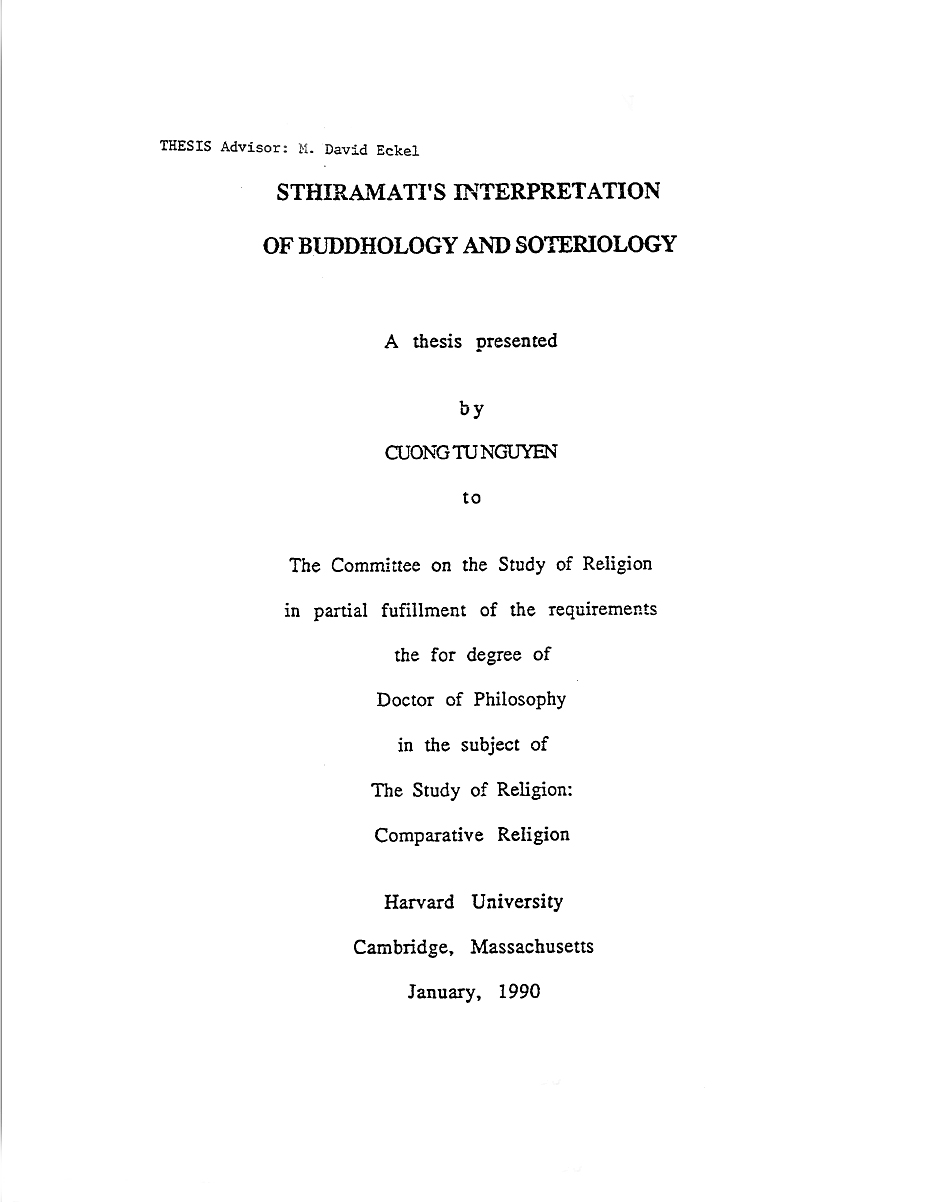
This thesis gives an account of Yogācāra Buddhist thought as presented in the works of Sthiramati, a leading sixth-century thinker in the Yogācāra tradition, along with a translation of his commentary on the Chapter on Enlightenment of the Mahāyānasūtrālaṃkāra. The thesis introduces Sthiramati's life and times, and discusses the authorship and authenticity of works attributed to him.
Sthiramati's viewpoint is placed in the overall context of Yogācāra ontology. The thesis elucidates the fundamental categories of Yogācāra ontology, giving an analysis of the three identities (trisvabhāva) and their interrelationships, the connection between the three identities and the principle of representation-only (vijñaptimātra), and an account of basis-transformation (āśrayaparāvṛtti). This provides a philosophical foundation for interpreting the Yogācāra concept of Buddhahood, bringing out the intrinsic link between ontological realization and soteriological attainment in the Yogācāra system.
The thesis traces the Yogācāra account of Buddhahood in both its essence and its manifestation: Buddhahood is shown as both the absolute ground of being and as the locus for innumerable pure qualities and forms of mastery through which enlightenment is communicated to ordinary sentient beings. In this connection, the thesis presents the Yogācāra analysis of the Three Bodies of Buddha (Dharmakāya, the Truth-Body; Sambhogakāya, the Enjoyment-Body; Nirmāṇakāya, the Emanation-Body), which encompass both the essential being and the manifest functioning of Buddha. The three Budda-bodies are correlated with the four liberative wisdoms (jñāna) of the Buddha (the Mirror-like Wisdom, the Equality Wisdom, the Analytical Wisdom, and the All-Accomplishing Wisdom). The thesis recounts the classic Yogācāra discussion of the attributes of Buddhahood in terms of unity and multiplicity, and the nature and scope of Buddha's salvific activities.
The aims of the thesis are (1) to present Yogācāra Buddhology in its own terms; (2) to clarify the conceptual structure of Yogācāra Buddhology and the relationship in Yogācāra thought between Buddha and the phenomenal world, and between Buddha and the minds of sentient beings; and (3) to facilitate cross-cultural comparisons between Buddha and concepts of the Absolute in other religious traditions by providing a reliable presentation of the ontological, epistemological, and soteriological aspects of Yogācāra Buddhology.
This thesis gives an account of Yogācāra Buddhist thought as presented in the works of Sthiramati, a leading sixth-century thinker in the Yogācāra tradition, along with a translation of his commentary on the Chapter on Enlightenment of the Mahāyānasūtrālaṃkāra. The thesis introduces Sthiramati's life and times, and discusses the authorship and authenticity of works attributed to him.
Sthiramati's viewpoint is placed in the overall context of Yogācāra ontology. The thesis elucidates the fundamental categories of Yogācāra ontology, giving an analysis of the three identities (trisvabhāva) and their interrelationships, the connection between the three identities and the principle of representation-only (vijñaptimātra), and an account of basis-transformation (āśrayaparāvṛtti). This provides a philosophical foundation for interpreting the Yogācāra concept of Buddhahood, bringing out the intrinsic link between ontological realization and soteriological attainment in the Yogācāra system.
The thesis traces the Yogācāra account of Buddhahood in both its essence and its manifestation: Buddhahood is shown as both the absolute ground of being and as the locus for innumerable pure qualities and forms of mastery through which enlightenment is communicated to ordinary sentient beings. In this connection, the thesis presents the Yogācāra analysis of the Three Bodies of Buddha (Dharmakāya, the Truth-Body; Sambhogakāya, the Enjoyment-Body; Nirmāṇakāya, the Emanation-Body), which encompass both the essential being and the manifest functioning of Buddha. The three Budda-bodies are correlated with the four liberative wisdoms (jñāna) of the Buddha (the Mirror-like Wisdom, the Equality Wisdom, the Analytical Wisdom, and the All-Accomplishing Wisdom). The thesis recounts the classic Yogācāra discussion of the attributes of Buddhahood in terms of unity and multiplicity, and the nature and scope of Buddha's salvific activities.
The aims of the thesis are (1) to present Yogācāra Buddhology in its own terms; (2) to clarify the conceptual structure of Yogācāra Buddhology and the relationship in Yogācāra thought between Buddha and the phenomenal world, and between Buddha and the minds of sentient beings; and (3) to facilitate cross-cultural comparisons between Buddha and concepts of the Absolute in other religious traditions by providing a reliable presentation of the ontological, epistemological, and soteriological aspects of Yogācāra Buddhology.
1 Scholarship
Abstract
This thesis gives an account of Yogācāra Buddhist thought as presented in the works of Sthiramati, a leading sixth-century thinker in the Yogācāra tradition, along with a translation of his commentary on the Chapter on Enlightenment of the Mahāyānasūtrālaṃkāra. The thesis introduces Sthiramati's life and times, and discusses the authorship and authenticity of works attributed to him.
Sthiramati's viewpoint is placed in the overall context of Yogācāra ontology. The thesis elucidates the fundamental categories of Yogācāra ontology, giving an analysis of the three identities (trisvabhāva) and their interrelationships, the connection between the three identities and the principle of representation-only (vijñaptimātra), and an account of basis-transformation (āśrayaparāvṛtti). This provides a philosophical foundation for interpreting the Yogācāra concept of Buddhahood, bringing out the intrinsic link between ontological realization and soteriological attainment in the Yogācāra system.
The thesis traces the Yogācāra account of Buddhahood in both its essence and its manifestation: Buddhahood is shown as both the absolute ground of being and as the locus for innumerable pure qualities and forms of mastery through which enlightenment is communicated to ordinary sentient beings. In this connection, the thesis presents the Yogācāra analysis of the Three Bodies of Buddha (Dharmakāya, the Truth-Body; Sambhogakāya, the Enjoyment-Body; Nirmāṇakāya, the Emanation-Body), which encompass both the essential being and the manifest functioning of Buddha. The three Budda-bodies are correlated with the four liberative wisdoms (jñāna) of the Buddha (the Mirror-like Wisdom, the Equality Wisdom, the Analytical Wisdom, and the All-Accomplishing Wisdom). The thesis recounts the classic Yogācāra discussion of the attributes of Buddhahood in terms of unity and multiplicity, and the nature and scope of Buddha's salvific activities.
The aims of the thesis are (1) to present Yogācāra Buddhology in its own terms; (2) to clarify the conceptual structure of Yogācāra Buddhology and the relationship in Yogācāra thought between Buddha and the phenomenal world, and between Buddha and the minds of sentient beings; and (3) to facilitate cross-cultural comparisons between Buddha and concepts of the Absolute in other religious traditions by providing a reliable presentation of the ontological, epistemological, and soteriological aspects of Yogācāra Buddhology.
This thesis gives an account of Yogācāra Buddhist thought as presented in the works of Sthiramati, a leading sixth-century thinker in the Yogācāra tradition, along with a translation of his commentary on the Chapter on Enlightenment of the Mahāyānasūtrālaṃkāra. The thesis introduces Sthiramati's life and times, and discusses the authorship and authenticity of works attributed to him.
Sthiramati's viewpoint is placed in the overall context of Yogācāra ontology. The thesis elucidates the fundamental categories of Yogācāra ontology, giving an analysis of the three identities (trisvabhāva) and their interrelationships, the connection between the three identities and the principle of representation-only (vijñaptimātra), and an account of basis-transformation (āśrayaparāvṛtti). This provides a philosophical foundation for interpreting the Yogācāra concept of Buddhahood, bringing out the intrinsic link between ontological realization and soteriological attainment in the Yogācāra system.
The thesis traces the Yogācāra account of Buddhahood in both its essence and its manifestation: Buddhahood is shown as both the absolute ground of being and as the locus for innumerable pure qualities and forms of mastery through which enlightenment is communicated to ordinary sentient beings. In this connection, the thesis presents the Yogācāra analysis of the Three Bodies of Buddha (Dharmakāya, the Truth-Body; Sambhogakāya, the Enjoyment-Body; Nirmāṇakāya, the Emanation-Body), which encompass both the essential being and the manifest functioning of Buddha. The three Budda-bodies are correlated with the four liberative wisdoms (jñāna) of the Buddha (the Mirror-like Wisdom, the Equality Wisdom, the Analytical Wisdom, and the All-Accomplishing Wisdom). The thesis recounts the classic Yogācāra discussion of the attributes of Buddhahood in terms of unity and multiplicity, and the nature and scope of Buddha's salvific activities.
The aims of the thesis are (1) to present Yogācāra Buddhology in its own terms; (2) to clarify the conceptual structure of Yogācāra Buddhology and the relationship in Yogācāra thought between Buddha and the phenomenal world, and between Buddha and the minds of sentient beings; and (3) to facilitate cross-cultural comparisons between Buddha and concepts of the Absolute in other religious traditions by providing a reliable presentation of the ontological, epistemological, and soteriological aspects of Yogācāra Buddhology.
1 A topic of
Abstract
This thesis gives an account of Yogācāra Buddhist thought as presented in the works of Sthiramati, a leading sixth-century thinker in the Yogācāra tradition, along with a translation of his commentary on the Chapter on Enlightenment of the Mahāyānasūtrālaṃkāra. The thesis introduces Sthiramati's life and times, and discusses the authorship and authenticity of works attributed to him.
Sthiramati's viewpoint is placed in the overall context of Yogācāra ontology. The thesis elucidates the fundamental categories of Yogācāra ontology, giving an analysis of the three identities (trisvabhāva) and their interrelationships, the connection between the three identities and the principle of representation-only (vijñaptimātra), and an account of basis-transformation (āśrayaparāvṛtti). This provides a philosophical foundation for interpreting the Yogācāra concept of Buddhahood, bringing out the intrinsic link between ontological realization and soteriological attainment in the Yogācāra system.
The thesis traces the Yogācāra account of Buddhahood in both its essence and its manifestation: Buddhahood is shown as both the absolute ground of being and as the locus for innumerable pure qualities and forms of mastery through which enlightenment is communicated to ordinary sentient beings. In this connection, the thesis presents the Yogācāra analysis of the Three Bodies of Buddha (Dharmakāya, the Truth-Body; Sambhogakāya, the Enjoyment-Body; Nirmāṇakāya, the Emanation-Body), which encompass both the essential being and the manifest functioning of Buddha. The three Budda-bodies are correlated with the four liberative wisdoms (jñāna) of the Buddha (the Mirror-like Wisdom, the Equality Wisdom, the Analytical Wisdom, and the All-Accomplishing Wisdom). The thesis recounts the classic Yogācāra discussion of the attributes of Buddhahood in terms of unity and multiplicity, and the nature and scope of Buddha's salvific activities.
The aims of the thesis are (1) to present Yogācāra Buddhology in its own terms; (2) to clarify the conceptual structure of Yogācāra Buddhology and the relationship in Yogācāra thought between Buddha and the phenomenal world, and between Buddha and the minds of sentient beings; and (3) to facilitate cross-cultural comparisons between Buddha and concepts of the Absolute in other religious traditions by providing a reliable presentation of the ontological, epistemological, and soteriological aspects of Yogācāra Buddhology.
This thesis gives an account of Yogācāra Buddhist thought as presented in the works of Sthiramati, a leading sixth-century thinker in the Yogācāra tradition, along with a translation of his commentary on the Chapter on Enlightenment of the Mahāyānasūtrālaṃkāra. The thesis introduces Sthiramati's life and times, and discusses the authorship and authenticity of works attributed to him.
Sthiramati's viewpoint is placed in the overall context of Yogācāra ontology. The thesis elucidates the fundamental categories of Yogācāra ontology, giving an analysis of the three identities (trisvabhāva) and their interrelationships, the connection between the three identities and the principle of representation-only (vijñaptimātra), and an account of basis-transformation (āśrayaparāvṛtti). This provides a philosophical foundation for interpreting the Yogācāra concept of Buddhahood, bringing out the intrinsic link between ontological realization and soteriological attainment in the Yogācāra system.
The thesis traces the Yogācāra account of Buddhahood in both its essence and its manifestation: Buddhahood is shown as both the absolute ground of being and as the locus for innumerable pure qualities and forms of mastery through which enlightenment is communicated to ordinary sentient beings. In this connection, the thesis presents the Yogācāra analysis of the Three Bodies of Buddha (Dharmakāya, the Truth-Body; Sambhogakāya, the Enjoyment-Body; Nirmāṇakāya, the Emanation-Body), which encompass both the essential being and the manifest functioning of Buddha. The three Budda-bodies are correlated with the four liberative wisdoms (jñāna) of the Buddha (the Mirror-like Wisdom, the Equality Wisdom, the Analytical Wisdom, and the All-Accomplishing Wisdom). The thesis recounts the classic Yogācāra discussion of the attributes of Buddhahood in terms of unity and multiplicity, and the nature and scope of Buddha's salvific activities.
The aims of the thesis are (1) to present Yogācāra Buddhology in its own terms; (2) to clarify the conceptual structure of Yogācāra Buddhology and the relationship in Yogācāra thought between Buddha and the phenomenal world, and between Buddha and the minds of sentient beings; and (3) to facilitate cross-cultural comparisons between Buddha and concepts of the Absolute in other religious traditions by providing a reliable presentation of the ontological, epistemological, and soteriological aspects of Yogācāra Buddhology.