| 🤓 Admin Zone 🛠️ hidden to non-admins | |


Description

- a) The Sanskrit text as far as it is still available
- b) The canonical Tibetan version of the complete work
- c) The Taishō edition of Paramārtha's Chinese translation
-front.jpg)
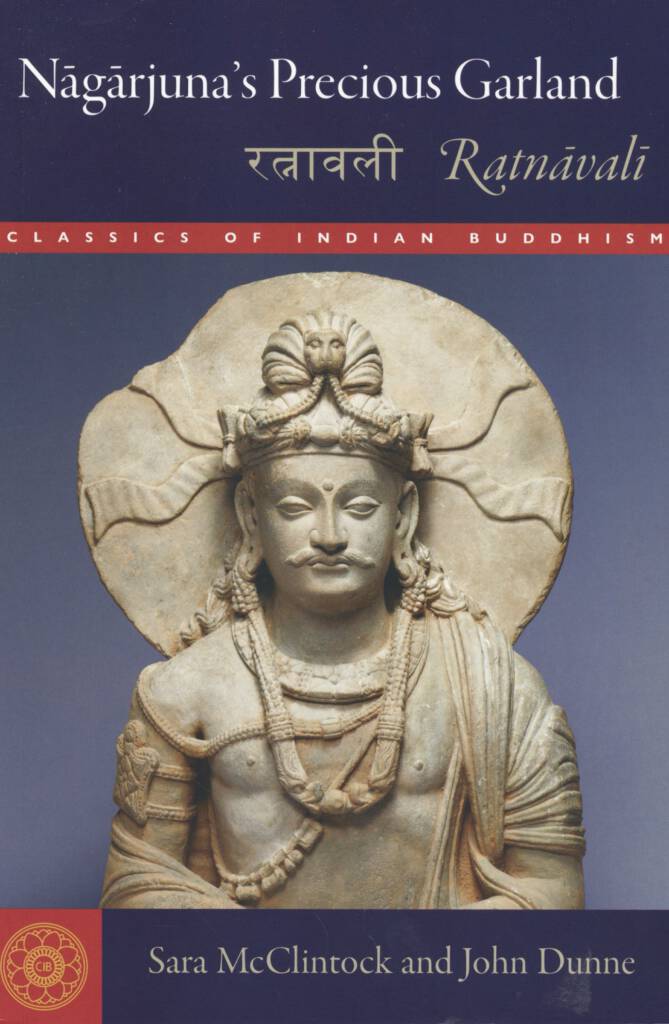
Nāgārjuna was an Indian Buddhist teacher, probably of the second century CE, who was renowned for his astute articulation of the philosophy of the Middle Way (Madhyamaka). His thoroughgoing critique of all forms of essentialism became a touchstone for Mahāyāna Buddhism in India, Tibet, and throughout East Asia, and his importance for the development of the Mahāyāna tradition can scarcely be exaggerated.
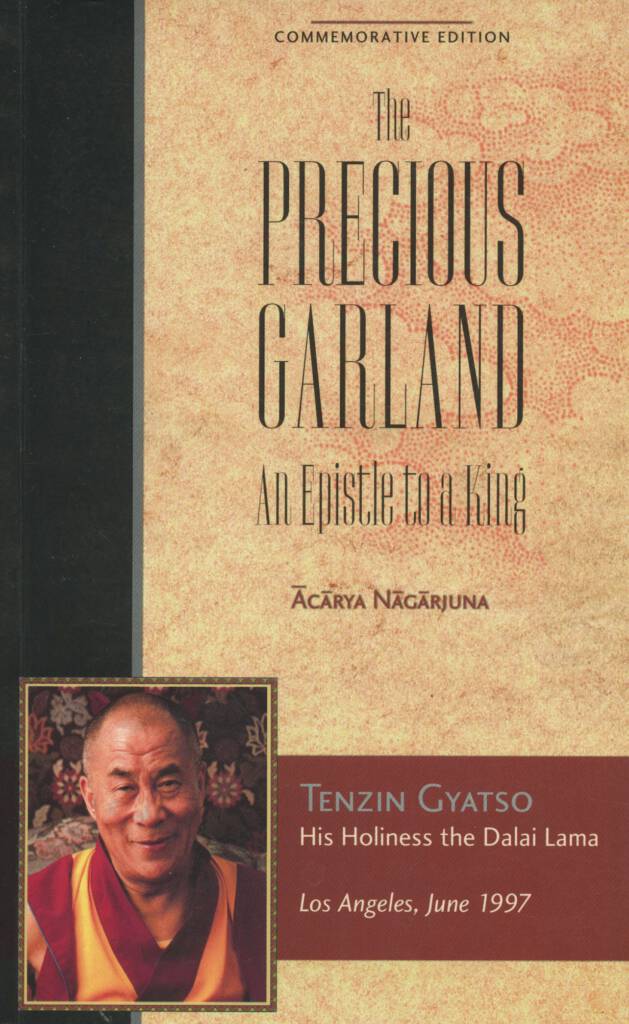
The translators here first rendered Nāgārjuna’s letter for the Dalai Lama’s teachings on the work in Los Angeles in 1997. While that commemorative edition was translated from the Tibetan, the present volume prioritizes the surviving Sanskrit verses along with the only known Indian commentary, by the eleventh-century scholar Ajitamitra. This is the first complete translation in English of the Precious Garland that takes the Indian text and commentary as its primary authorities. In addition, they provide rigorous working editions of the Sanskrit and Tibetan verses they translate. (Source: Wisdom Publications)Nāgārjuna was an Indian Buddhist teacher, probably of the second century CE, who was renowned for his astute articulation of the philosophy of the Middle Way (Madhyamaka). His thoroughgoing critique of all forms of essentialism became a touchstone for Mahāyāna Buddhism in India, Tibet, and throughout East Asia, and his importance for the development of the Mahāyāna tradition can scarcely be exaggerated.
The translators here first rendered Nāgārjuna’s letter for the Dalai Lama’s teachings on the work in Los Angeles in 1997. While that commemorative edition was translated from the Tibetan, the present volume prioritizes the surviving Sanskrit verses along with the only known Indian commentary, by the eleventh-century scholar Ajitamitra. This is the first complete translation in English of the Precious Garland that takes the Indian text and commentary as its primary authorities. In addition, they provide rigorous working editions of the Sanskrit and Tibetan verses they translate. (Source: Wisdom Publications)


Nāgārjuna was an Indian Buddhist teacher, probably of the second century CE, who was renowned for his astute articulation of the philosophy of the Middle Way (Madhyamaka). His thoroughgoing critique of all forms of essentialism became a touchstone for Mahāyāna Buddhism in India, Tibet, and throughout East Asia, and his importance for the development of the Mahāyāna tradition can scarcely be exaggerated.
The translators here first rendered Nāgārjuna’s letter for the Dalai Lama’s teachings on the work in Los Angeles in 1997. While that commemorative edition was translated from the Tibetan, the present volume prioritizes the surviving Sanskrit verses along with the only known Indian commentary, by the eleventh-century scholar Ajitamitra. This is the first complete translation in English of the Precious Garland that takes the Indian text and commentary as its primary authorities. In addition, they provide rigorous working editions of the Sanskrit and Tibetan verses they translate. (Source: Wisdom Publications)
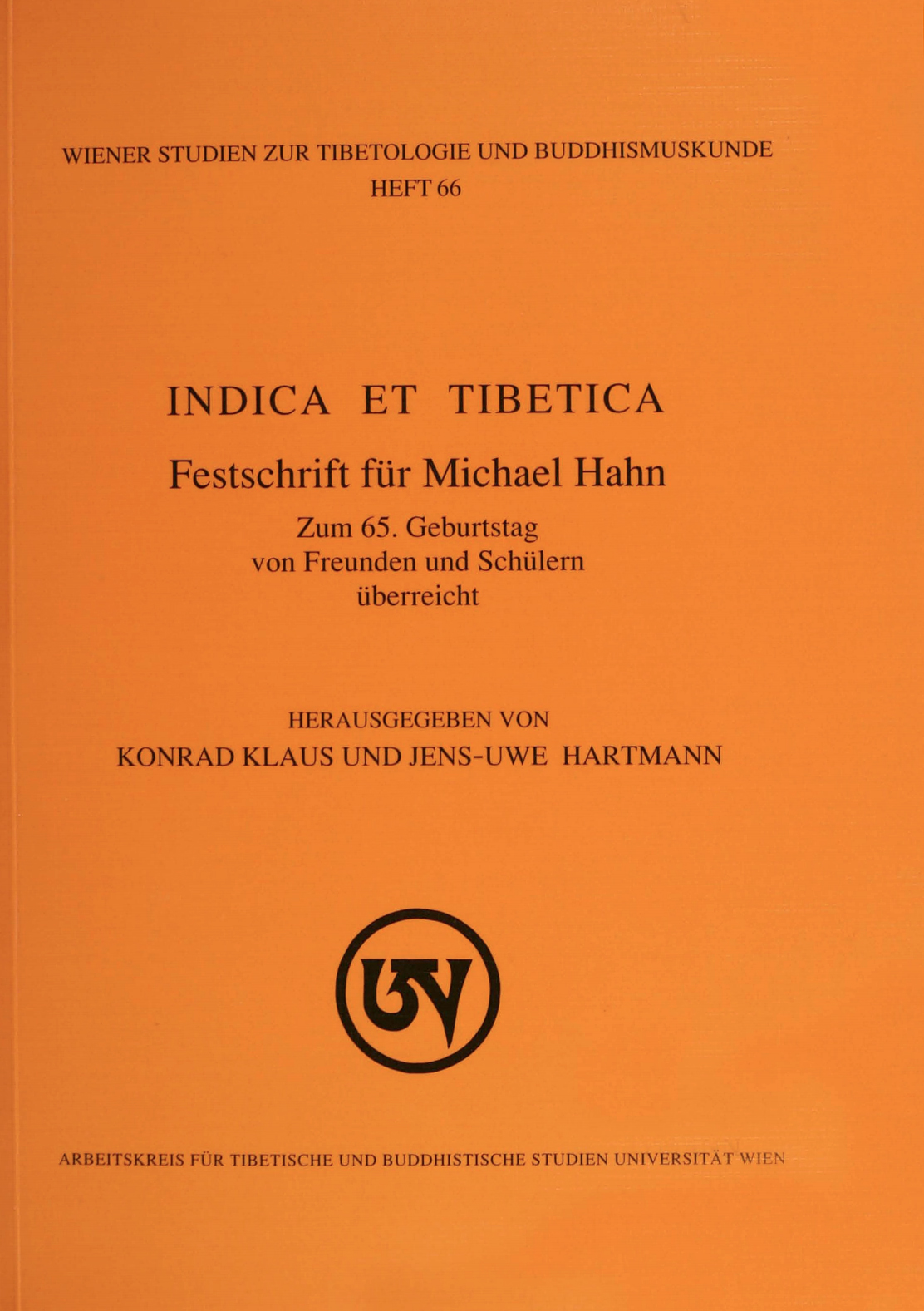
In jener Zeit in Nepal haben wir den Jubilar als äußerst kenntnisreichen und anregenden Gelehrten kennengelemt, der nicht müde wurde, uns Jüngeren, noch ganz am Anfang Stehenden etwas von der Faszination zu vermitteln, die ihm aus der Beschäftigung mit seinen Forschungsgegenständen erwuchs. Gleichzeitig verstand er es, durch seine offene und aufgeschlossene, Alters- und Wissensunterschiede ignorierende Art die Wurzeln für eine dauerhafte Freundschaft zu legen. Dafür und für all das, was wir seither an Anregung und Förderung von ihm erfahren haben, sind wir dankbar, und wir freuen uns, ihm mit dem vorliegenden Band wenigstens einen kleinen Teil jener Dankesschuld abstatten zu können.
Wir haben davon abgesehen, den Band in einen engeren thematischen Rahmen zu stellen, etwa durch die Forderung nach einem Bezug zu Nepal oder die Beschränkung auf Beiträge zu den engeren Forschungsgebieten des Jubilars. Michael Hahn ist mit Kollegen aus vie len Bereichen unseres Faches in alter Welt verbunden, und selbst die Arbeiten seiner Schüler umfassen ein so weites Spektrum, daß uns eine thematische Öffnung sinnvoll und notwendig erschien, um niemanden seiner zahlreichen Freunde und Schüler von vomherein von der Mitwirkung an dem Band auszuschließen.
Unser besonderer Dank gilt Herrn Dr. Helmut Eimer für sein sorgfaltiges Korrekturlesen. Herrn Peter Wyzlic, M. A., haben wir dafür zu danken, daß er stets mit Rat und Tat zur Seite stand, wenn es um die Lösung von Font-Problemen ging, insbesondere von solchen mit chinesischen und griechischen Zeichensätzen. Herr Prof. Dr. Ernst Steinkellner schlug uns vor, als seinen Beitrag zu der Festschrift den Band in die renommierte Reihe der Wiener Studien zur Tibetologie und Buddhismuskunde aufzunehmen, und diesem Vorschlag sind wir sehr gerne gefolgt. So danken wir ihm und den jetzigen Herausgebern, Frau Dr. Birgit Kellner, Herrn PD Dr. Helmut Krasser und Herrn Prof. Dr. Helmut Tauscher, fur die Veröffentlichung des Bandes in ihrer Reihe. (Die Herausgeber, preface, 7–8)
- a) The Sanskrit text as far as it is still available
- b) The canonical Tibetan version of the complete work
- c) The Taishō edition of Paramārtha's Chinese translation
Nāgārjuna was an Indian Buddhist teacher, probably of the second century CE, who was renowned for his astute articulation of the philosophy of the Middle Way (Madhyamaka). His thoroughgoing critique of all forms of essentialism became a touchstone for Mahāyāna Buddhism in India, Tibet, and throughout East Asia, and his importance for the development of the Mahāyāna tradition can scarcely be exaggerated.
The translators here first rendered Nāgārjuna’s letter for the Dalai Lama’s teachings on the work in Los Angeles in 1997. While that commemorative edition was translated from the Tibetan, the present volume prioritizes the surviving Sanskrit verses along with the only known Indian commentary, by the eleventh-century scholar Ajitamitra. This is the first complete translation in English of the Precious Garland that takes the Indian text and commentary as its primary authorities. In addition, they provide rigorous working editions of the Sanskrit and Tibetan verses they translate. (Source: Wisdom Publications)