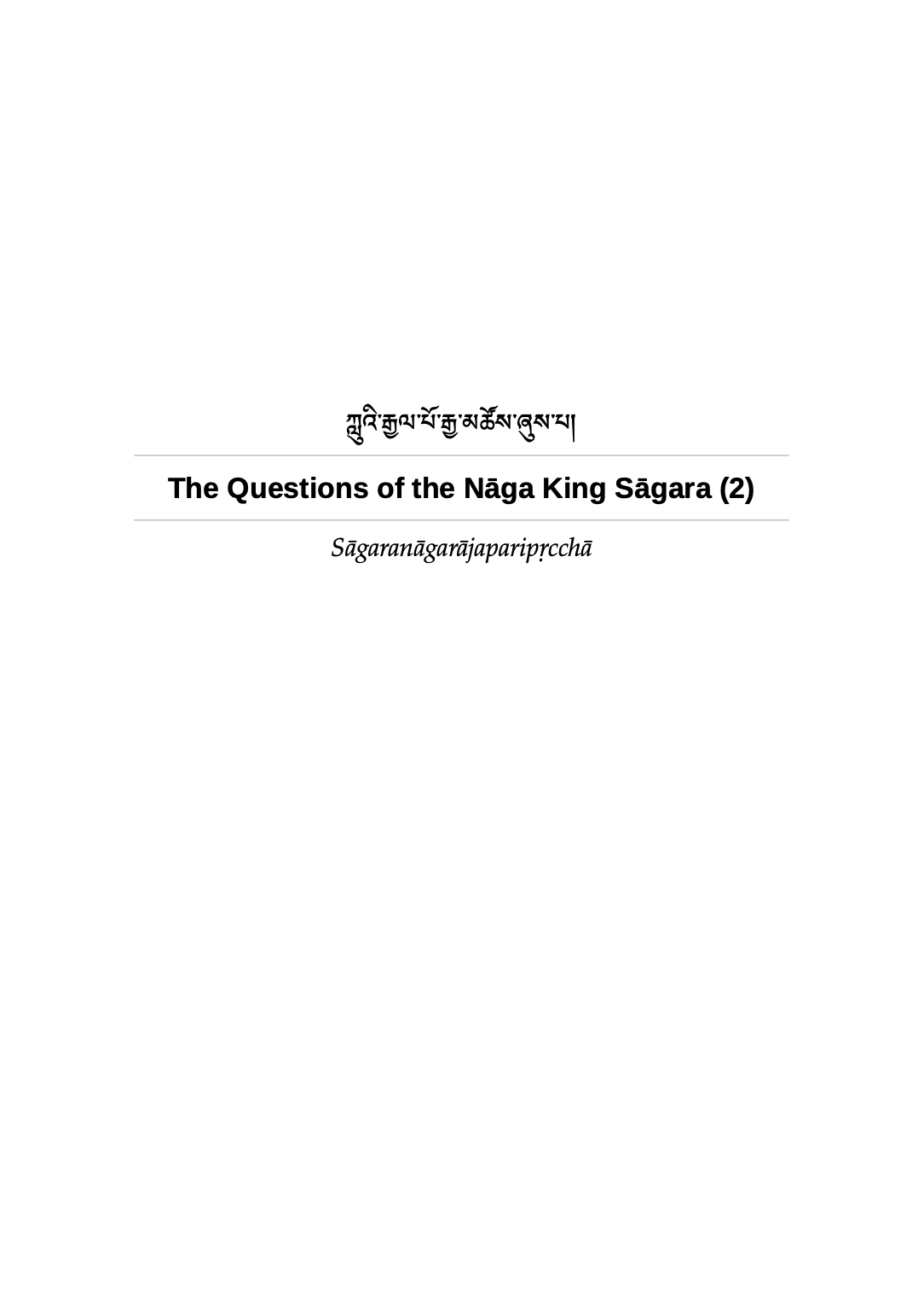
Sāgaranāgarājaparipṛcchāsūtra (2 of 3)
| 🤓 Admin Zone 🛠️ hidden to non-admins | |


Description

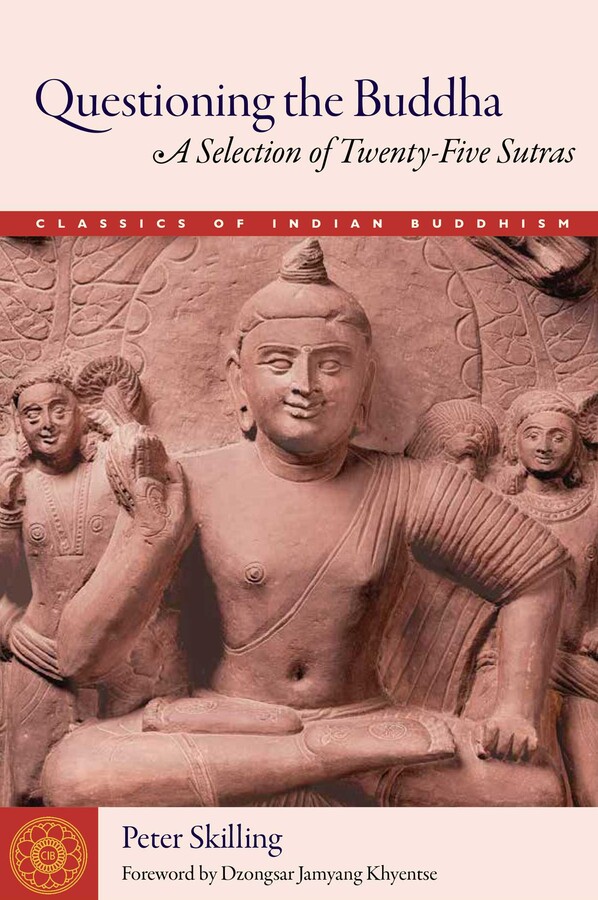
Peter Skilling, an authority on early Buddhist epigraphy, archaeology, and textual traditions, has been immersed in the Buddhist scriptures of diverse traditions for nearly half a century. In this volume, he draws on his deep and extensive research to render these ancient teachings in a fresh and precise language. His introduction is a fascinating history of the Buddhist sutras, including the transition from oral to written form, the rise of Mahayana literature, the transmission to Tibet, the development of canons, and a look at some of the pioneers of sutra study in the West.
Sutras included in this volume are: Four Dharmas Not to Be Taken for Granted; The Benefits of Giving; The Exposition of Four Dharmas; The Merit of the Three Refuges; Four Dharmas Never to Be Abandoned; Advice for Bodhisatva Dharmaketu; Advice for Bodhisatva Jayamati; Sūtra Comparing Bodhicitta to Gold; Bodhisatva Maitreya’s Question about the Gift of the Dharma; Four Summaries of the Dharma Spoken to the Nāga King Sāgara; The Stanza of Dependent Arising; The Heart Formula of Dependent Arising; Prediction of the Boy Brahmaśrī’s Future Buddhahood; Kṣemavatī’s Prediction to Future Buddhahood; The City Beggar Woman; An Old Woman’s Questions about Birth and Death; The Questions of Śrīmatī the Brahman Woman; The Questions of the Laywoman Gaṅgottarā; Brahmā Sahāṃpati’s Question; Advice to King Prasenajit; Passage to the Next Life; Instructions for King Bimbisāra; Instructions for King Udayana; Buddhas as Rare as a Grain of Golden Sand; and Predictions on the Eve of the Great Final Nirvāṇa. (Source: Wisdom Experience)

The first text (Toh 153) "begins with a miracle that portends the coming of the Nāga King Sāgara to Vulture Peak Mountain in Rājagṛha. The nāga king engages in a lengthy dialogue with the Buddha on various topics pertaining to the distinction between relative and ultimate reality, all of which emphasize the primacy of insight into emptiness. The Buddha thereafter journeys to King Sāgara’s palace in the ocean and reveals details of the king’s past lives in order to introduce the inexhaustible casket dhāraṇī. In the nāga king’s palace in the ocean, he gives teachings on various topics and acts as peacemaker, addressing the ongoing conflicts between the gods and asuras and between the nāgas and garuḍas. Upon returning to Vulture Peak, the Buddha engages in dialogue with King Ajātaśatru and provides Nāga King Sāgara’s prophecy."
The medium-length text (Toh 154) "presents a discourse given by the Buddha Shakyamuni on the importance of considering the effects caused by actions. At the start of his teaching, the Buddha remarks how the variety of forms that exist, and in fact all phenomena, come about as the result of virtuous and non-virtuous actions. By understanding this law of cause and effect and by taking great care to engage in virtue, one will avoid rebirth in the lower realms and enter the path to perfect awakening. In the rest of his discourse he explains in great detail the advantages of engaging in each of the ten virtues and the problems associated with not engaging in them."
In the shortest text (Toh 155), "the Buddha explains to a nāga king and an assembly of monks that reciting the four aphorisms of the Dharma is equivalent to recitation of all of the 84,000 articles of the Dharma. He urges them to make diligent efforts to engage in understanding the four aphorisms (also called the four seals), which are the defining philosophical tenets of the Buddhist doctrine: (1) all compounded phenomena are impermanent; (2) all contaminated phenomena are suffering; (3) all phenomena are without self; (4) nirvāṇa is peace." (Source: Rigpawiki.org and 84000)