Sāgaranāgarājaparipṛcchāsūtra (1 of 3)
| 🤓 Admin Zone 🛠️ hidden to non-admins | |


Description

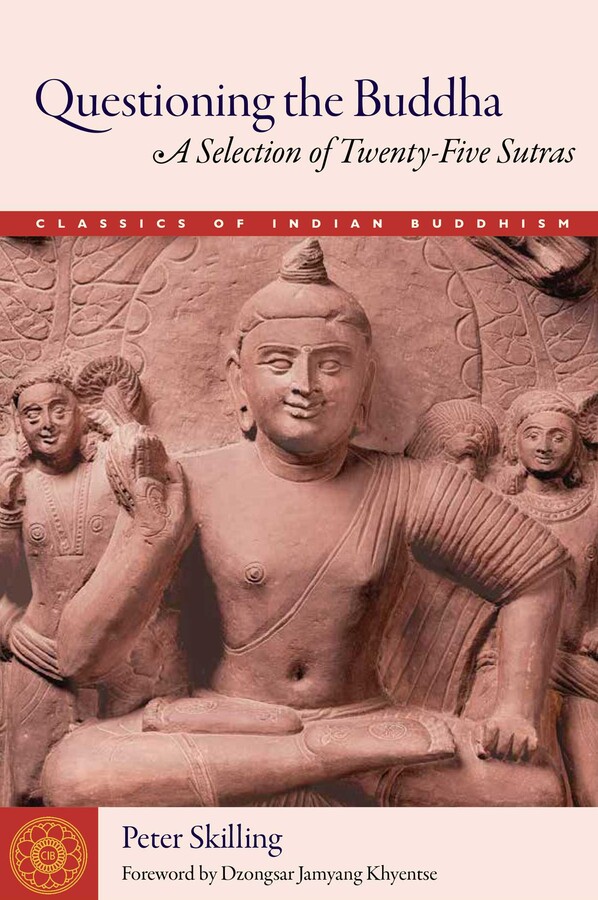
Peter Skilling, an authority on early Buddhist epigraphy, archaeology, and textual traditions, has been immersed in the Buddhist scriptures of diverse traditions for nearly half a century. In this volume, he draws on his deep and extensive research to render these ancient teachings in a fresh and precise language. His introduction is a fascinating history of the Buddhist sutras, including the transition from oral to written form, the rise of Mahayana literature, the transmission to Tibet, the development of canons, and a look at some of the pioneers of sutra study in the West.
Sutras included in this volume are: Four Dharmas Not to Be Taken for Granted; The Benefits of Giving; The Exposition of Four Dharmas; The Merit of the Three Refuges; Four Dharmas Never to Be Abandoned; Advice for Bodhisatva Dharmaketu; Advice for Bodhisatva Jayamati; Sūtra Comparing Bodhicitta to Gold; Bodhisatva Maitreya’s Question about the Gift of the Dharma; Four Summaries of the Dharma Spoken to the Nāga King Sāgara; The Stanza of Dependent Arising; The Heart Formula of Dependent Arising; Prediction of the Boy Brahmaśrī’s Future Buddhahood; Kṣemavatī’s Prediction to Future Buddhahood; The City Beggar Woman; An Old Woman’s Questions about Birth and Death; The Questions of Śrīmatī the Brahman Woman; The Questions of the Laywoman Gaṅgottarā; Brahmā Sahāṃpati’s Question; Advice to King Prasenajit; Passage to the Next Life; Instructions for King Bimbisāra; Instructions for King Udayana; Buddhas as Rare as a Grain of Golden Sand; and Predictions on the Eve of the Great Final Nirvāṇa. (Source: Wisdom Experience)

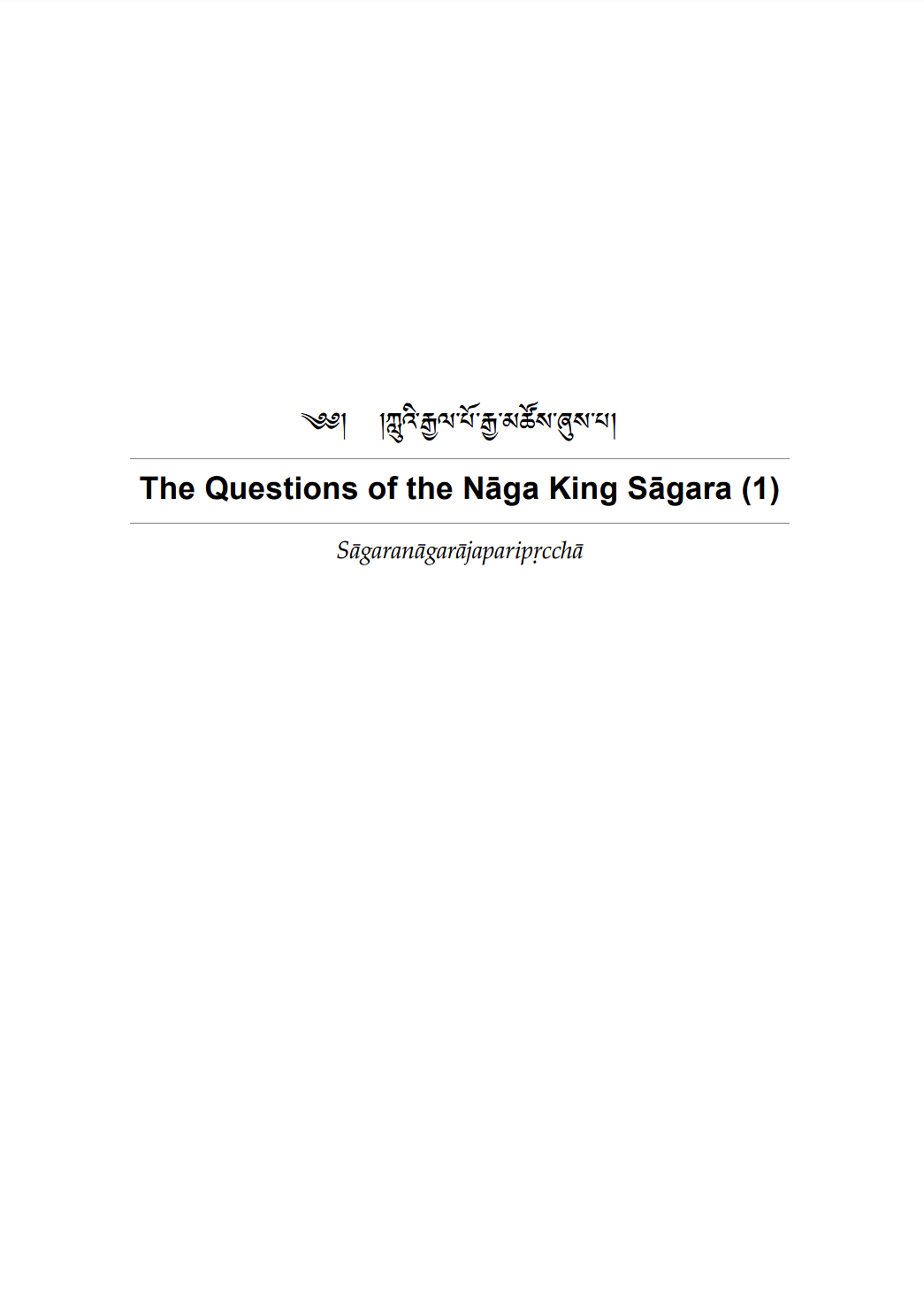
The Sutra of Sāgara, the Nāga King is also known as The Sutra of the Nāga King Sāgara Who Asked about the Incantations (Dhāraṇī) and The Sutra of the Accumulation of the Pure Dharma, the Dharma Jewel. This sutra was translated into Chinese by Dharmarakṣa in A.D. 285 and is also extant in Tibetan.
The first half of the sutra takes place on Vulture Peak (Gṛdhrakūṭa), the latter half in the Nāga king's oceanic palace. The principal teachings of the text are the Bodhisattva practice and the inexhaustible Dharma of Mahāyāna. This sutra is divided into twenty chapters, the main exposition is in the fourth chapter, "The Inexhaustible Storehouse"[11] [of Bodhisattva practice] through the sixth chapter, "The Body of Incantations." The principal theme is that the Mahāyāna teaching is embodied in the
incantation of the inexhaustible storehouse of merits which are accumulated by the Bodhisattva practice.
The Sutra of Sāgara, the Nāga King appears to have been greatly influenced by the Prajñāpāramitā but also suggests influence from the Pure Land school because of its reference to being born in the Buddha's land after hearing his name,[12] probably referring to the Buddha Amitābha and Pure Land. During the Nara period in Japan, this sutra gained immense popularity as a sacred text for the rituals of rain ceremonies because of the rain-giving faculty attributed to the Nāgas. The text was also used in rain ceremonies in China where sometimes as many as eleven hundred Buddhist priests attended the ritual.
Chapter 14, "Jewel Brocade Receives the Prediction," is strikingly similar to the Nāga princess episode in the Lotus Sutra and utilizes the same argument as the Vimalakīrtinirdeśa episode concerning the goddess.[13]
In the following episode, Jewel Brocade focuses on the key issue of the illusion of sexuality by arguing the case that all phenomena are equal in nature, that is, Empty, and should not be discriminated as being different in nature. The teaching of Emptiness is the fundamental and dominant theme in all Mahāyāna Buddhist literature. In accordance with that theme, the denial of innate sexual characteristics is a necessary corollary. The Sutra of Sāgara, the Nāga King is not the first text to conclude that there is no sexual discrimination if one accepts the teaching of Emptiness. In the Ta-chih tu lun (Mahāprajñāpāramitāśāstra), the discriminative characteristics of men and women are analogous to the ignorant individual's perception of water in a mirage.[14]
- If the characteristics of men and women are [discriminated as] identical or different, their true nature is unattainable. Why? Because phenomena [Dharmas] are neither the ego nor belong to the ego; they are Empty. Because they are Empty, there is neither male nor female.[15]
The commentary cites an author who explains that:
- . . . although women have superficial knowledge, conditioned by their past karma, they are able to receive a prediction [of future Buddhahood]. Because they express such a desire in their hearts, the Buddha will listen to them.[16]
Like the serpent princess in the Lotus Sutra, Jewel Brocade also offers her most precious jewel to the Buddha as a sign of her commitment to learn about his teaching. She immediately awakens to the thought of enlightenment, which indicates that she is a beginner Bodhisattva of the first stage and asserts, with her companions, that she will become a Buddha. Mahākāśyapa, the spokesman for the conservative Buddhist attitude toward women, immediately reminds the princess of the female sex's limitations. Here we see a different response to the conservative Buddhist position with regard to women. Unlike the Nāga princess in the Lotus Sutra who defers to the monk by changing into a male, Jewel Brocade replies that the Buddha's teaching has no male or female qualities. The princess then engages in a discourse on Emptiness which denies discriminations of any kind.
The episode of Jewel Brocade not only illustrates in a humorous way the comment from the Ta-chih tu lun that the Buddha will listen to those who desire in their hearts to commit themselves to the Bodhisattva practice but also ignores the sexual change required of aspiring young female Bodhisattvas, which we have found in other Buddhist texts. The Dharma removes notions of sexuality for those practicing the Bodhisattva path. (Paul, introduction, 232–34)
Notes
11. Chinese: wu-chin Isang.
12. See also Chapter 1, "Practice," in The Sutra of Sāgara, the Nāga King, T. v. 15, n. 598.
13. The Jewel Brocade tale appears to have been influenced by the Vimalakīrti sutra, having been translated approximately sixty years after the first recension of the Vimalakīrti which is no longer extant.
14. T. v. 25, n. 1509, p. 102 b 2-4.
15. T. v. 25, n. 1509, p. 206 b 6-8.

The first text (Toh 153) "begins with a miracle that portends the coming of the Nāga King Sāgara to Vulture Peak Mountain in Rājagṛha. The nāga king engages in a lengthy dialogue with the Buddha on various topics pertaining to the distinction between relative and ultimate reality, all of which emphasize the primacy of insight into emptiness. The Buddha thereafter journeys to King Sāgara’s palace in the ocean and reveals details of the king’s past lives in order to introduce the inexhaustible casket dhāraṇī. In the nāga king’s palace in the ocean, he gives teachings on various topics and acts as peacemaker, addressing the ongoing conflicts between the gods and asuras and between the nāgas and garuḍas. Upon returning to Vulture Peak, the Buddha engages in dialogue with King Ajātaśatru and provides Nāga King Sāgara’s prophecy."
The medium-length text (Toh 154) "presents a discourse given by the Buddha Shakyamuni on the importance of considering the effects caused by actions. At the start of his teaching, the Buddha remarks how the variety of forms that exist, and in fact all phenomena, come about as the result of virtuous and non-virtuous actions. By understanding this law of cause and effect and by taking great care to engage in virtue, one will avoid rebirth in the lower realms and enter the path to perfect awakening. In the rest of his discourse he explains in great detail the advantages of engaging in each of the ten virtues and the problems associated with not engaging in them."
In the shortest text (Toh 155), "the Buddha explains to a nāga king and an assembly of monks that reciting the four aphorisms of the Dharma is equivalent to recitation of all of the 84,000 articles of the Dharma. He urges them to make diligent efforts to engage in understanding the four aphorisms (also called the four seals), which are the defining philosophical tenets of the Buddhist doctrine: (1) all compounded phenomena are impermanent; (2) all contaminated phenomena are suffering; (3) all phenomena are without self; (4) nirvāṇa is peace." (Source: Rigpawiki.org and 84000)The Sutra of Sāgara, the Nāga King is also known as The Sutra of the Nāga King Sāgara Who Asked about the Incantations (Dhāraṇī) and The Sutra of the Accumulation of the Pure Dharma, the Dharma Jewel. This sutra was translated into Chinese by Dharmarakṣa in A.D. 285 and is also extant in Tibetan.
The first half of the sutra takes place on Vulture Peak (Gṛdhrakūṭa), the latter half in the Nāga king's oceanic palace. The principal teachings of the text are the Bodhisattva practice and the inexhaustible Dharma of Mahāyāna. This sutra is divided into twenty chapters, the main exposition is in the fourth chapter, "The Inexhaustible Storehouse"[11] [of Bodhisattva practice] through the sixth chapter, "The Body of Incantations." The principal theme is that the Mahāyāna teaching is embodied in the
incantation of the inexhaustible storehouse of merits which are accumulated by the Bodhisattva practice.
The Sutra of Sāgara, the Nāga King appears to have been greatly influenced by the Prajñāpāramitā but also suggests influence from the Pure Land school because of its reference to being born in the Buddha's land after hearing his name,[12] probably referring to the Buddha Amitābha and Pure Land. During the Nara period in Japan, this sutra gained immense popularity as a sacred text for the rituals of rain ceremonies because of the rain-giving faculty attributed to the Nāgas. The text was also used in rain ceremonies in China where sometimes as many as eleven hundred Buddhist priests attended the ritual.
Chapter 14, "Jewel Brocade Receives the Prediction," is strikingly similar to the Nāga princess episode in the Lotus Sutra and utilizes the same argument as the Vimalakīrtinirdeśa episode concerning the goddess.[13]
In the following episode, Jewel Brocade focuses on the key issue of the illusion of sexuality by arguing the case that all phenomena are equal in nature, that is, Empty, and should not be discriminated as being different in nature. The teaching of Emptiness is the fundamental and dominant theme in all Mahāyāna Buddhist literature. In accordance with that theme, the denial of innate sexual characteristics is a necessary corollary. The Sutra of Sāgara, the Nāga King is not the first text to conclude that there is no sexual discrimination if one accepts the teaching of Emptiness. In the Ta-chih tu lun (Mahāprajñāpāramitāśāstra), the discriminative characteristics of men and women are analogous to the ignorant individual's perception of water in a mirage.[14]
- If the characteristics of men and women are [discriminated as] identical or different, their true nature is unattainable. Why? Because phenomena [Dharmas] are neither the ego nor belong to the ego; they are Empty. Because they are Empty, there is neither male nor female.[15]
The commentary cites an author who explains that:
- . . . although women have superficial knowledge, conditioned by their past karma, they are able to receive a prediction [of future Buddhahood]. Because they express such a desire in their hearts, the Buddha will listen to them.[16]
Like the serpent princess in the Lotus Sutra, Jewel Brocade also offers her most precious jewel to the Buddha as a sign of her commitment to learn about his teaching. She immediately awakens to the thought of enlightenment, which indicates that she is a beginner Bodhisattva of the first stage and asserts, with her companions, that she will become a Buddha. Mahākāśyapa, the spokesman for the conservative Buddhist attitude toward women, immediately reminds the princess of the female sex's limitations. Here we see a different response to the conservative Buddhist position with regard to women. Unlike the Nāga princess in the Lotus Sutra who defers to the monk by changing into a male, Jewel Brocade replies that the Buddha's teaching has no male or female qualities. The princess then engages in a discourse on Emptiness which denies discriminations of any kind.
The episode of Jewel Brocade not only illustrates in a humorous way the comment from the Ta-chih tu lun that the Buddha will listen to those who desire in their hearts to commit themselves to the Bodhisattva practice but also ignores the sexual change required of aspiring young female Bodhisattvas, which we have found in other Buddhist texts. The Dharma removes notions of sexuality for those practicing the Bodhisattva path. (Paul, introduction, 232–34)
Notes
11. Chinese: wu-chin Isang.
12. See also Chapter 1, "Practice," in The Sutra of Sāgara, the Nāga King, T. v. 15, n. 598.
13. The Jewel Brocade tale appears to have been influenced by the Vimalakīrti sutra, having been translated approximately sixty years after the first recension of the Vimalakīrti which is no longer extant.
14. T. v. 25, n. 1509, p. 102 b 2-4.
15. T. v. 25, n. 1509, p. 206 b 6-8.
The Sutra of Sāgara, the Nāga King is also known as The Sutra of the Nāga King Sāgara Who Asked about the Incantations (Dhāraṇī) and The Sutra of the Accumulation of the Pure Dharma, the Dharma Jewel. This sutra was translated into Chinese by Dharmarakṣa in A.D. 285 and is also extant in Tibetan.
The first half of the sutra takes place on Vulture Peak (Gṛdhrakūṭa), the latter half in the Nāga king's oceanic palace. The principal teachings of the text are the Bodhisattva practice and the inexhaustible Dharma of Mahāyāna. This sutra is divided into twenty chapters, the main exposition is in the fourth chapter, "The Inexhaustible Storehouse"[11] [of Bodhisattva practice] through the sixth chapter, "The Body of Incantations." The principal theme is that the Mahāyāna teaching is embodied in the
incantation of the inexhaustible storehouse of merits which are accumulated by the Bodhisattva practice.
The Sutra of Sāgara, the Nāga King appears to have been greatly influenced by the Prajñāpāramitā but also suggests influence from the Pure Land school because of its reference to being born in the Buddha's land after hearing his name,[12] probably referring to the Buddha Amitābha and Pure Land. During the Nara period in Japan, this sutra gained immense popularity as a sacred text for the rituals of rain ceremonies because of the rain-giving faculty attributed to the Nāgas. The text was also used in rain ceremonies in China where sometimes as many as eleven hundred Buddhist priests attended the ritual.
Chapter 14, "Jewel Brocade Receives the Prediction," is strikingly similar to the Nāga princess episode in the Lotus Sutra and utilizes the same argument as the Vimalakīrtinirdeśa episode concerning the goddess.[13]
In the following episode, Jewel Brocade focuses on the key issue of the illusion of sexuality by arguing the case that all phenomena are equal in nature, that is, Empty, and should not be discriminated as being different in nature. The teaching of Emptiness is the fundamental and dominant theme in all Mahāyāna Buddhist literature. In accordance with that theme, the denial of innate sexual characteristics is a necessary corollary. The Sutra of Sāgara, the Nāga King is not the first text to conclude that there is no sexual discrimination if one accepts the teaching of Emptiness. In the Ta-chih tu lun (Mahāprajñāpāramitāśāstra), the discriminative characteristics of men and women are analogous to the ignorant individual's perception of water in a mirage.[14]
- If the characteristics of men and women are [discriminated as] identical or different, their true nature is unattainable. Why? Because phenomena [Dharmas] are neither the ego nor belong to the ego; they are Empty. Because they are Empty, there is neither male nor female.[15]
The commentary cites an author who explains that:
- . . . although women have superficial knowledge, conditioned by their past karma, they are able to receive a prediction [of future Buddhahood]. Because they express such a desire in their hearts, the Buddha will listen to them.[16]
Like the serpent princess in the Lotus Sutra, Jewel Brocade also offers her most precious jewel to the Buddha as a sign of her commitment to learn about his teaching. She immediately awakens to the thought of enlightenment, which indicates that she is a beginner Bodhisattva of the first stage and asserts, with her companions, that she will become a Buddha. Mahākāśyapa, the spokesman for the conservative Buddhist attitude toward women, immediately reminds the princess of the female sex's limitations. Here we see a different response to the conservative Buddhist position with regard to women. Unlike the Nāga princess in the Lotus Sutra who defers to the monk by changing into a male, Jewel Brocade replies that the Buddha's teaching has no male or female qualities. The princess then engages in a discourse on Emptiness which denies discriminations of any kind.
The episode of Jewel Brocade not only illustrates in a humorous way the comment from the Ta-chih tu lun that the Buddha will listen to those who desire in their hearts to commit themselves to the Bodhisattva practice but also ignores the sexual change required of aspiring young female Bodhisattvas, which we have found in other Buddhist texts. The Dharma removes notions of sexuality for those practicing the Bodhisattva path. (Paul, introduction, 232–34)
Notes
11. Chinese: wu-chin Isang.
12. See also Chapter 1, "Practice," in The Sutra of Sāgara, the Nāga King, T. v. 15, n. 598.
13. The Jewel Brocade tale appears to have been influenced by the Vimalakīrti sutra, having been translated approximately sixty years after the first recension of the Vimalakīrti which is no longer extant.
14. T. v. 25, n. 1509, p. 102 b 2-4.
15. T. v. 25, n. 1509, p. 206 b 6-8.