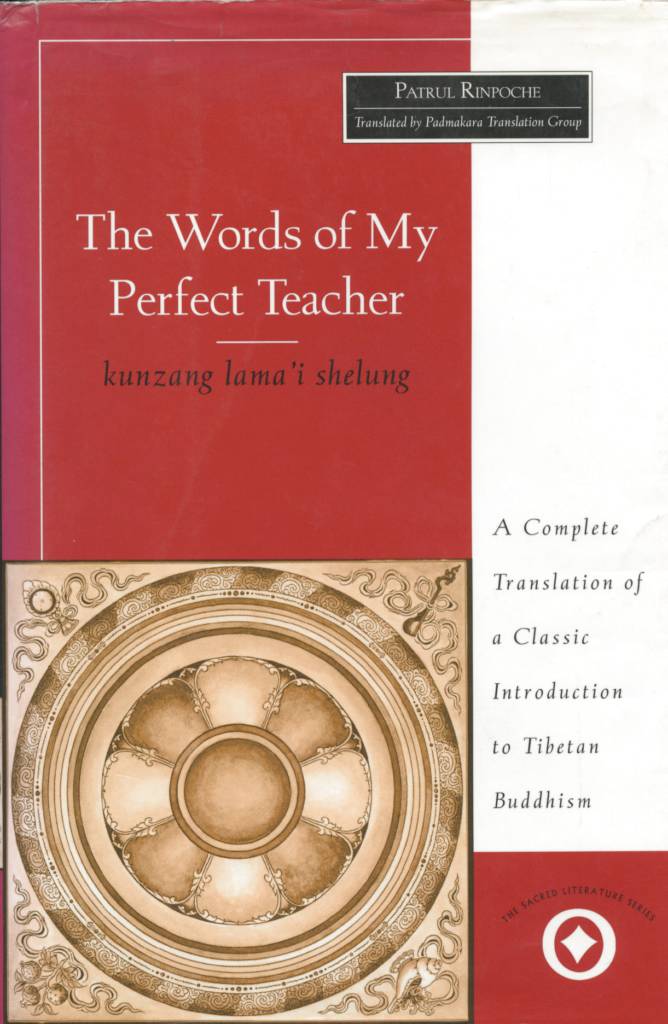
The Words of My Perfect Teacher (1994)
| 🤓 Admin Zone 🛠️ hidden to non-admins | |
-front.jpg)
Description
The Words of My Perfect Teacher is the classic commentary on the preliminary practices of the Longchen Nyingtig - one of the best-known cycles of teaching and a spiritual treasure of the Nyingmapa school - the oldest Tibetan Buddhist tradition.
Patrul Rinpoche makes the technicalities of his subject accessible through a wealth of stories, quotations, and references to everyday life. His style of mixing broad colloquialisms, stringent irony, and poetry has all the life and atmosphere of an oral teaching. Great care has been taken by the translators to render the precise meaning of the text in English while still reflecting the vigor and insight of the original Tibetan.
A preface by His Holiness the Dalai Lama, insightful introductory essays, explanatory notes, and classic illustrations enhance this quintessential introduction to Tibetan Buddhist practice. (Source Accessed April 18, 2025)
- List of illustrationsxxv
- Forewordxxvii
- ISLT Acknowledgementsxxviii
- Translators' Acknowledgementsxxix
- Translators' Introductionxxxi
- A brief historical introduction to Tibetan Buddhismxl
- Prologue3
- Part One: The Ordinary or External Preliminaries
- Chapter One: The difficulty of finding the freedoms and advantages
- I. The Proper Way To Listen To Spiritual Teaching
- 1. Attitude
- 1.1 The Vast Attitude of the Bodhicitta7
- 1.2 Vast Skill In Means: The Attitude of the Secret Mantrayāna8
- 2. Conduct
- 2.1 What To Avoid
- 2.1.1 The Three Defects of the Pot10
- 2.1.2 The Six Stains12
- 2.1.3 The Five Wrong Ways of Remembering15
- 2.2 What To Do
- 2.2.1 The Four Metaphors16
- 2.2.2 The Six Transcendent18
- 2.2.3 Other Modes of Conduct19
- 2.1 What To Avoid
- 1. Attitude
- II. The Teaching Itself: An Explanation of How Difficult It Is To Find the Freedoms and Advantages
- 1. Reflecting on the nature of freedom19
- 2. Reflecting on the particular advantages related to Dharma21
- 2.1 The Five Individual Advantages22
- 2.2 The Five Circumstantial Advantages25
- 2.3 The Eight Intrusive Circumstances30
- 2.4 The Eight Incompatible Propensities31
- 3. Reflecting on images that show how difficult it is to find the freedoms and advantages33
- 4. Reflecting on numerical comparisons34
- I. The Proper Way To Listen To Spiritual Teaching
- Chapter One: The difficulty of finding the freedoms and advantages
- Chapter Two: The impermanence of life
- I. The Impermanence of the Outer Universe In Which Beings Live39
- II. The Impermanence of Beings Living in the Universe41
- III. The Impermanence of Holy Beings42
- IV. The Impermanence of Those in Positions of Power44
- V. Other Examples of Impermanence45
- VI. The Uncertainty of the Circumstances of Death53
- VII. Intense Awareness of Impermanence54
- Chapter Two: The impermanence of life
- Chapter Three: The defects of saṁsāra
- I. The Sufferings of Saṁsāra in General61
- II. The Particular Sufferings Experienced by the Beings of the Six Realms
- 1. The eighteen hells
- 1.1 The Eight Hot Hells
- 1.1.1 The Reviving Hell63
- 1.1.2 The Black-Line Hell64
- 1.1.3 The Crushing Hell64
- 1.1.4 The Howling Hell65
- 1.1.5 The Great Howling Hell65
- 1.1.6 The Heating Hell65
- 1.1.7 The Intense Heating Hell65
- 1.1.8 The Hell of Ultimate Torment66
- 1.1.9 The Neighbouring Hells66
- 1.2 The Eight Cold Hells68
- 1.3 The Ephemeral Hells69
- 1.1 The Eight Hot Hells
- 2. The pretas
- 2.1 Pretas Who Live Collectively
- 1.1 Pretas suffering from external obscurations72
- 2.1.2 Pretas suffering from internal obscurations73
- 2.1.3 Pretas suffering from specific obscurations73
- 2.2 Pretas Who Move Through Space75
- 2.1 Pretas Who Live Collectively
- 3. The animals
- 3.1 Animals Living in the Depths76
- 3.2 Animals That Live Scattered76
- 4. The human realm78
- 4.1 The Three Fundamental Types of Suffering
- 4.1.1 The suffering of change78
- 4.1.2 Suffering upon suffering79
- 4.1.3 Suffering in the making79
- 4.2 The Sufferings of Birth, Sickness, Old Age and Death
- 4.2.1 The suffering of birth81
- 4.2.2 The suffering of old age82
- 4.2.3 The suffering of sickness83
- 4.2.4 The suffering of death84
- 4.3 Other Human Sufferings
- 4.3.1 The fear of meeting hated enemies85
- 4.3.2 The fear of losing loved ones86
- 4.3.3 The suffering of not getting what one wants89
- 4.3.4 The suffering of encountering what one does not want89
- 4.1 The Three Fundamental Types of Suffering
- 5. The asuras92
- 6. The gods93
- 1. The eighteen hells
- Chapter Three: The defects of saṁsāra
- Chapter Four: Actions: the principle of cause and effect
- I. Negative Actions To Be Abandoned101
- 1. The ten negative actions to be avoided
- 1.1 Taking Life102
- 1.2 Taking What Is Not Given105
- 1.3 Sexual Misconduct107
- 1.4 Lying107
- 1.5 Sowing Discord108
- 1.6 Harsh Speech108
- 1.7 Worthless Chatter108
- 1.8 Covetousness110
- 1.9 Wishing Harm On Others110
- 1.10 Wrong Views110
- 2. The effects of the ten negative actions112
- 2.1 The Fully Ripened Effect112
- 2.2 The Effect Similar to the Cause112
- 2.2.1 Actions Similar to the Cause112
- 2.2.2 Experiences Similar to the Cause113
- 2.3 The Conditioning Effect116
- 2.4 The Proliferating Effect117
- 1. The ten negative actions to be avoided
- II. Positive Actions To Be Adopted117
- III. The All-Determining Quality of Actions118
- I. Negative Actions To Be Abandoned101
- Chapter Four: Actions: the principle of cause and effect
- Chapter Five: The benefits of liberation
- I. Causes Leading to Liberation133
- II. The Result: The Three Levels of Enlightenment134
- Chapter Five: The benefits of liberation
- Chapter Six: How to follow a spiritual friend
- I. Examining the Teacher137
- II. Following the Teacher143
- III. Emulating the Teacher's Realization and Actions149
- Chapter Six: How to follow a spiritual friend
- Part Two: The Extraordinary or Internal Preliminaries
- Chapter One: Taking refuge, foundation stone of all paths
- I. Approaches To Taking Refuge
- 1. Faith
- 1.1 Vivid Faith171
- 1.2 Eager Faith172
- 1.3 Confident Faith172
- 2. Motivation
- 2.1 The Refuge of Lesser Beings176
- 2.2 The Refuge of Middling Beings176
- 2.3 The Refuge of Great Beings176
- 1. Faith
- II. How To Take Refuge177
- III. Precepts and Benefits of Taking Refuge
- 1. The precepts of taking refuge
- 1.1 The Three Things To Be Abandoned182
- 1.2 The Three Things To Be Done183
- 1.3 The Three Supplementary Precepts183
- 2. The benefits of taking refuge187
- 1. The precepts of taking refuge
- I. Approaches To Taking Refuge
- Chapter One: Taking refuge, foundation stone of all paths
- Chapter Two: Arousing bodhichitta, the root of the Great Vehicle
- I. Training the Mind in the Four Boundless Qualities195
- 1. Meditation on impartiality196
- 2. Meditation on love198
- 3. Meditation on compassion201
- 4. Meditation on sympathetic joy213
- II. Arousing Bodhichitta
- 1. Classification based on the three degrees of courage
- 1.1 The Courage of a King218
- 1.2 The Courage of a Boatman218
- 1.3 The Courage of a Shepherd218
- 2. Classification according to the Bodhisattva levels218
- 3. Classification according to the nature of bodhichitta
- 3.1 Relative Bodhichitta
- 3.1.1 Intention219
- 3.1.2 Application219
- 3.2 Absolute Bodhichitta219
- 3.1 Relative Bodhichitta
- 4. Taking the vow of bodhichitta220
- 1. Classification based on the three degrees of courage
- III. Training in Bodhichitta
- 1. Training in the bodhichitta of aspiration
- 1.1 Considering Others as Equal to Oneself222
- 1.2 Exchanging Oneself and Others223
- 1.3 Considering Others More Important Than Oneself228
- 2. Training in the bodhichitta of application: the six transcendent perfections
- 2.1 Transcendent Generosity
- 2.1.1 Material giving234
- 2.1.2 Giving Dharma236
- 2.1.3 Giving protection from fear238
- 2.2 Transcendent Discipline238
- 2.2.1 Avoiding negative actions239
- 2.2.2 Undertaking positive actions239
- 2.2.3 Bringing benefit to others239
- 2.3 Transcendent Patience
- 2.3.1 Patience when wronged240
- 2.3.2 Patience to bear hardships for the Dharma242
- 2.3.3 Patience to face the profound truth without fear244
- 2.4 Transcendent Diligence
- 2.4.1 Armour-like diligence245
- 2.4.2 Diligence in action245
- 2.4.3 Insatiable diligence246
- 2.5 Transcendent Concentration
- 2.5.1 Giving up distractions248
- 2.5.2 Actual concentration250
- 2.6 Transcendent Wisdom
- 2.6.1 Wisdom through hearing251
- 2.6.2 Wisdom through reflection251
- 2.6.3 Wisdom through meditation252
- 2.1 Transcendent Generosity
- 1. Training in the bodhichitta of aspiration
- I. Training the Mind in the Four Boundless Qualities195
- Chapter Two: Arousing bodhichitta, the root of the Great Vehicle
- Chapter Three: Meditating on the teacher as Vajrasattva to cleanse all obscurations
- I. How Obscurations Can Be Purified Through Confession263
- II. The Four Powers
- 1. The power of support265
- 2. The power of regret265
- 3. The power of resolution266
- 4. The power of action as an antidote266
- III. The Actual Meditation of Vajrasattva267
- Chapter Three: Meditating on the teacher as Vajrasattva to cleanse all obscurations
- Chapter Four: Offering the mandala to accumulate merit and wisdom
- I. The Need For the Two Accumulations283
- II. The Accomplishment Mandala285
- III. The Offering Mandala286
- 1. The thirty-seven element mandala offering287
- 2. The mandala offering of the three kāyas according to this text
- 2.1 The Ordinary Mandala of the Nirmāṇakāya288
- 2.2 The Extraordinary Mandala of the Sambhogakāya289
- 2.3 The Special Mandala of the Dharmakāya289
- Chapter Four: Offering the mandala to accumulate merit and wisdom
- Chapter Five: The kusali's accumulation: destroying the four demons at a single stroke
- I. The Body as an Offering297
- II. The Practice of Offering the Body298
- 1. The white feast for the guests above300
- 2. The white feast for the guests below300
- 3. The variegated feast for the guests above301
- 4. The variegated feast for the guests below301
- III. The Meaning of Chö303
- Chapter Five: The kusali's accumulation: destroying the four demons at a single stroke
- Chapter Six: Guru Yoga, entrance-way for blessings, the ultimate way to arouse the wisdom of realization
- I. The Reason for Guru Yoga309
- II. How to Practice Guru Yoga
- 1. Visualizing the field of merit313
- 2. Offering the seven branches
- 2.1 Prostration, the Antidote to Pride317
- 2.2 Offering321
- 2.3 Confession of Harmful Actions322
- 2.4 Rejoicing, the Antidote to Jealousy323
- 2.5 Exhorting the Buddhas to Turn the Wheel of Dharma324
- 2.6 Requesting the Buddhas Not to Enter Nirvana325
- 2.7 Dedication325
- 3. Resolute prayer328
- 4. Taking the four empowerments329
- III. The History of the Advent of the Early Translation Doctrine332
- IV. Propagation of the Essence-Teaching in Tibet, Land of Snows341
- 3. The hearing lineage of ordinary beings345
- Chapter Six: Guru Yoga, entrance-way for blessings, the ultimate way to arouse the wisdom of realization
- Part Three: The Swift Path of Transference
- Chapter One: Transference of consciousness, the instructions for the dying: Buddhahood without meditation
- I. The Five Kinds of Transference351
- 1. Superior transference to the dharmakāya through the seal of the view352
- 2. Middling transference to the sambhogakāya through the union of the generation and perfection phases352
- 3. Lower transference to the nirmāṇakāya through immeasurable compassion352
- 4. Ordinary transference using three ideas352
- 5. Transference performed for the dead with the hook of compassion352
- II. Ordinary Transference Using Three Ideas355
- 1. Training for transference357
- 2. Actual transference357
- 3. The steps of the meditation on transference
- 3.1 The Preliminaries359
- 3.2 The Main Visualization360
- I. The Five Kinds of Transference351
- Chapter One: Transference of consciousness, the instructions for the dying: Buddhahood without meditation
- Conclusion367
- Notes377
- Glossary401
- Bibliography441
- Index447
- Padmakara Translation Group455
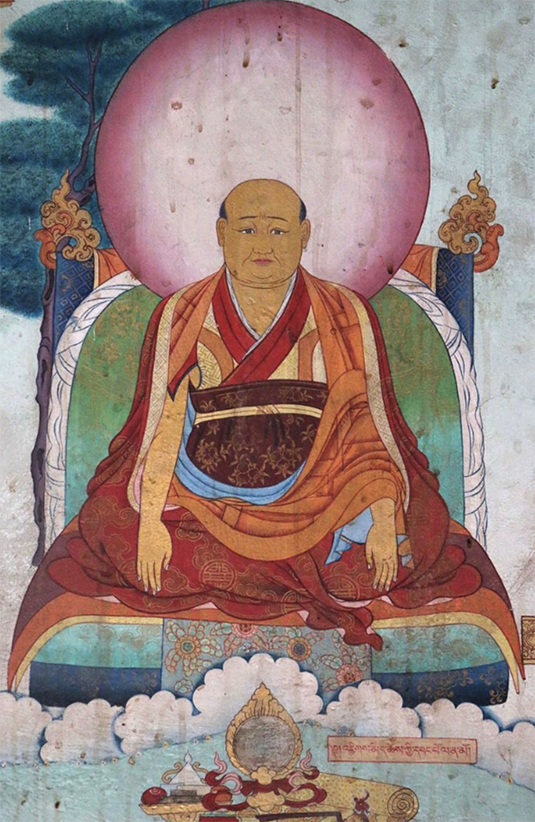
.jpg)

Patrul Rinpoche makes the technicalities of his subject accessible through a wealth of stories, quotations, and references to everyday life. His style of mixing broad colloquialisms, stringent irony, and poetry has all the life and atmosphere of an oral teaching. Great care has been taken by the translators to render the precise meaning of the text in English while still reflecting the vigor and insight of the original Tibetan.
A preface by His Holiness the Dalai Lama, insightful introductory essays, explanatory notes, and classic illustrations enhance this quintessential introduction to Tibetan Buddhist practice. This new edition includes translations of a postface to the text written a century ago (for the first printed edition in Tibetan) by the first Jamgon Kongtrul Rinpoche, and a new preface by the late Dilgo Khyentse Rinpoche. The notes, glossary and bibliography have been expanded and updated, Sanskrit names and terminology have been given their proper transliterated form, and the illustrations have been improved in quality and supplemented with new material.