On Knowing Reality

From Bodhicitta
LibraryBooksOn Knowing Reality
< Books
Books/On Knowing Reality

On Knowing Reality
Book


Please note that many items in our library are simply pages that represent a detailed library catalog entry and citation of someone else's work, presentation, or performance. Read our General Disclaimer for more information.
On Knowing Reality 2002-front.jpg

Description

On Knowing Reality is the first English translation with commentary of a crucial chapter of the Bodhisattvabhumi, composed in Sanskrit in the late fourth century by the philosopher-sage Asanga, founder of the Yogacara school of Mahayana Buddhism. The chapter is the core of Asanga's theoretical teachings: it deals with the central epistemological question of how to judge and validate knowledge, and how confusions about "reality" arise.

The Yogacara school has long been considered by scholars, East and West, as advocating a fully idealistic view of reality. But Janice D. Willis argues that Asanga himself had no such intention, and that in fact he rejected idealism as forcefully as he rejected the notion that ordinary beings know things as they really are. Instead, the chapter "On Knowing Reality" shows that Asanga expounded voidness (sunyata), rather than mind (citta), as the only absolute mode of being. He attempted to redefine sunyata in a more positive way than had Nagarjuna and other philosophers of so-called "critical" school, setting up a philosophical scheme to meditate between inexpressible reality and the distortions of ideation and language.

In addition to her translation and extensive commentary, Willis has written an introduction which describes the history of the text and of its author, discusses the place of the Yogacara school in Buddhist philosophical history, and interprets key terms in Asanga's system. The result is a work of fundamental importance to the study of the Mahayana Buddhist tradition. (Source: Namse Bangdzo Bookstore)

Citation
Willis, Janice D., trans. On Knowing Reality: The Tattvārtha Chapter of Asaṅga's Bodhisattvabhūmi. Delhi: Motilal Banarsidass Publishers, 1982.
Texts Translated
The Tattvārtha Chapter of Asaṅga's Bodhisattvabhūmi. Tattvārtha-paṭala. Sanskrit editions: (a) N. Dutt, ed. Bodhisattvabhūmi, Tibetan Sanskrit Works Series, vol. 7. Patna: K. P. Jayaswal Research Institute, 1966. Devanāgari text, pp. 25-39. (b) U. Wogihara, ed. Bodhisattvabhūmi, vol. 1, Tokyo, 1930. Romanized text, pp. 37-57. Tibetan edition: (c) Tibetan Tripiṭaka, Peking edition (the PTT); D. T. Suzuki, ed., rpt. ed., Kyoto: Otani University, 1.957. Vol. 110 (bstan 'gyur, sems-tsam, shi, folio sides 24b-37b), pp. 142-47. (d) Guṇaprabha's commentary on the chapter, entitled the Bodhisattvabhūmivṛtti, in PIT, yol. 112 (bstan 'gyur, sems tsam Yi, folio sides 196b-203b), pp. 9-12. (e) Sāgaramegha's commentary, the Yogācāryabhūmau bodhisattvabhūmi vyākhyā, PTT, vol. 112 (bstan 'gyur, sems tsam Ri, folio sides 63b-91b), pp. 69-80. Columbia AIBS


Commentary of

 
The Bodhisattvabhūmi (literally "The Stage of a Bodhisattva") stands as one of the most comprehensive and systematic expositions of the Mahāyāna Buddhist path from classical India. Formally the fifteenth section of the massive Yogācārabhūmi corpus, this foundational treatise provides an encyclopedic manual detailing the entire spiritual trajectory of a bodhisattva—from the initial arising of the "mind of awakening" (bodhicitta) to the ultimate attainment of perfect buddhahood.

Traditionally attributed to Ārya Asaṅga (c. fourth–fifth century CE) through revelation from the future buddha Maitreya, the text likely represents a compilation of earlier materials (c. 230–300 CE) that predates the fully developed Yogācāra philosophical system. Its existence in multiple Chinese translations from the early fifth century onward confirms its early date and widespread influence across Asian Buddhism.

The work's meticulously structured curriculum unfolds across three main books: The Support (ādhāra), the foundational prerequisites for the path; The Qualities That Accord with the Support (ādhārānudharma), the progressive stages of development; and The Perfection of the Support (ādhāraniṣṭhā), the ultimate fruition of buddhahood. At its philosophical heart lies the Tattvārthapaṭala (Chapter on Reality), which articulates a nuanced doctrine of "rightly grasped emptiness" that avoids both nihilism and eternalism. The text's longest and most influential section, the Śīlapaṭala (Chapter on Morality), codifies the complete ethical discipline of bodhisattvas through the famous system of bodhisattva precepts that became standard in Tibetan Buddhism.
Text

Partial translation of

 
Yogācārabhūmaubodhisattvabhūmiḥ
The Bodhisattvabhūmi (literally "The Stage of a Bodhisattva") stands as one of the most comprehensive and systematic expositions of the Mahāyāna Buddhist path from classical India. Formally the fifteenth section of the massive Yogācārabhūmi corpus, this foundational treatise provides an encyclopedic manual detailing the entire spiritual trajectory of a bodhisattva—from the initial arising of the "mind of awakening" (bodhicitta) to the ultimate attainment of perfect buddhahood.

Traditionally attributed to Ārya Asaṅga (c. fourth–fifth century CE) through revelation from the future buddha Maitreya, the text likely represents a compilation of earlier materials (c. 230–300 CE) that predates the fully developed Yogācāra philosophical system. Its existence in multiple Chinese translations from the early fifth century onward confirms its early date and widespread influence across Asian Buddhism.
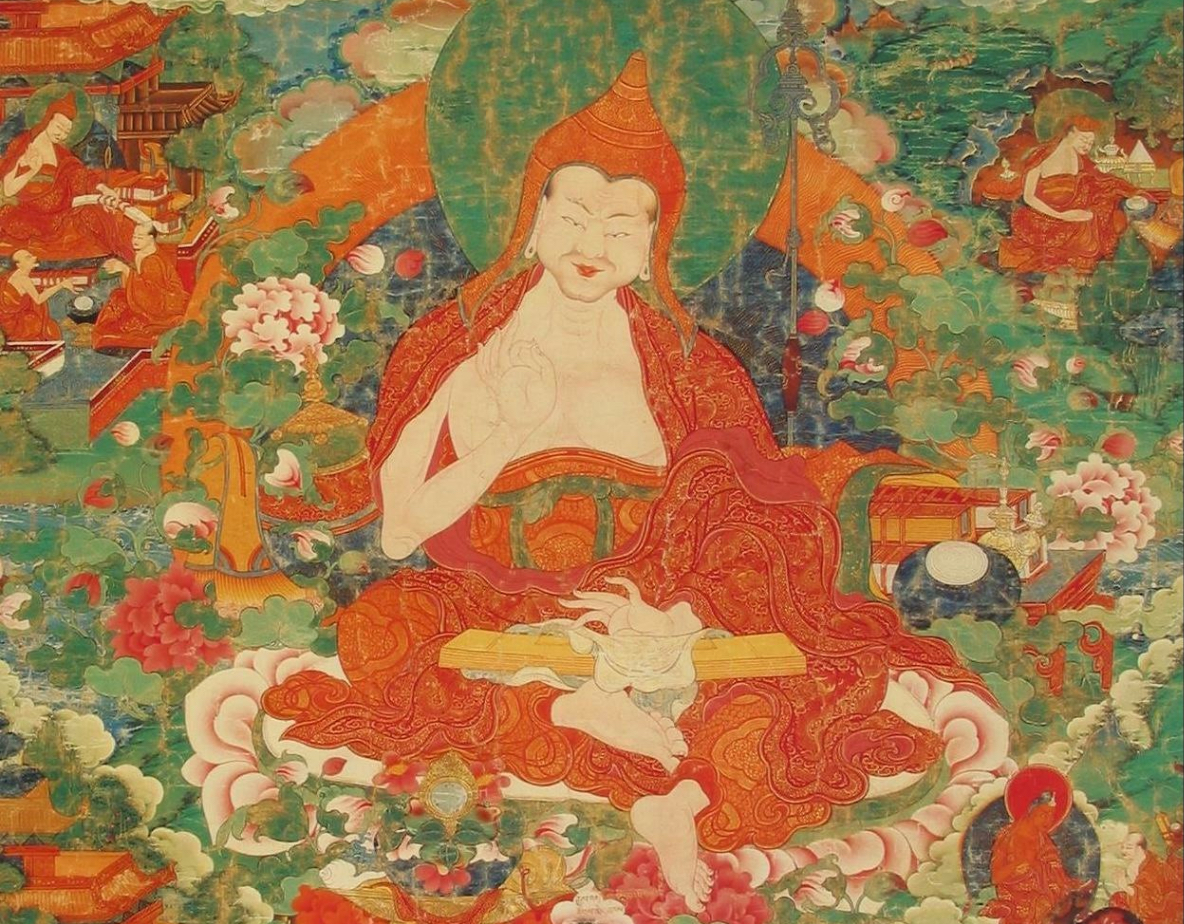
The work's meticulously structured curriculum unfolds across three main books: The Support (ādhāra), the foundational prerequisites for the path; The Qualities That Accord with the Support (ādhārānudharma), the progressive stages of development; and The Perfection of the Support (ādhāraniṣṭhā), the ultimate fruition of buddhahood. At its philosophical heart lies the Tattvārthapaṭala (Chapter on Reality), which articulates a nuanced doctrine of "rightly grasped emptiness" that avoids both nihilism and eternalism. The text's longest and most influential section, the Śīlapaṭala (Chapter on Morality), codifies the complete ethical discipline of bodhisattvas through the famous system of bodhisattva precepts that became standard in Tibetan Buddhism.
Text

  • Prefaceix
  • Introduction1
    • History of the Text and the Life of Its Author3
    • The Yogācāra School of the Mahāyāna13
    • Two Threads of the Yogācāra and Some Later Confusions20
    • Contents of the Chapter37
    • Notes to the Introduction47
  • The Chapter on Knowing Reality67
  • The Chapter on Knowing Reality: Running Translation147
  • Glossary177
  • Selected Bibliography193