Mahāmeghasūtra

From Bodhicitta
(Redirected from 'phags pa sprin chen po zhes bya ba theg pa chen po'i mdo)
Texts/Mahāmeghasūtra

🤓 Admin Zone 🛠️ hidden to non-admins
महामेघसूत्र
Mahāmeghasūtra
འཕགས་པ་སྤྲིན་ཆེན་པོ་ཞེས་བྱ་བ་ཐེག་པ་ཆེན་པོའི་མདོ།
'phags pa sprin chen po zhes bya ba theg pa chen po'i mdo
The Great Cloud Sūtra (84000)
Text


Please note that many items in our library are simply pages that represent a detailed library catalog entry and citation of someone else's work, presentation, or performance. Read our General Disclaimer for more information.

Description

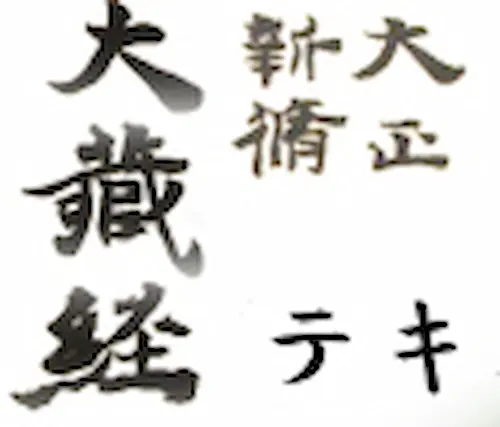
Mahāmeghasūtra. (T. Sprin chen po'i mdo; C. Dafangdeng wuxiang jing/Dayun jing; J. Daihōdō musōkyō/Daiungyō; K. Taebangdǔng musang kyǒng/Taeun kyǒng 大方等無想經/大雲經). In Sanskrit, the "Great Cloud Sūtra"; it is also known in China as the Dafangdeng wuxiang jing. The Mahāmeghasūtra contains the teachings given by the Buddha to the bodhisattva "Great Cloud Secret Storehouse" (C. Dayunmizang) on the inconceivable means of attaining liberation, samādhi, and the power of dhāraṇīs. The Buddha also declares that tathāgatas remain forever present in the dharma and the saṃgha despite having entered parinirvāṇa and that they are always endowed with the four qualities of nirvāṇa mentioned in the Mahāparinirvāṇasūtra, namely, permanence, bliss, purity, and selfhood (see guṇapāramitā). The Mahāparinirvāṇasūtra's influence on the Mahāmeghasūtra can also be witnessed in the story of the goddess "Pure Light" (C. Jingguang). Having heard the Mahāparinirvāṇasūtra in her past life, the goddess is told by the Buddha that she will be reborn as a universal monarch (cakravartin). The sūtra is often cited for its prophecy of the advent of Nāgārjuna, as well as for its injunctions against meat-eating. It was also recited in order to induce rain. In China, commentators on the Mahāmeghasūtra identified the newly enthroned Empress Wu Zetian as the reincarnation of the goddess, seeking thereby to legitimize her rule. As Emperor Gaozong (r. 649–683) of the Tang dynasty suffered from increasingly ill health, his ambitious and pious wife Empress Wu took over the imperial administration. After her husband's death she exiled the legitimate heir Zhongzong (r. 683–684, 703–710) and usurped the throne. One of the many measures she took to gain the support of the people was the publication and circulation of the Mahāmeghasūtra. Two translations by Zhu Fonian and Dharmakṣema were available at the time. Wu Zetian also ordered the establishment of monasteries called Dayunsi ("Great Cloud Monastery") in every prefecture of the empire. (Source: "Mahāmeghasūtra." In The Princeton Dictionary of Buddhism, 500. Princeton University Press, 2014. http://www.jstor.org/stable/j.ctt46n41q.27.)
Quoted in the aligned translations
Reference
Mahāmeghasūtra [महामेघसूत्र]. 'phags pa sprin chen po zhes bya ba theg pa chen po'i mdo [འཕགས་པ་སྤྲིན་ཆེན་པོ་ཞེས་བྱ་བ་ཐེག་པ་ཆེན་པོའི་མདོ།]. [The Great Cloud Sūtra (84000)]. Translated by Surendrabodhi, Ye shes sde, Dharmakṣema. Kangyur, RKTSK 232 http://www.rkts.org/cat.php?id=232&typ=1.
Interconnections
1 Recensions
Articles1980About this item
A critical Sanskrit edition of the Mahāmeghasūtra, edited by Moriguchi Mitsutoshi in Annual of the Institute for Comprehensive Studies of Buddhism, Taisho University.
1 Partial translations
3 Scholarship
Articles1980About this item
A critical Sanskrit edition of the Mahāmeghasūtra, edited by Moriguchi Mitsutoshi in Annual of the Institute for Comprehensive Studies of Buddhism, Taisho University.
Articles2000About this item
Thanks to several previous studies, the Mahāparinirvāṇasūtra (MPNS) has been proved to shift its central thought from the buddhakāya idea to the tathāgatagarbha/buddhadhātu idea. The present author has shown in another paper (Suzuki [1999]) that the movement between the buddhakāya idea and the tathāgatagarbha/buddhadhātu idea appears in the larger context including the MPNS, and has extracted this context from the various Mahāyāna sūtras under the name of the Mahāparinirvāṇasūtra-Group (MPNS-G), which consists of the Mahāmeghasūtra (MMS), the MPNS, the Aṅgulimālīyasūtra (AMS) and the Mahābherisūtra (MBhS). While the AMS is a direct successor of the MPNS, the MBhS succeeds the MPNS critically and shifts back its central thought from the tathāgatagarbha/buddhadhātu idea to the buddhakāya idea again.
      The MPNS-G declares or suggests the non-emptiness of the tathāgata. This is reinterpretation of the pratītyasamutpāda and the śūnyatā idea, and follows the rule of the historical Buddhist hermeneutics. It is especially worthwhile to note that the MBhS, like the Saṃdhinirmocanasūtra in the Vijñāptimātra idea, devaluates the śūnyatā idea as imperfect. This quite negative attitude toward the śūnyatā idea does not appear in any other Indian texts on the tathāgatagarbha idea including the MPNS and the AMS. Aiming at establishing the theory that every sentient being is able to perform religious efforts and become buddha on account of the nonemptiness and the eternalness of the tathāgata, the MBhS must reject any sūtra concerning the śūnyatā idea as imperfect. Though the MPNS is a pioneer in reinterpretation of the the śúnyatā idea, the MPNS cannot devaluate it perfectly because the śūnyatā idea is one of the main backgrounds to the MPNS. The MBhS's decisive attitude toward the śūnyatā idea devaluation becomes possible by having the MPNS as its basis. (Source: UTokyo Repository)
1 Scholarly presentations
MultimediaAbout this item
Scholars of Buddhism in Tibet and elsewhere have proposed different lists of which discourses (sūtras; Tib. mdo) in Mahāyāna Buddhism are sources for teaching about buddha-nature. Among these, there are those texts that teach some account of buddha-nature using the enigmatic expression tathāgatagarbha (Tib. de bzhin gshegs pa’i snying po). Crucially, these two categories are not quite the same: discourses concerned with buddha-nature exceed those that use the term tathāgatagarbha, whereas passing mention of tathāgatagarbha does not mean by itself that a discourse promotes anything that we can accurately call buddha-nature teaching.

To explore differences between what we should call ‘buddha-nature’ and ‘tathāgatagarbha’ works, the present paper will take as a case study the Mahāmeghasūtra (Discourse of the Great Cloud), which survives only in translations in Tibetan (Sprin chen po’i mdo) and in Chinese (Taishō no. 387 大方等無想經; also called 大方等大雲經). Although recognizably still the same discourse, our two versions of the Mahāmeghasūtra differ significantly in their content. Although commentators in the Jonang tradition, including Dol po pa (C13–14th), have sometimes taken the Mahāmeghasūtra to be a source for teaching about buddha-nature, the Tibetan version of the text certainly does not teach about this in a manner reminiscent of any other known Buddhist discourse, and is demonstrably not invested in the term tathāgatagarbha specifically. Attending to our two extant versions of the Mahāmeghasūtra, I will highlight some of the difficulties in the classification of Buddhist works, especially where two versions of ‘the same’ discourse appear to teach quite different things.

Moreover, recent reevaluation of the history of buddha-nature thought in India suggests that while the Mahāmeghasūtra is not interested in the expression tathāgatagarbha, it may still have been produced in a milieu associated with the very early life of this term. It could be argued that in material of specifically the Tibetan translation of the Mahāmeghasūtra we find traces of nascent thinking about ‘buddha-nature’ before this became tied inextricably to the term tathāgatagarbha. I tentatively propose that the Tibetan version of this work, so far little-studied, may provide insights into the early life of buddha-nature teaching in India, and that while it may not be a member of any delineable ‘tathāgatagarbha corpus’ it could nonetheless provide insights into a formative period of buddha-nature thought in India.
4 A topic of
MultimediaAbout this item
Scholars of Buddhism in Tibet and elsewhere have proposed different lists of which discourses (sūtras; Tib. mdo) in Mahāyāna Buddhism are sources for teaching about buddha-nature. Among these, there are those texts that teach some account of buddha-nature using the enigmatic expression tathāgatagarbha (Tib. de bzhin gshegs pa’i snying po). Crucially, these two categories are not quite the same: discourses concerned with buddha-nature exceed those that use the term tathāgatagarbha, whereas passing mention of tathāgatagarbha does not mean by itself that a discourse promotes anything that we can accurately call buddha-nature teaching.

To explore differences between what we should call ‘buddha-nature’ and ‘tathāgatagarbha’ works, the present paper will take as a case study the Mahāmeghasūtra (Discourse of the Great Cloud), which survives only in translations in Tibetan (Sprin chen po’i mdo) and in Chinese (Taishō no. 387 大方等無想經; also called 大方等大雲經). Although recognizably still the same discourse, our two versions of the Mahāmeghasūtra differ significantly in their content. Although commentators in the Jonang tradition, including Dol po pa (C13–14th), have sometimes taken the Mahāmeghasūtra to be a source for teaching about buddha-nature, the Tibetan version of the text certainly does not teach about this in a manner reminiscent of any other known Buddhist discourse, and is demonstrably not invested in the term tathāgatagarbha specifically. Attending to our two extant versions of the Mahāmeghasūtra, I will highlight some of the difficulties in the classification of Buddhist works, especially where two versions of ‘the same’ discourse appear to teach quite different things.

Moreover, recent reevaluation of the history of buddha-nature thought in India suggests that while the Mahāmeghasūtra is not interested in the expression tathāgatagarbha, it may still have been produced in a milieu associated with the very early life of this term. It could be argued that in material of specifically the Tibetan translation of the Mahāmeghasūtra we find traces of nascent thinking about ‘buddha-nature’ before this became tied inextricably to the term tathāgatagarbha. I tentatively propose that the Tibetan version of this work, so far little-studied, may provide insights into the early life of buddha-nature teaching in India, and that while it may not be a member of any delineable ‘tathāgatagarbha corpus’ it could nonetheless provide insights into a formative period of buddha-nature thought in India.
Articles1980About this item
A critical Sanskrit edition of the Mahāmeghasūtra, edited by Moriguchi Mitsutoshi in Annual of the Institute for Comprehensive Studies of Buddhism, Taisho University.
Articles2000About this item
Thanks to several previous studies, the Mahāparinirvāṇasūtra (MPNS) has been proved to shift its central thought from the buddhakāya idea to the tathāgatagarbha/buddhadhātu idea. The present author has shown in another paper (Suzuki [1999]) that the movement between the buddhakāya idea and the tathāgatagarbha/buddhadhātu idea appears in the larger context including the MPNS, and has extracted this context from the various Mahāyāna sūtras under the name of the Mahāparinirvāṇasūtra-Group (MPNS-G), which consists of the Mahāmeghasūtra (MMS), the MPNS, the Aṅgulimālīyasūtra (AMS) and the Mahābherisūtra (MBhS). While the AMS is a direct successor of the MPNS, the MBhS succeeds the MPNS critically and shifts back its central thought from the tathāgatagarbha/buddhadhātu idea to the buddhakāya idea again.
      The MPNS-G declares or suggests the non-emptiness of the tathāgata. This is reinterpretation of the pratītyasamutpāda and the śūnyatā idea, and follows the rule of the historical Buddhist hermeneutics. It is especially worthwhile to note that the MBhS, like the Saṃdhinirmocanasūtra in the Vijñāptimātra idea, devaluates the śūnyatā idea as imperfect. This quite negative attitude toward the śūnyatā idea does not appear in any other Indian texts on the tathāgatagarbha idea including the MPNS and the AMS. Aiming at establishing the theory that every sentient being is able to perform religious efforts and become buddha on account of the nonemptiness and the eternalness of the tathāgata, the MBhS must reject any sūtra concerning the śūnyatā idea as imperfect. Though the MPNS is a pioneer in reinterpretation of the the śúnyatā idea, the MPNS cannot devaluate it perfectly because the śūnyatā idea is one of the main backgrounds to the MPNS. The MBhS's decisive attitude toward the śūnyatā idea devaluation becomes possible by having the MPNS as its basis. (Source: UTokyo Repository)