| 🤓 Admin Zone 🛠️ hidden to non-admins | |
Description
commitments.
The Sanmayakai jo is a text deeply influenced by and indebted to the Putixin lun. In outlining the various teachings in the world, the Putixin lun has a general approach covering worldly beings, the non-Buddhists, the two vehicles, and exoteric Mahāyāna without mentioning specific schools. Kūkai refines that presentation to mention some characteristics of the ten abodes of mind, which is to say the kinds of teachings known in early ninth century East Asia. In total, the ten abodes of mind are mentioned in three separate sections of the Sanmayakai jo (§I.1, II.3.1, and III.2.1), indicating that it is a major underpinning of the teachings of this text. (Source: Thomas Eijō Dreitlein, "An Annotated Translation of Kūkai’s Sanmayakai jo, Including the Himitsu sanmaya bukkai gi" Bulletin of the Research Institute of Esoteric Buddhist Culture: Mikkyo Bunka Kenkyusho Kiyo 28 (March 2015): 1 and 4, https://www.koyasan-u.ac.jp/laboratory/pdf/kiyo28/28_dreitlein.pdf.

As discussion of the possibilities available to sentient beings engaged in various ritual practices and devotions progressed, the notion arose that they were actual partakers in Buddha-nature, with the potential of attaining Buddhahood. That sentient beings could even think of such a notion was indeed a radical departure from the doctrines of early Buddhism.
It was perhaps Kūkai, in his Shingon Buddhist doctrine, who took this notion to its fullest extent as he forwarded his scheme of actual integration between man and Buddha, facilitated by means of specifically directed practice, including activities of body, speech and mind. Such integration was not merely a philosophical phenomenon, but was viewed as a tangible and very immediate process. This immediacy is typified in the statement adopted by Kūkai indicating that one could even 'be a Buddha in this very body' (sokushin-jōbutsu), eliminating the necessity for countless rebirths.
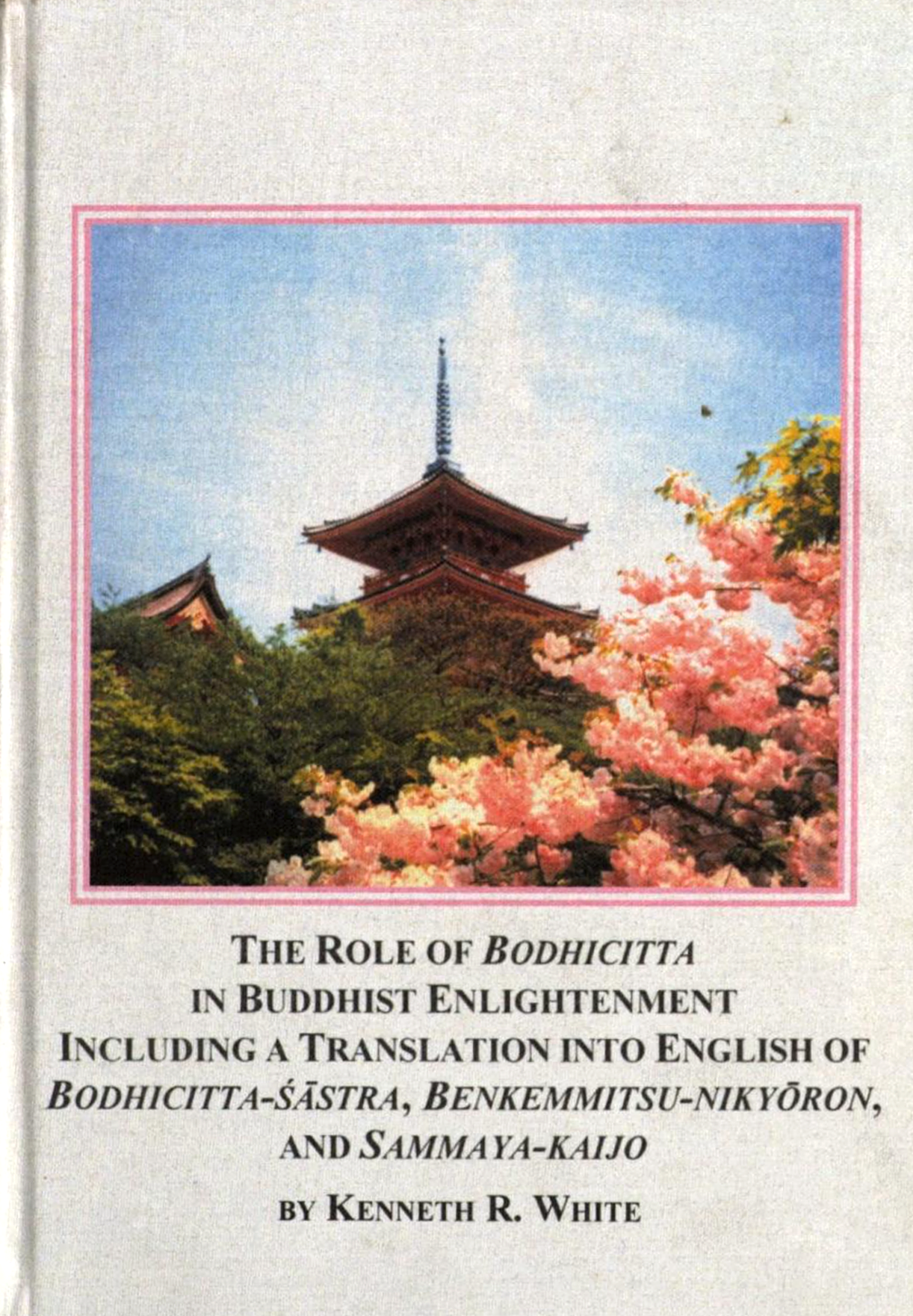
Kūkai saw his unique Shingon doctrine and practice as not merely an addition to Mahāyāna Buddhist thought and Japanese Buddhist ritual, but rather as the distillation of all that Buddhist doctrine had been hinting at and attempting to explain. He took it to constitute the effective essence of Mahāyāna Buddhism, emphasizing the important notion that Buddhahood is a possibility for all. Two of Kūkai's original works, Benkemmitsu-nikyōron and Sammaya-kaijo, as well as the Bodhicitta-śāstra, a text from which he often quoted, constitute the foundation of his sokushin-jōbutsu thought, and are elucidating in an analysis of the development of his bodhicitta view. (Source: Edwin Mellen Press)As discussion of the possibilities available to sentient beings engaged in various ritual practices and devotions progressed, the notion arose that they were actual partakers in Buddha-nature, with the potential of attaining Buddhahood. That sentient beings could even think of such a notion was indeed a radical departure from the doctrines of early Buddhism.
It was perhaps Kūkai, in his Shingon Buddhist doctrine, who took this notion to its fullest extent as he forwarded his scheme of actual integration between man and Buddha, facilitated by means of specifically directed practice, including activities of body, speech and mind. Such integration was not merely a philosophical phenomenon, but was viewed as a tangible and very immediate process. This immediacy is typified in the statement adopted by Kūkai indicating that one could even 'be a Buddha in this very body' (sokushin-jōbutsu), eliminating the necessity for countless rebirths.
Kūkai saw his unique Shingon doctrine and practice as not merely an addition to Mahāyāna Buddhist thought and Japanese Buddhist ritual, but rather as the distillation of all that Buddhist doctrine had been hinting at and attempting to explain. He took it to constitute the effective essence of Mahāyāna Buddhism, emphasizing the important notion that Buddhahood is a possibility for all. Two of Kūkai's original works, Benkemmitsu-nikyōron and Sammaya-kaijo, as well as the Bodhicitta-śāstra, a text from which he often quoted, constitute the foundation of his sokushin-jōbutsu thought, and are elucidating in an analysis of the development of his bodhicitta view. (Source: Edwin Mellen Press)