| 🤓 Admin Zone 🛠️ hidden to non-admins | |
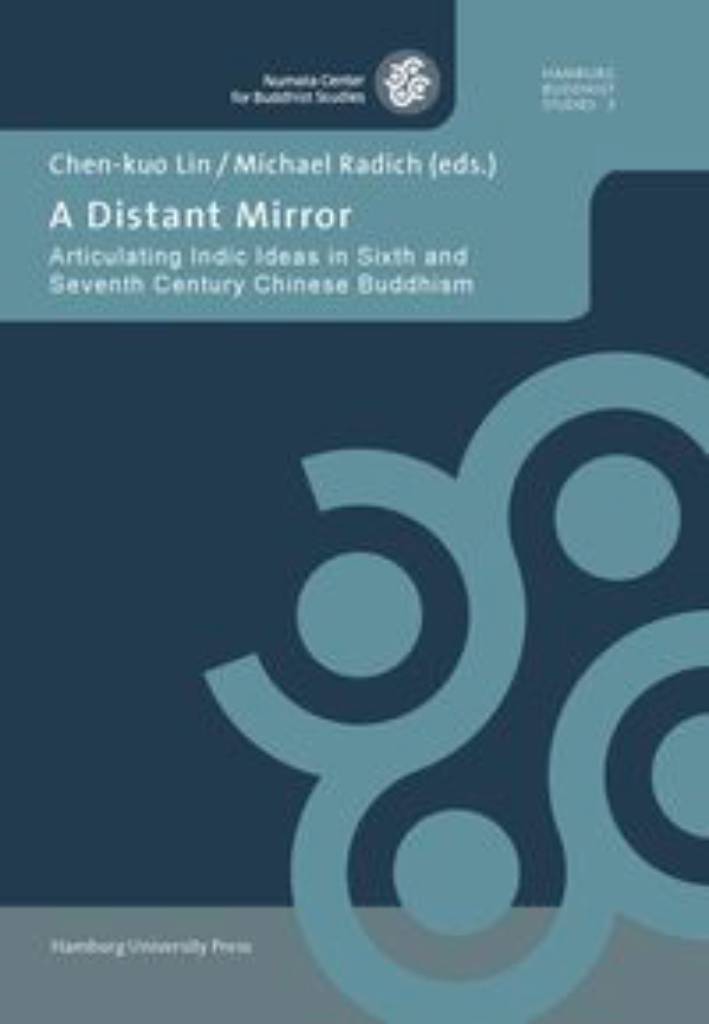
A Distant Mirror: Articulating Indic Ideas in Sixth and Seventh Century Chinese Buddhism
Book
Please note that many items in our library are simply pages that represent a detailed library catalog entry and citation of someone else's work, presentation, or performance. Read our General Disclaimer for more information. You can find more information about this item on the publisher website.

Description
In this book, an international team of fourteen scholars investigates the Chinese reception of Indian Buddhist ideas, especially in the sixth and seventh centuries. Topics include Buddhist logic and epistemology (pramāṇa, yinming); commentaries on Indian Buddhist texts; Chinese readings of systems as diverse as Madhyamaka, Yogācāra and tathāgatagarbha; the working out of Indian concepts and problematics in new Chinese works; and previously under-studied Chinese evidence for developments in India. The authors aim to consider the ways that these Chinese materials might furnish evidence of broader Buddhist trends, thereby problematizing a prevalent notion of “sinification”, which has led scholars to consider such materials predominantly in terms of trends ostensibly distinctive to China. The volume also tries to go beyond seeing sixth- and seventh-century China primarily as the age of the formation and establishment of the Chinese Buddhist “schools”. The authors attempt to view the ideas under study on their own terms, as valid Buddhist ideas engendered in a rich, “liminal” space of interchange between two large traditions. (Source: Hamburg University Press)
Citation
Lin, Chen-kuo, and Michael Radich, eds. A Distant Mirror: Articulating Indic Ideas in Sixth and Seventh Century Chinese Buddhism. Hamburg Buddhist Studies 3. Hamburg: Hamburg University Press, 2014. https://hup.sub.uni-hamburg.de/volltexte/2014/146/pdf/HamburgUP_HBS03_LinRadich_Mirror.pdf.
Publisher Link
Interconnections
1 Scholarship on

One of the most revered and recited scriptures of the perfection of wisdom genre (prajñāpāramitāsūtras), perhaps second only to the Heart Sūtra, both of which became especially popular in the East Asian Buddhist traditions. It is a crucial source for Mahāyāna tenets of selflessness and the emptiness of phenomena, and its discourse is framed as an explanation of how to enter into the vehicle of the bodhisattvas by developing and sustaining their enlightened perspective.