Books/Becoming Bodhisattvas: Difference between revisions
From Bodhicitta
< BooksBooks/Becoming Bodhisattvas
(CSV import of Library Items) Tag: Replaced |
No edit summary |
||
| Line 1: | Line 1: | ||
{{LibraryItem}} | {{LibraryItem | ||
|ItemNumber=0017 | |||
|Priority=1 | |||
|GregDescription=Translation of the root verses of the BCA together with a Dharma teaching on the The Way of the Bodhisattva in Today's World (Chapter 9 is omitted). The book contains an appendix: Study Guidelines (reading out loud, memorizing, journaling, dedicating the merit, visualization for ending a session of study) | |||
|GregNotes=Topics of the book cover: | |||
*The idea of life transformation by awakening the longing for bodhicitta | |||
*The necessity and urgency of this transformation in today's world | |||
*Dealing with the experience of death, decline, war, etc. | |||
*Using our suffering to connect to others | |||
*Not worrying about results when aspiring to help beings | |||
*Being beyond self-centeredness | |||
*Confession to move beyond self-deception and neurosis | |||
*The yearly Life Review: imagining you're about to die | |||
*Rejoicing to overcome jealousy and competitiveness | |||
*Stop hating (e.g., politicians, others, etc.) | |||
*Sharing merit as surrendering | |||
*On the most basic level, wishing others do not experience our suffering (Right in the middle of our foulest emotions, we find this precious gem; there in the midst of confusion and reactivity, we find the jewel of bodhichitta.) | |||
*The bodhisattva path is not about being a “good” person | |||
*Making friends with your emotions through intelligent attention | |||
*Keeping a rule of life | |||
*Gently returning to the present (and all our fears come to nothing) | |||
*In this age of multitasking, Śāntideva's instruction is radical: calm the mind by doing one thing at a time | |||
*Slowing down (speech, etc.) | |||
*No action has to be destitute of merit | |||
*Not getting trapped in fixating thinking leading to anger | |||
*Humor as a way to defuse anger | |||
*Seeking confirmation as a trigger to anger | |||
*Dismantling the illogical logic of self-importance | |||
*Dealing with discouragement | |||
*Taking responsibility for your moods by acknowledging you're not a victim | |||
*The myth of separateness | |||
*Getting in touch with the pain of poverty mind | |||
*How the fictitious self is advised by wisdom mind to free itself and benefit others | |||
*Self-absorption and ego-tripping as the cause of all misery | |||
*Basic goodness vs. self-loathing | |||
*The positive effect of dedication, aspiration, and prayer | |||
}} | |||
Revision as of 13:10, 10 November 2021
| 🤓 Admin Zone 🛠️ hidden to non-admins | |
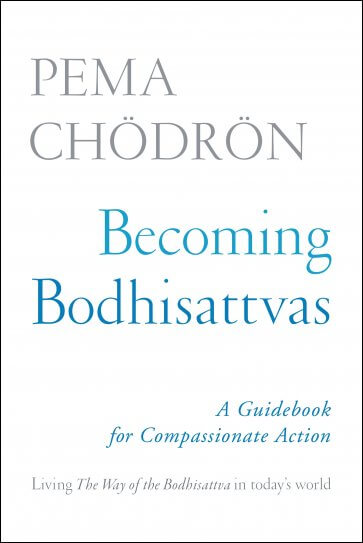
Becoming Bodhisattvas: A Guidebook for Compassionate Action
Book
Please note that many items in our library are simply pages that represent a detailed library catalog entry and citation of someone else's work, presentation, or performance. Read our General Disclaimer for more information.

Description
The Way of the Bodhisattva has long been treasured as an indispensable guide to enlightened living, offering a window into the greatest potential within us all. Written in the eighth century by the scholar and saint Shantideva, it presents a comprehensive view of the Mahayana Buddhist tradition’s highest ideal—to commit oneself to the life of a bodhisattva warrior, a person who is wholeheartedly dedicated to the freedom and common good of all beings. And it has inspired many of the tradition’s greatest teachers, providing a remarkable source of insight on the means by which we may heal ourselves and our troubled world. These essential teachings present the core of the Buddhist path, from cultivating deep-seated confidence to infusing one’s life with selflessness, joyfulness, kindness, and compassion. Pema Chödrön here invites you to journey more deeply into this liberating way of life, presenting Shantideva’s text verse-by-verse and offering both illuminating stories and practical exercises to enrich the text and bring its timeless teachings to life in our world today. (Source: Shambhala Publications)
Citation
Chödrön, Pema. Becoming Bodhisattvas: A Guidebook for Compassionate Action. Edited by Helen Berliner. Boulder, CO: Shambhala Publications, 2018.
Interconnections
1 Full translation of

An "Introduction to Bodhisattva Practice," the Bodhisattvacaryāvatāra is a poem about the path of a bodhisattva, in ten chapters, written by the Indian Buddhist Śāntideva (fl. c. 685–763). One of the masterpieces of world literature, it is a core text of Mahāyāna Buddhism and continues to be taught, studied, and commented upon in many languages and by many traditions around the world. The main subject of the text is bodhicitta, the altruistic aspiration for enlightenment, and the path and practices of the bodhisattva, the six perfections (pāramitās). The text forms the basis of many contemporary discussions of Buddhist ethics and philosophy.
2 Other editions

Chödrön reveals the traditional Buddhist teachings of the Bodhicharyavatara, describing the steps we can take to cultivate courage, caring, and joy.
-front.jpg)
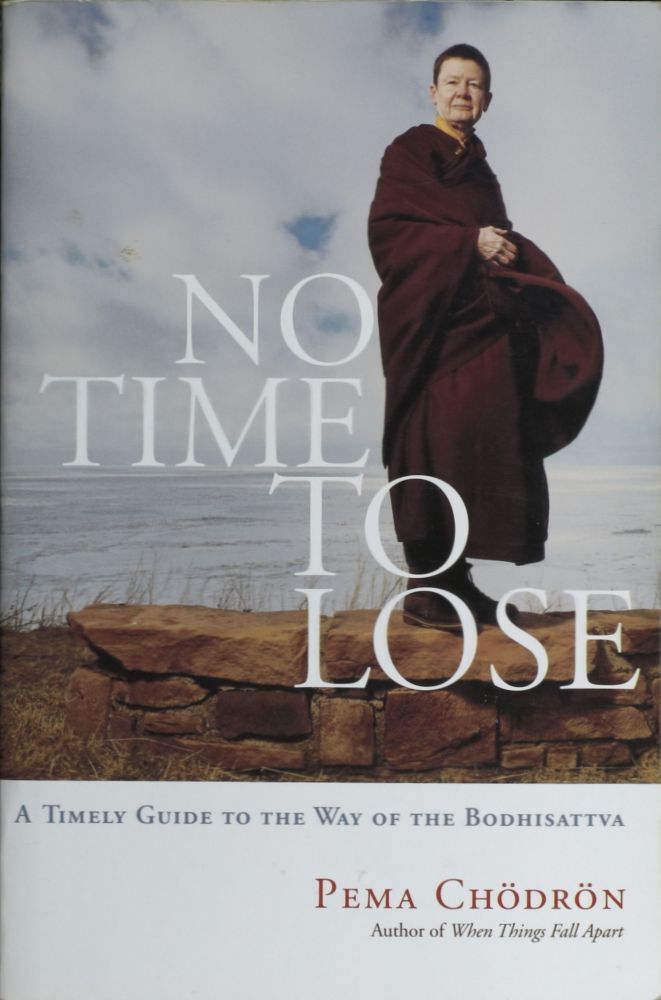
In No Time to Lose Chödrön reveals the traditional Buddhist teachings that guide her own life: those of The Way of the Bodhisattva (Bodhicharyavatara), a text written by the eighth-century sage Shantideva. This treasured Buddhist work is remarkably relevant for our times, describing the steps we can take to cultivate courage, caring, and joy—the key to healing ourselves and our troubled world. Chödrön offers us a highly practical and engaging commentary on this essential text, explaining how its profound teachings can be applied to our daily lives.
Full of illuminating stories and practical exercises, this fresh and accessible guide shows us that the path of the bodhisattva is open to each and every one of us. Pema Chödrön urges us to embark on this transformative path today, writing, "There is no time to lose—but not to worry, we can do it." (Source: Shambhala Publications)
1 Teaching based on
An "Introduction to Bodhisattva Practice," the Bodhisattvacaryāvatāra is a poem about the path of a bodhisattva, in ten chapters, written by the Indian Buddhist Śāntideva (fl. c. 685–763). One of the masterpieces of world literature, it is a core text of Mahāyāna Buddhism and continues to be taught, studied, and commented upon in many languages and by many traditions around the world. The main subject of the text is bodhicitta, the altruistic aspiration for enlightenment, and the path and practices of the bodhisattva, the six perfections (pāramitās). The text forms the basis of many contemporary discussions of Buddhist ethics and philosophy.