No edit summary |
No edit summary |
||
| Line 3: | Line 3: | ||
|FullRead=No | |FullRead=No | ||
|DisableRedirects=No | |DisableRedirects=No | ||
|TableOfContents=*{{i|Foreword|vii}} | |||
*{{i|Introduction|xi}} | |||
*DAY ONE | |||
**{{i|First Session|1}} | |||
**{{i|Second Session|17}} | |||
*DAY TWO | |||
**{{i|First Session|35}} | |||
**{{i|Second Session|52}} | |||
*DAY THREE | |||
**{{i|First Session|73}} | |||
**{{i|Second Session|87}} | |||
*DAY FOUR | |||
**{{i|First Session|107}} | |||
**{{i|Second Session|125}} | |||
*{{i|Glossary|145}} | |||
*{{i|Works Cited|151}} | |||
*{{i|Recommended Reading|152}} | |||
|CheckQuotes=No | |CheckQuotes=No | ||
|TermTopics=Anger; Patience; BCA Chapter 6 | |TermTopics=Anger; Patience; BCA Chapter 6 | ||
Revision as of 12:53, 8 December 2021
| 🤓 Admin Zone 🛠️ hidden to non-admins | |
Healing Anger: The Power of Patience from a Buddhist Perspective
Book
- A Buddhist 'good life' Theory: Śāntideva's Bodhicaryāvatāra
- A Buddhist Carol
- A Fearless Heart
- A Few Good Men
- A Flash of Lightning in the Dark of Night
- A Great Commentary on Shantideva's Guide to the Bodhisattva's Way of Life, Vol. 1
- A Guide to the Bodhisattva Way of Life
- A Guide to the Bodhisattva's Way of Life (1985)
- A Guide to the Bodhisattva's Way of Life (1999)
- A Guide to the Bodhisattva's Way of Life of Shantideva (2002)
- A Mirror Is for Reflection
- A Nirvana that Is Burning in Hell: Pain and Flourishing in Mahayana Buddhist Moral Thought
- A Note on Mahāyāna Buddhism and the Bodhicaryāvatāra
- A Role for Primordial Wisdom in the Buddhist Free Will Controversy
- Altruism and Reality (1998)
- Altruism as Antidote to Demagoguery: Shantideva’s Bodhicharyavatara Chapter 3 as Method for Countering Identity Divisions
- Altruism in the Charnel Ground: Śāntideva and Parfit on Anātman, Reductionism and Benevolence
- An Introduction to Buddhist Ethics
- Anger: The Seven Deadly Sins
- Appendix B: Excerpt from A Lamp Completely Illuminating the Profound Reality of Interdependence
- Becoming Bodhisattvas
- Bhadracaryāvidhi in the Śikṣāsamuccaya Chapt. 16
- Bile & Bodhisattvas: Śāntideva on Justified Anger
- Blasphemie und Sakrileg im Buddhismus in Geschichte und Gegenwart mit besonderer Berücksichtigung des Verses Bodhicaryāvatāra 6.64
- Bodhi(sattva)caryāvatāra als Lehrschrift und Vorhaben: Zum Thema Ritual, Religion, Philosophie und Mystik im Buddhismus
- Bodhicaryāvatāra and Bodhicaryāvatāra-Pañjikā (Malalasekera)
- Bodhicaryāvatāra and Tibetan Mind Training (Lojong)
- Bodhicaryāvatāra para Parama Pāvana Dalāi Lāmā Jī ka viśesha pravacana
- Bodhicaryāvatāra with Commentary (O'Sullivan)
- Bodhicaryāvatāra: Governing the Bodhisattvas Way of Life
- Bodhicitta: Cultivating the Compassionate Mind of Enlightenment
- Bodhisattvacaryāvatāra: Entering the Way of the Bodhisattvas (2022, Khenpo Gawang and Wiener)
- Bodhisattvacaryāvatāra: Exposition de la pratique des bodhisattvas
- Bodies and Embodiment in the Bodhicaryāvatāra
- Buddha Mind - Christ Mind
- Buddhist Ethics (2003)
- Buddhist Ethics and Globalization on the Basis of Bodhicaryavatara
- Buddhist Ethics in the Context of Conventional Truth: Path and Transformation
- Buddhist Texts Through the Ages
- Built on Emptiness: Śūnyatā as a Basis for Mahāyāna Ethics, With References to Śāntideva’s Bodhicaryāvatāra
- Can We Kill Illusory People? Some Philosophical Reflections on Bodhi(sattva)caryāvatāra 9:11-13ab
- Comparative Confession: A Comparative Study of Confession in the Writings of Tertullian, Cassian, and Śāntideva
- Compassion in Mahayana Buddhism
- Compassion in Our Day: Learning from Shantideva
- Consequences of Compassion
- Consequences of Compassion: An Interpretation and Defense of Buddhist Ethics-Review by Meyers
- Consequentialism, Agent-Neutrality, and Mahāyāna Ethics
- Consequentialism, Particularism, and the Emptiness of Persons: A Response to Vishnu Sridharan
- Cooking Living Beings: The Transformative Effects of Encounters with Bodhisattva Bodies
- Courageous Compassion
- Cultivating Bodhicitta: Wisdom and Compassion in Śāntideva's Introduction to the Awakened Life
- Das 7. Kapitel über die Tatkraft in Śāntidevas Bodhicaryāvatāra
- Das Ritual der Entschlussfassung im Bodhicaryāvatāra (Kap. II und III)
- Demandingness, Self-Interest and Benevolence in Santideva's Introduction to the Practice of Awakening (Bodhicaryavatara)
- Did Śāntideva Destroy the Bodhisattva Path?
- Discourses on Bodhicharyāvatāra
- Does "Buddhist Ethics" Exist?
- Does Anātman Rationally Entail Altruism? On Bodhicaryāvatāra 8:101-103
- Drops of Nectar: Khenpo Kunpal's Commentary on Shantideva's Entering the Conduct of the Bodhisattvas
- Emptiness and Moral Perfection
- Engaging in Bodhisattva Behavior
- Engaging in the Bodhisattva Deeds
- Engaging in the Conduct of the Bodhisattvas
- Enlightenment to Go
- Entering the Way of the Bodhisattva: A New Translation and Contemporary Guide
- Ethical Revaluation in the Thought of Śāntideva
- Ethics (Garfield)
- Ethics and the Subversion of Conceptual Reification in Lévinas and Śāntideva
- Ethics in Indian and Tibetan Buddhism
- Ethics in Schopenhauer and Buddhism
- Ethics in the Śikṣāsamuccaya: A Study in Mahāyāna Morality
- Ethics without Self, Dharma without Atman
- Exchanging Self and Other
- Experience and Morality: Buddhist Ethics as Moral Phenomenology
- Extreme Giving: The Vessantara Jātaka and Shantideva's A Guide to the Bodhisattva Way of Life
- Following in the Buddha's Footsteps
- For the Benefit of All Beings
- Freedom from Responsibility: Agent-Neutral Consequentialism and the Bodhisattva Ideal
- From Madhyamaka to Consequentialism: A Road Map
- From Sickness to Empathy: How Śāntideva and Jesus's Healing of the Man Blind from Birth Might Help Us Understand the Ongoing Pandemic
- Guidance for the Spiritual Caregiver from the Bodhicaryavatara by Shantideva
- Guide to the Bodhisattva's Way of Life (Bodhicaryavatara): A Commentary by Geshe Tenzin Zopa
- Guide to the Good Life
- Healing Anger
- Healing Anger: The Power of Patience from a Buddhist Perspective-Review by Naga
- How to Be a Bodhisattva: Introduction to the Practice of the Bodhisattva Path (The Bodhicaryāvatāra)
- Hume as a Western Mādhyamika: The Case from Ethics
- In Praise of Great Compassion
- Innate Human Connectivity and Śāntideva's Cultivation of Compassion
- Internal and External Opposition to the Bodhisattva's Gift of His Body
- Le commentaire de Mi-pham au chapitre IX du Bodhicaryāvatāra de Śāntideva: Échos modernes d'une controverse du XVème siècle
- Madhyamaka Ethics
- Mapping the Bodhicaryāvatāra
- Mental Purification (Blo sbyong): A Native Tibetan Genre of Religious Literature
- Mindfulness and Ethics: Attention, Virtue and Perfection
- Mindfulness and Moral Transformation: Awakening to Others in Śāntideva's Ethics
- Moderation or the Middle Way: Two Approaches to Anger
- Moonpaths: Ethics and Emptiness
- Moral Pluralism, Skillful Means, and Environmental Ethics
- Moral Theory in Śāntideva's Śikṣāsamuccaya
- Moral Theory in Śāntideva's Śikṣāsamuccaya-Review by Osto
- Moral Theory in Śāntideva's Śikṣāsamuccaya: Cultivating the Fruits of Virtue-Review by Goodman
- Nichtselbst, Leerheit und Altruistische Ethik im Bodhicaryāvatāra (Lecture Transcript)
- Nichtselbst, Leerheit und Altruistische Ethik im Bodhicaryāvatāra (Official Publication)
- No Time to Lose
- On Altruism and Rebirth: Philosophical Comments on Bodhicaryāvatāra 8: 97-8
- On Learning to Overhear the "Vanishing Poet"
- On the Classification of Śāntideva's Ethics in the Bodhicaryāvatāra
- One Aspect of the Acceptance of the Bodhisattva-śīla in Tibet
- Patience and Perspective
- Patience: A Guide to Shantideva's Sixth Chapter (Zopa 2020)
- Peaceful Heart
- Perfecting Patience
- Perfecting Wisdom
- Plant Seed, Pull Weed
- Practicing Wisdom
- Puṇya and Pāp in Public Health: Everyday Religion, Material Culture, and Avenues of Buddhist Activism in Urban Kathmandu
- Readings of Śāntideva's Guide to Bodhisattva Practice
- Readings of Śāntideva's Guide to Bodhisattva Practice-Review by Harris
- Reason and Knowledge on the Path: A Protreptic Reading of the Guide
- René Girard, Śāntideva, and the Emptiness of Desire
- Reply to Paul Williams
- Resentment and Reality: Buddhism on Moral Responsibility
- Response to Mark Siderits' Review
- Seeing Sentient Beings: Śāntideva's Moral Phenomenology
- Self-Sceptical Ethics and Selfless Morality: A Historical and Cross-Cultural Overview
- Selfhood and the Metaphysics of Altruism
- Selfless Ethics: The Equality of Non-Existence
- Selflessness and Normativity: Śāntideva and Emptiness Ethics
- Shantideva and Friends
- Shantideva's Bodhicaryavatara: An Internal Pilgrimage to Universal Peace and Compassion
- Shantideva's Guide to the Bodhisattva's Way Of Life: An Oral Explanation of Chapter 4
- Shantideva's Guide to the Bodhisattva's Way Of Life: An Oral Explanation of Chapter 5
- Shantideva's Guide to the Bodhisattva's Way Of Life: An Oral Explanation of Chapter 6
- Shantideva's Guide to the Bodhisattva's Way Of Life: An Oral Explanation of Chapter 7
- Shantideva's Guide to the Bodhisattva's Way Of Life: An Oral Explanation of Chapter 8
- Shantideva's Guide to the Bodhisattva's Way of Life: An Oral Explanation of Chapter 1
- Shantideva's Guide to the Bodhisattva's Way of Life: An Oral Explanation of Chapter 2
- Shantideva's Guide to the Bodhisattva's Way of Life: An Oral Explanation of Chapter 3
- Shantideva: How to Wake Up a Hero
- Spinoza through the Prism of Later 'East-West' Exchanges: Analogues of Buddhist Themes in the Ethics and the Works of Early Spinozists
- Stoics and Bodhisattvas: Spiritual Exercise and Faith in Two Philosophical Traditions
- Studies in the Philosophy of the Bodhicaryāvatāra (2000)
- Sur l'océan du Mahayana
- Sāntideva, The Bodhicaryāvatāra, Chapter 8 (verses 89-140)
- The Absence of Self and the Removal of Pain: How Śāntideva Destroyed the Bodhisattva Path
- The Awakening Mind (Tsering 2008)
- The Beautiful Way of Life
- The Bodhi-caryâvatāra and Its Monastic Aspects: On the Problem of Representation
- The Bodhisattva Guide
- The Bodhisattva Path: Śāntideva's Bodhicaryāvatāra
- The Bodhisattva and the Ideal of Moral Wisdom in Śāntideva's Śikṣāsamuccaya
- The Center of the Sunlit Sky
- The Changing Way of the Bodhisattva: Superheroes, Saints, and Social Workers
- The Circle of Compassion: An Interpretive Study of Karuṇā in Indian Buddhist Literature
- The Compassionate Gift of Vice: Śāntideva on Gifts, Altruism, and Poverty
- The Concept of Bodhicitta in Santideva's Bodhicaryavatara
- The Concept of Bodhicitta in Śāntideva's Bodhicaryāvatāra (Diss)
- The Concept of Bodhicitta in Śāntideva's Bodhicaryāvatāra-Review by Edelglass
- The Concept of Bodhicitta in Śāntideva's Bodhicaryāvatāra-Review by Tatz
- The Connection between Ontology and Ethics in Madhyamaka Thought
- The Endlessly Fascinating Cry
- The Entrance for the Children of the Conquerors
- The Ethics of Mahāyāna Buddhism in the Bodhicaryāvatāra
- The Ethics of Śaṅkara and Śāntideva
- The Ethics of Śaṅkara and Śāntideva-Review by Abramson
- The Ethics of Śaṅkara and Śāntideva-Review by Javanaud
- The Ethics of Śaṅkara and Śāntideva-Review by O'Leary
- The Metaphysical Basis of Śāntideva's Ethics
- The Nectar of Manjushri's Speech
- The Profound Reality of Interdependence
- The Profound Reality of Interdependence-Review by Bouthillette
- The Reality of Altruism: Reconstructing Śāntideva, A Review of Altruism and Reality: Studies in the Philosophy of the Bodhicāryāvatāra, by Paul Williams
- The Reflexive Nature of Awareness (1998)
- The Relationship between Morality and the Body in Monastic Training according to the Śikṣāsamuccaya
- The Self and the Other in Bodhicaryāvatāra: Part 1
- The Self and the Suffering Other: Levinas and Śāntideva on the Ethics of Compassion
- The Selfless Removal of Pain: A Critical Glance at Śāntideva's Argument in Bodhicaryāvatāra 8: 101–3
- The Social Message of Mahayana Buddhism
- The Training Anthology of Śāntideva
- The Transmission of the Bodhicaryāvatāra: The History, Diffusion, and Influence of a Mahāyāna Buddhist Text
- The Way of Awakening
- The Way of the Bodhisattva (1997)
- The Way of the Bodhisattva (2006)
- The Wisdom Chapter
- The Śāntideva Passage: Bodhicaryāvatāra VIII.90–103
- Theory and Comparison in the Discussion of Buddhist Ethics
- Traces of Consequentialism and Non-Consequentialism in Bodhisattva Ethics
- Transcendent Wisdom (1988)
- Transcendent Wisdom (2009)
- Uncommon Happiness
- Uses of the Illusion of Agency: Why Some Buddhists Should Believe in Free Will
- Virtuous Bodies
- Waking into Compassion: The Three Ālambana of Karuṇā
- What Is It Like to Be a Bodhisattva? Moral Phenomenology in Śāntideva's Bodhicaryāvatāra
- Where Does the Cetanic Break Take Place? Weakness of Will in Śāntideva’s Bodhicaryāvatāra
- Why War? Why Not Peace? Santideva's Answer to Einstein's Famous Question to Freud
- Wisdom: Two Buddhist Commentaries
- Śāntideva (Karen Lang)
- Śāntideva (Stanford Encyclopedia of Philosophy)
- Śāntideva and Kant: An East-West Comparative Study in Ethics
- Śāntideva and an Ethic of Radical Compassion
- Śāntideva on Roots and Resolutions of Violence
- Śāntideva's Ethics of Impartial Compassion
- Śāntideva's Impartialist Ethics
- Śāntideva, Virtue, and Consequentialism
Please note that many items in our library are simply pages that represent a detailed library catalog entry and citation of someone else's work, presentation, or performance. Read our General Disclaimer for more information. You can find more information about this item on the publisher website.

Description
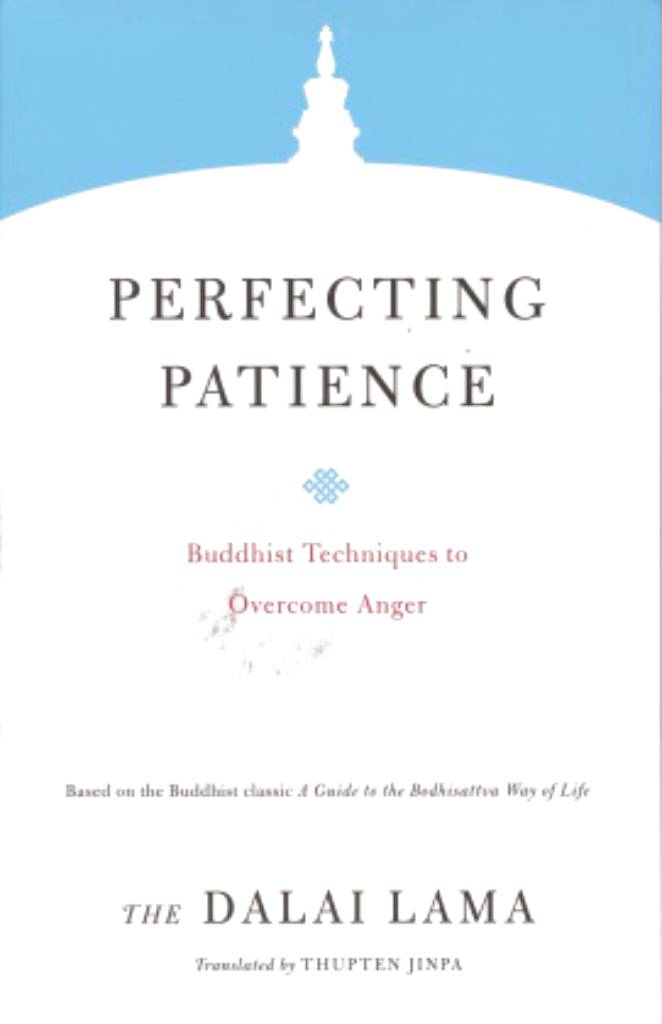
In this book the Dalai Lama shows how through the practice of patience and tolerance we can overcome the obstacles of anger and hatred. He bases his discussion on A Guide to the Bodhisattva's Way of Life, the classic work on the activities of Bodhisattva's-those who aspire to attain full enlightenment in order to benefit all beings.
The techniques and methods presented are relevant not only for Buddhist practitioners but for all who seek to improve themselves. Through these teachings and by his own example, the Dalai Lama shows the power that patience and tolerance have to heal anger and to generate peace in the world. (Source: Motilal Banarsidass)
Citation
Dalai Lama, 14th. Healing Anger: The Power of Patience from a Buddhist Perspective. Translated by Geshe Thupten Jinpa. Delhi: Motilal Banarsidass, 1997. https://archive.org/details/healingangerdalailama_838_u/mode/2up.
Publisher Link
Table of contents
- Forewordvii
- Introductionxi
- DAY ONE
- First Session1
- Second Session17
- DAY TWO
- First Session35
- Second Session52
- DAY THREE
- First Session73
- Second Session87
- DAY FOUR
- First Session107
- Second Session125
- Glossary145
- Works Cited151
- Recommended Reading152
Interconnections
1 Partial translation of

An "Introduction to Bodhisattva Practice," the Bodhisattvacaryāvatāra is a poem about the path of a bodhisattva, in ten chapters, written by the Indian Buddhist Śāntideva (fl. c. 685–763). One of the masterpieces of world literature, it is a core text of Mahāyāna Buddhism and continues to be taught, studied, and commented upon in many languages and by many traditions around the world. The main subject of the text is bodhicitta, the altruistic aspiration for enlightenment, and the path and practices of the bodhisattva, the six perfections (pāramitās). The text forms the basis of many contemporary discussions of Buddhist ethics and philosophy.
1 Other editions

In this book the Dalai Lama shows how, through the practice of patience and tolerance, we can overcome the obstacles of anger and hatred.
1 Teaching based on
An "Introduction to Bodhisattva Practice," the Bodhisattvacaryāvatāra is a poem about the path of a bodhisattva, in ten chapters, written by the Indian Buddhist Śāntideva (fl. c. 685–763). One of the masterpieces of world literature, it is a core text of Mahāyāna Buddhism and continues to be taught, studied, and commented upon in many languages and by many traditions around the world. The main subject of the text is bodhicitta, the altruistic aspiration for enlightenment, and the path and practices of the bodhisattva, the six perfections (pāramitās). The text forms the basis of many contemporary discussions of Buddhist ethics and philosophy.
1 Reviews

Ācārya Sangye T. Naga's review of Healing Anger: The Power of Patience from a Buddhist Perspective, by the 14th Dalai Lama. Published in The Tibet Journal 24, no. 2 (1999): 92–93.