Books/Introduction to the Middle Way: Difference between revisions
No edit summary |
No edit summary |
||
| Line 3: | Line 3: | ||
|FullRead=No | |FullRead=No | ||
|DisableRedirects=No | |DisableRedirects=No | ||
|TableOfContents= | |TableOfContents=*Foreword by Jigme Khyentse Rinpoche ... xiii | ||
* | *Translators' Introduction ... 1 | ||
* | *Part One: Madhyamakavatara ... 55 | ||
* | *Part Two: The Word of Chandra: The Necklace of Spotless Crystal ... 115 | ||
**A Textual Outline Of The Word Of Chandra ... 117 | **A Textual Outline Of The Word Of Chandra ... 117 | ||
**Preamble ... 143 | **Preamble ... 143 | ||
** | **The Ten Grounds Or Stages Of Realization ... 148 | ||
***- The First Ground: Perfect Joy ... 148 | ***- The First Ground: Perfect Joy ... 148 | ||
***- The Second Ground: Immaculate ... 153 | ***- The Second Ground: Immaculate ... 153 | ||
| Line 15: | Line 15: | ||
***- The Fourth Ground: Radiant ... 160 | ***- The Fourth Ground: Radiant ... 160 | ||
***- The Fifth Ground: Hard to Keep ... 160 | ***- The Fifth Ground: Hard to Keep ... 160 | ||
*** | ***The Sixth Ground: Clearly Manifest ... 161 | ||
****I. ''Establishing Emptiness by Rational Demonstration'' ... 165 | ****I. ''Establishing Emptiness by Rational Demonstration'' ... 165 | ||
*****A. Using Reason to Disprove the Self of Phenomena ... 165 | *****A. Using Reason to Disprove the Self of Phenomena ... 165 | ||
| Line 30: | Line 30: | ||
******2. A reasoned demonstration that production is no more than dependent arising ... 278 | ******2. A reasoned demonstration that production is no more than dependent arising ... 278 | ||
******3. The result of the analysis ... 279 | ******3. The result of the analysis ... 279 | ||
***** | *****B. Using Reason to Disprove the Self of Persons ... 281 | ||
******1. Refutation of the belief that the self is a concrete entity ... 282 | ******1. Refutation of the belief that the self is a concrete entity ... 282 | ||
*******a) A refutation of the belief that the personal self is different from the aggregates ... 282 | *******a) A refutation of the belief that the personal self is different from the aggregates ... 282 | ||
| Line 45: | Line 45: | ||
***- The Ninth Ground: Perfect Intellect ... 328 | ***- The Ninth Ground: Perfect Intellect ... 328 | ||
***- The Tenth Ground: Cloud of Dharma ... 329 | ***- The Tenth Ground: Cloud of Dharma ... 329 | ||
** | **The Qualities of the Ten Grounds ... 331 | ||
***- An exposition of the twelve groups of one hundred qualities that manifest on the first ground ... 331 | ***- An exposition of the twelve groups of one hundred qualities that manifest on the first ground ... 331 | ||
***- The adaptation of these qualities to the following grounds ... 332 | ***- The adaptation of these qualities to the following grounds ... 332 | ||
| Line 51: | Line 51: | ||
***- The attainment of buddhahood ... 334 | ***- The attainment of buddhahood ... 334 | ||
***- What is the goal, namely, buddahood? ... 338 | ***- What is the goal, namely, buddahood? ... 338 | ||
** | **Conclusion ... 349 | ||
* | * Notes ... 355 | ||
* | *Glossary ... 383 | ||
* | *Bibliography ... 393 | ||
* | *Index ... 397 | ||
Revision as of 02:41, 5 January 2026
| 🤓 Admin Zone 🛠️ hidden to non-admins | |

Description
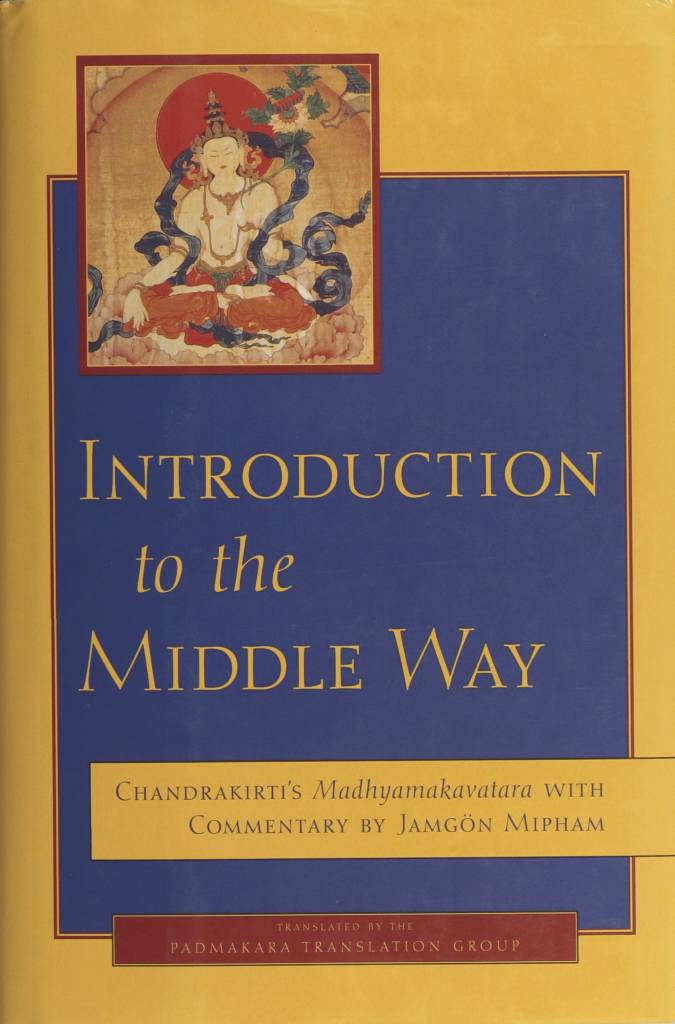
This book includes a verse translation of the Madhyamakavatara by the renowned seventh-century Indian master Chandrakirti, an extremely influential text of Mahayana Buddhism, followed by an exhaustive logical explanation of its meaning by the modern Tibetan master Jamgön Mipham, composed approximately twelve centuries later. Chandrakirti's work is an introduction to the Madhyamika teachings of Nagarjuna, which are themselves a systematization of the Prajnaparamita, or "Perfection of Wisdom" literature, the sutras on the crucial but elusive concept of emptiness.
Chandrakirti's work has been accepted throughout Tibetan Buddhism as the highest expression of the Buddhist view on the sutra level. With Jamgön Mipham's commentary, it is a definitive presentation of the wisdom of emptiness, a central theme of Buddhist teachings. This book is a core study text for both academic students and practitioners of Mahayana and Vajrayana Buddhism. (Source: Shambhala Publications)
- Foreword by Jigme Khyentse Rinpoche ... xiii
- Translators' Introduction ... 1
- Part One: Madhyamakavatara ... 55
- Part Two: The Word of Chandra: The Necklace of Spotless Crystal ... 115
- A Textual Outline Of The Word Of Chandra ... 117
- Preamble ... 143
- The Ten Grounds Or Stages Of Realization ... 148
- - The First Ground: Perfect Joy ... 148
- - The Second Ground: Immaculate ... 153
- - The Third Ground: Luminous ... 156
- - The Fourth Ground: Radiant ... 160
- - The Fifth Ground: Hard to Keep ... 160
- The Sixth Ground: Clearly Manifest ... 161
- I. Establishing Emptiness by Rational Demonstration ... 165
- A. Using Reason to Disprove the Self of Phenomena ... 165
- 1. Using reason to refute the theory of inherently real production ... 165
- a) A refutation of the four theories of production from the standpoint of the two truths ... 165
- (1) Refutation of self-production ... 183
- (2) Refutation of other-production ... 187
- (a) A general refutation of other-production on the ultimate level ... 187
- (b) There is no naturally existent other-production, even conventionally ... 203
- (c) Refutation of the Chittamatra position ... 229
- (3) Refutation of production from both self and other ... 260
- (4) Refutation of uncaused production ... 261
- b) Replies to the objections against the refutation of the four theories of production ... 266
- a) A refutation of the four theories of production from the standpoint of the two truths ... 165
- 2. A reasoned demonstration that production is no more than dependent arising ... 278
- 3. The result of the analysis ... 279
- 1. Using reason to refute the theory of inherently real production ... 165
- B. Using Reason to Disprove the Self of Persons ... 281
- 1. Refutation of the belief that the self is a concrete entity ... 282
- a) A refutation of the belief that the personal self is different from the aggregates ... 282
- b) A refutation of the belief that the self is identical with the aggregates ... 285
- c) A refutation of the belief that the self is indescribable ... 296
- 2. The self is a mere dependent imputation ... 298
- a) Even though the self has no existence according to the sevenfold analysis, it is dependently imputed, just like a chariot ... 298
- b) An adaptation to phenomena in general of the arguments that demonstrate that both the chariot and the self are mere imputations ... 304
- 1. Refutation of the belief that the self is a concrete entity ... 282
- A. Using Reason to Disprove the Self of Phenomena ... 165
- II. The Categories of Emptiness Established by Reasoning ... 309
- A. A Detailed Categorization into Sixteen Kinds of Emptiness ... 314
- B. An Abridged Classification into Four Kinds of Emptiness ... 322
- I. Establishing Emptiness by Rational Demonstration ... 165
- - The Seventh Ground: Far Progressed ... 324
- - The Eighth Ground: Immovable ... 325
- - The Ninth Ground: Perfect Intellect ... 328
- - The Tenth Ground: Cloud of Dharma ... 329
- The Qualities of the Ten Grounds ... 331
- - An exposition of the twelve groups of one hundred qualities that manifest on the first ground ... 331
- - The adaptation of these qualities to the following grounds ... 332
- The Ultimate Ground of Buddhahood ... 334
- - The attainment of buddhahood ... 334
- - What is the goal, namely, buddahood? ... 338
- Conclusion ... 349
- Notes ... 355
- Glossary ... 383
- Bibliography ... 393
- Index ... 397
- Supplementary Discussions Appearing In The Text
- 1. A discussion concerning true existence regarded as extraneous to phenomena ... 165
- 2. The ultimate truth in itself and the approximate ultimate truth ... 192
- 3. The valid establishment of phenomena ... 197
- 4. What is refuted by absolutist reasoning? ... 205
- 5. Further discussion concerning true existence considered as extraneous to phenomena ... 208
- 6. Disintegration as a positive entity ... 223
- 7. The purpose of absolutist reasoning (continued) ... 238
- 8. Phenomena as validly established by direct sense experience alone ... 241
- 9. Do the Shravakas realize the no-self of phenomena? ... 310
- 10. Extraneous true existence (continued) ... 314

-front.jpg)
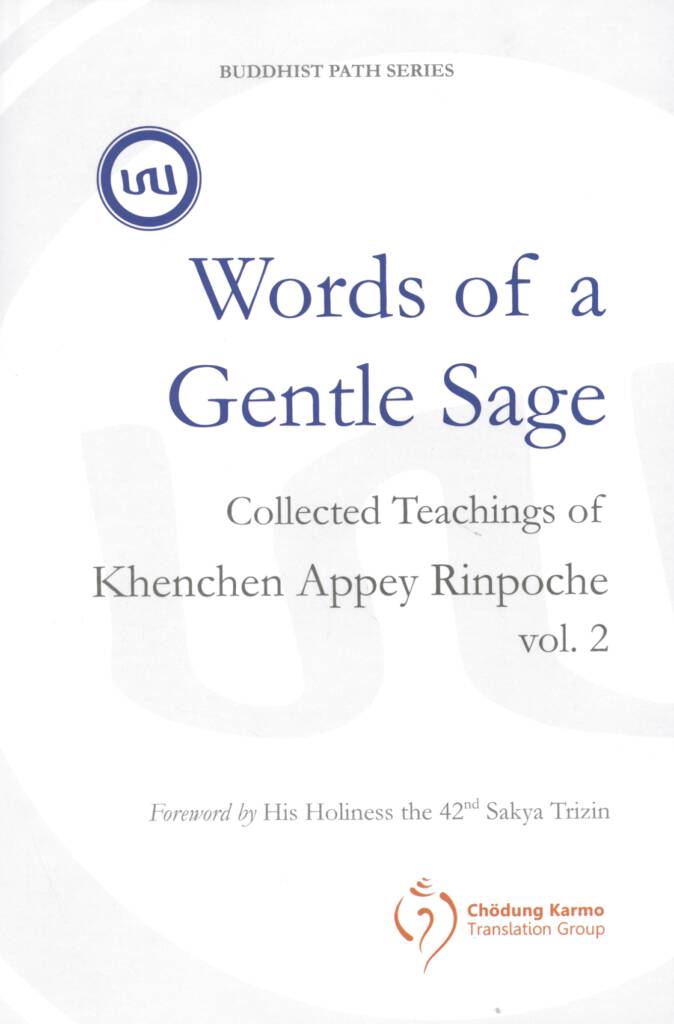
1) A commentary to inspire faith, based on verses in praise of the Buddha’s immeasurable qualities from Sakya Paṇḍita's Clarifying the Sage's Intent.
2) Oral instructions based on Candrakīrti's Entering the Middle Way, offering a practical understanding of the Mahāyāna path as a whole.
3) A commentary on the first three chapters of Śāntideva's Way of the Bodhisattva, which includes an explanation of the ritual for the bodhicitta vow.
4) A rarely given explanation of Gorampa's profound teaching on dependent arising according to the four philosophical schools of Indian Buddhism, entitled Illumination of Saṃsāra and Nirvāṇa.
5) A detailed commentary on Samantabhadra's Noble Aspirations to Sublime Conduct, as the supreme means of dedication.
(Source: Chödung Karmo Translation Group)