Theg pa chen po mdo sde'i rgyan ces bya ba'i mchan 'grel

From Bodhicitta
(Redirected from Theg pa chen po mdo sde'i rgyan ces bya ba'i mchan 'grel)
Texts/Theg pa chen po mdo sde'i rgyan ces bya ba'i mchan 'grel

🤓 Admin Zone 🛠️ hidden to non-admins
ཐེག་པ་ཆེན་པོ་མདོ་སྡེའི་རྒྱན་ཅེས་བྱ་བའི་མཆན་འགྲེལ།
theg pa chen po mdo sde'i rgyan ces bya ba'i mchan 'grel
Interlinear Commentary on the Ornament of the Mahāyāna Sūtras
Text


Please note that many items in our library are simply pages that represent a detailed library catalog entry and citation of someone else's work, presentation, or performance. Read our General Disclaimer for more information.

Description

An interlinear commentary on the Mahāyānasūtrālaṃkāra by the famed Khenpo Zhenga. It is one of a series of such works on the thirteen major treatises of Indian Mahāyāna Buddhism that became the basis for the curriculum at several major Tibetan monastic universities, such as those at Dzogchen and Dzongsar monasteries.
Reference
Gzhan phan chos kyi snang ba (གཞན་ཕན་ཆོས་ཀྱི་སྣང་བ་). theg pa chen po mdo sde'i rgyan ces bya ba'i mchan 'grel [ཐེག་པ་ཆེན་པོ་མདོ་སྡེའི་རྒྱན་ཅེས་བྱ་བའི་མཆན་འགྲེལ།]. [Interlinear Commentary on the Ornament of the Mahāyāna Sūtras].

Recensions

Theg pa chen po mdo sde'i rgyan ces bya ba'i mchan 'grel. (Interlinear Commentary on the Ornament of the Mahāyāna Sūtras). Recension information:
Tibetan Gzhan phan chos kyi snang ba. ཐེག་པ་ཆེན་པོ་མདོ་སྡེའི་རྒྱན་ཅེས་བྱ་བའི་མཆན་འགྲེལ།, (Theg pa chen po mdo sde'i rgyan ces bya ba'i mchan 'grel).
  • In Gzhung chen bcu gsum, Vol. 3: 395-646. Delhi: Konchhog Lhadrepa, 1983.
  • In Gsung 'bum gzhan phan chos kyi snang ba, Vol. 3: 275-500. Rdzong sar: Rdzong sar khams bye'i slob gling, 2004.
  • In Gsung 'bum gzhan phan chos kyi snang ba, Vol. 12: 5-272. Khreng tu'u: Si khron mi rigs dpe skrun khang, 2006.
Interconnections
1 Full translations
Books2014About this item
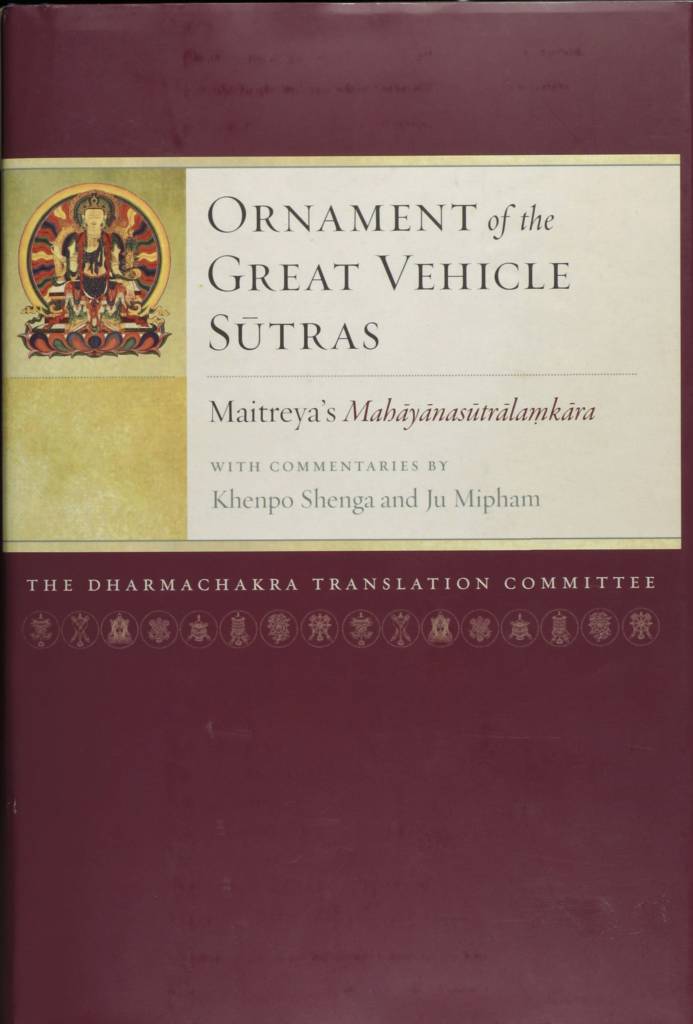
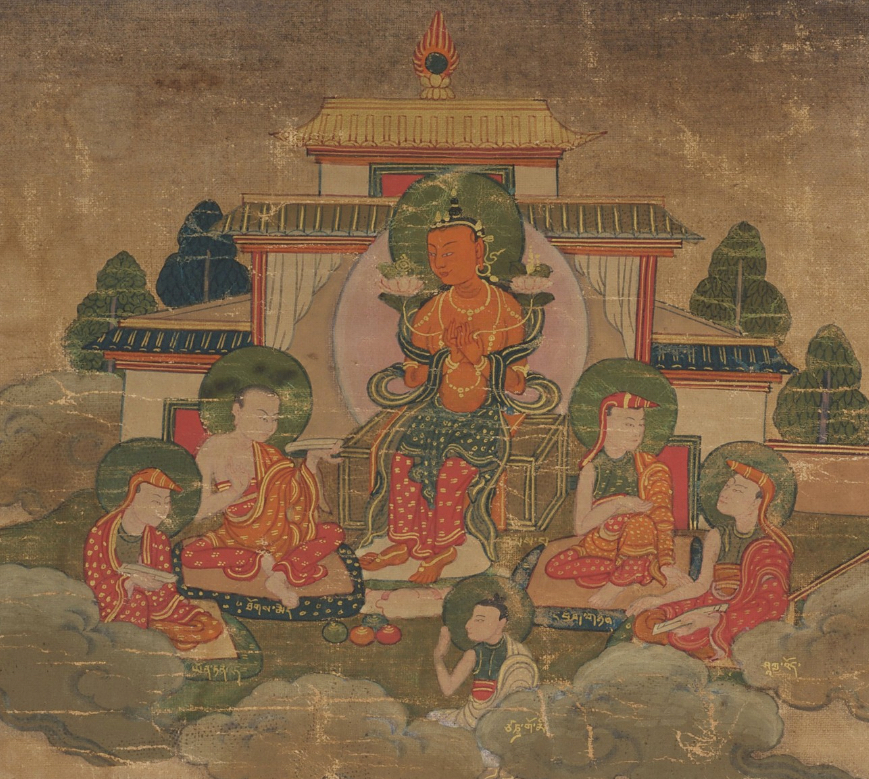
The Buddhist masterpiece Ornament of the Great Vehicle Sūtras, often referred to by its Sanskrit title, Mahāyānasūtrālaṃkāra, is part of a collection known as the Five Maitreya Teachings, a set of philosophical works that have become classics of the Indian Buddhist tradition. Maitreya, the Buddha’s regent, is held to have entrusted these profound and vast instructions to the master Asaṅga in the heavenly realm of Tuṣita.

The Ornament provides a comprehensive description of the bodhisattva’s view, meditation, and enlightened activities. Bodhisattvas are beings who, out of vast love for all sentient beings, have dedicated themselves to the task of becoming fully awakened buddhas, capable of helping all beings in innumerable and vast ways to become enlightened themselves. To fully awaken requires practicing great generosity, patience, energy, discipline, concentration, and wisdom, and Maitreya’s text explains what these enlightened qualities are and how to develop them.

This volume includes commentaries by Khenpo Shenga and Ju Mipham, whose discussions illuminate the subtleties of the root text and provide valuable insight into how to practice the way of the bodhisattva. Drawing on the Indian masters Vasubandhu and, in particular, Sthiramati, Mipham explains the Ornament with eloquence and brilliant clarity. This commentary is among his most treasured works. (Source: Shambhala Publications)

1 Classical commentary of
Classical WorksAbout this item
In Sanskrit, the “Ornament for the Mahāyāna Sūtras”; one of the Five Dharma Treatises of Maitreya (byams chos sde lnga) said to have been presented to Asaṅga by the bodhisattva Maitreya in the Tuṣita heaven. Written in verse, the text offers a systematic presentation of the practices of the bodhisattva from the standpoint of the Yogācāra school and is one of the most important of the Indian Mahāyāna śāstras. Its twenty-one chapters deal with (1) the proof that the Mahāyāna sūtras are the word of the Buddha; (2) taking refuge in the three jewels (ratnatraya); (3) the lineage (gotra) of enlightenment necessary to undertake the bodhisattva path; (4) the generation of the aspiration to enlightenment (bodhicittotpāda); (5) the practice of the bodhisattva; (6) the nature of reality, described from the Yogācāra perspective; (7) the attainment of power by the bodhisattva; (8) the methods of bringing oneself and others to maturation; (9) enlightenment and the three bodies of a buddha (trikāya); (10) faith in the Mahāyāna; (11) seeking complete knowledge of the dharma; (12) teaching the dharma; (13) practicing in accordance with the dharma; (14) the precepts and instructions received by the bodhisattva; (15) the skillful methods of the bodhisattva; (16) the six perfections (pāramitā) and the four means of conversion (saṃgrahavastu), through which bodhisattvas attract and retain disciples; (17) the worship of the Buddha; (18) the constituents of enlightenment (bodhipākṣikadharma); (19) the qualities of the bodhisattva; and (20-21) the consummation of the bodhisattva path and the attainment of buddhahood. (Source: The Princeton Dictionary of Buddhism, p. 514)
1 A topic of
Books2014About this item
The Buddhist masterpiece Ornament of the Great Vehicle Sūtras, often referred to by its Sanskrit title, Mahāyānasūtrālaṃkāra, is part of a collection known as the Five Maitreya Teachings, a set of philosophical works that have become classics of the Indian Buddhist tradition. Maitreya, the Buddha’s regent, is held to have entrusted these profound and vast instructions to the master Asaṅga in the heavenly realm of Tuṣita.

The Ornament provides a comprehensive description of the bodhisattva’s view, meditation, and enlightened activities. Bodhisattvas are beings who, out of vast love for all sentient beings, have dedicated themselves to the task of becoming fully awakened buddhas, capable of helping all beings in innumerable and vast ways to become enlightened themselves. To fully awaken requires practicing great generosity, patience, energy, discipline, concentration, and wisdom, and Maitreya’s text explains what these enlightened qualities are and how to develop them.

This volume includes commentaries by Khenpo Shenga and Ju Mipham, whose discussions illuminate the subtleties of the root text and provide valuable insight into how to practice the way of the bodhisattva. Drawing on the Indian masters Vasubandhu and, in particular, Sthiramati, Mipham explains the Ornament with eloquence and brilliant clarity. This commentary is among his most treasured works. (Source: Shambhala Publications)