| 🤓 Admin Zone 🛠️ hidden to non-admins | |
Sūtrālaṃkārabhāṣya
མདོ་སྡེའི་རྒྱན་གྱི་བཤད་པ
mdo sde'i rgyan gyi bshad pa
An Explanation of The Ornament for the Mahāyāna Sūtras (84000)
Text
Please note that many items in our library are simply pages that represent a detailed library catalog entry and citation of someone else's work, presentation, or performance. Read our General Disclaimer for more information.

Description
Vasubandhu's commentary on the Mahāyānasūtrālaṃkārakārikā of Maitreya.
Reference
Vasubandhu. sūtrālaṃkārabhāṣya. mdo sde'i rgyan gyi bshad pa [མདོ་སྡེའི་རྒྱན་གྱི་བཤད་པ]. [An Explanation of The Ornament for the Mahāyāna Sūtras (84000)]. Tengyur, RKTST 3365 http://www.rkts.org/cat.php?id=3365&typ=2.
Interconnections
1 Classical commentary of

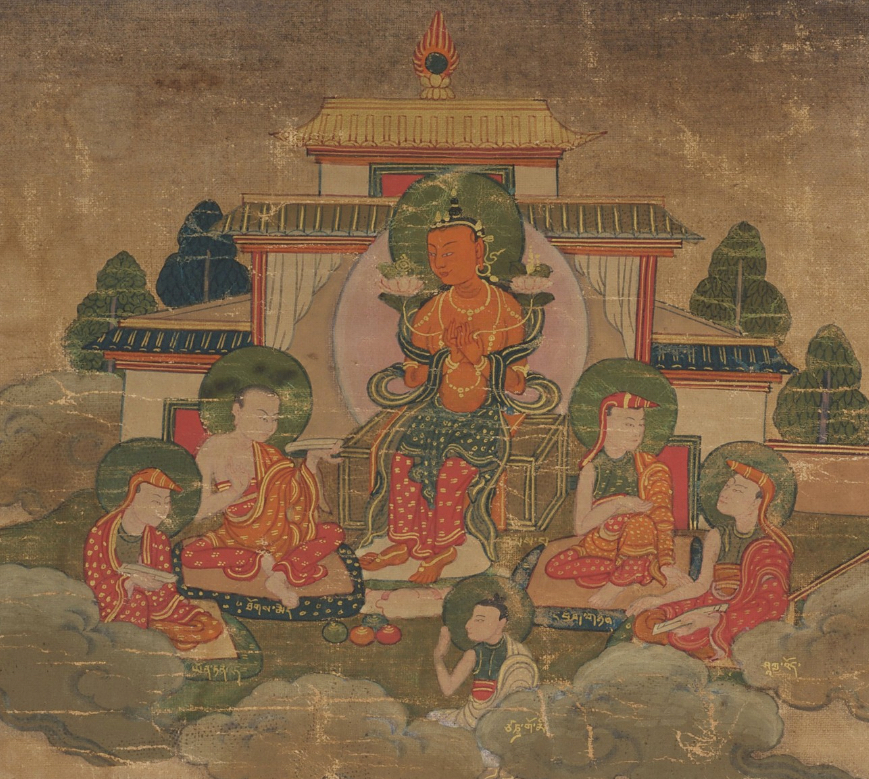
In Sanskrit, the “Ornament for the Mahāyāna Sūtras”; one of the Five Dharma Treatises of Maitreya (byams chos sde lnga) said to have been presented to Asaṅga by the bodhisattva Maitreya in the Tuṣita heaven. Written in verse, the text offers a systematic presentation of the practices of the bodhisattva from the standpoint of the Yogācāra school and is one of the most important of the Indian Mahāyāna śāstras. Its twenty-one chapters deal with (1) the proof that the Mahāyāna sūtras are the word of the Buddha; (2) taking refuge in the three jewels (ratnatraya); (3) the lineage (gotra) of enlightenment necessary to undertake the bodhisattva path; (4) the generation of the aspiration to enlightenment (bodhicittotpāda); (5) the practice of the bodhisattva; (6) the nature of reality, described from the Yogācāra perspective; (7) the attainment of power by the bodhisattva; (8) the methods of bringing oneself and others to maturation; (9) enlightenment and the three bodies of a buddha (trikāya); (10) faith in the Mahāyāna; (11) seeking complete knowledge of the dharma; (12) teaching the dharma; (13) practicing in accordance with the dharma; (14) the precepts and instructions received by the bodhisattva; (15) the skillful methods of the bodhisattva; (16) the six perfections (pāramitā) and the four means of conversion (saṃgrahavastu), through which bodhisattvas attract and retain disciples; (17) the worship of the Buddha; (18) the constituents of enlightenment (bodhipākṣikadharma); (19) the qualities of the bodhisattva; and (20-21) the consummation of the bodhisattva path and the attainment of buddhahood. (Source: The Princeton Dictionary of Buddhism, p. 514)