Caturdharmanirdeśasūtra

From Bodhicitta
< Texts(Redirected from Texts/RKTSK 249)
Texts/Caturdharmanirdeśasūtra

🤓 Admin Zone 🛠️ hidden to non-admins
चतुर्धर्मनिर्देशसूत्र
Caturdharmanirdeśasūtra
འཕགས་པ་ཆོས་བཞི་བསྟན་པ་ཞེས་བྱ་བ་ཐེག་པ་ཆེན་པོའི་མདོ
'phags pa chos bzhi bstan pa zhes bya ba theg pa chen po'i mdo
The Noble Mahāyāna Sūtra "Teaching the Four Factors" (84000)
Text


Please note that many items in our library are simply pages that represent a detailed library catalog entry and citation of someone else's work, presentation, or performance. Read our General Disclaimer for more information.

Description

While Buddha Śākyamuni is residing in the Sudharmā assembly hall in the Heaven of the Thirty-Three, he explains to the great bodhisattva Maitreya four factors that make it possible to overcome the effects of any negative deeds one has committed. These four are: the action of repentance, which involves feeling remorse; antidotal action, which is to practice virtue as a remedy to non-virtue; the power of restraint, which involves vowing not to repeat a negative act; and the power of support, which means taking refuge in the Buddha, Dharma, and Saṅgha, and never forsaking the mind of awakening. The Buddha concludes by recommending that bodhisattvas regularly recite this sūtra and reflect on its meaning as an antidote to any further wrongdoing. (Source: 84000: Translating the Words of the Buddha)
Quoted in the aligned translations
Interconnections
1 Recensions
Articles.jpeg
Articles2010About this item
An English translation of the Caturdharmikasūtra by Bhikṣuṇī Vinītā (Vinita Tseng) published by the China Tibetology Publishing House and the Austrian Academy of Sciences Press.
2 Full translations
Articles.jpeg
Articles2010About this item
An English translation of the Caturdharmikasūtra by Bhikṣuṇī Vinītā (Vinita Tseng) published by the China Tibetology Publishing House and the Austrian Academy of Sciences Press.
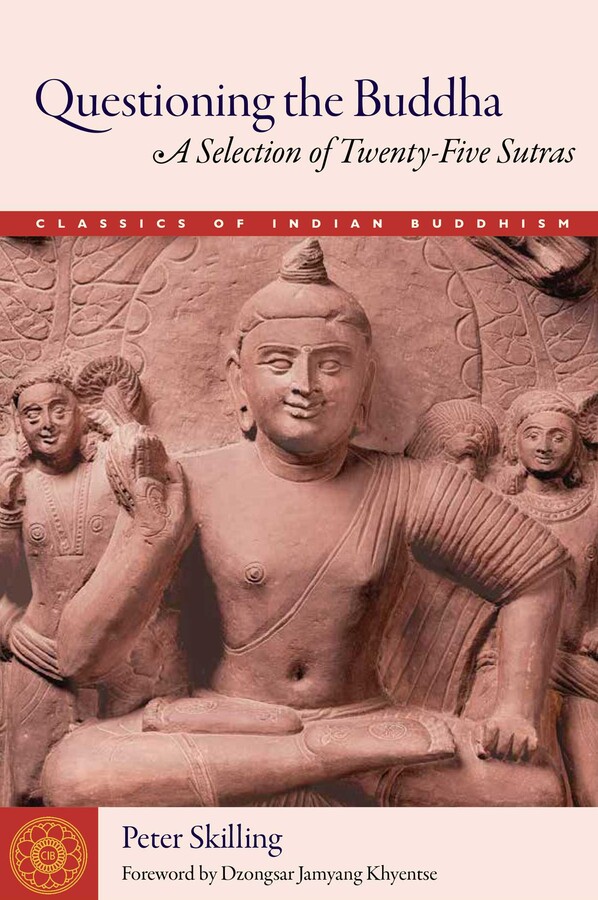
Questioning the Buddha-front.jpg
Books2021About this item
In the forty-five years the Buddha spent traversing northern India, he shared his wisdom with everyone from beggar women to kings. Hundreds of his discourses, or sutras, were preserved by his followers, first orally and later in written form. Around thirteen hundred years after the Buddha’s enlightenment, the sutras were translated into the Tibetan language, where they have been preserved ever since. To date, only a fraction of these have been made available in English. Questioning the Buddha brings the reader directly into the literary treasure of the Tibetan canon with thoroughly annotated translations of twenty-five different sutras. Often these texts, many translated here in full for the first time, begin with an encounter in which someone poses a question to the Buddha.

Peter Skilling, an authority on early Buddhist epigraphy, archaeology, and textual traditions, has been immersed in the Buddhist scriptures of diverse traditions for nearly half a century. In this volume, he draws on his deep and extensive research to render these ancient teachings in a fresh and precise language. His introduction is a fascinating history of the Buddhist sutras, including the transition from oral to written form, the rise of Mahayana literature, the transmission to Tibet, the development of canons, and a look at some of the pioneers of sutra study in the West.

Sutras included in this volume are: Four Dharmas Not to Be Taken for Granted; The Benefits of Giving; The Exposition of Four Dharmas; The Merit of the Three Refuges; Four Dharmas Never to Be Abandoned; Advice for Bodhisatva Dharmaketu; Advice for Bodhisatva Jayamati; Sūtra Comparing Bodhicitta to Gold; Bodhisatva Maitreya’s Question about the Gift of the Dharma; Four Summaries of the Dharma Spoken to the Nāga King Sāgara; The Stanza of Dependent Arising; The Heart Formula of Dependent Arising; Prediction of the Boy Brahmaśrī’s Future Buddhahood; Kṣemavatī’s Prediction to Future Buddhahood; The City Beggar Woman; An Old Woman’s Questions about Birth and Death; The Questions of Śrīmatī the Brahman Woman; The Questions of the Laywoman Gaṅgottarā; Brahmā Sahāṃpati’s Question; Advice to King Prasenajit; Passage to the Next Life; Instructions for King Bimbisāra; Instructions for King Udayana; Buddhas as Rare as a Grain of Golden Sand; and Predictions on the Eve of the Great Final Nirvāṇa. (Source: Wisdom Experience)

1 Similar title
Sutra portrait.jpg
Classical WorksAbout this item
In this short sūtra the Buddha explains that throughout one's life there are four beliefs one should not hold: (1) that there is pleasure to be found among women, (2) or at the royal court; (3) that happiness can be ensured by depending on health and attractiveness, (4) or on wealth and material possessions. (Source: 84000)
2 Related
Sutra portrait.jpg
Classical WorksAbout this item
In this short sūtra the Buddha explains that throughout one's life there are four beliefs one should not hold: (1) that there is pleasure to be found among women, (2) or at the royal court; (3) that happiness can be ensured by depending on health and attractiveness, (4) or on wealth and material possessions. (Source: 84000)
Sutra portrait.jpg
Classical WorksAbout this item
While residing in the Jeta's Grove in Śrāvastī, the Buddha explains to an assembly of monks and bodhisattvas four factors of the path that bodhisattvas must not abandon even at the cost of their lives: (1) the thought of awakening, (2) the spiritual friend, (3) tolerance and lenience (which are here counted as one), and (4) dwelling in the wilderness. The sūtra concludes with two verses in which the Buddha restates the four factors and asserts that those who do not relinquish them will attain complete awakening. (Source: 84000)
2 A topic of
Articles.jpeg
Articles2010About this item
An English translation of the Caturdharmikasūtra by Bhikṣuṇī Vinītā (Vinita Tseng) published by the China Tibetology Publishing House and the Austrian Academy of Sciences Press.
Questioning the Buddha-front.jpg
Books2021About this item
In the forty-five years the Buddha spent traversing northern India, he shared his wisdom with everyone from beggar women to kings. Hundreds of his discourses, or sutras, were preserved by his followers, first orally and later in written form. Around thirteen hundred years after the Buddha’s enlightenment, the sutras were translated into the Tibetan language, where they have been preserved ever since. To date, only a fraction of these have been made available in English. Questioning the Buddha brings the reader directly into the literary treasure of the Tibetan canon with thoroughly annotated translations of twenty-five different sutras. Often these texts, many translated here in full for the first time, begin with an encounter in which someone poses a question to the Buddha.

Peter Skilling, an authority on early Buddhist epigraphy, archaeology, and textual traditions, has been immersed in the Buddhist scriptures of diverse traditions for nearly half a century. In this volume, he draws on his deep and extensive research to render these ancient teachings in a fresh and precise language. His introduction is a fascinating history of the Buddhist sutras, including the transition from oral to written form, the rise of Mahayana literature, the transmission to Tibet, the development of canons, and a look at some of the pioneers of sutra study in the West.

Sutras included in this volume are: Four Dharmas Not to Be Taken for Granted; The Benefits of Giving; The Exposition of Four Dharmas; The Merit of the Three Refuges; Four Dharmas Never to Be Abandoned; Advice for Bodhisatva Dharmaketu; Advice for Bodhisatva Jayamati; Sūtra Comparing Bodhicitta to Gold; Bodhisatva Maitreya’s Question about the Gift of the Dharma; Four Summaries of the Dharma Spoken to the Nāga King Sāgara; The Stanza of Dependent Arising; The Heart Formula of Dependent Arising; Prediction of the Boy Brahmaśrī’s Future Buddhahood; Kṣemavatī’s Prediction to Future Buddhahood; The City Beggar Woman; An Old Woman’s Questions about Birth and Death; The Questions of Śrīmatī the Brahman Woman; The Questions of the Laywoman Gaṅgottarā; Brahmā Sahāṃpati’s Question; Advice to King Prasenajit; Passage to the Next Life; Instructions for King Bimbisāra; Instructions for King Udayana; Buddhas as Rare as a Grain of Golden Sand; and Predictions on the Eve of the Great Final Nirvāṇa. (Source: Wisdom Experience)