| 🤓 Admin Zone 🛠️ hidden to non-admins | |
Quan fa pu ti xin wen (Shixian)
Text
Please note that many items in our library are simply pages that represent a detailed library catalog entry and citation of someone else's work, presentation, or performance. Read our General Disclaimer for more information.
Description
"Quan fa pu ti xin wen" (勸發菩提心文), also known as "An Exhortation to Resolve Upon Bodhi" or "An Inspiration to Give Rise to the Bodhi Mind," is a Chinese Buddhist text written by Great Master Shixian (1686-1734). This work encourages readers to cultivate the bodhi mind, which is the aspiration to attain enlightenment for the benefit of all sentient beings.
The text discusses various aspects of the bodhi mind, including:
- Different types of mind: true, false, great, small, partial, and perfect.
- The importance of rejecting wrong views and embracing correct ones.
- Reflections on the kindness of parents and the Buddha.
Quan fa pu ti xin wen emphasizes the significance of developing a sincere and unwavering commitment to the Buddhist path, highlighting the transformative power of the bodhi mind in spiritual practice. (Generated by Perplexity Mar 24, 2025)
Reference
[Exhortation to Resolve on Buddhahood].
Interconnections
2 Full translations

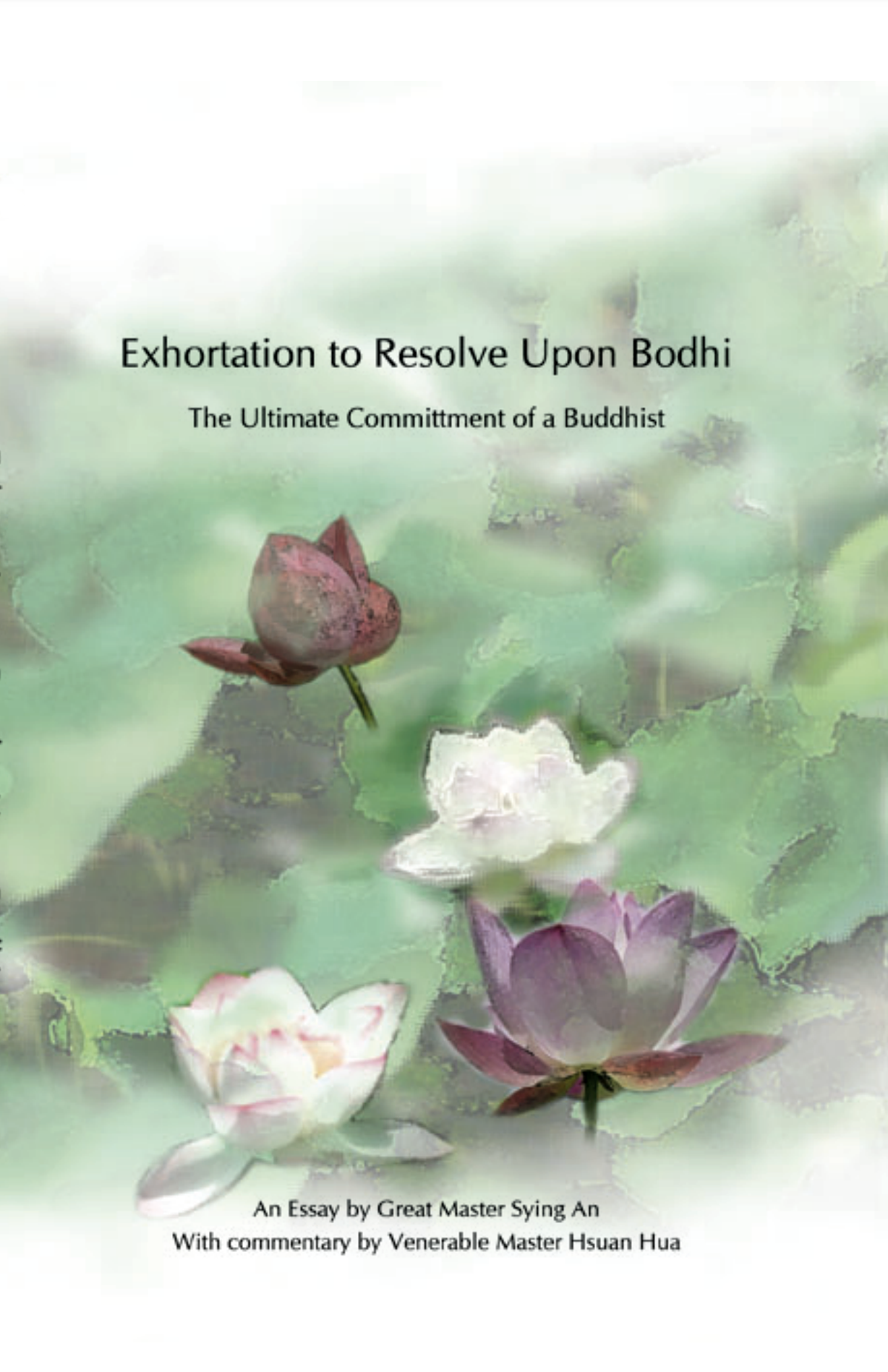
The Resolve for Bodhi (bodhicitta), the aspiration to reach full Awakening for the sake of all living beings, is a core element of Mahayana Buddhism. This short text by Master Xing An (d. 1734) who lived in Hangzhou, provides instructions on the Resolve for Bodhi that fit well into the Chinese cultural context, while staying true to the spirit of Mahayana Buddhism. Mainly written for a monastic audience, the text provides an intriguing glimpse into the Buddhism of the Qing Dynasty, which is yet to receive much scholarly attention. At the same time, the text and its modern commentary by Tripitaka Master Hsuan Hua also speak to the people of the twenty-first century, asking what makes our lives worth living.
(Based on audio recordings of lectures given by Master Hua at the City of Ten Thousand Buddhas in Ukiah, California, in 1979, and at Gold Mountain Monastery in San Francisco in 1985) (Source Accessed Mar 24, 2025)

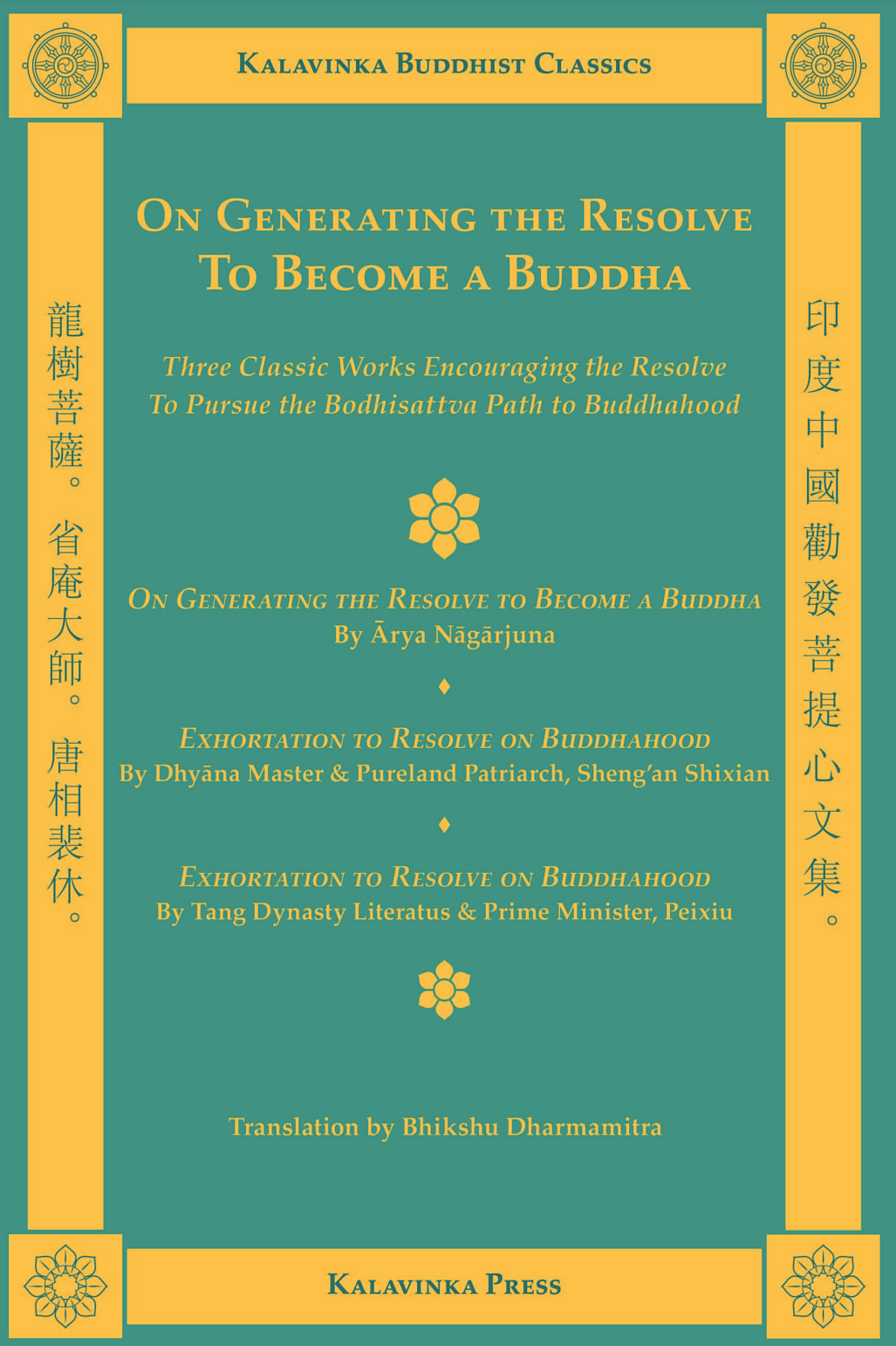
In this volume, Bhikshu Dharmamitra presents translations of three classic works on the bodhisattva vow (bodhicitta) authored by: The early Indian monastic eminence, Arya Nagarjuna (2nd c.); The Dhyana Master and Pureland Patriarch, Sheng'an Shixian (1686-1734); The Tang Dynasty literatus and prime minister, the Honorable Peixiu (797-870). Given that the bodhisattva vow constitutes the very essence of the path to buddhahood, this text can be said to be dedicated to the most important topic in all of Mahayana Buddhism. The translation and notes are by the American monk, Bhikshu Dharmamitra. This volume includes text outlines and facing-page source text in both traditional and simplified scripts. (Source Accessed Jan 15, 2025)
1 Similar title

Pei Xiu's Bodhicitta Essay is his only work that systematically articulates his views of Buddhist practice. It is not a doctrinal treatise that deals with scholastic discussion of sophisticated Buddhist concepts. Rather, it is targeted at beginners to provide a comprehensive guide for practice. As its content suggests, this piece, addressed universally to both members of the clergy and the laity, explains the meaning of bodhi, bodhicitta, and the procedures for cultivation necessary to achieve bodhicitta. (Source: Jiang Wu, "Pei Xiu (791–864) and Lay Buddhism in Tang Chan" Journal of Chan Buddhism 2 (2020): 56.
1 Works containing teachings
The Resolve for Bodhi (bodhicitta), the aspiration to reach full Awakening for the sake of all living beings, is a core element of Mahayana Buddhism. This short text by Master Xing An (d. 1734) who lived in Hangzhou, provides instructions on the Resolve for Bodhi that fit well into the Chinese cultural context, while staying true to the spirit of Mahayana Buddhism. Mainly written for a monastic audience, the text provides an intriguing glimpse into the Buddhism of the Qing Dynasty, which is yet to receive much scholarly attention. At the same time, the text and its modern commentary by Tripitaka Master Hsuan Hua also speak to the people of the twenty-first century, asking what makes our lives worth living.
(Based on audio recordings of lectures given by Master Hua at the City of Ten Thousand Buddhas in Ukiah, California, in 1979, and at Gold Mountain Monastery in San Francisco in 1985) (Source Accessed Mar 24, 2025)
2 A topic of
The Resolve for Bodhi (bodhicitta), the aspiration to reach full Awakening for the sake of all living beings, is a core element of Mahayana Buddhism. This short text by Master Xing An (d. 1734) who lived in Hangzhou, provides instructions on the Resolve for Bodhi that fit well into the Chinese cultural context, while staying true to the spirit of Mahayana Buddhism. Mainly written for a monastic audience, the text provides an intriguing glimpse into the Buddhism of the Qing Dynasty, which is yet to receive much scholarly attention. At the same time, the text and its modern commentary by Tripitaka Master Hsuan Hua also speak to the people of the twenty-first century, asking what makes our lives worth living.
(Based on audio recordings of lectures given by Master Hua at the City of Ten Thousand Buddhas in Ukiah, California, in 1979, and at Gold Mountain Monastery in San Francisco in 1985) (Source Accessed Mar 24, 2025)
In this volume, Bhikshu Dharmamitra presents translations of three classic works on the bodhisattva vow (bodhicitta) authored by: The early Indian monastic eminence, Arya Nagarjuna (2nd c.); The Dhyana Master and Pureland Patriarch, Sheng'an Shixian (1686-1734); The Tang Dynasty literatus and prime minister, the Honorable Peixiu (797-870). Given that the bodhisattva vow constitutes the very essence of the path to buddhahood, this text can be said to be dedicated to the most important topic in all of Mahayana Buddhism. The translation and notes are by the American monk, Bhikshu Dharmamitra. This volume includes text outlines and facing-page source text in both traditional and simplified scripts. (Source Accessed Jan 15, 2025)