| 🤓 Admin Zone 🛠️ hidden to non-admins | |


Description

-front.jpg)

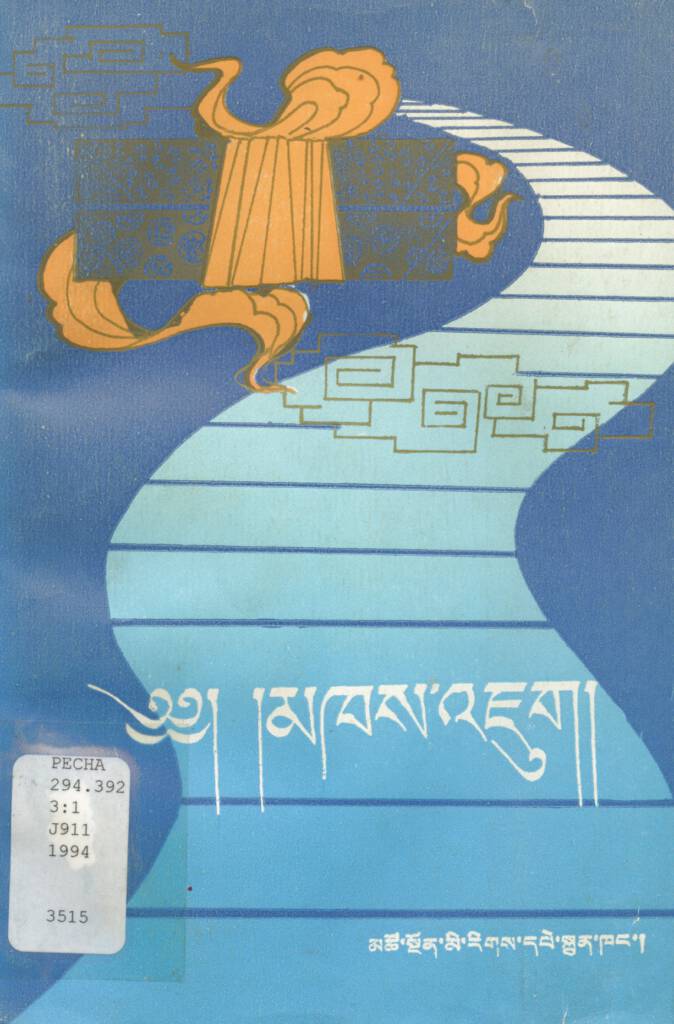
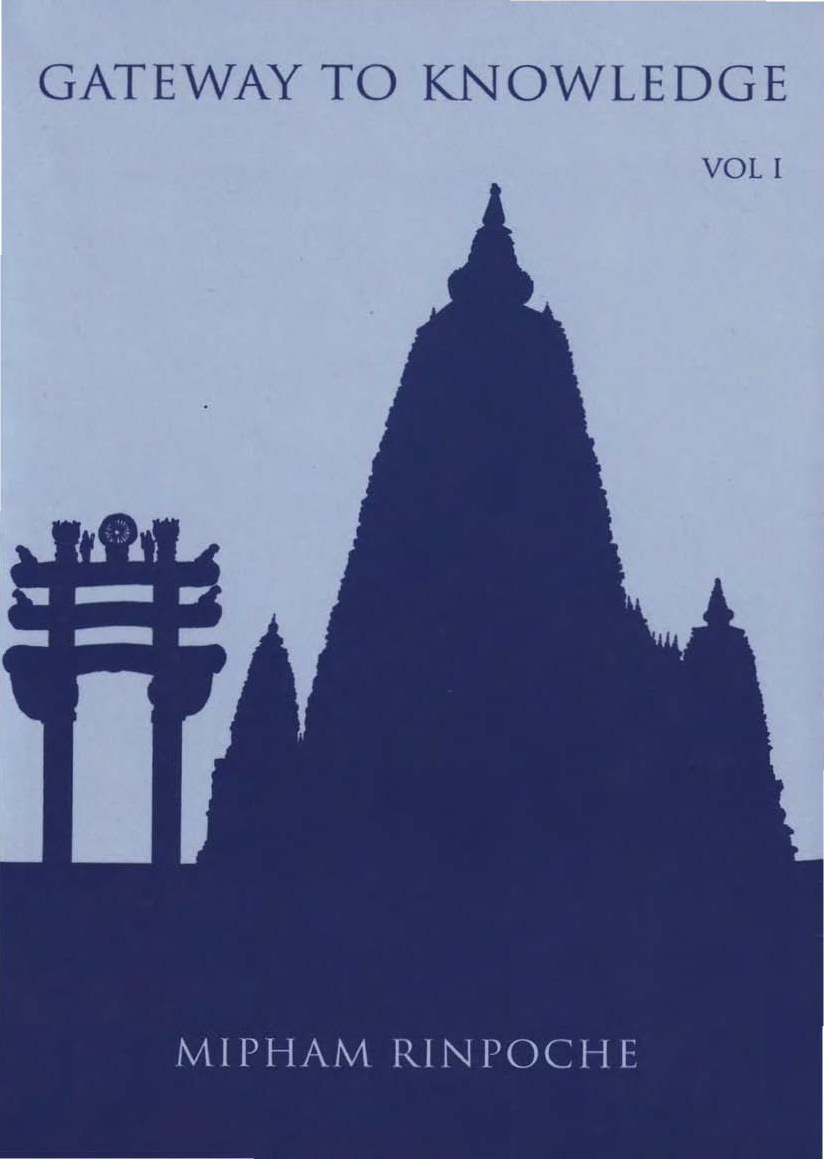
philosophical backbone of the living tradition of Tibetan Buddhism. This rich source book embodies the basics of Prajnaparamita and Madhyamika as well as the Abhidharma from both the Mahayana and Hinayana perspective. Every volume in this series includes the Tibetan text and the English translation on facing pages.
"The student of The Gateway to Knowledge can begin to comprehend the meaning of the major works on Buddhist philosophy and of the traditional sciences. When you want to extract their meaning you need an "expert system," a key. The Gateway to Knowledge is like that key, a magical key - it opens up the treasury of precious gemstones in the expansive collection of Buddhist scriptures.
"The extremely gifted and learned Tibetan master, Jamgön Mipham Rinpoche (1846-1912) studied with many great masters from all traditions. Accomplished in all five fields of knowledge, he remains the example of perfect scholarship. His unexcelled deeds in teaching and composing Buddhist treatises are immense." —Chökyi Nyima Rinpoche. (Source: back cover)
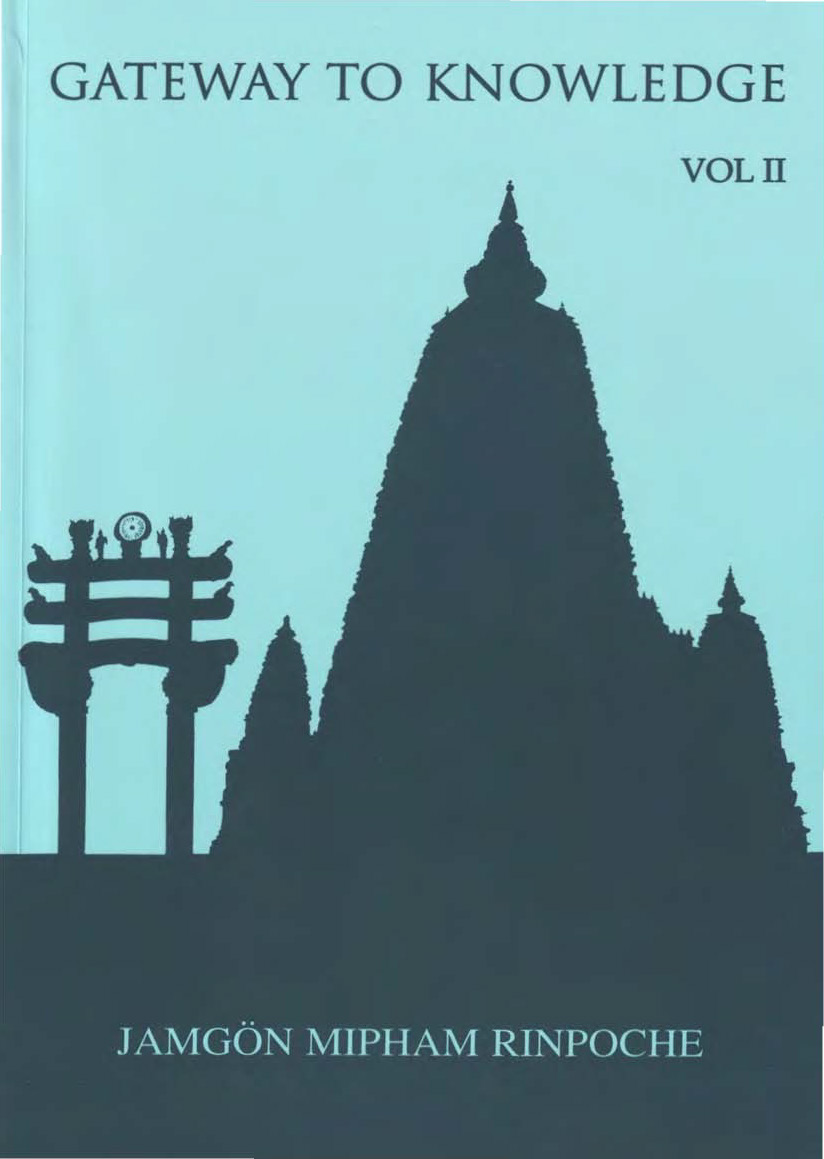
philosophical backbone of the living tradition of Tibetan Buddhism. Volume II of this rich source book elucidates the Four Noble Truths. Every volume in this series includes the Tibetan text and the English translation on facing pages.
The Tibetan master, Jamgön Mipham Rinpoche (1846-1912) is an exceptional treasure of wisdom, compassion and scholarship. His accomplishments in practice, learning, composition and teaching are immense.
The student of the Gateway to Knowledge can begin to comprehend the meaning of the major works on Buddhist philosophy and of the traditional sciences. When you want to extract their meaning you need an "expert system," a key. The Gateway to Knowledge is like that key, a magical key - it opens up the treasury of precious gemstones in the expansive collection of Buddhist scriptures. -Chökyi Nyima Rinpoche. (Source: back cover)
philosophical backbone of the living tradition of Tibetan Buddhism. Volume III of this rich source book elucidates Mahayana and emptiness. Every volume in this series includes the Tibetan text and the English translation on facing pages.
The Tibetan master, Jamgön Mipham Rinpoche (1846-1912) is an exceptional treasure of wisdom, compassion and scholarship. His accomplishments in practice, learning, composition and teaching are immense.
The student of the Gateway to Knowledge can begin to comprehend the meaning of the major works on Buddhist philosophy and of the traditional sciences. When you want to extract their meaning you need an "expert system,” a key. The Gateway to Knowledge is like that key, a magical key—it opens up the treasury of precious gemstones in the expansive collection of Buddhist scriptures. - Chökyi Nyima Rinpoche. (Source: back cover)
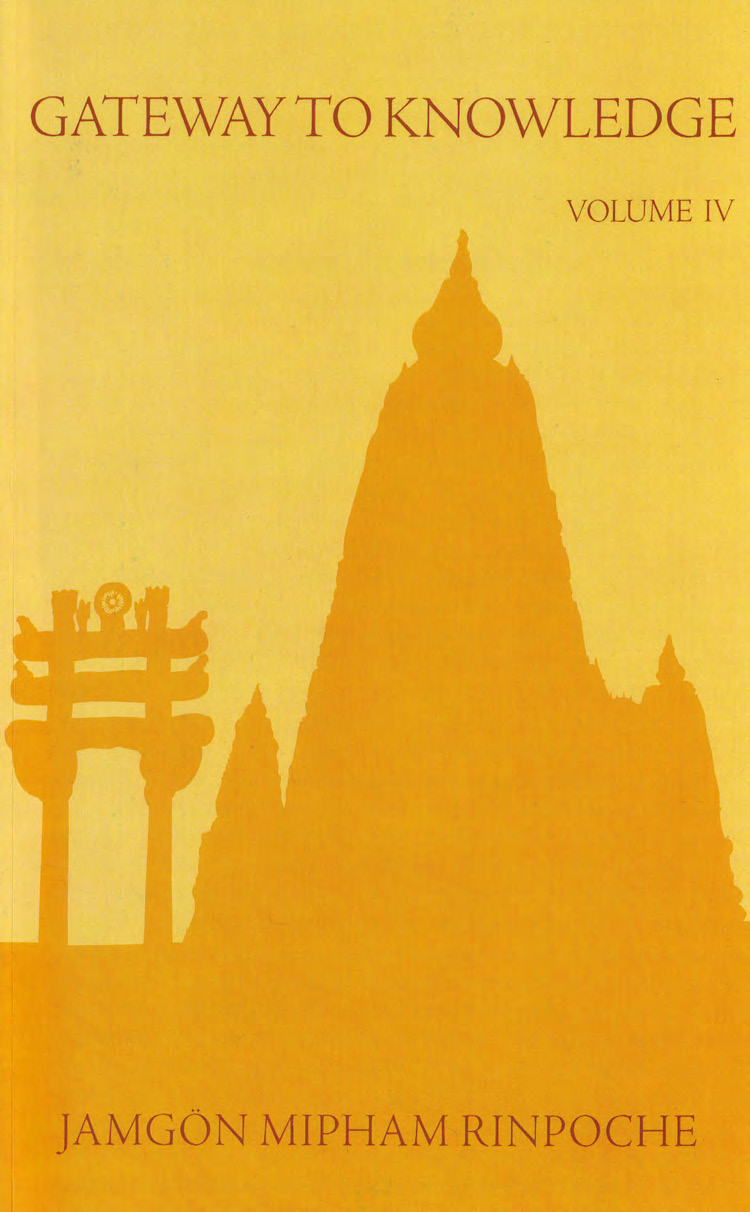
Consolidating the intent of Buddha Shakyamuni's teachings into a unified body of textbooks, it is the philosophical backbone of the living tradition of Tibetan Buddhism.
Volume IV of this book elucidates the four seals of the Dharma, the four right discriminations, and the four reasonings. Every volume in this series includes the Tibetan and the English translation on facing pages.
The Tibetan master Jamgön Mipham Rinpoche (1846-1912) is an exceptional treasure of wisdom, compassion, and scholarship. His accomplishments in practice, learning, composition, and teaching are immense. The student of the Gateway to Knowledge can begin to comprehend the meaning of the major works on Buddhist philosophy and of the traditional sciences.
"When you want to extract their meaning you need an 'expert system,' a key. The Gateway to Knowledge is like that key, a magical key-it opens up the treasury of precious gemstones in the expansive collection of Buddhist scriptures." - Chökyi Nyima Rinpoche. (Source: back cover)
relate to each other in the classification of the Mahāyāna doctrine.
In composing his mKhas 'jug, Mi pham begins with the usual verses of veneration and intention and then divides his text into three major discussions:[3]
- 1 mkhas par bya ba'i gnas bcu (daśavidhaṃ kauśalyam: the ten kinds of expertise: 2a3-123b6),
- 2. chos kyi sdom bźi (dharmoddāna-catuṣṭaya: four synoptic statements concerning the doctrine: 123b6-140b5), and
- 3. so so yaṅ dag par rig pa bźi (catvāri pratisaṃvidaḥ: four detailed and accurate knowledges: 140b5-161b4).
He concludes the treatise with a short discussion on the import of the text.
In this paper, I wish to focus my attention on the eighty inexhaustible topics (mi zad pa brgyad cu) that substantiate Mi pham's discussion on what constitutes a Mahāyāna path. However, before becoming involved with that topic, I believe that the eighty inexhaustible topics should be put into their proper context, and therefore, I shall deal first with the ten kinds of expertise (mkhas par bya ba'i gnas bcu, daśavidhaṃ kauśalyam). (Kawamura, introductory remarks, 131-32)philosophical backbone of the living tradition of Tibetan Buddhism. This rich source book embodies the basics of Prajnaparamita and Madhyamika as well as the Abhidharma from both the Mahayana and Hinayana perspective. Every volume in this series includes the Tibetan text and the English translation on facing pages.
"The student of The Gateway to Knowledge can begin to comprehend the meaning of the major works on Buddhist philosophy and of the traditional sciences. When you want to extract their meaning you need an "expert system," a key. The Gateway to Knowledge is like that key, a magical key - it opens up the treasury of precious gemstones in the expansive collection of Buddhist scriptures.
"The extremely gifted and learned Tibetan master, Jamgön Mipham Rinpoche (1846-1912) studied with many great masters from all traditions. Accomplished in all five fields of knowledge, he remains the example of perfect scholarship. His unexcelled deeds in teaching and composing Buddhist treatises are immense." —Chökyi Nyima Rinpoche. (Source: back cover)philosophical backbone of the living tradition of Tibetan Buddhism. Volume II of this rich source book elucidates the Four Noble Truths. Every volume in this series includes the Tibetan text and the English translation on facing pages.
The Tibetan master, Jamgön Mipham Rinpoche (1846-1912) is an exceptional treasure of wisdom, compassion and scholarship. His accomplishments in practice, learning, composition and teaching are immense.
The student of the Gateway to Knowledge can begin to comprehend the meaning of the major works on Buddhist philosophy and of the traditional sciences. When you want to extract their meaning you need an "expert system," a key. The Gateway to Knowledge is like that key, a magical key - it opens up the treasury of precious gemstones in the expansive collection of Buddhist scriptures. -Chökyi Nyima Rinpoche. (Source: back cover)philosophical backbone of the living tradition of Tibetan Buddhism. Volume III of this rich source book elucidates Mahayana and emptiness. Every volume in this series includes the Tibetan text and the English translation on facing pages.
The Tibetan master, Jamgön Mipham Rinpoche (1846-1912) is an exceptional treasure of wisdom, compassion and scholarship. His accomplishments in practice, learning, composition and teaching are immense.
The student of the Gateway to Knowledge can begin to comprehend the meaning of the major works on Buddhist philosophy and of the traditional sciences. When you want to extract their meaning you need an "expert system,” a key. The Gateway to Knowledge is like that key, a magical key—it opens up the treasury of precious gemstones in the expansive collection of Buddhist scriptures. - Chökyi Nyima Rinpoche. (Source: back cover)Consolidating the intent of Buddha Shakyamuni's teachings into a unified body of textbooks, it is the philosophical backbone of the living tradition of Tibetan Buddhism.
Volume IV of this book elucidates the four seals of the Dharma, the four right discriminations, and the four reasonings. Every volume in this series includes the Tibetan and the English translation on facing pages.
The Tibetan master Jamgön Mipham Rinpoche (1846-1912) is an exceptional treasure of wisdom, compassion, and scholarship. His accomplishments in practice, learning, composition, and teaching are immense. The student of the Gateway to Knowledge can begin to comprehend the meaning of the major works on Buddhist philosophy and of the traditional sciences.
"When you want to extract their meaning you need an 'expert system,' a key. The Gateway to Knowledge is like that key, a magical key-it opens up the treasury of precious gemstones in the expansive collection of Buddhist scriptures." - Chökyi Nyima Rinpoche. (Source: back cover)relate to each other in the classification of the Mahāyāna doctrine.
In composing his mKhas 'jug, Mi pham begins with the usual verses of veneration and intention and then divides his text into three major discussions:[3]
- 1 mkhas par bya ba'i gnas bcu (daśavidhaṃ kauśalyam: the ten kinds of expertise: 2a3-123b6),
- 2. chos kyi sdom bźi (dharmoddāna-catuṣṭaya: four synoptic statements concerning the doctrine: 123b6-140b5), and
- 3. so so yaṅ dag par rig pa bźi (catvāri pratisaṃvidaḥ: four detailed and accurate knowledges: 140b5-161b4).
He concludes the treatise with a short discussion on the import of the text.
In this paper, I wish to focus my attention on the eighty inexhaustible topics (mi zad pa brgyad cu) that substantiate Mi pham's discussion on what constitutes a Mahāyāna path. However, before becoming involved with that topic, I believe that the eighty inexhaustible topics should be put into their proper context, and therefore, I shall deal first with the ten kinds of expertise (mkhas par bya ba'i gnas bcu, daśavidhaṃ kauśalyam). (Kawamura, introductory remarks, 131-32)