| 🤓 Admin Zone 🛠️ hidden to non-admins | |


Description

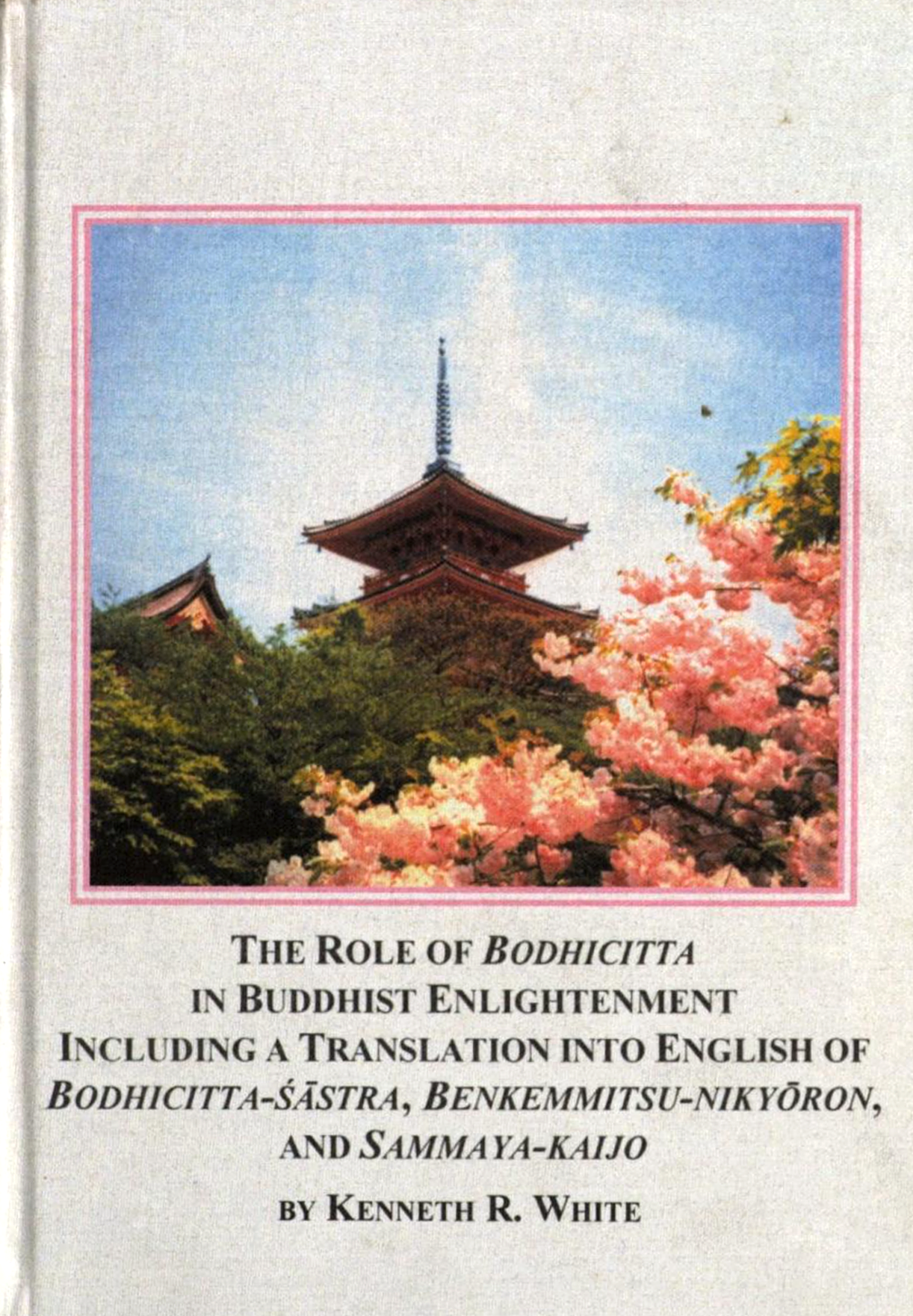
doctrinal basis of bodhicitta thought by making reference to the three texts—texts which I consider to indicate the evolution of bodhicitta thought from India and China to Japan. There are, of course, other Buddhist texts dealing with bodhicitta, but the selection was dictated by my desire to examine the doctrinal basis of Shingon's man-Buddha integration theory. Bodhicitta constitutes the agent of this integration.
This work treats bodhicitta thought as a form of an experiential philosophy and describes that philosophy by means of iconographic maṇḍalas. Experiential philosophy in the context in the context of this work means that bodhisattva practice is the norm to cultivate and perfect bodhicitta, the perfection of bodhicitta signaling the realm of man-Buddha integration. Maṇḍalas are employed to describe this type of experiential philosophy and integrating process by visual representation. This work is not a phenomenological study of Buddhist Tantrism or a historical study of the Buddhist Tantric tradition as a whole. It is a doctrinal study based upon an examination of the three texts; it zeros in on bodhicitta; it describes bodhicitta as an experiential philosophy and the agent of man-Buddha integration.
An annotated translation of the three texts is attached to this work as textual reference. (Source: Kiyota, Tantric Concept of Bodhicitta, vii)
As discussion of the possibilities available to sentient beings engaged in various ritual practices and devotions progressed, the notion arose that they were actual partakers in Buddha-nature, with the potential of attaining Buddhahood. That sentient beings could even think of such a notion was indeed a radical departure from the doctrines of early Buddhism.
It was perhaps Kūkai, in his Shingon Buddhist doctrine, who took this notion to its fullest extent as he forwarded his scheme of actual integration between man and Buddha, facilitated by means of specifically directed practice, including activities of body, speech and mind. Such integration was not merely a philosophical phenomenon, but was viewed as a tangible and very immediate process. This immediacy is typified in the statement adopted by Kūkai indicating that one could even 'be a Buddha in this very body' (sokushin-jōbutsu), eliminating the necessity for countless rebirths.
Kūkai saw his unique Shingon doctrine and practice as not merely an addition to Mahāyāna Buddhist thought and Japanese Buddhist ritual, but rather as the distillation of all that Buddhist doctrine had been hinting at and attempting to explain. He took it to constitute the effective essence of Mahāyāna Buddhism, emphasizing the important notion that Buddhahood is a possibility for all. Two of Kūkai's original works, Benkemmitsu-nikyōron and Sammaya-kaijo, as well as the Bodhicitta-śāstra, a text from which he often quoted, constitute the foundation of his sokushin-jōbutsu thought, and are elucidating in an analysis of the development of his bodhicitta view. (Source: Edwin Mellen Press)doctrinal basis of bodhicitta thought by making reference to the three texts—texts which I consider to indicate the evolution of bodhicitta thought from India and China to Japan. There are, of course, other Buddhist texts dealing with bodhicitta, but the selection was dictated by my desire to examine the doctrinal basis of Shingon's man-Buddha integration theory. Bodhicitta constitutes the agent of this integration.
This work treats bodhicitta thought as a form of an experiential philosophy and describes that philosophy by means of iconographic maṇḍalas. Experiential philosophy in the context in the context of this work means that bodhisattva practice is the norm to cultivate and perfect bodhicitta, the perfection of bodhicitta signaling the realm of man-Buddha integration. Maṇḍalas are employed to describe this type of experiential philosophy and integrating process by visual representation. This work is not a phenomenological study of Buddhist Tantrism or a historical study of the Buddhist Tantric tradition as a whole. It is a doctrinal study based upon an examination of the three texts; it zeros in on bodhicitta; it describes bodhicitta as an experiential philosophy and the agent of man-Buddha integration.
An annotated translation of the three texts is attached to this work as textual reference. (Source: Kiyota, Tantric Concept of Bodhicitta, vii)doctrinal basis of bodhicitta thought by making reference to the three texts—texts which I consider to indicate the evolution of bodhicitta thought from India and China to Japan. There are, of course, other Buddhist texts dealing with bodhicitta, but the selection was dictated by my desire to examine the doctrinal basis of Shingon's man-Buddha integration theory. Bodhicitta constitutes the agent of this integration.
This work treats bodhicitta thought as a form of an experiential philosophy and describes that philosophy by means of iconographic maṇḍalas. Experiential philosophy in the context in the context of this work means that bodhisattva practice is the norm to cultivate and perfect bodhicitta, the perfection of bodhicitta signaling the realm of man-Buddha integration. Maṇḍalas are employed to describe this type of experiential philosophy and integrating process by visual representation. This work is not a phenomenological study of Buddhist Tantrism or a historical study of the Buddhist Tantric tradition as a whole. It is a doctrinal study based upon an examination of the three texts; it zeros in on bodhicitta; it describes bodhicitta as an experiential philosophy and the agent of man-Buddha integration.
An annotated translation of the three texts is attached to this work as textual reference. (Source: Kiyota, Tantric Concept of Bodhicitta, vii)As discussion of the possibilities available to sentient beings engaged in various ritual practices and devotions progressed, the notion arose that they were actual partakers in Buddha-nature, with the potential of attaining Buddhahood. That sentient beings could even think of such a notion was indeed a radical departure from the doctrines of early Buddhism.
It was perhaps Kūkai, in his Shingon Buddhist doctrine, who took this notion to its fullest extent as he forwarded his scheme of actual integration between man and Buddha, facilitated by means of specifically directed practice, including activities of body, speech and mind. Such integration was not merely a philosophical phenomenon, but was viewed as a tangible and very immediate process. This immediacy is typified in the statement adopted by Kūkai indicating that one could even 'be a Buddha in this very body' (sokushin-jōbutsu), eliminating the necessity for countless rebirths.
Kūkai saw his unique Shingon doctrine and practice as not merely an addition to Mahāyāna Buddhist thought and Japanese Buddhist ritual, but rather as the distillation of all that Buddhist doctrine had been hinting at and attempting to explain. He took it to constitute the effective essence of Mahāyāna Buddhism, emphasizing the important notion that Buddhahood is a possibility for all. Two of Kūkai's original works, Benkemmitsu-nikyōron and Sammaya-kaijo, as well as the Bodhicitta-śāstra, a text from which he often quoted, constitute the foundation of his sokushin-jōbutsu thought, and are elucidating in an analysis of the development of his bodhicitta view. (Source: Edwin Mellen Press)