Tantric Concept of Bodhicitta (Kiyota 1982)

From Bodhicitta
< BooksBooks/Tantric Concept of Bodhicitta (Kiyota 1982)

🤓 Admin Zone 🛠️ hidden to non-admins
Tantric Concept of Bodhicitta: A Buddhist Experiential Philosophy (An Exposition based upon the Mahāvairocana-sūtra, Bodhicitta-śāstra and Sokushin-jōbutsu-gi)
Book


Please note that many items in our library are simply pages that represent a detailed library catalog entry and citation of someone else's work, presentation, or performance. Read our General Disclaimer for more information.
The Concept of Bodhicitta-front.png

Description

This work consists of an expository essay on and an anotated translation of three Buddhist Tantric texts: the Mahāvairocana-sūtra composed in India in the 7th century, the Bodhicitta-śāstra composed in China in the 8th century, and the Sokushin-jōbutsu-gi composed in Japan in the 9th century. The purpose is to supplement my previous work, Shingon Buddhism: Theory and Practice (Los Angeles-Tokyo: Buddhist Books International, 1978), the central theme of which was bodhicitta. The present work describes the

doctrinal basis of bodhicitta thought by making reference to the three texts—texts which I consider to indicate the evolution of bodhicitta thought from India and China to Japan. There are, of course, other Buddhist texts dealing with bodhicitta, but the selection was dictated by my desire to examine the doctrinal basis of Shingon's man-Buddha integration theory. Bodhicitta constitutes the agent of this integration.

This work treats bodhicitta thought as a form of an experiential philosophy and describes that philosophy by means of iconographic maṇḍalas. Experiential philosophy in the context in the context of this work means that bodhisattva practice is the norm to cultivate and perfect bodhicitta, the perfection of bodhicitta signaling the realm of man-Buddha integration. Maṇḍalas are employed to describe this type of experiential philosophy and integrating process by visual representation. This work is not a phenomenological study of Buddhist Tantrism or a historical study of the Buddhist Tantric tradition as a whole. It is a doctrinal study based upon an examination of the three texts; it zeros in on bodhicitta; it describes bodhicitta as an experiential philosophy and the agent of man-Buddha integration.

An annotated translation of the three texts is attached to this work as textual reference. (Source: Kiyota, Tantric Concept of Bodhicitta, vii)

Citation
Kiyota, Minoru. Tantric Concept of Bodhicitta: A Buddhist Experiential Philosophy (An Exposition based upon the Mahāvairocana-sūtra, Bodhicitta-śāstra and Sokushin-jōbutsu-gi). Madison, WI: South Asian Area Center, University of Wisconsin-Madison, 1982.
Table of contents
  • Acknowledgements
  • Abbreviations
  • Preface
  • I. Tantric Concept of Bodhicitta
    • 1. Tacit Assumptions2
    • 2. Mahāvairocana-sūtra: The Theoretical Foundation11
    • 3. Bodhicitta-śāstra: The Experiential Foundation25
    • 4. Sokushin-Jōbutsu-gi: Man-Buddha Integration Theory39
    • 5. Conclusion52
  • II. Translations
    • 1. Mahāvairocana-sūtra56
    • 2. Bodhicitta-śāstra80
    • 3. Sokushin-jōbutsu-gi94
  • Notes110
  • Bibliographical Reference129
  • Glossary of Technical Terms (Sanskrit, Tibetan and Chinese)136
  • Index156
Interconnections
3 Full translation of
Amoghavajra 14 century National Museum Tokyo Wikipedia.jpg
Classical WorksAbout this item
The Bodhicitta-śāstra (Taishō vol. 32, no. 1665) is extant only in Chinese translation. . . . This is a Buddhist tantric text and constitutes one of the most important śāstras in the formulation of the Shingon theory of human-buddha integration. The term “human-buddha integration,” which first appears in this śāstra, called zhi shen cheng fo in Chinese and sokushin jōbutsu in Japanese, literally means “the body, just as it is, is that of the Buddha.” This śāstra claims that human-buddha integration is possible because bodhicitta (the wisdom of knowing the true nature of self, i.e., that the self is a product of emptiness) is shared by both sentient beings and the Buddha, who in this case is Dharmakāya Mahāvairocana, the personification of emptiness. (Source: Esoteric Texts, translator's introduction, 105)
Kawa Paltsek-Mandala-reduced.jpg
Classical WorksAbout this item
Mahāvairocanãbhisambodhisūtra. (T. Rnam par snang mdzad chen po mngon par rdzogs par byang chub pa rnam par sprul ba byin gyis rlob pa shin tu rgyas pa mdo; C. Da piluzhena chengfo shenbian jiachi jing/Dari jing; J. Daibirushana jōbutsu jinben kajikyō/Dainichikyō; K. Tae Pirojana sǒngbul sinbyǒn kaji kyǒng /Taeil kyǒng 大毘盧那成佛神變加持經. In Sanskrit, "The Discourse on the Enlightenment of Mahāvairocanā"; a scripture also known as the Mahāvairocanasūtra and the Vairocanābhisambodhitantra; the full title of the work is Mahāvairocanābhisaṃbodhivikurvitādhisthānavaipulyasūtra ("Extensive Sūtra on the Enlightenment, Transformations, and Empowerment of Mahāvairocana"). This scripture is an early Buddhist tantra, which was probably composed sometime between the mid-sixth and seventh centuries, around the time that the mantrayāna was emerging as distinct strand of Mahāyāna Buddhism; the text is later classified as both a yogatantra and a caryātantra. It was first translated into Chinese by Śubhakarasiṃha and Yixing in 724-725, and would become one of the two most important tantras for East Asian esoteric Buddhism (the other being the Sarvatathāgatatattvasaṃgraha). The text was translated into Tibetan in the early ninth century; the Tibetan version contains an additional seven chapters, called the "continuation" (uttaratantra), that do not appear in the Chinese version. Among the commentaries to the text, the most important is that of Buddhaguyha and that of the Chinese translators, Śubhakarasiṃha and Yixing. The tantra is set forth as a dialogue between Vajrapāni and the buddha Mahāvairocanā. The central topics of the text are bodhicitta, karunā, and upāya, which the buddha Vairocana explains are respectively the cause, root, and culmination of his own omniscience. Much of the text deals with the traditional tantric topics of initiation (abhiṣeka), mantra recitation, mudrā, visualization, and the description of the maṇḍala. (Source: "Mahāvairocanābhisaṃbodhisūtra." In The Princeton Dictionary of Buddhism, 511-12. Princeton University Press, 2014. http://www.jstor.org/stable/j.ctt46n41q.27.)
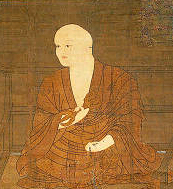
Kukai wikipedia.jpg
Classical WorksAbout this item
In the Buddhism practiced in Japan prior to the time of Kūkai it had been maintained that it was possible to become a Buddha only after spending an enormously long period of time repeating the cycle of birth and death. This process known as “becoming a Buddha in three kalpas” (Jp. san-kō-jō-butsu) or "becoming a Buddha after passing through countless kalpas" (Jp. ryaku-kō-jō-butsu). In the present work Kūkai expounds the idea that it is possible to become a Buddha in this very body (Jp. soku-shin-jō-butsu). This work is thus an elucidation from the standpoint of the Shingon School of the theory and practice leading to such attainment. (Source Accessed Jan 15, 2025)
3 Scholarship on
Amoghavajra 14 century National Museum Tokyo Wikipedia.jpg
Classical WorksAbout this item
The Bodhicitta-śāstra (Taishō vol. 32, no. 1665) is extant only in Chinese translation. . . . This is a Buddhist tantric text and constitutes one of the most important śāstras in the formulation of the Shingon theory of human-buddha integration. The term “human-buddha integration,” which first appears in this śāstra, called zhi shen cheng fo in Chinese and sokushin jōbutsu in Japanese, literally means “the body, just as it is, is that of the Buddha.” This śāstra claims that human-buddha integration is possible because bodhicitta (the wisdom of knowing the true nature of self, i.e., that the self is a product of emptiness) is shared by both sentient beings and the Buddha, who in this case is Dharmakāya Mahāvairocana, the personification of emptiness. (Source: Esoteric Texts, translator's introduction, 105)
Kawa Paltsek-Mandala-reduced.jpg
Classical WorksAbout this item
Mahāvairocanãbhisambodhisūtra. (T. Rnam par snang mdzad chen po mngon par rdzogs par byang chub pa rnam par sprul ba byin gyis rlob pa shin tu rgyas pa mdo; C. Da piluzhena chengfo shenbian jiachi jing/Dari jing; J. Daibirushana jōbutsu jinben kajikyō/Dainichikyō; K. Tae Pirojana sǒngbul sinbyǒn kaji kyǒng /Taeil kyǒng 大毘盧那成佛神變加持經. In Sanskrit, "The Discourse on the Enlightenment of Mahāvairocanā"; a scripture also known as the Mahāvairocanasūtra and the Vairocanābhisambodhitantra; the full title of the work is Mahāvairocanābhisaṃbodhivikurvitādhisthānavaipulyasūtra ("Extensive Sūtra on the Enlightenment, Transformations, and Empowerment of Mahāvairocana"). This scripture is an early Buddhist tantra, which was probably composed sometime between the mid-sixth and seventh centuries, around the time that the mantrayāna was emerging as distinct strand of Mahāyāna Buddhism; the text is later classified as both a yogatantra and a caryātantra. It was first translated into Chinese by Śubhakarasiṃha and Yixing in 724-725, and would become one of the two most important tantras for East Asian esoteric Buddhism (the other being the Sarvatathāgatatattvasaṃgraha). The text was translated into Tibetan in the early ninth century; the Tibetan version contains an additional seven chapters, called the "continuation" (uttaratantra), that do not appear in the Chinese version. Among the commentaries to the text, the most important is that of Buddhaguyha and that of the Chinese translators, Śubhakarasiṃha and Yixing. The tantra is set forth as a dialogue between Vajrapāni and the buddha Mahāvairocanā. The central topics of the text are bodhicitta, karunā, and upāya, which the buddha Vairocana explains are respectively the cause, root, and culmination of his own omniscience. Much of the text deals with the traditional tantric topics of initiation (abhiṣeka), mantra recitation, mudrā, visualization, and the description of the maṇḍala. (Source: "Mahāvairocanābhisaṃbodhisūtra." In The Princeton Dictionary of Buddhism, 511-12. Princeton University Press, 2014. http://www.jstor.org/stable/j.ctt46n41q.27.)
Kukai wikipedia.jpg
Classical WorksAbout this item
In the Buddhism practiced in Japan prior to the time of Kūkai it had been maintained that it was possible to become a Buddha only after spending an enormously long period of time repeating the cycle of birth and death. This process known as “becoming a Buddha in three kalpas” (Jp. san-kō-jō-butsu) or "becoming a Buddha after passing through countless kalpas" (Jp. ryaku-kō-jō-butsu). In the present work Kūkai expounds the idea that it is possible to become a Buddha in this very body (Jp. soku-shin-jō-butsu). This work is thus an elucidation from the standpoint of the Shingon School of the theory and practice leading to such attainment. (Source Accessed Jan 15, 2025)