| 🤓 Admin Zone 🛠️ hidden to non-admins | |
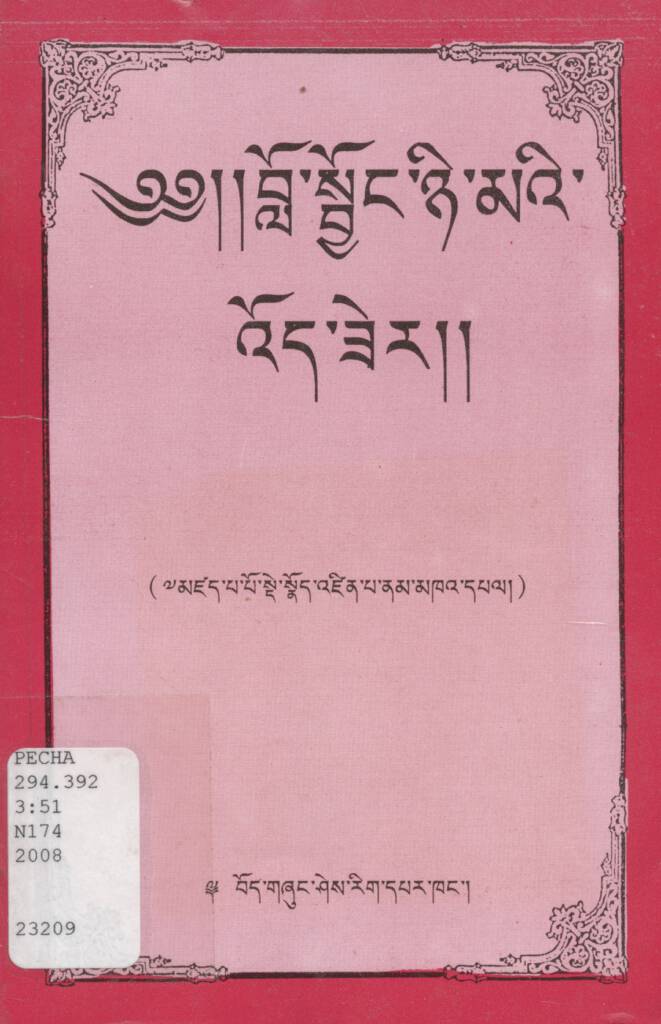
བློ་སྦྱོང་ཉི་མའི་འོད་ཟེར།
blo sbyong nyi ma'i 'od zer
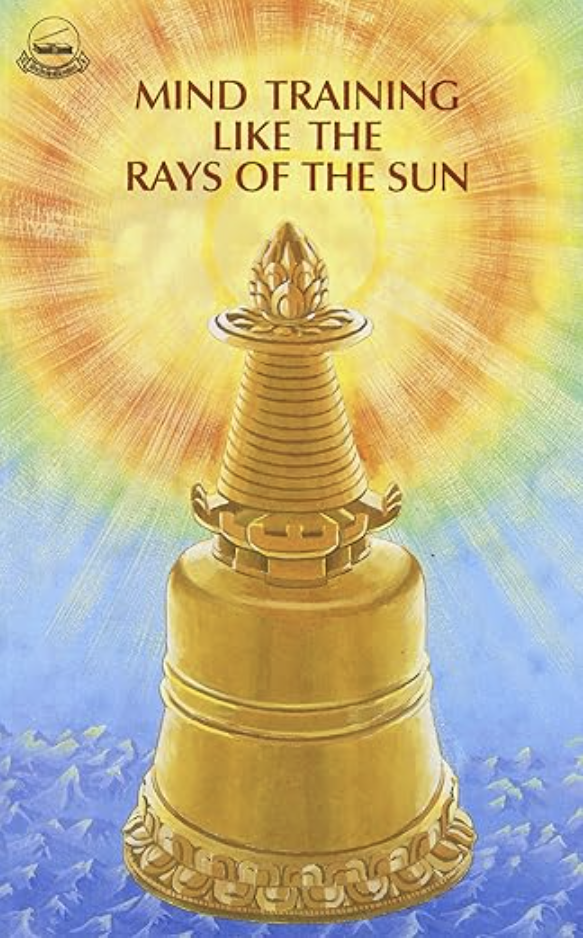
Mind Training Like the Rays of the Sun
Text
Please note that many items in our library are simply pages that represent a detailed library catalog entry and citation of someone else's work, presentation, or performance. Read our General Disclaimer for more information.

Description
The Mind Training Like the Rays of the Sun exemplifies Tsongkhapa's presentation of mind training. The author, Namkha Pel, as he mentions in his introduction, received the lineage of the explanation of the Seven Point Mind Training, which is the fundamental text here, from various sources including Je Rinpoche, his principal teacher. What is distinctive about this presentation is that he has managed to combine both the mind training instructions as they are recorded in Geshey Chekawa's text with the pattern of the Stages of the Path. (Adapted from Source Mar 26, 2025)
Reference
blo sbyong nyi ma'i 'od zer [བློ་སྦྱོང་ཉི་མའི་འོད་ཟེར།]. [Mind Training Like the Rays of the Sun].
Interconnections
1 Recensions
-front.jpg)
Hor ston nam mkha' dpal ba. Blo sbyong nyi ma'i 'od zer. New Delhi: Bod gzhung shes rig dpar khang, 2008.
1 Full translations

The mind training teachings are a great vehicle instruction, because they are mostly concerned with developing the awakening mind, the altruistic mind of enlightenment. They are directed primarily towards the practitioner of great capacity, and deal essentially with transforming our mental attitudes.
One special feature of the mind training teachings is the advice to transform adversity into advantage. So, not only do these instructions help us open out towards other beings, but they also help us transform whatever difficulties come our way into something valuable.
The Mind Training Like the Rays of the Sun exemplifies Tsong-khapa's presentation of mind training. The author, Nam-kha Pel, as he mentions in his introduction, received the lineage of the explanation of the Seven Point Mind Training, which is the fundamental text here, from various sources including Je Rinpoche, his principal teacher. What is distinctive about this presentation is that he has managed to combine both the mind training instructions as they are recorded in Geshey Che-ka-wa's text with the pattern of the Stages of the Path. (Source: Back Cover)1 Related

Blo sbyong don bdun ma. (Lojong Döndünma). In Tibetan, "Seven Points of Mind Training"; an influential Tibetan work in the blo sbyong ("mind training") genre. The work was composed by the Bka' gdams scholar 'Chad ka ba ye shes rdo rje, often known as Dge bshes Mchad kha ba, based on the tradition of generating bodhicitta known as "mind training" transmitted by the Bengali master Atiśa Dīpaṃkaraśrījñāna. It also follows the system laid out previously by Glang ri thang pa (Langri Tangpa) in his Blo sbyong tshig brgyad ma ("Eight Verses on Mind Training"). Comprised of a series of pithy instructions and meditative techniques, the Blo sbyong don bdun ma became influential in Tibet, with scholars from numerous traditions writing commentaries to it. According to the commentary of the nineteenth-century Tibetan polymath 'Jam mgon kong sprul, the seven points covered in the treatise are: (1) the preliminaries to mind training, which include the contemplations on the preciousness of human rebirth, the reality of death and impermanence, the shortcomings of saṃsāra, and the effects of karman; (2) the actual practice of training in bodhicitta; (3) transforming adverse conditions into the path of awakening; (4) utilizing the practice in one's entire life; (5) the evaluation of mind training; (6) the commitments of mind training; and (7) guidelines for mind training. (Source: "Blo sbyong don bdun ma." In The Princeton Dictionary of Buddhism, 126–27. Princeton University Press, 2014. http://www.jstor.org/stable/j.ctt46n41q.27.)
2 A topic of
Hor ston nam mkha' dpal ba. Blo sbyong nyi ma'i 'od zer. New Delhi: Bod gzhung shes rig dpar khang, 2008.
The mind training teachings are a great vehicle instruction, because they are mostly concerned with developing the awakening mind, the altruistic mind of enlightenment. They are directed primarily towards the practitioner of great capacity, and deal essentially with transforming our mental attitudes.
One special feature of the mind training teachings is the advice to transform adversity into advantage. So, not only do these instructions help us open out towards other beings, but they also help us transform whatever difficulties come our way into something valuable.
The Mind Training Like the Rays of the Sun exemplifies Tsong-khapa's presentation of mind training. The author, Nam-kha Pel, as he mentions in his introduction, received the lineage of the explanation of the Seven Point Mind Training, which is the fundamental text here, from various sources including Je Rinpoche, his principal teacher. What is distinctive about this presentation is that he has managed to combine both the mind training instructions as they are recorded in Geshey Che-ka-wa's text with the pattern of the Stages of the Path. (Source: Back Cover)