Study/Influence and Reception of Śāntideva's Works in China and Central Asia
- [[<span class="smw-highlighter" data-type="4" data-state="inline" data-title="Warning" title="Some use of "|]]
- "
- In your query was not closed by a matching "
- "
- [[.">Some use of "" in your query was not closed by a matching "".|]]
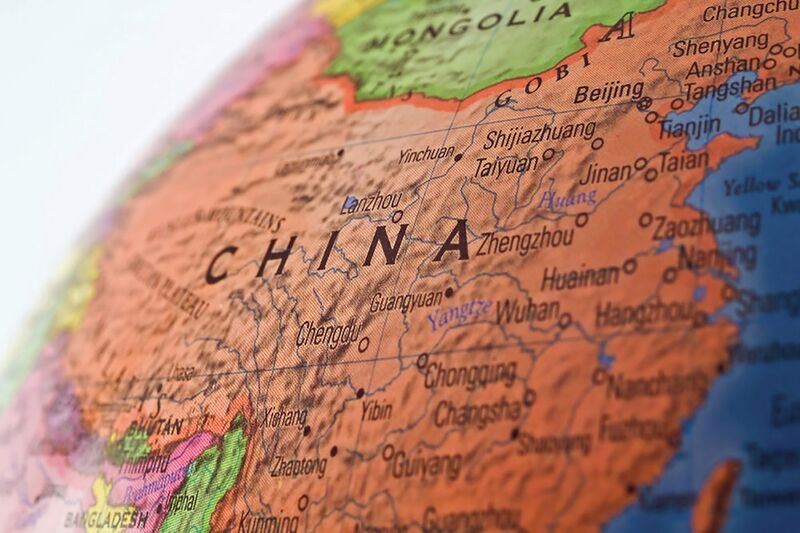
In his master's thesis, Fredrik Liland explores the transmission and influence of Śāntideva's Bodhicaryāvatāra in China and Mongolia. He examines the Chinese translation of the text during the Sòng dynasty and highlights the related political context and translation processes. His study analyzes the Bodhicaryāvatāra's limited impact in China due to various factors ranging from a lack of interest in new Buddhist ideas to linguistic challenges. Liland then shifts his focus to Mongolia, where the Bodhicaryāvatāra became highly influential, detailing its introduction through Tibetan influence and discussing Čosgi Odser's Mongolian translation in 1305 CE.
Liland's short comparative study offers valuable insights into the transmission of Buddhist texts across cultures and the varied reception of important works. It shows how political, cultural, and linguistic factors can influence the adoption and impact of religious texts. The detailed presentation of the Chinese translation process illustrates the complexities involved in the cross-cultural transmission of Buddhist ideas. By contrasting the text's limited influence in China with its significant impact in Mongolia, the article demonstrates the complex interplay between religious texts and their cultural contexts, making it a valuable resource for scholars of Buddhist studies, comparative religion, and cultural history, as well as for Buddhist practitioners interested in the history of the Bodhicaryāvatāra.
China
In the Taishō edition of the Chinese Buddhist canon we find an apparently incomplete translation of the BCA by the name Pútíxíng Jīng 菩提行經 (BCAChi).[1] This translation is reported to have been executed by Tiān Xīzāi 天息災 in 985 CE, during the Northern Sòng dynasty.[2] Although it was included in the official canon this translation does not seem to have gained much importance in Chinese and, as a consequence, East Asian Buddhism in general. In order to shed some light on this lack of interest, and before dealing with the details of the translation itself, it will first be helpful to make a small investigation of the context in which the translation took place.
By scholars working on the topic the state of Chinese Buddhism during the Sòng 宋 dynasty (960-1279 CE) has been described by such diametrically opposed characteristics as "decline" and "golden age".[3] The decline has been linked to a culture of internal corruption and doctrinal stagnation that characterized the Buddhism patronized by the state, and the fact that the gap between this and the religion of the masses widened. On the other hand many factors indicate that Buddhism was in fact flourishing during the period. Many Indian monks travelled to China, even more Chinese pilgrims paid India a visit, and the number of translations that were undertaken was comparable to the glory-days of Buddhism during earlier dynasties. Moreover, the characteristic schools of Chinese Buddhism, such as Chán 禅, Tiāntāi 天台 and others, had developed a strong identity and were having great success, and so it seems that Buddhism in China was anything but on the decline. Still, the latter period of the Sòng dynasty marks the end of the flourishing Buddhist exchange with India, and throughout the period newly translated Buddhist texts had little influence on the general development of Chinese Buddhism. This seems also to have been the case with the BCA. Different reasons have been put forth to explain this phenomenon. Tansen Sen (2002) argues that the most important reason must have been that the, by this time, fully developed indigenous schools of Chinese Buddhism saw little need for newly translated doctrines. While there was in fact a bustling translation activity taking place, this was executed under state patronage, and there are indications that it was upheld by the rulers mainly for political purposes, and was far removed from the Buddhism of the populace.
Translations during the Sòng dynasty
After a hiatus of 160 years since the Táng 唐 dynasty (618-907 CE) began to gradually disintegrate, the translation activities in China were revived during the reign of the Sòng emperor Tàizǔ 太祖 (r. 960-976).[4] In the year 966 permission and provisions were given to a group of over 150 pilgrims to travel to the Western Regions to search for Buddhist teachings, and in 973 the first two translations of this period were presented to the court.[5] The court's decision to endorse Buddhism was likely in part political as it would legitimize the authority of the Sòng emperor in the eyes of the many neighbouring Buddhist states. The monks' literacy and learning was also a highly regarded commodity at the court, and so were many texts that were considered as powerful tools if employed for political ends. It was therefore not necessarily due to a popular need for more teachings from India that the translation activity was revived. Newly translated texts were presented to the court on auspicious occasions, and their production seems to have eventually become a sort of formality, as certain occasions required their presentation. The texts seem not to necessarily have been meant for the Buddhist clergy in China at all. The lively commentarial tradition of earlier times is conspicuously absent during the Sòng dynasty. The Chinese had fully developed their own strand of Buddhism and new ideas from India were not in demand. In fact they seem to have been outright unwanted, and there was a tendency towards disassociating Chinese Buddhism completely from its Indian origins in order to legitimize it as an authentic Chinese tradition that could meet Chinese needs. A state-monk by the name Zànnìng 贊寧 was particularly outspoken in this regard when he criticised Indian culture for being unsophisticated and simple, since they did not even have a clear date for the birth of the Buddha. He also reiterated earlier Chinese claims of Buddhism having been present in China during the Zhōu 周 dynasty (1045-256 BCE), centuries before it was actually introduced.[6]
In 980 the second emperor of the Sòng dynasty, Tàizōng 太宗 (r. 977-997), established the Institute for the Translation of Sūtras [Yìjīng yuàn 譯經院; renamed Institute for the Transmission of the Dharma (Chuánfǎ yuàn 傳法院) in 983]. The institute was housed in the capital Biànjīng 汴京, in the western section of the Tàipíngxìngguó Monastery 太平興國寺, and the three leading Indian monks present in China were ordered to reside and work at the institute. These were Fǎtiān 法天 (Dharmadeva?, d. 1001) from Nālandā Monastery in Magadha, Shīhù 施護 (Dānapāla?, d. 1000) from Uḍḍiyāna, and Tiān Xīzāi 天息災 (Devaśāntika?, d. 1000; later given the name Fǎxián 法賢[7] by the Chinese emperor), the translator of the BCA, from Kashmir. These were the chief translators, and although it is their name alone that is given as the translators of the works they were involved with, they did not work alone. A detailed description of the translation projects that took place under Tiān Xīzāi is translated in Sen (2002: 35-36): After a week of ritual preparations the chief translator is seated with his co-workers around a wooden altar. He begins by reading out loud and explaining the text while conferring with his philological assistant sitting to his left. The text appraiser sitting to his right listens while checking for errors, while a fourth transcribes the Sanskrit sounds into Chinese characters. A translator-scribe then translates each Sanskrit word into Chinese in the order given in the original text. This makes for awkward Chinese, so a sixth person, the text composer, links up the characters turning them into a meaningful text. A proof reader next compares the translation with the original, and an editor deletes unnecessarily long expressions and checks the meaning of phrases. Finally there is the stylist who, apart from administering the monks involved, also takes part in giving style to the translation. There was also added a printing press to the institute, so many more, including both monks and laymen, were involved in the production of the final editions. This painstakingly scientific procedure was not unique to the Sòng dynasty, but what was unique was the complete centralization of the whole process. During previous periods several major monasteries housed translation committees, some independent and some sponsored by the state. Moreover, the members of the Chinese Buddhist community were themselves the ones responsible for determining what the Buddhist canon should consist of. The Sòng court on the other hand took full control over the whole process, something which to some extent at least must have alienated the Buddhist community. One recorded incident that illustrates the opposition felt among the Buddhist clergy to the revival of translation activities is translated in Jan (1966: 136). When the institute was to present the first completed translations it was decided that 100 monk-scholars, experts of sects flourishing at the court, should assemble to examine these. They are said to have declared that "the Institute for Translation had been abolished for a long time, and the translating work is a very difficult task," and to have interrogated Tiān Xīzāi thoroughly, who in response gave quotations from scriptures until the questioners were finally "convinced." They can not, however, have been very convinced, as is illustrated by the lack of influence of the Sòng translations.
Tiān Xīzāi
The translator of the BCA was, as has been mentioned, Tiān Xīzāi, no doubt working together with a group of both Indian and Chinese monks in the manner illustrated above. Being a native of Kashmir he is reported to have entered the Mìlín Monastery 密林 (Tamasāvana Saṅgārama?) in Jālandhara[8] at the age of twelve to study śabdavidyā 声明學 (grammar and philology). Together with his paternal cousin Shīhù from Uḍḍiyāna, another of the chief translators at the Sòng court, he set out towards China with the intention of translating Buddhist texts into Chinese. They were detained for some months by the ruler of Dūnhuáng, but managed to escape with all but a few Buddhist manuscripts confiscated, and finally arrived in the Sòng capital in 980. Tiān Xīzāi worked at the Institute for the Transmission of the Dharma until his death on the 4th of September 1000, and 94 translations in 170 scrolls are attributed to him.[9] He was apparently concerned for the future of translation activities in China, mainly because of a declining number of qualified Indian monks arriving there, and in 983 he is said to have requested the court to provide for 50 novices to learn Sanskrit at the institute. After his death he was awarded the title huìbiàn 慧辯 (wise and eloquent) by the emperor, and was no doubt a highly regarded asset at the court.
Linguistic and stylistic aspects are among several other reasons suggested for the failure of influence suffered by the texts translated during the Sòng era.[10] Hajime Nakamura suggests that this is exactly why the BCA, specifically, was largely overlooked. The BCA, he says, "was read very seldom and has left little influence in later Chinese and Japanese Buddhism because of the awkwardness of the style."[11] The BCAChi seems, with this author's limited knowledge of Chinese,[12] to be a difficult text to read, and there are no known Chinese commentaries on it. However, considering the evidence put forth above, it seems likely that the main reason for its negligence is probably that suffered by most translations during this period: a general lack of interest among the Chinese Buddhist clergy towards new ideas. Two traditions that became very influential in north-Indian Buddhism from the second half of the first millennium onwards were the scholastic traditions of Pramāṇa (logic) and Mādhyamika (middle way). These traditions seem to have had little influence in China, especially when compared to Tibet where they came to be regarded somewhat as the quintessence of Buddhism itself. The BCA is considered a work of Mādhyamika, and in the 9th chapter on prajñāpāramīta (perfection of wisdom) it employs a rigid method of reductio ad absurdum to disprove the claims of other schools, Buddhist and non-Buddhist. Maybe because such ideas did not cater to the Chinese Buddhist mind, or maybe just because it was a too late arrival, the fact of the matter is that the BCAChi remained an obscure text probably only included in the canon because the emperor wanted it that way.
The Chinese BCA
The Chinese BCA that has been examined for this thesis is the one found in the Taishō Shinshū Daizōkyō 大正新修大藏經 (T), published in Tokyo between 1924 and 1934. This was based on older Japanese versions, which again were based on the Korean canon (the oldest extant canon), carved between 1236 and 1251 (the BCA was carved in 1245), as well as individual versions of texts available in Japan. In T the BCA can be found in the śāstra 論 集部section, Vol. 32, text No. 1662. The BCA is divided into 4 scrolls (volumes) of roughly equal size, the shortest (scroll 1) containing 3328 characters (only verses counted) and the longest (scroll 4) containing 4544 characters. The verses contain either 20 characters (the classic four groups of five), corresponding to the Sanskrit anuṣṭubh-metre containing 8 syllables per pāda, or 28 characters (four groups of 7), corresponding to either the samacatuṣpadī- (even) or ardhasamacatuṣpadī-metre (semi-even) containing 11(12) syllables per pāda. Chapter 8 (chapter 10 of the Sanskrit) is an exception, as some of the verses of the Sanskrit are considerably longer. The longest, a samacatuṣpadī-metre of the sragdharā type with 21 (7+7+7) syllables per pāda, is represented by a Chinese verse in 50 (ten groups of five) characters.[13]
What is most noteworthy about the translation at first sight is that a large portion seems to be missing. If compared to the BCA2, the BCATib3, and the BCAMon, all verses beginning with verse 14 of the second chapter until the final verse of chapter 4 are left out, a total of 134 verses. The rest of the translation, except for a few scattered verses that are missing here and there, corresponds well with the number and order of verses found in the other languages. The BCAChi then has 767 verses, while the Sanskrit has 912/913. The chapter-numbers have been altered correspondingly, so that, as chapters 3 and 4 are completely left out, there are eight chapters (and not ten as in BCA2), numbering from 1 to 8. The scrolls are also arranged so that roughly the same amount of text fits into each, although the first scroll, where we would expect to find the missing part, is a bit shorter than the others. If, however, the missing part were to be fitted into scroll 1, this would make it disproportionately large, containing nearly 300 verses, while the other three all contain around 200. This leads us to the likely conclusion that the missing portion was already missing at the time of the carving of the woodblocks in 1245. The missing portion must therefore have been lost at some point between the time of standardisation and carving, and the year of its translation, in 985. Or, alternatively, it was never part of the translation executed by Tiān Xīzāi and his co-workers.
There does not seem to be any reason for why it would have been left out on purpose by the translation team. The content is not markedly different from the rest of the text, which makes the possibility of censorship unlikely. We have already come across, in the Tibetan tradition, a shorter version (BCATib1), shorter than the Tibetan canonical one. This version does not, however, in any way correspond to the BCAChi, which is clearly, judging from the contents of the later chapters, clearly a translation of BCA2. Another possibility is that the original manuscript the team had to work with might have been incomplete. Although this could have been the case it does seem strange that a group of highly trained Indian monks were not able to recognize it and seek out a complete manuscript, as the BCA was probably quite an influential text in India at the time. It is also puzzling that the missing portion seems to have been surgically removed, exactly two whole chapters and 53 verses with no loose ends of verses sticking out anywhere. If by accident some pages of the manuscript had fallen out it would be quite a coincidence if these corresponded exactly with the beginning of one verse and the end of chapter 4, as Sanskrit manuscripts of the time were inscribed with continuous text. This could be more probable with a Chinese manuscript where, like in T, each verse occupies exactly two lines. Before any firmer evidence can be put forth it therefore seems most probable that our missing portion was lost from the Chinese translation sometime between 985 and 1245. If, in addition, the text was read as little as has been indicated above there were probably not many manuscripts in circulation, and an accidental loss of text correspondingly difficult to amend.
To conclude this section on the BCAChi we present a small extract to demonstrate the manner the BCA has been translated into Chinese. The verses are taken from the 10th and concluding chapter, pariṇāmanā 迴向 (Dedication), and illustrate well the altruistic bodhisattva ideal characteristic of the text as a whole:
ākāśasya sthitir yāvad yāvac ca jagataḥ sthitiḥ / tāvan mama sthitir bhūyāj jagadduḥkhāni nighnataḥ // yat kiṃcij jagato duḥkhaṃ tat sarvaṃ mayi pacyatām / bodhisattvaśubhaiḥ sarvair jagat sukhitam astu ca //[14]
彼或住虛空 或住於世間 今我住亦然 得壞世間苦 世間若有苦 彼一切我得 世間一切善 菩薩之樂得[15]
"For as long as space exists and as long as beings remain, my existence is devoted to the removal of the world's suffering. Whatever be the suffering of beings may it all ripen in me! And may the world delight in all the goodness of bodhisattvas!"
The verses are translated quite literally, and the word order has only been changed when the Chinese grammar requires it. We can only imagine the above described translation process where each Sanskrit word is first given a Chinese equivalent, and then the verse as a whole is edited for grammatical and stylistic consistency. The commonly used term 菩薩, for instance, is a (somewhat shortened) transcription of bodhisattva, which had no equivalent in Chinese, and was therefore left un-translated. All other words in the verses have been given a Chinese equivalent. In the first verse we see the relative co-relative construction yāvat... tāvat... reproduced with 彼或... 亦然.... Moreover, we see in the second line an example of the word order having been changed so as to fit the Chinese standard subject-verb-object construction, when jagadduḥkhāni nighnataḥ, "the world’s sufferings removed", is translated into 得壞世 間苦, "removing the world's suffering". A translation of the Chinese translation could be the following: "As long as there remains space, and [someone] remaining in the world, I then will also remain to remove the world's suffering. What the world may have of suffering, all of that I will take [upon myself]. May the world get pleasure from all the goodness of the bodhisattvas."
Mongolia
Unlike in Chinese Buddhism, where it was a marginal text, the BCA became very important in Mongolia. Cleaves (1954: 27) ranks it as "without question, one of our most important early Mongolian texts […,] one of the monuments of early Mongolian literature." It was translated in 1305 CE by the Tibetan monk Čosgi Odser (Mon. Nom-un gerel; Tib. Chos kyi 'od zer; fl. 1305-1321) who worked at the Yuán court.[16] This translator also wrote a Mongolian commentary to the BCA, but only a fragment of this has been preserved. Together, the translation of the BCA and this commentary is the only early specimen we have of such a combination of native composition and translated literature. The reason why the BCA was so much more influential here is clearly the massive influence of Tibetan Buddhism. The religious and political ties between Mongolia and Tibet became firmly established in the 13th Century, and have been strong ever since, except for the period of strong Soviet communist influence from the 1920s to the early 1990s. Today a revival of Mongolian Buddhism is again taking place, with frequent visits by such prominent Buddhist figures as the 14th Dalai Lama.
The first scholarly reproduction of Čosgi Odser's translation was published by B.A. Vlarimircov in 1929, in since then the text has raised much interest among Altaic scholars. The same can not be said about the wider field of Buddhist studies in general, and works on the BCA in particular, where the Mongolian translation of the BCA (BCAMon) has barely been mentioned at all. Those working on the BCA have usually been Indologists or Buddhologists specializing in Sanskrit, Tibetan, or both, and have concentrated their efforts on the influence the text has had in India and Tibet. A working knowledge of Mongolian is not something necessarily emphasised in Buddhist Studies, and very few have been able to benefit from the BCAMon, or maybe they have just not been aware of its existence. Apart from some minor contributions by Kanaoka (1966), no work that I am aware of has made any attempts at a detailed comparison of this translation with that of the original, or of the Tibetan.[17] Scholars of Altaic studies have concentrated their efforts on the Mongolian text itself and what it can tell us about Mongolian literature.[18] The author of the present work does not have any knowledge of Mongolian, and can therefore not claim the ability to add anything substantial to this unfortunate insufficiency. Still, it is possible that the inclusion of this discussion here can alleviate the matter slightly, and pave the way for an inclusion of also the BCAMon in future investigations of the history of the BCA.
The Introduction of Buddhism
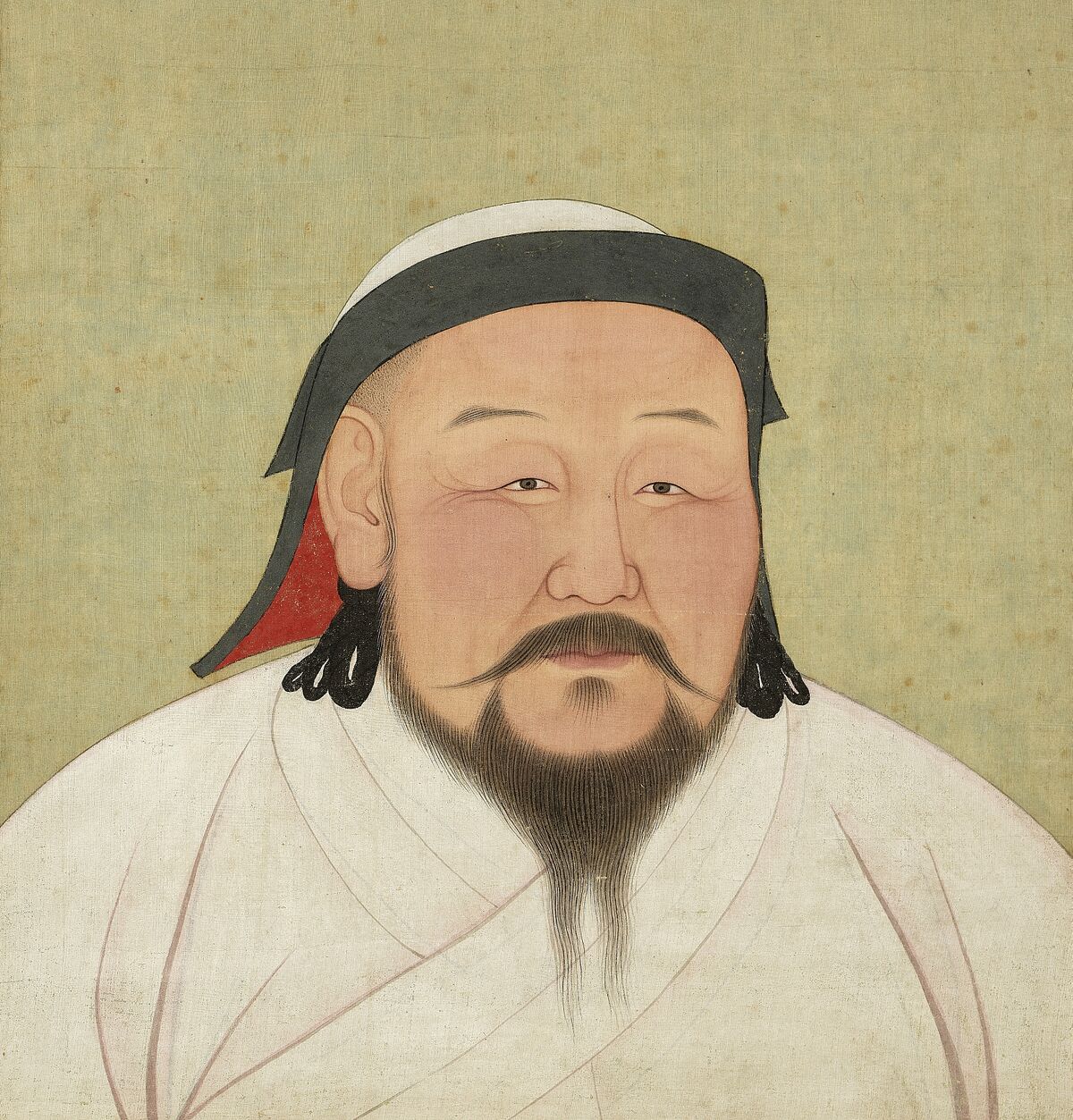
There was probably some Buddhist influence in Mongolia prior to the massive influence Tibetan Buddhism had in the 13th Century, but no proof can so far be cited in support of this. Buddhism had already been active in China for well over a millennia, and to the South of Mongolia the Silk Road had for centuries acted as a highway for the exchange of culture, especially Buddhism. Qubilai Qaan,[19] who later would be instrumental in the spreading of a Tibetan-inspired Buddhism, was converted to Buddhism already in 1242 by the Chinese monk Hǎiyún (海雲; 1202-1257). The first formal ties between Mongolia and Tibet were established in 1246, when when Gödan Qaan, the grandson of Chingis Qaan (c. 1167-1227), summoned the Tibetan monk Sa skya Paṇḍita Kun dga' rgyal mtshan (1182–1251) to court. Sakya Pandita in effect surrendered Tibet to Mongol overlordship, and was in turn appointed as vice-regent of Tibet by Gödan. The presence of the Buddhist master also served to pique Gödan's religious interests, and in 1249 he was initiated into the religion and became a protector of Buddhism. Later Möngke Qaan (r. 1251-1259), the nephew of Gödan, decreed Buddhism the state religion in 1256 after a series of debates organized between Christians, Muslims, Taoists, and Buddhists. The next emperor Qubilai Qaan (r. 1260-1294), founder of the Yuán Dynasty (1271-1368), kept Sa skya Paṇḍita's nephew 'Phags pa blo gros rdo rje (1235-1280) as a religious leader in his imperial court, and under 'Phags pa's influence Buddhism was firmly established as the state religion, but not yet as the religion of choice among the masses. The political capital was moved by Chingis from Qaraqorum to Beijing, and this is one of the reasons cited by Jerryson (2007:17) for the eventual decline of Mongolian Buddhism towards the end of the 14th Century. Due to this, trade in Outer Mongolia was reduced, something that also reduced the financial support for the Buddhist institutions. Another reason was that most of the early Buddhist converts were the wealthy and politically influential. With more difficult economic conditions and the fall of the empire Buddhism was no longer as interesting as before, and indigenous Shamanism regained its hold on parts of the region.
Čosgi Odser
It is in the middle of the Yuán period that we meet Čosgi Odser working at the court of the Mongol emperors. There is no comprehensive bibliography of his life in a language available to me, so for the following observations I base myself mainly on the work of Cleaves (1954 and 1988).[20] Cleaves cites several Chinese, Mongolian, and Tibetan sources that mention Čosgi Odser, and draws a few conclusions based on this. Judging from the dates of the sources available[21] it seems clear that the translator/author flourished between the years 1305 and 1321. This would imply that he at least served under four Yuán emperors, Öljeyitü Qaan (r. 1294-1307), Külüg Qaan (r. 1307-1311), Buyantu Qaan (r. 1311-1320), and Gegegen Qaan (1320-1323). Čosgi Odser was a Sa skya monk, and had probably been sent from Tibet to serve under the Yuán emperors after his predecessor, perhaps 'Phags pa, passed away. At the same time another great Tibetan master, Bu ston rin chen 'grub (1290-1364), was active with compiling the Buddhist canon in Tibet. It is perhaps then not a coincidence that it was during the time of Čosgi Odser that this process would also get under way in Mongolia, for as Waddell (1895: 158) remarked, the "Kāh-gyur was translated into Mongolian about 1310 by the Saskya Lāma Ch'os-Kyi 'Od-zer under the Saskyā Paṇḍita, who, assisted by a staff of twenty-nine learned Tibetan, Ugrian, Chinese and Sanskrit scholars, had previously revised the Tibetan canon by collating it with Chinese and Sanskrit texts, under the patronage of the emperor Kublai Khan." The passing away of Sa skya Paṇḍita must have taken place some time before the arrival of Čosgi Odser, so the accuracy of this account is uncertain. What is certain, however, is that Čosgi Odser was involved in translations from Tibetan to Mongolian of material (the BCA) that is included in the Tibetan canon.
The colophon to Čosgi Odser's translation of the BCA contains three parts. The first is a Mongolian translation of the colophon also found in the Tibetan translation in Tg, which explains the process by which the text was rendered into Tibetan from Sanskrit.[22] The second is the colophon written by the translator himself, and the third is a colophon by the redactor, Bilig-ün Dalai, of the 1748 edition included in the printed Mongolian canon. The redaction will be discussed below. Čosgi Odser’s colophon states the following:
Because such an editing did not exist formerly [in the form of a translation] from the Tibetan language into the Mongolian language, arranging [the text] ever so little, I, Čosgi Odser ayaγ-γ-a tegimlig (sic),[23] for the sake of being a help unto others by the sounds of the Mongolian people, by reason of the fact that, hearing again and again [the explanations of the masters], have comprehended and understood in a signal manner [the text] ever so little, relying upon my having acquired the cognition whereby I might, without fear, answer him who, disputing with [me] interrogated [me], finished drafting [it] in the snake year.[24]
As shown by Cleaves (1954: 22-23) the snake year in question is most likely 1305 CE. This is then the earliest dated account of Čosgi Odser's work at the Yuán court. Several sources place him in a position of central importance when it comes to the translation of Buddhist scriptures in Mongolia. Qubilai Qaan is known to have encouraged the use of the newly acquired Uighur script for Mongolian works,[25] and 'Phags pa also devised a new script in order to better render Mongolian pronunciation, as well as to make it easier to transcribe Tibetan and Sanskrit words.[26] The earliest editions of Čosgi Odser's text were perhaps written in the 'Phags pa script, but there are no editions preserved from this time. The earliest we have is a ms. from Olon Süme discovered by a Japanese expedition and published in 1940.[27] This fragment published by Poppe (1954) seems to be from the mid 14th Century, and is written in the Uighur inspired Mongolian script. This fragment unfortunately only contains verses 9.56-60. There are two later complete mss. that seem to predate the the revised 1748 canonical edition. One is the ms. discovered by the Polish orientalist J.S. Kowalewski (1801-1878), now kept at the Kazan Theological Academy, Tatarstan, Russia. This formed the basis for the edition published by Vlarimircov (1929). The second is kept in New Delhi, and was published by Lokesh Chandra in 1976.[28]
Čosgi Odser seems to have been quite an influential figure. According to the Chinese accounts he was involved in imperial decorations of monasteries, pleaded to the emperor in one case for a monk not be punished too severely, was involved in how monks should be taxed, and at one instance was rewarded 10000 dìng 錠 of paper money.[29] He was also not only a translator. The commentary Bodhistw-a Čari-a Awatar-un Tayilbur (BCATay; Commentary on the Bodhicaryāvatāra) was written by Čosgi Odser in 1311, and published in 1312. Unfortunately only 12 folia containing the the commentary to the last 30 verses of chapter 10 have been preserved. This was discovered in the Turfan basin by Albert von Le Coq (1860-1930), and is kept in the Deutsche Akademie der Wissenschaften in Berlin. Cleaves (1954) edited and translated this material, relating it with the same verses of the Sanskrit BCA translated by Finot (1920). In the colophon Čosgi Odser refers to himself as "well versed in the books of the agam (āgama; "canonical texts") and the yugti (yukti; "collections")".[30] He says he composed the commentary on imperial edict. Perhaps the request came from Külüg Qaan, or maybe Buyantu Qaan who took over as emperor that same year. The BCA is referred to by Čosgi Odser as what "manisfests the profound and vast views and conduct of the nom (dharma; "law/teaching") of the Yeke Kölgen (mahāyāna; "Great Vehicle")." The BCA was clearly considered a key text of the newly introduced Buddhism. A text that laid out the rule of conduct for the new faith, and that required an indigenous commentary for this rule to be implemented in the Mongol society.
Notes
- ↑ Taishō Shinshū Daizōkyō 大正新修大藏經, Tokyo, 1926-34, Vol. 32, Text No. 1662; this translation was first noticed by Lévi (1902) and La Vallée Poussin (1903).
- ↑ Lancaster (1979): http://www.acmuller.net/descriptive_catalogue/files/k1121.html; extracted from the internet 28th November 2008.
- ↑ Sen (2002: 27-8); in this section I mainly base myself on the findings of Jan (1966) and Sen (2002).
- ↑ Sen (2002: 31).
- ↑ These were the Shèng wúliàngshòu jīng 聖無量壽經 (T. 937) and Qīfó zàn 七佛讚 (T. 1682) translated by the Maghadhan monk Fǎtiān 法天 (Dharmadeva?, d. 1001) and the Chinese monk Fǎjìn 法進.
- ↑ Sen (2002: 71)
- ↑ On the mistaken identification of Fǎxián with Fǎtiān, see Jan (1966: 34-35).
- ↑ Jan (1966: 37) suggests that, although there was a monastery named Tamasāvana Saṅgārama near Jālandhara, it might be that the name Mìlín might refer to another monastery that was within the borders of Kaśmīr at the time.
- ↑ A large number when compared to the total of 564 scrolls of translation produced during the 10th and 11th Centuries.
- ↑ Other suggested reasons include the deterioration of Buddhism in India, the rise of Tantric Buddhism, Tibet's emerging role as a leading Buddhist country in the region and its non-centralized rule, and the rise of neoConfucianism at the Sòng court; see Jan (1966) and Sen (2002) for discussions of these.
- ↑ Hajime Nakamura (1989, reprint), Indian Buddhism: A Survey with Bibliographical Notes, Delhi, p. 288; quoted in Sen (2002: 29).
- ↑ The BCA was read multilingually at a seminar held by Prof. Jens Braarvig at the University of Oslo in the Spring of 2007. During this seminar I was able to discuss in debt the Chinese translation of the first chapter of the BCA with Prof. Braarvig and stip. Christoph Anderl, the general conclusion being that the translation was indeed a difficult and puzzling one.
- ↑ These verse formats were described in the introduction, and the last mentioned verse was also quoted there.
- ↑ Verse 10.55-56; Minayev (1889: 225).
- ↑ T 1662 562a7-11.
- ↑ Although sources tell us that Čosgi Odser was a Tibetan by origin we have, since he worked in a Mongolian setting, chosen to spell his Tibetan name according to the Mongolian spelling.
- ↑ Some of the work that has been done is in Russian, German, and Japanese, languages that are not readily available to me, and there might therefore be examples that can prove me wrong.
- ↑ It seems to me that most of those scholars of Altaic studies that have concerned themselves with the BCAMon have not had any knowledge of Sanskrit or Tibetan. Rachewiltz (1996), for instance, mentions in his introduction that he has received help from a colleague on matters related to the Sanskrit and Tibetan versions.
- ↑ I am generally following the transcription scheme for Mongolian followed by Jerryson (2007). There is a variety of transcription schemes available for Mongolian, and this creates difficulties when referring to other works.
- ↑ Rachewiltz (1996) reports of the existence of a work in Mongolian by D. Cerensodnom entitled XIV zuuny üeiĭn yaruu naĭragč Čoĭži-Odser (The XVI Century Poet Čoĭži-Odser) (Šinžlex Uxaany Akademiǐn Xevlel, UlanBator, 1969). Cleves (1988: 154) refers to this as "a splendid account of Čhos kyi 'Od zer and his poetry", while at the same time saying that his present article wishes to "focus attention of its (the new Chinese source he has located) relevance as a source for a biography of Čhos kyi 'Od zer", which could imply that Cerensodnom's account has not filled that purpose.
- ↑ These are dated 1305, 1310, 1312, 1313, and 1321; see Cleaves (1954: 13-27).
- ↑ See the above section on Tibet for more on this.
- ↑ Cleaves (1954: 101): ayaγ-qa tegimlig is the correct spelling, meaning "attaining to the bowl", i.e. "monk".
- ↑ Cleaves (1954: 24).
- ↑ This script, ultimately of Semitic origins, was adapted from that used by the Sogdians to write Buddhist, Manichaean, and Christian works.
- ↑ The 'Phags pa script was based on the Tibetan script, but was wrtitten downwards, from left to right. It was cumbersome to write, and went out of use after the Yuán Dynasty.
- ↑ Hattori Shiro (1940), "Oron Sume shutsudo no Mōkogo bunsho nit suite" ("The Mongolian documents found at Olon Sume, Inner Mongolia"), in Tōhō Gakuhō (Journal of Oriental Studies), Tokyo, no. 11, part 2, pp. 257-278.
- ↑ Lokesh Chandra (1976), Bodhicaryāvatāra. 1. Pre-canonical Mongolian Text. 2. Tibetan Commentary by Blo-bzaṅ-dpal-ldan, Śata-piṭaka Series 230, New Delhi.
- ↑ Cleaves (1954).
- ↑ Cleaves (1954: 85).
