- [[<span class="smw-highlighter" data-type="4" data-state="inline" data-title="Warning" title="Some use of "|]]
- "
- In your query was not closed by a matching "
- "
- [[.">Some use of "" in your query was not closed by a matching "".|]]
In the following excerpt from Wisdom: Two Buddhist Commentaries, Helena Blankleder, Wulstan Fletcher, and Stephen Gethin of the Padmakara Translation Group provide an overview of the commentaries on the Bodhicaryāvatāra composed by two disciples of Patrul Rinpoche—namely, Khenchen Kunzang Palden and Minyak Kunzang Sönam.
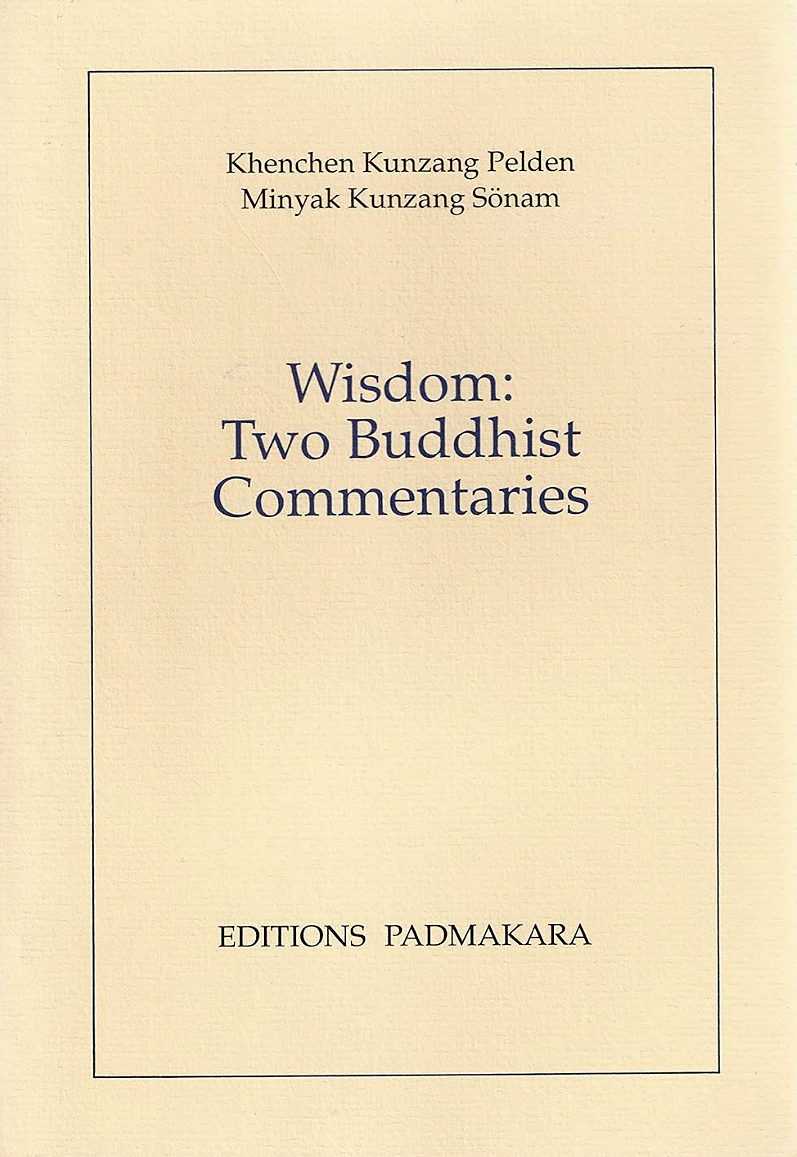
Khenchen Kunzang Pelden and Minyak Kunzang Sönam . . . were both close disciples of Dza Patrul Rinpoche.[1] Together with Jamyang Khyentse Wangpo (1820-1892), Jamgön Kongtrul and Jamgön Ju Mipham[2] and others, this famous master was one of the foremost representatives of the Rime or non-sectarian movement, which did so much to restore and invigorate Buddhism in Tibet in the course of the 19th century. Patrul Rinpoche has been acknowledged as the greatest authority of his time on the Bodhicharyavatara, Shantideva's masterpiece on the stages of the Bodhisattva path, and it is not surprising that many of the commentaries written around the turn of the century bear witness to the pervasive influence of his oral lineage.[3] This is true of Mipham Rinpoche's celebrated exegesis of the ninth chapter,[4] as well as of the two commentaries translated here, which by the unity of their source and the diversity of the style and content, are particularly fine examples of the non-sectarian spirit.
Khenchen Kunzang Pelden (c.1870-c.1940), better known as Khenpo Kunpel, was a disciple also of Mipham Rinpoche. His lucid and accessible commentary on the ninth chapter closely follows the interpretation of Mipham Rinpoche which in turn is based on the teachings that Patrul Rinpoche gave at Dzogchen Shri Singha. The text translated here is in fact an excerpt taken from a much larger presentation of the Bodhicharyavatara. This, together with similar commentaries by Shechen Gyaltsab Pema Namgyal and Mewa Sönam Chödrup, also disciples of Patrul Rinpoche, is widely used in Nyingmapa colleges inside and outside Tibet.
Khenpo Kunpel also wrote a biography of Patrul Rinpoche, and several other important works including a history of the Vinaya and a commentary on Mipham Rinpoche's Torch of Certainty (nges shes sgron me). He was highly respected in eastern Tibet and his disciples included Dzongsar Khyentse Chökyi Lodrö and many other important masters.
Minyak Kunzang Sönam, also known as Chökyi Trakpa, was Patrul Rinpoche's closest disciple in the Gelug tradition. He studied with him for over twenty years, with a devotion that knew no bounds. In Kunzang Sönam's time, the interpretation of the Bodhicharyavatara's ninth chapter had already given rise to much philosophical controversy between the various Tibetan Buddhist schools. It is therefore interesting to note that the masters who requested him to write commentaries on this delicate subject were Lungtok Tenpai Nyima (Patrul Rinpoche's principal dzogchen disciple) and Lerab Lingpa, or Tertön Sogyal (1856-1926), both followers of the Nyingma school. This illustrates how genuine the non-sectarian movement was, and indeed still is, and how close was the relationship between the masters who took part in it.
Minyak Kunzang Sönam in fact wrote two commentaries on the ninth chapter, The Brilliant Torch, a word-by-word commentary on the root text, which has been translated here, and another commentary expounding the general meaning of the Perfection of Transcendent Wisdom. He also composed an extensive commentary on the first eight chapters of the Bodhicharyavatara.
In The Brilliant Torch, Kunzang Sönam follows the traditional interpretations of the Gelugpa school as set forth by Je Tsongkhapa (1357-1419) and Gyaltsab Darma Rinchen (1362-1432).
Notes
- ↑ Patrul Rinpoche, Orgyen Jigme Chökyi Wangpo (1808-1887), also known as Dzogchen Palge Tulku.
- ↑ Mipham Rinpoche (1846-1912), also known as Mipham Jamyang Gyatso and Jampel Gyepai Dorje.
- ↑ As an example of the Rime attitude, it is interesting to note that Patrul Rinpoche would, according to circumstances, teach commentaries by Gyalse Ngulchu Thogme, Sönam Tsemo and Pawo Tsuklag Trengwa, as well as his own oral tradition.
- ↑ This brilliant and profound commentary gave rise to intense debate. Mipham Rinpoche replied to his critics in two further works (see bibliography).
