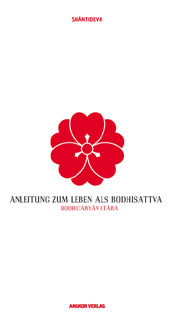
Der Eintritt in den Wandel in Erleuchtung
From Bodhicitta
< Books(Redirected from Der Eintritt in den Wandel in Erleuchtung)
Books/Der Eintritt in den Wandel in Erleuchtung
Books/Der Eintritt in den Wandel in Erleuchtung
| 🤓 Admin Zone 🛠️ hidden to non-admins | |
Der Eintritt in den Wandel in Erleuchtung (Bodhicaryāvatāra): Ein Buddhistisches Lehrgedicht des VII. Jahrhunderts n. Chr.
Book
See Timeline of BCA Translations
- Anleitungen auf dem Weg zur Glückseligkeit: Bodhicaryāvatāra
- Der Eintritt in den Wandel in Erleuchtung
- Die Lebensführung im Geiste der Erleuchtung: Das Bodhisattvacharyavatara
- Nichtselbst, Leerheit und Altruistische Ethik im Bodhicaryāvatāra (Lecture Transcript)
- Nichtselbst, Leerheit und Altruistische Ethik im Bodhicaryāvatāra (Official Publication)
Please note that many items in our library are simply pages that represent a detailed library catalog entry and citation of someone else's work, presentation, or performance. Read our General Disclaimer for more information.
Description
Der südindische Königssohn Shântideva studierte an der Klosterschule in Nandala und bekam dort wegen seiner Trägheit von Mönchsbrüdern den Spitznamen „Isst, schläft, scheißt“. Im 8. Jahrhundert hielt er eine tiefe und alle Zuhörer überraschende Dharma-Rede, das hier vorliegende Bodhicaryâvatâra. Darin erläutert er, wie ein Bodhisattva sein Leben gestalten sollte. Zwei Meditationsmethoden können helfen, sich anderen Menschen zuzuwenden: die Übung der Gleichheit des Anderen und des Selbst (parâtmasamatâ) und die Übung des Austauschens des Anderen und des Selbst (parâtmaparivartana). (Source Accessed Mar 17, 2021)
Citation
Schmidt, Richard, trans. Der Eintritt in den Wandel in Erleuchtung (Bodhicaryāvatāra): Ein Buddhistisches Lehrgedicht des VII. Jahrhunderts n. Chr. By Śāntideva. Dokumente der Religion 5. Paderborn, Germany: Ferdinand Schöningh, 1923.
Interconnections
1 Full translation of

An "Introduction to Bodhisattva Practice," the Bodhisattvacaryāvatāra is a poem about the path of a bodhisattva, in ten chapters, written by the Indian Buddhist Śāntideva (fl. c. 685–763). One of the masterpieces of world literature, it is a core text of Mahāyāna Buddhism and continues to be taught, studied, and commented upon in many languages and by many traditions around the world. The main subject of the text is bodhicitta, the altruistic aspiration for enlightenment, and the path and practices of the bodhisattva, the six perfections (pāramitās). The text forms the basis of many contemporary discussions of Buddhist ethics and philosophy.
1 Other editions
_2005-front.jpg)
Richard Schmidt's German translation of the Bodhicaryāvatāra.