Dam chos dgongs pa gcig pa
| 🤓 Admin Zone 🛠️ hidden to non-admins | |

Description
- (1) Pure View, Practice, and Conduct
- (2-4) The Three Vows
- (5) Three Dharma Wheels
- (6) Dependent Origination
- (7) The Resultant Stage of Buddhahood
Recensions
| Tibetan | 'Bri gung skyob pa 'jig rten mgon po; 'Bri gung spyan snga shes rab 'byung gnas. དམ་ཆོས་དགོངས་པ་གཅིག་པ།, (Dam chos dgongs pa gcig pa'i rtsa tshig rdo rje'i gsung brgya lnga bcu pa). |
|---|


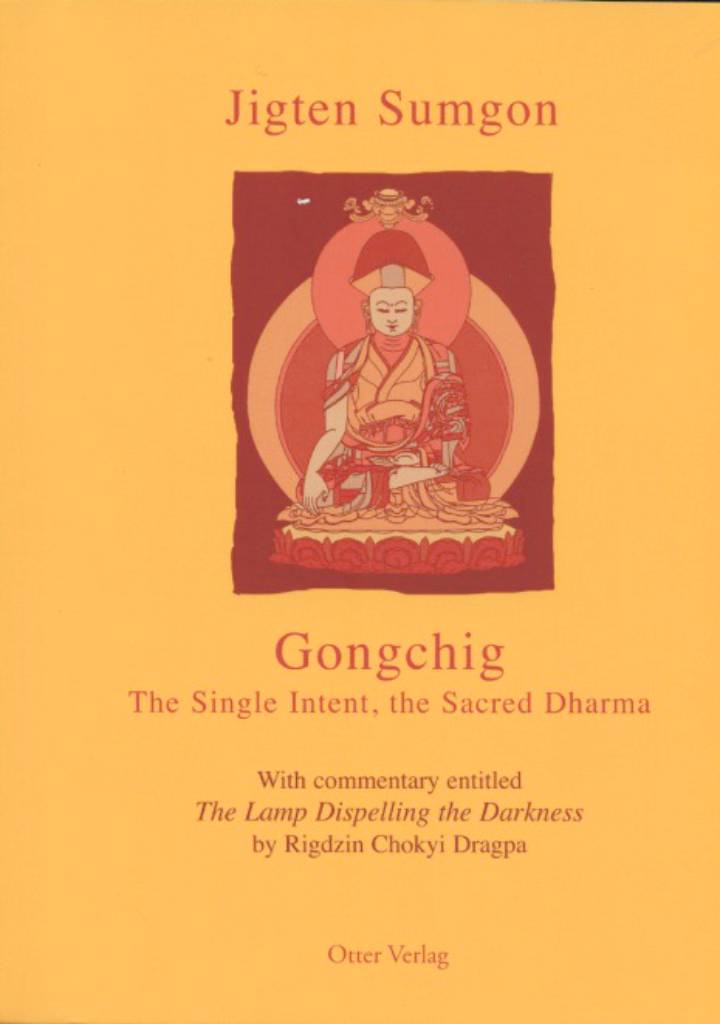
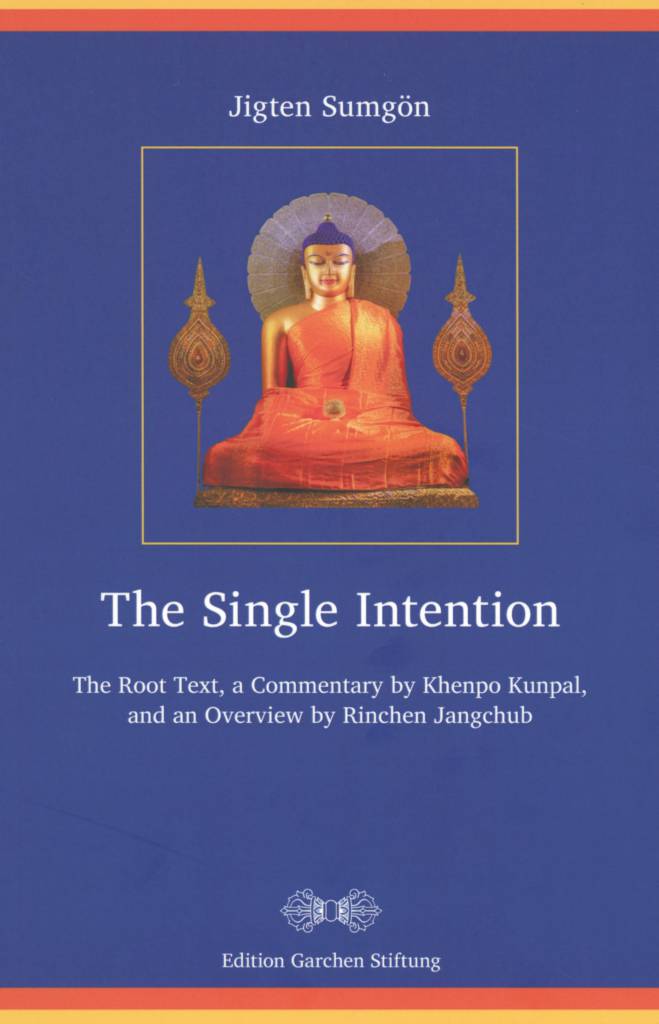
It is about the fundamental intention that underlies all the Buddha’s teachings and unites all the categories of Buddhist concepts within one central principle – the “actual reality of the nature or state of all phenomena.” One of the main messages is the universal validity and unchangeable nature of virtue and non-virtue, which means that no one can bypass the foundational practices and the observance of disciplined conduct..
(Source: Garchen Stiftung)


-front.jpg)
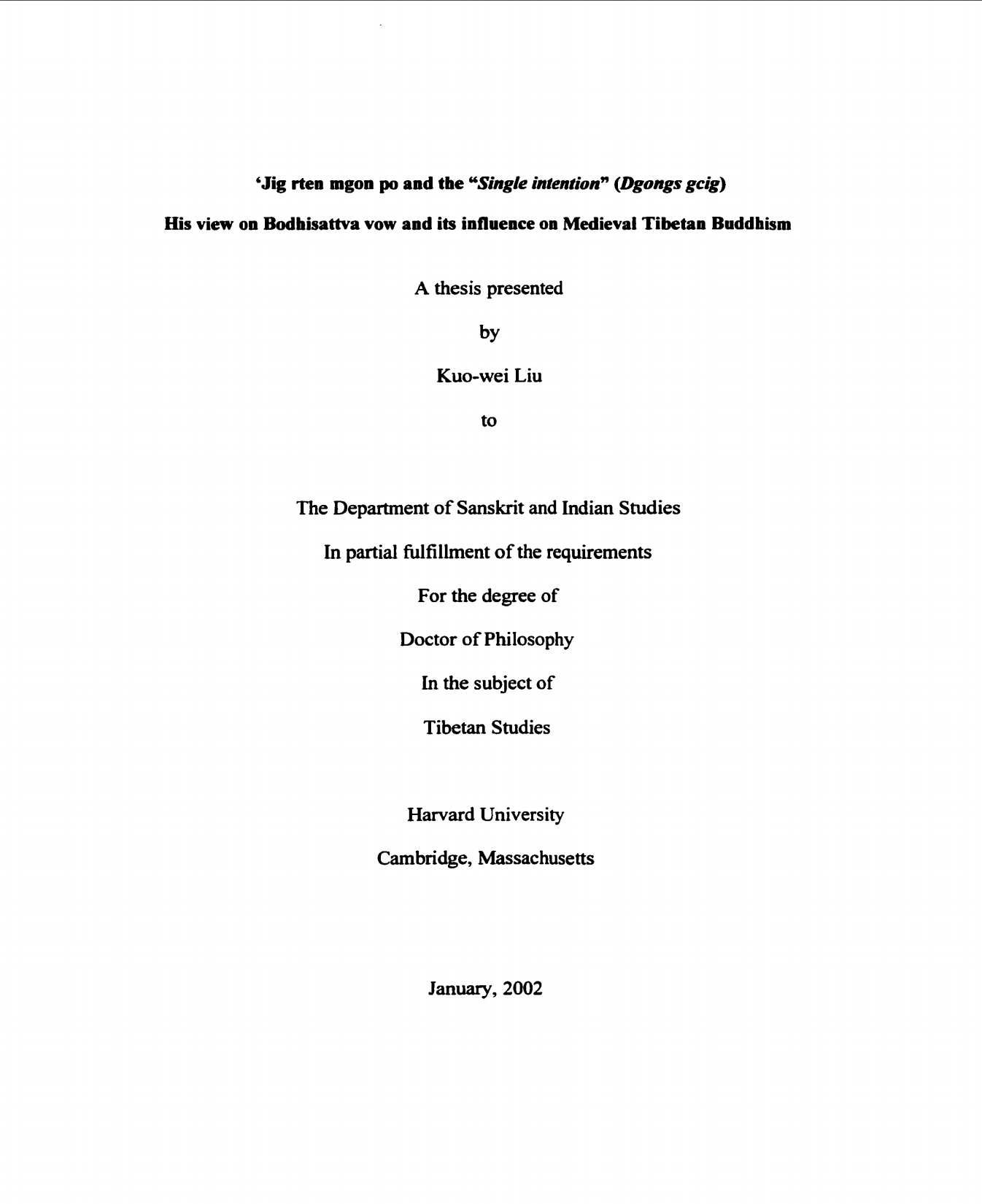
Research by scholars in the past has led to a better understanding of the contents and importance of the Bodhisattva vows in Mahāyāna Buddhism. While some have focused on the earlier explanations found in Buddhist sūtras, others have concentrated on the later development of the Bodhisattva vows discussed in Indian Buddhist commentaries. However, within the field of Tibetan intellectual history, modem scholars have begun to recognize the importance of the so-called "Three Vows" (sdom gsum) genre found in Tibetan Buddhist writings. To date, there has been no in-depth investigation of the complex historical development of the Bodhisattva vows of Tibetan Buddhism, in which the transformation of the concept of bodhicitta (enlightenment attitude) has played a significant role.
In this dissertation, I seek to provide a thorough investigation of the Bodhisattva vows from the period of Indian Buddhism to that of Tibetan Buddhism. Secondly, by analyzing the views held by 'Jig rten mgon po, based chiefly on that part of his work, "Single Intention" (Dgongs gcig), which concerns the Bodhisattva vows, I will highlight his distinctive concerns regarding this subject. In collating the numerous arguments between the Sa skya pa and the Bka' brgyud pa scholars around this topic, I will attempt to decipher and resolve some points which will contribute to a further understanding of medieval Tibetan intellectual history. In the second part, I will provide translations of two commentaries on the chapter of the Bodhisattva vow of the Dgongs gcig.
In general, the intent of this dissertation is to pursue these investigations utilizing a philological and historical perspective while taking into account both Indian and Tibetan traditions.
It is about the fundamental intention that underlies all the Buddha’s teachings and unites all the categories of Buddhist concepts within one central principle – the “actual reality of the nature or state of all phenomena.” One of the main messages is the universal validity and unchangeable nature of virtue and non-virtue, which means that no one can bypass the foundational practices and the observance of disciplined conduct..
(Source: Garchen Stiftung)