Eight Verses for Training the Mind (Sodargye 2018)

From Bodhicitta
LibraryBooksEight Verses for Training the Mind (Sodargye 2018)
< Books
Books/Eight Verses for Training the Mind (Sodargye 2018)

Eight Verses for Training the Mind (Sodargye 2018)
Book


Please note that many items in our library are simply pages that represent a detailed library catalog entry and citation of someone else's work, presentation, or performance. Read our General Disclaimer for more information. You can find more information about this item on the publisher website.
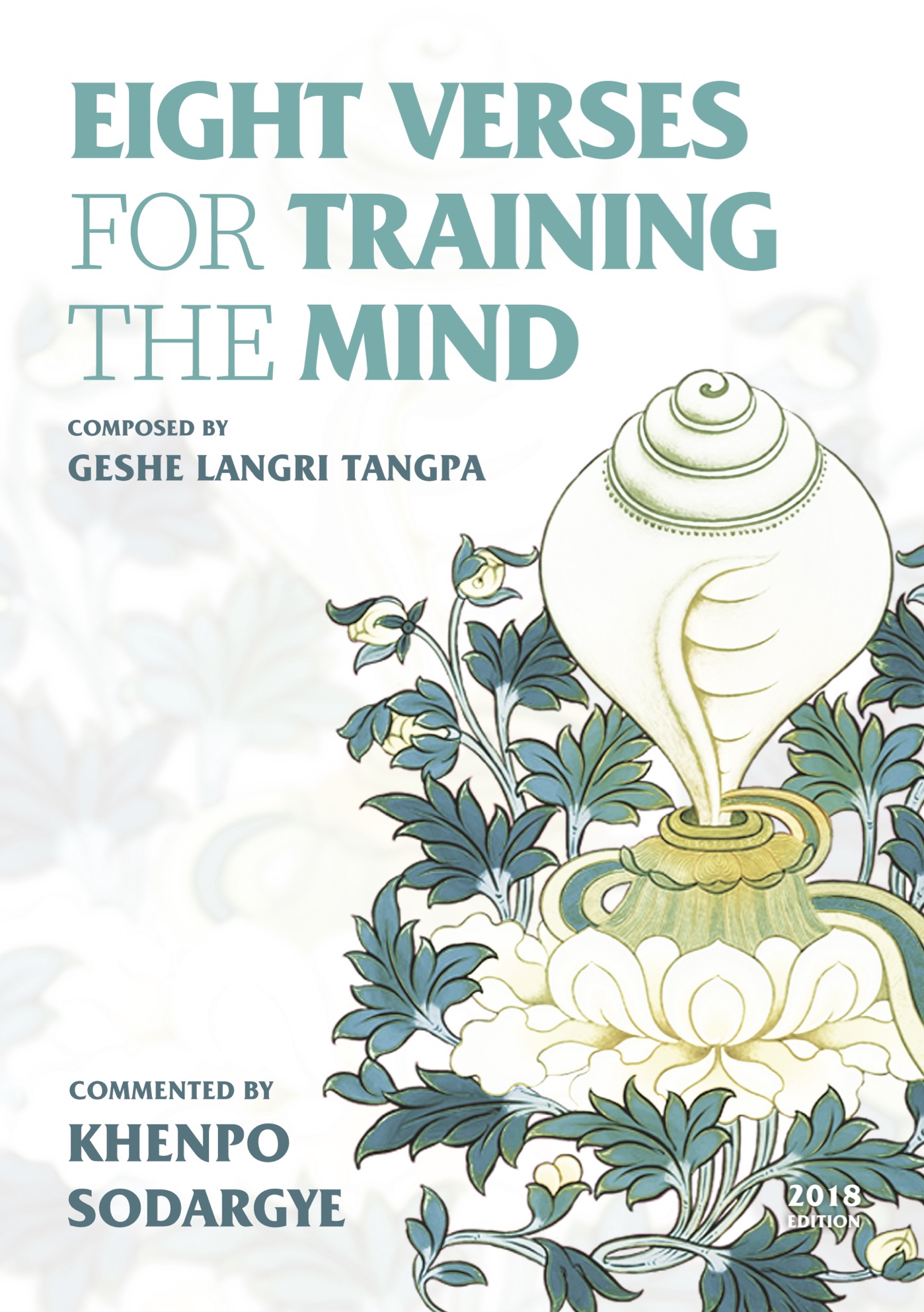
Eight-Verses-for-Training-the-Mind-front.jpg

Description

Khenpo Sodargye Rinpoche’s Commentary on Eight Verses for Training the Mind serves as a down-to-earth guide for all practitioners. It contains precious oral instructions of H. H. Jigme Phuntsok Rinpoche, as well as Khenpo Rinpoche’s own experience, quotes and stories from scriptures. This commentary provides specific guidelines for practitioners to implement the eight verses and apply compassion and wisdom in their daily lives. (Source: KhenpoSodargye.org)
Citation
Sodargye, Khenpo. Eight Verses for Training the Mind.(ebook) khenposodargye.org, 2018.
Publisher Link


Translation of

 
Blo sbyong tshig brgyad ma
Composed by the Buddhist Master Langri Tangpa (1054-1123), Eight Verses for Training the Mind is a highly revered text from the Mahayana Lojong (mind training) tradition. These instructions offer essential practices for

cultivating the awakening mind of compassion, wisdom, and love. This eight-verse lojong enshrines the very heart of Dharma, revealing the true essence of the Mahayana path to liberation. Even a single line of this practice can be seen as encapsulating the entire teaching of the Buddha. For even a single statement of this mind training practice has the incredible power to help us subdue our self-oriented behavior and mental afflictions. The fundamental theme of mind training practice is the profound reorientation of our basic attitude, both toward our own self and toward our fellow human beings, as well as toward the events around us. The goal of mind training practice is the radical transformation of our thoughts, attitudes, and habits. Presently, we tend to cherish the welfare of our own self at the expense of all others. However, the mind training teaching challenges us to reverse this process. This involves a deep understanding of others as true friends, and the recognition that our

true enemy lies inside of ourselves, not outside. Source Accessed Jan 30, 2025)

Text

Commentary of

 
Blo sbyong tshig brgyad ma
Composed by the Buddhist Master Langri Tangpa (1054-1123), Eight Verses for Training the Mind is a highly revered text from the Mahayana Lojong (mind training) tradition. These instructions offer essential practices for

cultivating the awakening mind of compassion, wisdom, and love. This eight-verse lojong enshrines the very heart of Dharma, revealing the true essence of the Mahayana path to liberation. Even a single line of this practice can be seen as encapsulating the entire teaching of the Buddha. For even a single statement of this mind training practice has the incredible power to help us subdue our self-oriented behavior and mental afflictions. The fundamental theme of mind training practice is the profound reorientation of our basic attitude, both toward our own self and toward our fellow human beings, as well as toward the events around us. The goal of mind training practice is the radical transformation of our thoughts, attitudes, and habits. Presently, we tend to cherish the welfare of our own self at the expense of all others. However, the mind training teaching challenges us to reverse this process. This involves a deep understanding of others as true friends, and the recognition that our

true enemy lies inside of ourselves, not outside. Source Accessed Jan 30, 2025)
Text

  • Root Text 2
  • Commentary 7
  • Opening 8
    • The Background of the Text 8
    • Some Words for You 12
    • The Author of the Text 14
    • The Title of the Text 16
  • The Eight Verses 19
    • Verse 1: Always Hold Others as Dear and Precious 19
    • Verse 2: Consider Myself as the Lowest among All 25
    • Verse 3: Avert Afflictions as Soon as They Arise 29
    • Verse 4: May I Cherish This Precious Treasure 38
    • Verse 5: Take Loss and Defeat upon Myself 46
    • Verse 6: View Those Who Harm Me as Spiritual Teachers 55
    • Verse 7: Secretly Take upon Myself All Their Sufferings 59
    • Verse 8: All Things Are like Illusions 65
  • Epilogue 70