| 🤓 Admin Zone 🛠️ hidden to non-admins | |
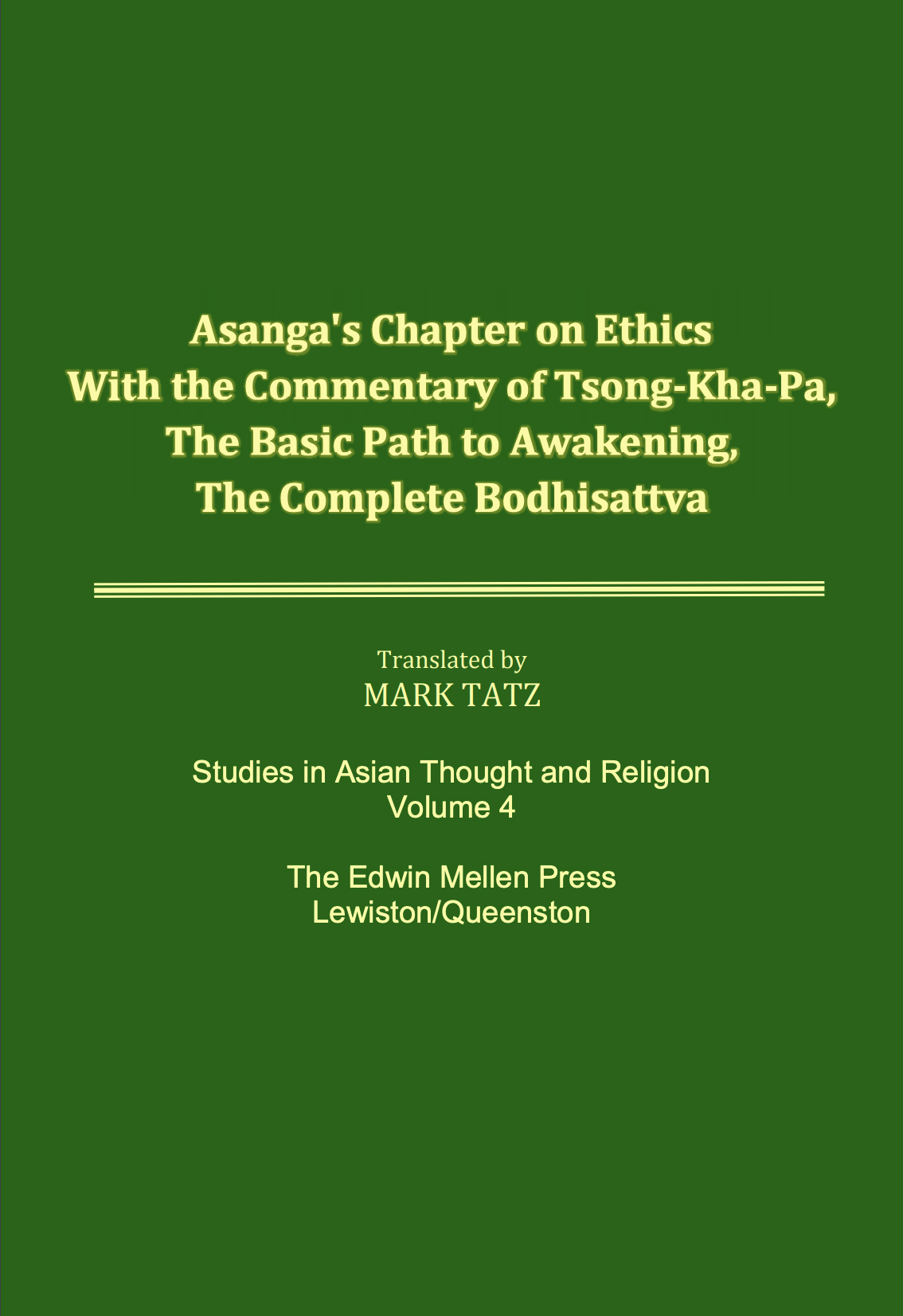
Asanga's Chapter on Ethics with the Commentary of Tsong-kha-pa, The Basic Path to Awakening, The Complete Bodhisattva
Book
Please note that many items in our library are simply pages that represent a detailed library catalog entry and citation of someone else's work, presentation, or performance. Read our General Disclaimer for more information. You can find more information about this item on the publisher website.

Description
Two works are translated here: one Indian, the other Tibetan. The former, or source work, is the Chapter on Ethics by Asanga (third to fourth centuries), an excerpt of some thirty leaves from his Bodhisattva Stage. The latter is the Basic Path to Awakening written by Tsong-kha-pa (A.D. 1 357-1419), a hundred-leaf commentary to the Chapter on Ethics. Tsong-kha-pa incorporates a number of related writings of Indian provenance, as well as the views of Tibetan scholars. All these present the system of ethics of the Mahāyāna, the school of Buddhism known as the Greater Vehicle. (Tatz, introduction, 1)
Citation
Tatz, Mark, trans. Asanga's Chapter on Ethics with the Commentary of Tsong-kha-pa, The Basic Path to Awakening, The Complete Bodhisattva. Studies in Asian Thought and Religion 4. Lewiston, NY: Edwin Mellen Press, 1986.
Publisher Link
Table of contents
- Introduction 1
- The Indian Context 2
- Lay and Monastic in Early Buddhism 8
- Bodhisattva Ethics 13
- The Literature: India 26
- The Literature: Tibet 31
- Santaraksita and the Early Spread 31
- Tsong-kha-pa and the Later Spread 35
- Acknowledgement, Methodology, Desiderata 38
- Notes 40
- The Chapter on Ethics 47
- The Basic Path to Awakening 91
- Outline of Major Topics 92
- The Basic Path to Awakening: An Explanation of How to Take the Bodhisattva Vow and Purify the Aggregate of Ethics 94
- Notes 263
- Appendices 313
- A. Fragment of a Commentary to the Twenty Verses from Tun Huang, Author Unknown 313
- B. Seminal Transgression from the Akasagarbha-sutra 316
- C. Alcohol: How is it Reprehensible? 321
- D. Permission to Murder, etc. 322
- Bibliography and Abbreviations 329
- Index 343
Interconnections
1 Full translation of
.jpg)
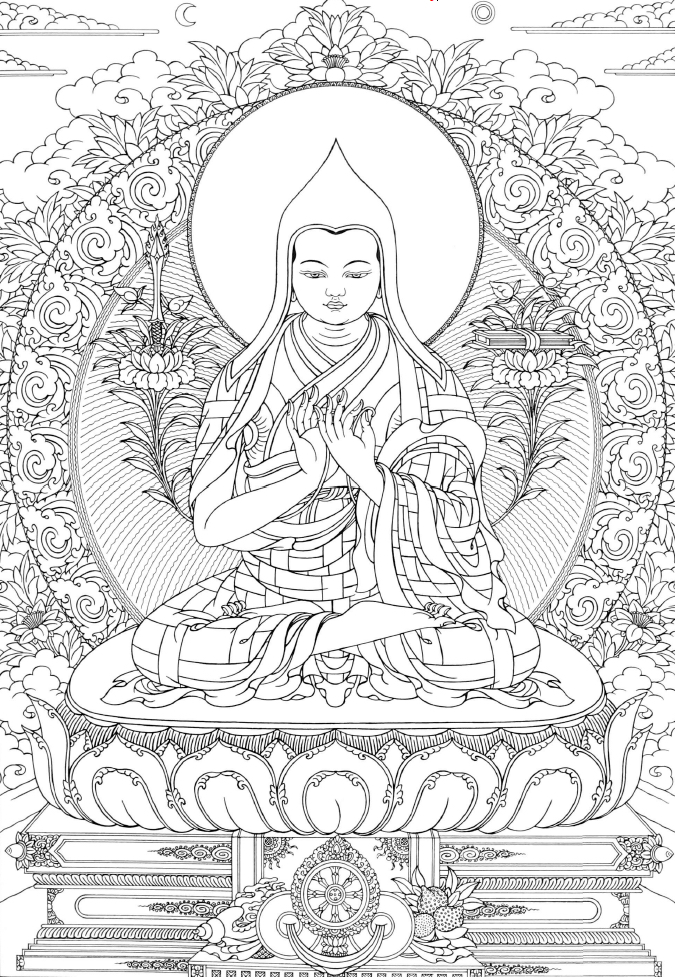
Tsongkhapa's commentary on the moral-ethics (tshul khrims) chapter of Asaṅga's Bodhisattvabhūmi with reference to the major Indian treatises on the subject of the bodhisattva discipline.
1 Partial translation of
.jpg)
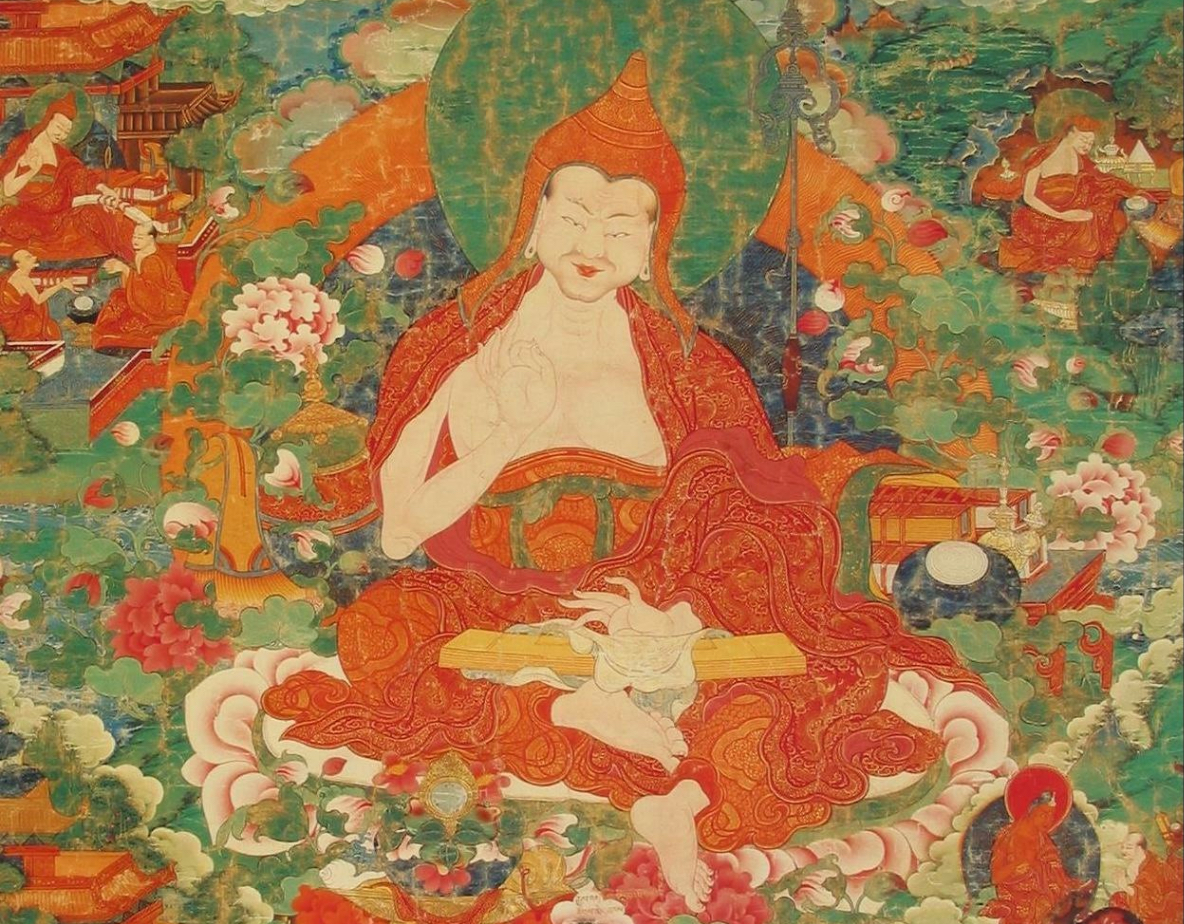
The Bodhisattvabhūmi (literally "The Stage of a Bodhisattva") stands as one of the most comprehensive and systematic expositions of the Mahāyāna Buddhist path from classical India. Formally the fifteenth section of the massive Yogācārabhūmi corpus, this foundational treatise provides an encyclopedic manual detailing the entire spiritual trajectory of a bodhisattva—from the initial arising of the "mind of awakening" (bodhicitta) to the ultimate attainment of perfect buddhahood.
Traditionally attributed to Ārya Asaṅga (c. fourth–fifth century CE) through revelation from the future buddha Maitreya, the text likely represents a compilation of earlier materials (c. 230–300 CE) that predates the fully developed Yogācāra philosophical system. Its existence in multiple Chinese translations from the early fifth century onward confirms its early date and widespread influence across Asian Buddhism.