| 🤓 Admin Zone 🛠️ hidden to non-admins | |
Description
The Great Master Patrul
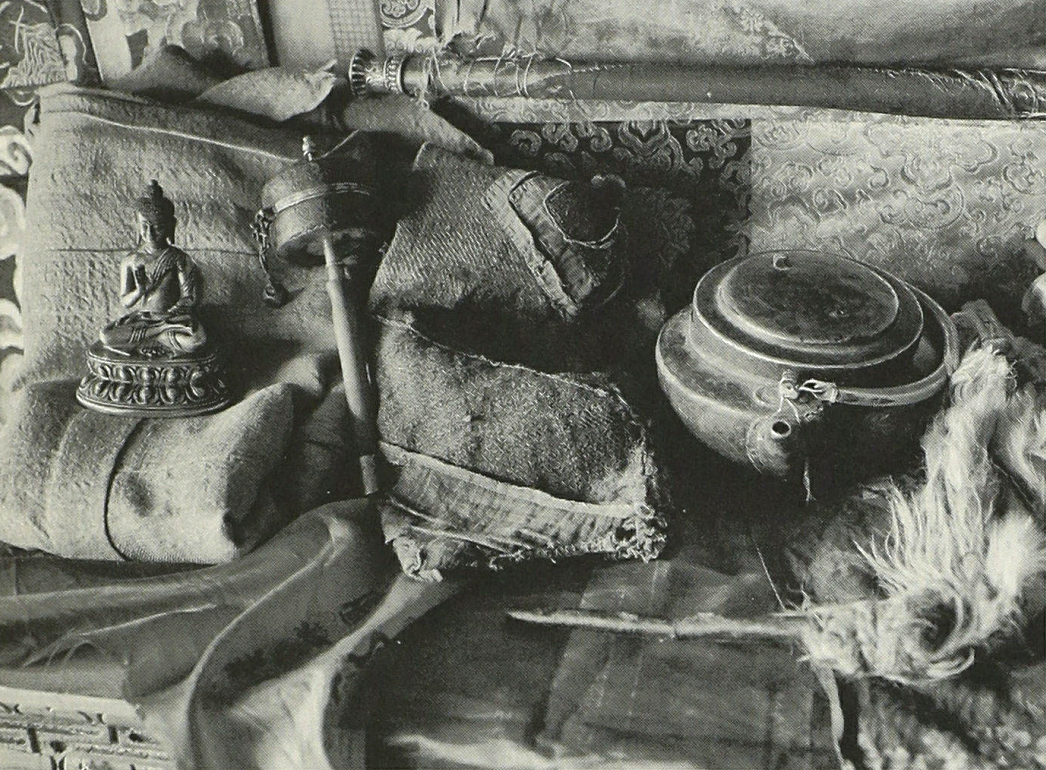
Photo by Matthieu Ricard, 2016
Patrul Rinpoche was heading for Shri Singha[1] Philosophical College to teach Shantideva's Way of the Bodhisattva, and at the same time, a group of monks were on their way to Dzogchen Monastery to attend these teachings.
The party of monks came upon a lama in a meadow not far from the college.
Dressed in nomad style in an old sheepskin chuba, he was sitting on the ground by a little bonfire, making himself some tea.
The monks asked him, "Do you know if Patrul Rinpoche has arrived yet?"
"Yes, he's already here! He'll be teaching at Shri Singha!" the lama answered. "But, really, what's the point of going to hear him? That Patrul's nothing but a loudmouth! Honestly, he's a charlatan!"
Seemingly inspired, the shabby nomad lama continued bad-mouthing the great master Patrul Rinpoche at considerable length and with tremendous creativity and vigor.
Hearing these insults, the monks became furious.
"Shut your trap, samaya-breaker!" they screamed, "or we'll beat you to a pulp!"
The shabby nomad lama ceased his invective and resumed making tea.
The group of monks left and camped nearby for the night. In the morning, they headed for the college and came across the shabby lama once again.
He hailed them cordially, saying, "All right, let's all go together to Shri Singha! I hear that at least the tea they serve there is first class!"
The monks, still outraged, refused to talk to him. They went on to the college without him and found themselves seats in the assembly.
Soon there was an announcement that the great teacher Patrul Rinpoche
was just about to enter. The whole audience rose to show respect, and in solemn, melodious voices, everyone sang verses in praise of Shantideva's Way of the Bodhisattva.
When the distinguished master took his seat on the teaching throne to begin the teachings, the monks realized with horror that the great master Patrul Rinpoche was none other than the shabby lama in sheepskin they had met earlier and threatened with bodily harm!
Patrul began his teachings by saying, "Last night, I met a bunch of furious monks. Where are they? I'd like them to come up here and sit in the very front row!"
Which, with chagrin, they did.
A Monk Makes a Full Confession
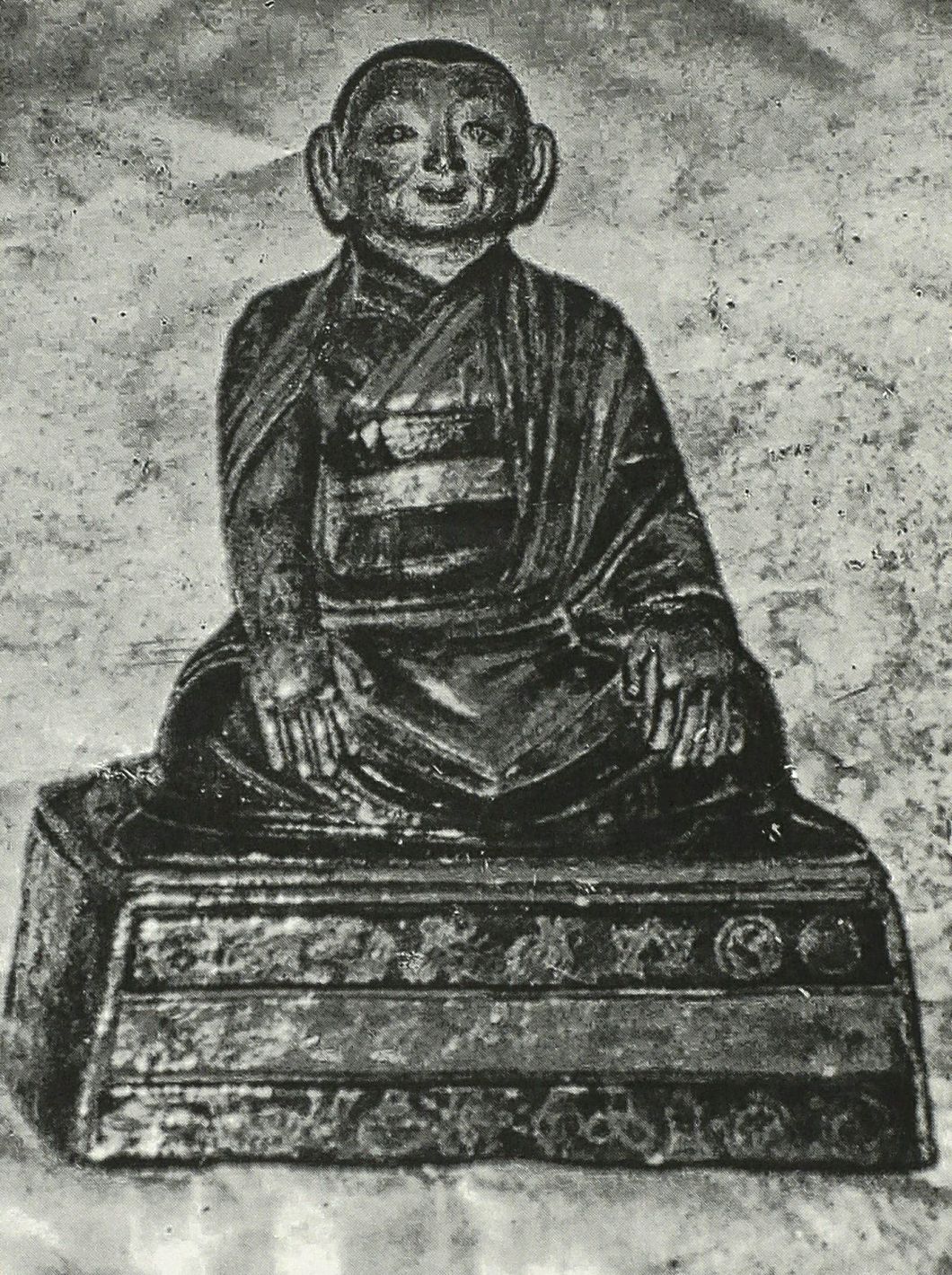
Photo by Khenpo Dönnyi, ca. 1997
Once, at Shri Singha Philosophical College, it was the day for doing sojong, the confession ritual that monks are required to perform twice a month. The gong rang summoning people to the temple. Everyone began hurrying so as not to be late. Walking stick in hand, Patrul was heading toward the temple, too, dressed in a patched felt chuba, which he would wear in the summer.
A crowd was rushing in and climbing up the steps, shabby Patrul among them. Suddenly, one monk gave Patrul such a shove that he lost his balance and tumbled down the staircase. The monk who had rudely shoved aside Patrul had mistaken him for a thieving beggar trying to sneak into a ceremony meant for members of the sangha only.
Eventually, everyone entered the temple and found a seat. The monk, too, sat down. Then he looked up.
There was a throne on which was seated the person in charge of leading the sojong ceremony. Sitting upon the throne was Patrul, the shabby man the monk had very roughly shoved aside.
Trying to make the best of a bad situation, the horrified monk stood up at once, declaring, "Not only do I have an offense to confess, but I can confess it before the very person I offended!"
Patrul Waits in Line to Receive a Blessing
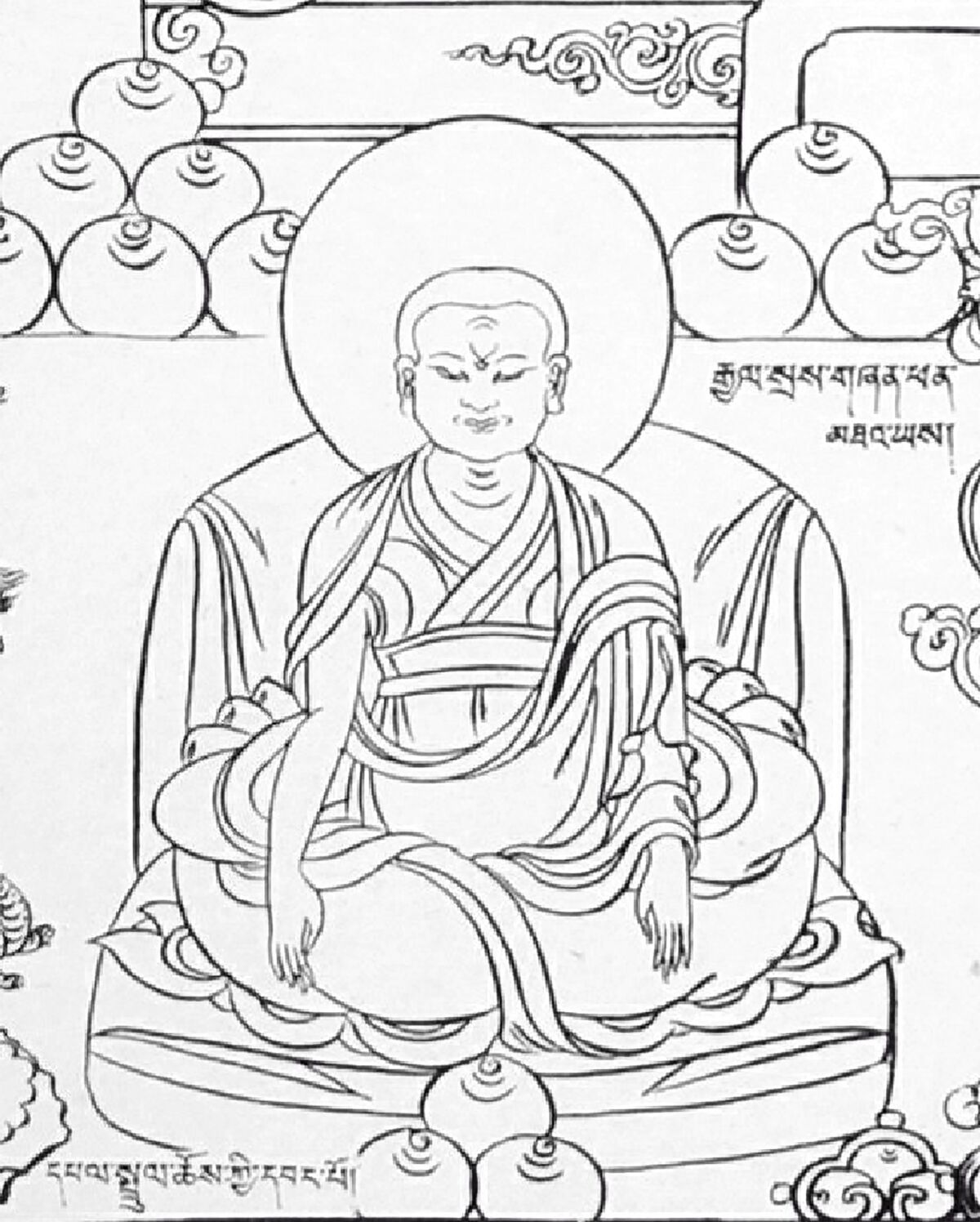
Source: Himalayan Art Resources
At a time when Patrul was traveling alone, on foot, he came upon the tent encampment of a group of lamas who were on their way to a large dharma assembly. He approached them to beg alms and asked if he might travel with their group. They agreed to let him join their party.
Looking like an ordinary wandering practitioner, he was treated as one. They gave the shabby nomad lama lots of menial chores to do: making tea, gathering firewood, serving tea to the other monks. With Patrul working hard as their humble servant, the group traveled through remote regions over several weeks until at last they reached their destination.
A prominent lama was to give an important Vajrayana transmission, and in keeping with the importance of the spiritual occasion, the gathering was very grand. In all aspects, it was a magnificent spectacle: a huge crowd made up of ordinary people dressed in their best clothes, high officials and their families, and handsome aristocrats in silken garments riding horses with polished silver-alloy bridles, elaborate saddles, ornate stirrups, and brightly colored saddle pads.
There were many high lamas and many very important monks, wearing tall ceremonial hats, brocades, and other monastic regalia.
The long ritual horns and conch-shell trumpets sounded like a celestial symphony. Each important lama was seated on a special throne whose exact height was precisely set according to rank and precedence.
The religious rituals began, and continued for several days. Once the assembly was over, all the monks, wealthy patrons, and laymen and laywomen got into line, waiting to make individual offerings to the presiding master and receive his blessings.
Patrul had been sitting at the back of the crowd the whole time, so he wound up at the end of the very long line, standing and waiting patiently for his turn to receive a personal blessing. (Patrul himself always declined to give such hand-blessings.) As the queue slowly advanced, people made prostrations, one by one, before the great master's throne. They each offered the lama a white silk scarf and then received his blessing.
At first, the great lama touched each person on the head, using his two hands to give his blessing. After some time, since there were so many people
in line, the presiding lama stopped using his hands and began brushing each person's head with a long peacock feather.
Finally, it was Patrul's turn. He came forward to receive the great lama's blessing. Before touching the devotee's head with the peacock feather, the master peered down from his lofty throne at the bedraggled figure below him. His eyes widened with astonishment as he recognized the vagabond.
It was the great Patrul Rinpoche—who was, in fact, the great lama's own
master.
The high lama somehow managed to clamber down from his extremely high throne. He stood before Patrul, raised his folded hands to his forehead, and began to prostrate to him.
As everyone present, including his former traveling companions, looked on and gasped in amazement, Patrul merely smiled.
Notes