Śāntideva: The Author and His Project
Articles/Śāntideva: The Author and His Project
| 🤓 Admin Zone 🛠️ hidden to non-admins | |
- A Critical Study of Ācārya Śāntideva's Bodhicaryāvatāra
- A Critical Study of Ācārya Śāntideva's Bodhicaryāvatāra (diss)
- A Short Presentation of Śāntideva's Bodhicaryāvatāra
- A Study of Akṣayamati (Śāntideva)'s Bodhisattvacaryāvatāra as Found in the Tibetan Manuscripts From Tun-huang
- A Study of the Ṡikṣasamuccaya of Āchārya Shāntideva
- Account of the Period of the Kings Cala, Pañcamasiṃha and Others
- Akṣayamati and Śāntideva
- Akṣayamati's Bodhisattvacaryāvatāra as Found in the Tibetan Manuscripts from Dūn-huáng
- An Inquiry into the Relationship between the Śikṣāsamuccaya and the Bodhi(sattva)caryāvatāra
- Bodhi(sattva)caryāvatāra als Lehrschrift und Vorhaben: Zum Thema Ritual, Religion, Philosophie und Mystik im Buddhismus
- Bodhi(sattva)caryāvatāra and Śikṣāsamuccaya
- Bodhicaryāvatāra (Weeraratne)
- Bodhicaryāvatāra and Bodhicaryāvatāra-Pañjikā (Malalasekera)
- Bodhisattvacaryāvatāra: Exposition de la pratique des bodhisattvas
- Bodhisattvas of the Forest and the Formation of the Mahayana
- Bu ston on the sPyod 'jug (Bodhisattvacaryāvatāra)
- Buddha Mind - Christ Mind
- Buddha's Lions
- Buddhist Texts Through the Ages
- Camino al Despertar
- Die "Vollkommenheiten" im BCA und seinen tibetischen Kommentaren
- Drops of Nectar: Khenpo Kunpal's Commentary on Shantideva's Entering the Conduct of the Bodhisattvas
- Entering the Path of Enlightenment
- Entering the Path of Enlightenment-Review by Cook
- Entering the Path of Enlightenment-Review by Seyfort Ruegg
- Epitome of the Bodhicaryāvatāra with Its Pañjikā, Chap. IX
- Ethical Revaluation in the Thought of Śāntideva
- Ethics in the Śikṣāsamuccaya: A Study in Mahāyāna Morality
- Facts or Fictions: Reconsidering Śāntideva's Names, Life, and Works
- Fierce Devotion to all Beings: The Role of Emotions in Śāntideva’s Introduction to the Way of the Bodhisattva (Bodhicaryāvatāra)
- General Introduction: Śāntideva and His World
- Gleichheit und Mitgefühl: Prajñākaramatis Kommentar zu Bodhicaryāvatāra VIII. 89-108
- How to Be a Bodhisattva: Introduction to the Practice of the Bodhisattva Path (The Bodhicaryāvatāra)
- La légende de Śāntideva
- Mahasiddhas: La vie de 84 sages de l'Inde
- Masters of Mahāmudrā
- Mental Purification (Blo sbyong): A Native Tibetan Genre of Religious Literature
- Mindfulness and Moral Transformation: Awakening to Others in Śāntideva's Ethics
- Moral Theory in Śāntideva's Śikṣāsamuccaya
- Moral Theory in Śāntideva's Śikṣāsamuccaya-Review by Osto
- Moral Theory in Śāntideva's Śikṣāsamuccaya: Cultivating the Fruits of Virtue-Review by Goodman
- Notes on the Deśanā-ritual in the Bodhicaryāvatāra: Evidence of Its Revision
- Notes on the Interpretation of Bodhi(sattva)caryāvatāra V.104–106
- Of the Progresse of the Bodhisattva: The Bodhisattvamārga in the Śikṣāsamuccaya
- On Akṣayamati's Bodhisattvacaryāvatāra
- On Another Sūtrasamuccaya
- On the Pariṇāmanā Chapter of the Bodhicaryāvatāra
- Prolegomena to an English Translation of the Sūtrasamuccaya
- Proof of the Authenticity of the Mahāyāna in Akṣayamati's Bodhi(sattva)caryāvatāra
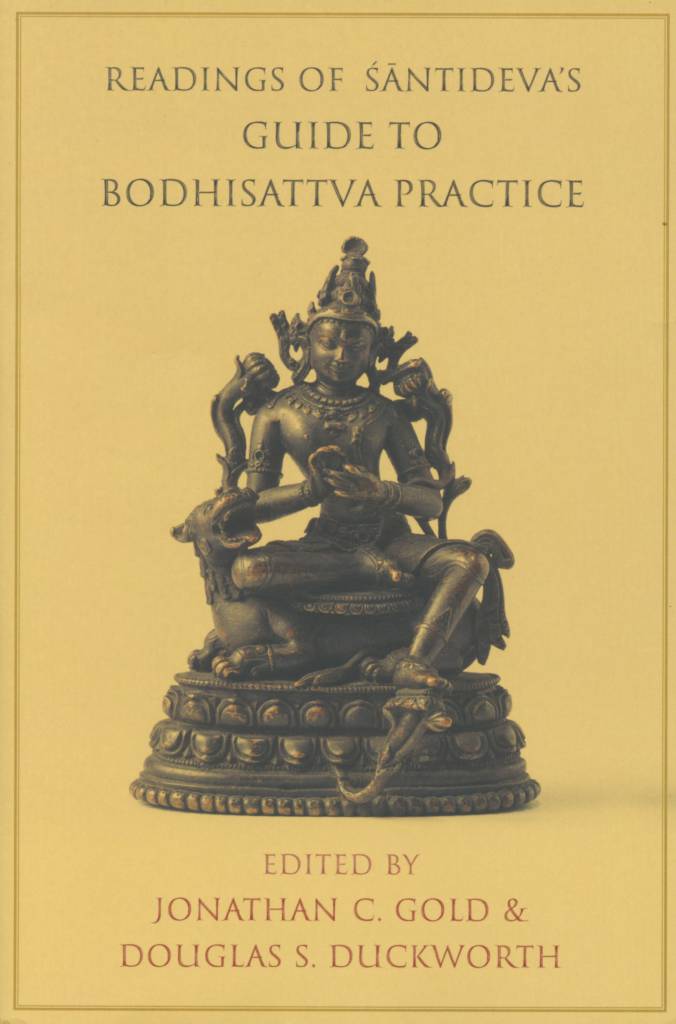
- Readings of Śāntideva's Guide to Bodhisattva Practice
- Readings of Śāntideva's Guide to Bodhisattva Practice-Review by Harris
- Reason and Knowledge on the Path: A Protreptic Reading of the Guide
- Reason, Irrationality and Akrasia (Weakness of the Will) in Buddhism: Reflections upon Śāntideva's Arguments with Himself
- Relocation of the Verses on "The Equality of Self and Others" in the Bodhicaryāvatāra
- Remarks on Akṣayamati (Blo gros mi zad pa), Being the Author of the Earlier Version of the Bodhisattvacaryāvatāra
- Remarks on an Instance of Intertextuality in the Eleventh Chapter of the Śikṣāsamuccaya and the Phrase Tṛṇagulmauṣadhivanaspati in Buddhist Sūtra Literature
- Santideva (Indian Antiquary, Vol. 42, 1913)
- Santideva's Bodhicaryāvatāra
- Santideva, un mistico del Buddhismo
- Seven Important Points (Marmasthāna) in the Śikṣāsamuccaya
- Shantideva (From Butön's History of Buddhism in India and Its Spread to Tibet, Translated by Lisa Stein and Ngawang Zangpo)
- Shantideva (Nariman)
- Shantideva's Bodhicaryavatara: An Internal Pilgrimage to Universal Peace and Compassion
- Shantideva's Teaching
- Shāntideva (Tib. Shi-wa-lha)
- Stotra, Psychological Conditioning, and the Bodhicaryāvatāra: Together with a Translation of the Bodhicittānuśaṃsapariccheda
- The Bodhi-caryâvatāra and Its Monastic Aspects: On the Problem of Representation
- The Bodhisattva Doctrine in Buddhist Sanskrit Literature
- The Bodhisattva Path: Śāntideva's Bodhicaryāvatāra
- The Case of the Vanishing Poet: New Light on Śāntideva and the Śikṣā-samuccaya
- The Center of the Sunlit Sky
- The Changing Way of the Bodhisattva: Superheroes, Saints, and Social Workers
- The Concept of Bodhicitta in Śāntideva's Bodhicaryāvatāra (Diss)
- The Ethics of Śaṅkara and Śāntideva
- The Ethics of Śaṅkara and Śāntideva-Review by Abramson
- The Ethics of Śaṅkara and Śāntideva-Review by Javanaud
- The Ethics of Śaṅkara and Śāntideva-Review by O'Leary
- The Literature of the Madhyamaka School of Philosophy in India
- The Mahāsiddha Bhusuku (Śāntideva), The Idle Monk
- The Masters and Poets of the Mahāyāna
- The Path of the Bodhisattva
- The Perfection of Wisdom (Schopen)
- The Relationship between Morality and the Body in Monastic Training according to the Śikṣāsamuccaya
- The Resolve to Become a Buddha
- The Training Anthology of Śāntideva
- The Transmission of the Bodhicaryāvatāra: The History, Diffusion, and Influence of a Mahāyāna Buddhist Text
- The Triskandha, Practice in Three Parts: Study of an Early Mahāyāna Buddhist Ritual
- The Way of the Bodhisattva: An Introduction and Commentary to Shantideva's The Way of Life of the Bodhisattva
- The Way of the Translators: Three Recent Translations of Śāntideva's Bodhicaryāvatāra
- Verses by Śāntideva in the Śikṣāsamuccaya: A New English Translation
- Virtuous Bodies
- Śikṣāsamuccaya (Anthology of Instruction)
- Śikṣāsamuccaya et Sūtrasamuccaya
- Śāntideva (Internet Encyclopedia of Philosophy)
- Śāntideva (Potter, Kalupahana, and Sweet)
- Śāntideva (Stanford Encyclopedia of Philosophy)
- Śāntideva and Bodhicaryāvatāra
- Śāntideva and an Ethic of Radical Compassion
- Śāntideva and the Mādhyamika: The Prajñāpāramitā-Pariccheda of the Bodhicaryāvatāra
- Śāntideva as a Mantracarin
- Śāntideva in the History of Mādhyamika Philosophy
- Śāntideva on Developing the Thought of Awakening
- Śāntideva, A Mystic of Buddhism
- Śāntideva, il Bodhicaryāvatāra e le kārikā del Śikṣāsamuccaya
- Śāntideva, il Bodhicaryāvatāra e le kārikā del Śikṣāsamuccaya-Review by Pāsādika
- Śāntideva: Mystique Bouddhiste des VIIe et VIIIe siècles
- Śāntideva: Mystique Bouddhiste des VIIe et VIIIe siècles-Review by Cabezón
- Śāntideva: The Author and His Project
- Śāntidevas Bodhicaryāvatāra: Das Weiterwirken des Werkes dargestellt anhand der Überlieferungsgeschichte des Textes und seiner Kommentare
Description
The other chapters of this book address themselves primarily to the
Bodhicaryāvatāra (the Guide) of Śāntideva, with only occasional reference to his second major work, the Śikṣāsamuccaya or Training Anthology (the Anthology).[1] The two works are quite different in various ways. The Guide is a unified and extended verse composition, which is, as far as we can tell, entirely the creation of its author, and as poetry it is crafted with a fair degree of skill and art.[2] The Anthology, by contrast, is a much longer composite work, in which Śāntideva's own words, in both prose and verse, are combined with extensive citations from a wide variety of scriptural texts, over 110 in number. Written in an equally wide variety of registers, the passages cited also consist sometimes of prose, sometimes of verse, which is to be expected given the standard prosimetric style of the Mahāyāna sūtras to which Śāntideva gives pride of place; he quotes Mainstream Buddhist or Śrāvakayāna texts much less frequently, and even then not at great length.
The general style of the Anthology is consequently quite uneven, more prosaic and expository than artistic and evocative, although occasionally the verses that Śāntideva inserts, whether his own or taken from his canonical sources, rise to the heights of expressiveness achieved in the Guide. The Guide and the Anthology are thus very different in form and style, but what about their purpose? In this chapter we will make an attempt to understand who Śāntideva was and what he was about, asking whether each of these two works has its own agenda or somehow contributes to one coherent and comprehensive project clearly initiated by a single person.[3] We will see in the end that the Guide and the Anthology do serve a common agenda, and that neither work can be fully understood independently of the other. (Harrison, introductory remarks, 27–28)
Notes
- The Sanskrit text of the Anthology as we know it has survived in a single manuscript now in the Cambridge University Library, which was first edited by Cecil Bendall, Çikshāsamuccaya: A Compendium of Buddhistic Teaching. It has been translated twice into English, almost a century ago by Bendall himself in collaboration with W. H. D. Rouse, Śikshā-samuccaya, and recently by Charles Goodman, The Training Anthology of Śāntideva. Goodman's translation is superior to that of Bendall & Rouse, and we recommend its use. References to the Anthology will be in the form B52:G55, where B stands for Bendall's edition of the Sanskrit text, G for Goodman's English translation.
- This makes it challenging to translate. We will refer in this chapter to the English rendition by Kate Crosby and Andrew Skilton, Śāntideva, The Bodhicaryāvatāra, which is enhanced by useful chapter introductions and notes. Also well worth looking at is the almost complete translation made by Luis Gómez, "How to Be a Bodhisattva."
- Modern scholarship generally follows the Tibetan tradition in accepting the attribution of the two works to Śāntideva, and I see no good reason to call this into question. For a useful survey (in French) of material relating to questions of ascription and to Śāntideva's life, see Pezzali, Śāntideva: mystique bouddhiste des Vlle et VIIIe siècles. See also Saitō, "Facts or Fictions: Reconsidering Śāntideva's Names, Life, and Works," for a concise summary of the issues.