| 🤓 Admin Zone 🛠️ hidden to non-admins | |
The Lotus Sutra
Book
- A Few Good Men
- A Treasury of Mahāyāna Sūtras
- Abiding in Good and Noble Deportment
- Appendix to the New Edition of the Bodhicaryāvatāra
- Buddha Pronounces the Sūtra of the Great Cundī Dhāraṇī
- Chapter on Entering the Inconceivable Liberated State of Samantabhadra's Practices and Vows
- Dialogue With Bodhisattva Infinite Wisdom
- Mahāvaipulya Sūtra of the Tathāgata Store
- Myōhō-renge-kyō
- On Entering into the Inconceivable State of Emancipation by the Practice and Vows of the Bodhisattva Samantabhadra of the Mahavaipulya Buddha Avatamsaka Sutra
- On the Pāramitā of Ingenuity
- Scripture of the Lotus Blossom of the Fine Dharma
- The Buddhist Feminine Ideal
- The Definitive Vinaya
- The Dhâranî of Tchundi
- The Diamond Cutter of Doubts: A Commentary on The Diamond Sūtra (Vajracchedikā-prajñā-pāramitā Sūtra) By Ch'an Master Han Shan
- The Diamond Prajna Paramita Sutra
- The Diamond Prajna-Paramita Sutra
- The Diamond Sutra (Chin-Kang-Ching), or Prajna-Paramita
- The Diamond Sutra (Hsüan Hua)
- The Diamond Sutra (Wai-tao and Goddard)
- The Diamond Sutra and The Sutra of Hui Neng
- The Diamond Sutra: The Perfection of Wisdom
- The Diamond Sutra: Translated from Kumarajiva's Chinese Version
- The Diamond That Cuts Through Illusion
- The Essentials of the Dharma Blossom Sutra
- The Flower Ornament Scripture: A Translation of The Avatamsaka Sutra
- The Giving Rise of the Ten Kinds of Mind of the Bodhisattva
- The Great Vows of Samantabhadra
- The Healing Buddha (1979)
- The Healing Buddha (1989)
- The Lankavatara Sutra: A Zen Text
- The Lion's Roar of Queen Śrīmālā
- The Lotus Sutra (2016) (BDK)
- The Lotus Sutra (Watson)
- The Lotus Sutra: A Contemporary Translation of a Buddhist Classic
- The Lotus Sutra: The Sutra of the Lotus Flower of the Wonderful Dharma
- The Lotus of the Wonderful Law or The Lotus Gospel (2005)
- The Mahayana Mahaparinirvana-sutra (3 vols.)
- The Pratyutpanna Samādhi Sutra: The Śūraṅgama Samādhi Sutra
- The Prediction of Mañjuśrī's Attainment of Buddhahood
- The Scripture of Master of Medicine, Beryl Radiance Tathāgata and The Sutra of the Girl Candrottarā
- The Shurangama Sutra - Volume Eight
- The Shurangama Sutra - Volume Five
- The Shurangama Sutra - Volume Four
- The Shurangama Sutra - Volume One
- The Shurangama Sutra - Volume Seven
- The Shurangama Sutra - Volume Six
- The Shurangama Sutra - Volume Three
- The Shurangama Sutra - Volume Two
- The Shurangama Sutra: Sutra Text and Supplements
- The Skill in Means (Upāyakauśalya) Sūtra
- The Sky as a Mahāyāna Symbol of Emptiness and Generous Fullness: A Study and Translation of the Gaganagañjaparipṛcchā: Volume 2: Edition and Translation
- The Sutra of Queen Śrīmālā of the Lion's Roar and the Vimalakīrti Sutra
- The Sutra of the Lord of Healing
- The Sutra of the Master of Healing
- The Tale of King Udayana of Vatsa
- The Threefold Lotus Sūtra
- The True Lion's Roar of Queen Śrīmālā
- The Vimalakirti Nirdesa Sutra
- The Vimalakīrti Sūtra (Watson)
- The Vow to Live the Life of Samanta-bhadra
- The Vows of Bodhisattva Samantabhadra Sutra
- The Śūraṅgama Sūtra: A New Translation
- Vaipulya Sūtra of Śrīmālā's Lion's Roar That Reveals the Great Skillful Means of the One Vehicle
- Vajra-chhedika, the "Kin Kong King," or Diamond Sutra
- Vimalakīrti's Discourse on Emancipation
- Vimalakīrti-Nirdeśa-Sūtra: Translated from the Chinese
Please note that many items in our library are simply pages that represent a detailed library catalog entry and citation of someone else's work, presentation, or performance. Read our General Disclaimer for more information. You can find more information about this item on the publisher website.

Description
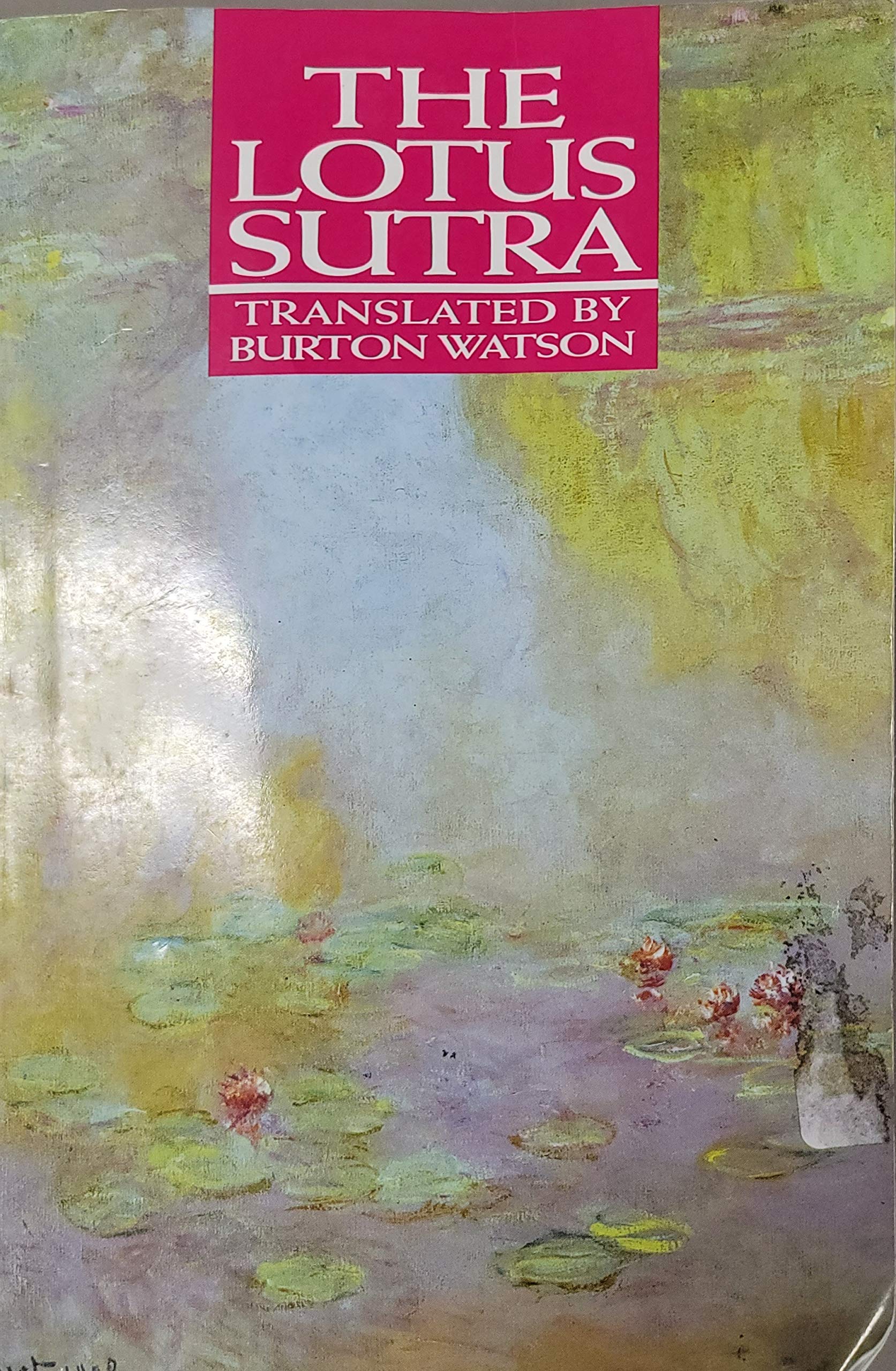
Since its appearance in China in the third century, The Lotus Sutra has been regarded as one of the most illustrious scriptures in the Mahayana Buddhist canon. The object of intense veneration among generations of Buddhists in China, Korea, Japan, and other parts of the world, it has had a profound impact on the great works of Japanese and Chinese literature, attracting more commentary than any other Buddhist scripture.
As Watson notes in the introduction to his remarkable translation, "The Lotus Sutra is not so much an integral work as a collection of religious texts, an anthology of sermons, stories, and devotional manuals, some speaking with particular force to persons of one type or in one set of circumstances, some to those of another type or in other circumstances. This is no doubt why it has had such broad and lasting appeal over the ages and has permeated so deeply into the cultures that have been exposed to it." (Source: Columbia University Press)
Citation
Watson, Burton, trans. The Lotus Sutra. Translations from the Asian Classics. New York: Columbia University Press, 1993. https://ia802902.us.archive.org/13/items/lotussutraburtonwatson_202003_473_o/Lotus%20Sutra%20Burton%20Watson.pdf.
Publisher Link
Table of contents
- Translator's Introductionix
- Translator's Notexxiii
- 1. Introduction3
- 2. Expedient Means23
- 3. Simile and Parable47
- 4. Belief and Understanding80
- 5. The Parable of the Medicinal Herbs97
- 6. Bestowal of Prophecy107
- 7. The Parable of the Phantom City117
- 8. Prophecy of Enlightenment for Five Hundred Disciples143
- 9. Prophecies Conferred on Learners and Adepts154
- 10. The Teacher of the Law160
- 11. The Emergence of the Treasure Tower170
- 12 . Devadatta182
- 13. Encouraging Devotion190
- 14. Peaceful Practices196
- 15. Emerging from the Earth212
- 16. The Life Span of the Thus Come One224
- 17 . Distinctions in Benefits233
- 18. The Benefits of Responding with Joy245
- 19. Benefits of the Teacher of the Law251
- 20. The Bodhisattva Never Disparaging265
- 21. Supernatural Powers of the Thus Come One272
- 22. Entrustment277
- 23. Former Affairs of the Bodhisattva Medicine King280
- 24. The Bodhisattva Wonderful Sound290
- 25. The Universal Gateway of the Bodhisattva Perceiver of the World's Sounds298
- 26. Dharani307
- 27. Former Affairs of King Wonderful Adornment312
- 28. Encouragements of the Bodhisattva Universal Worthy319
- Glossary325
- Index343
Interconnections
1 Full translation of

The White Lotus of the Good Dharma, popularly known as the Lotus Sūtra, is taught by Buddha Śākyamuni on Vulture Peak to an audience that includes bodhisattvas from countless realms, as well as bodhisattvas who emerge from under the ground, from the space below this world. Buddha Prabhūtaratna, who has long since passed into nirvāṇa, appears within a floating stūpa to hear the sūtra, and Śākyamuni enters the stūpa and sits beside him. The Lotus Sūtra is celebrated, particularly in East Asia, for its presentation of crucial elements of the Mahāyāna tradition, such as the doctrine that there is only one yāna, or "vehicle"; the distinction between expedient and definite teachings; and the notion that the Buddha's life, enlightenment, and parinirvāṇa were simply manifestations of his transcendent buddhahood, while he continues to teach eternally. A recurring theme in the sūtra is its own significance in teaching these points during past and future eons, with many passages in which the Buddha and bodhisattvas such as Samantabhadra describe the great benefits that come from devotion to it, the history of its past devotees, and how it is the Buddha's ultimate teaching, supreme over all other sūtras. (Source: 84000)