The Faults of Meat

From Bodhicitta
< Books
Revision as of 16:05, 29 May 2026 by AlexC (talk | contribs) (Text replacement - "|TermTopics=Animals" to "|TermTopics=Animals; Vegetarianism ")
(diff) ← Older revision | Latest revision (diff) | Newer revision → (diff)

Books/The Faults of Meat

🤓 Admin Zone 🛠️ hidden to non-admins
The Faults of Meat: Tibetan Buddhist Writings on Vegetarianism
Book


Please note that many items in our library are simply pages that represent a detailed library catalog entry and citation of someone else's work, presentation, or performance. Read our General Disclaimer for more information. You can find more information about this item on the publisher website.
The Faults of Meat-front.jpg

Description

Should all Buddhists be vegetarian?

Vegetarianism is an important topic of debate in Buddhist circles—some argue that Buddhists should avoid meat entirely while others suggest that it is acceptable. For the most part, however, this ethical query has been conducted in the West without consulting traditional literature on the subject. The Faults of Meat brings together for the first time a collection of rich and intricate explorations of authoritative Tibetan views on eating meat. These fourteen nuanced texts, ranging from scholastic treatises to poetic verse, reveal vegetarianism as a significant, ongoing issue of debate for Tibetans across time and traditions, with a wide variety of voices marshaled against meat, and a few in favor. Authors include many important Tibetan teachers:

Dolpopa Sherab Gyaltsen (1292–1361) Khedrup Jé (1385–1438) The eighth Karmapa, Mikyö Dorjé (1507–1554) Shabkar Tsokdrük Rangdröl (1781–1851) Khenpo Tsultrim Lodrö (1961– ) and many more.

These Buddhist teachers recognize both the ethical problems that surround meat eating and the practical challenges of maintaining a vegetarian diet; their skilled arguments are illuminated further by the translators’ introductions to each work.

The perspectives in The Faults of Meat are strikingly relevant to our discussions of vegetarianism today; they introduce us to new approaches and solutions to a contentious issue for Buddhists. (Source: Wisdom Publications)

Citation
Barstow, Geoffrey, ed. The Faults of Meat: Tibetan Buddhist Writings on Vegetarianism. Somerville, MA: Wisdom Publications, 2019.
Publisher Link
Table of contents
  • Foreword by Khenpo Tsultrim Lodrövii
  • Foreword by Matthieu Ricardix
  • Acknowledgmentsxv
  • Conventionsxvii
  • Introduction by Geoffrey Barstow1


  • 1. Canonical Precedents: The Laṅkāvatāra and Mahāparinirvāna Sūtras by Geoffrey Barstow31
  • 2. Dolpopa Sherab Gyaltsen on Refraining from Meat by Michael Sheehy53
  • 3. Ngorchen Künga Sangpo on the Faults of Alcohol and Meat by Jörg Heimbel77
  • 4. Khedrup Jé on Meat in the Monastery by Anna Wolcott Johnson119
  • 5. Gorampa on Meat in the Three Vows by Geoffrey Barstow159
  • 6. Karmapa Mikyö Dorjé’s Critique of Meat in Tantric Ritual by Geoffrey Barstow173
  • 7. Karma Chakmé’s Comprehensive Critique of Meat by Geoffrey Barstow181
  • 8. Songs against Meat by the Yogi Shabkar by Rachel H. Pang211
  • 9. Nyala Pema Dündul’s Inferno by Adam Pearcey223
  • 10. A Necessary Evil: Shardza Tashi Gyaltsen on the Faults of—and Need for—Meat by Geoffrey Barstow235
  • 11. Arjia Rinpoché on Giving Up Meat by Sangseraima Ujeed247
  • 12. Khenpo Tsultrim Lodrö’s Appeal to Contemporary Tibetans to Abandon Meat and Practice Nonkilling by Catherine Hardie259


  • Suggested Reading311
  • Translator Biographies315
  • Index317
Interconnections
All 11Articles 1Classical Works 10
5 Full translation of
Nyakla Pema Dudul.jpg
Classical WorksAbout this item
A recurrent theme in Nyala Pema Dundul's songs and other works is abstinence. He discourages the consumption of meat, alcohol and tobacco (in the form of snuff) and warns against sexual misconduct. For the latter, he employs what might be called an anti-Oedipal argument: since all beings have been one's mothers in previous existences, intercourse with anyone is tantamount to incest. These calls for ethical restraint follow a similar pattern, as assertions build into a fuller thesis. What distinguishes the song of advice on giving up meat is that its arguments derive from a vision and are presented in the voice of Avalokiteśvara, the bodhisattva of compassion.

Pema Dündul tells us that one day he was meditating on the Great Compassionate One (following a text of his own revelation) when his entire perception suddenly transformed. Noble Avalokiteśvara appeared directly and the lower realms of saṃsāra became clearly visible. He witnessed the Reviving Hell in particular—one of eighteen hells according to Buddhist cosmology and the destiny of meat eaters and practitioners of so-called red offerings. Thus, it would seem that the song’s references to “the suffering that meat eating brings” concern the infernal torment of those responsible for animals’ death, rather than the pain of the animals themselves. It could be that the suffering involved in slaughter is too obvious to warrant commentary, whereas its karmic consequences, which are not directly apparent, require explanation. In any case, Pema Dündul appeals to his audience’s compassion in other ways, such as when he argues that murder is no way to repay the kindness of beings who were one’s mother in previous lifetimes. More than once he highlights his own and others’ hypocrisy in lecturing others about the law of cause and effect while failing to adhere to its principles oneself. Meat eaters suffer in future lives, he says, but even in their current lifetime they will be plagued by illness and tormented by negative emotions and non-human spirits. In fact, they are just like demons themselves and find it impossible to develop genuine altruism. Vegetarians, by contrast, are widely revered, benefit from divine assistance and easily cultivate the love and compassion that aid progress along the path. Thus, the text is concerned not so much with the rules surrounding the consumption of flesh as with its consequences—both the negative effects of meat eating and the positive effects of abstention. Moreover, these karmic results are not proposed as theory or set out merely on the basis of scripture; they are reported as first-hand testimony that includes the authoritative voice of Avalokiteśvara.

The song concludes with a confession of past misdeeds and a pledge to abstain from meat eating in the future. Although Pema Dündul employs the first person here, the faults he lists apply to meat eaters in general. Thus, there can be little doubt that readers are also encouraged to share in the author’s declaration and make a similar commitment of their own. Effectively, the text captures a moment of conversion and invites others to re-enact it. (Source: Lotsawa House)
Ngorchen Kunga Zangpo.jpg
Classical WorksAbout this item
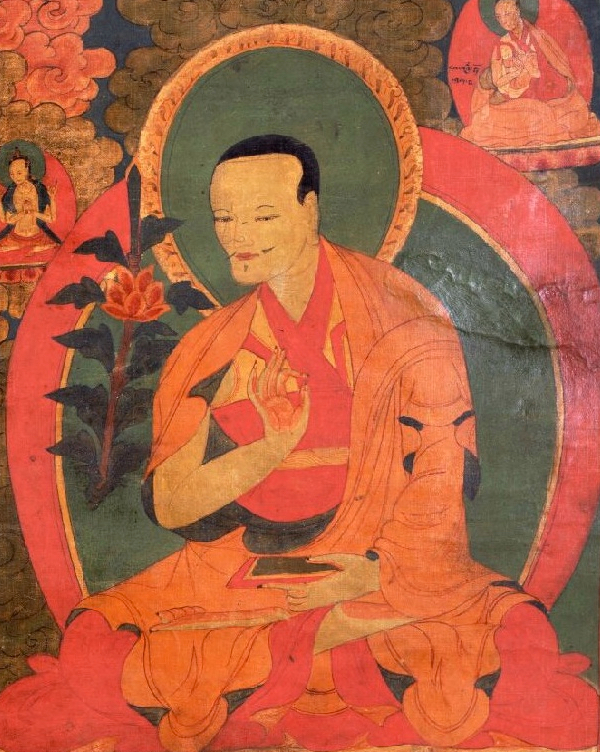
An Epistle Benefitting Students is a well-known composition by Ngorchen Kunga Zangpo. One of the longest Tibetan literary works of its kind, in it he urgently argues from both sūtric and tantric points of view against the consumption and tantric use of alcohol and meat by monastics. Ngorchen compiled the text in 1425 at age forty-three when he was still based at Sakya Monastery. (Source: Slightly modified from Jörg Heimbel, trans., "Ngorchen Künga Sangpo on the Faults of Alcohol and Meat," in The Faults of Meat: Tibetan Buddhist Writings on Vegetarianism, comp. and ed. Geoffrey Barstow (Somerville, MA: Wisdom Publications, 2019), 78.)
Karma Chakme.jpg
Classical WorksAbout this item
Karma Chakmé's Words of My Kind Lama: The Faults of Meat is one of the most significant Tibetan treatises on the subject. His argument proceeds through several layers.

He begins with a general critique of meat drawing on the Laṅkāvatārasūtra, then addresses why the Buddha permitted monks to eat meat—arguing this was skillful means for those deeply attached to meat, but only a provisional teaching. In the Mahāyāna, he holds, meat is unacceptable except in cases of serious illness where preserving the practitioner's life takes precedence.

The bulk of the text addresses meat in tantric Buddhism. He notes that the three lower tantric classes explicitly require vegetarianism. Even in Anuttarayoga Tantra, where meat sometimes appears, he argues it is inappropriate, on the grounds that compassion defines a true tantric master and meat-eating contradicts compassion. He distinguishes ritual use of the five meats—which must never come from slaughtered animals—from ordinary consumption, and insists that even ritual use is only permissible for highly advanced practitioners capable of actually transforming the substance. For ordinary practitioners, only a minuscule amount is allowable.

His conclusion is graduated: full vegetarianism is the ideal; below that, avoiding meat killed specifically for you; below that, eating only small amounts; at minimum, generating compassion for the animal before eating.
Karma Chakme.jpg
Classical WorksAbout this item
Eating Meat with Compassion: Oral Instructions on the Meaning, Combining Sūtras and Tantras is a prayer to be recited before eating any meat. Perhaps not surprisingly, the prayer opens with an extended interlinear note describing the faults of eating meat and concluding that it is not acceptable. But if a practitioner must do so, Karma Chakmé suggests that they visualize themselves absorbing and purifying the animal’s sin. Then, after again acknowledging that the animal in question was once their mother, the practitioner is encouraged to visualize the process of eating the meat as an inner fire-offering, as if the meat were being placed into a blazing fire as an offering to the deities. All of this is done while reciting appropriate mantras. (Barstow, The Faults of Meat)
Shardza Tashi Gyalsten Okar Research.jpg
Classical WorksAbout this item
Shardza spends the bulk of his work criticizing meat. He calls meat "nauseating" and argues at length that eating it is sinful and leads to birth in hell. But then, on the final page of his treatise, Shardza abruptly reverses his position and claims that people must eat meat. Without it, he claims, the body will become weak, feeble, and, crucially, unable to practice religion. And practicing religion is a rare opportunity, available only when one achieves a human birth with all of the freedoms and riches intact. But Shardza's advocacy of meat eating does not negate his earlier concerns. Instead, he is claiming that people should eat meat despite the fact that it is sinful. Further, he proposes that, in order to minimize the negative karma of meat eating, people should eat "suitable" meat. But what kind of meat is suitable? To this Shardza gives two examples: the meat of animals that have died naturally and meat purchased in a market. The first involves no act of killing, so is karmically pure. Shardza himself followed just such a diet, eating only the meat of animals that died naturally. Meat purchased in the market is more problematic, and Shardza clearly sees it as an inferior option. But he does include it, seeming to reflect the idea that meat purchased in the market is more distant from the act of killing than when someone either personally kills the animal or specifically asks someone else to do it for them. (Source: Barstow, The Faults of Meat, 237)
5 Partial translation of
Dolpopa Sherab Gyaltsen.jpg
Classical WorksAbout this item
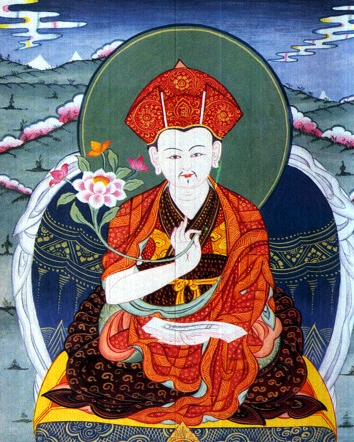
In 1314 Dolpopa vowed not to eat slaughtered meat for the rest of his life. He was twenty-three at the time, had received full monastic ordination that same year, and was on a tour of the preeminent scholastic institutions in Central Tibet. His Advice and Quotes about Refraining from Meat and Alcohol was composed in 1325, the same year that he first taught at Jonang and was requested by his teacher Yontan Gyatso to assume leadership of the Jonang yogi community. While there is certainly precedent for a meatless diet among spiritual masters in Tibet prior to Dolpopa, with early Kagyü masters including Pakmodrupa (1110–1170) and his disciples Jigten Sumgön (1143–1217) and Taklung Tangpa (1142–1209) being noteworthy exemplars, Dolpopa's advice is among the earliest Tibetan writings on vegetarianism. (Slightly modified from Michael Sheehy, "Dolpopa Sherab Gyaltsen on Refraining from Meat," in The Faults of Meat: Tibetan Buddhist Writings on Vegetarianism (Somerville, MA: Wisdom Publications, 2019), 55.
Gorampa.jpg
Classical WorksAbout this item
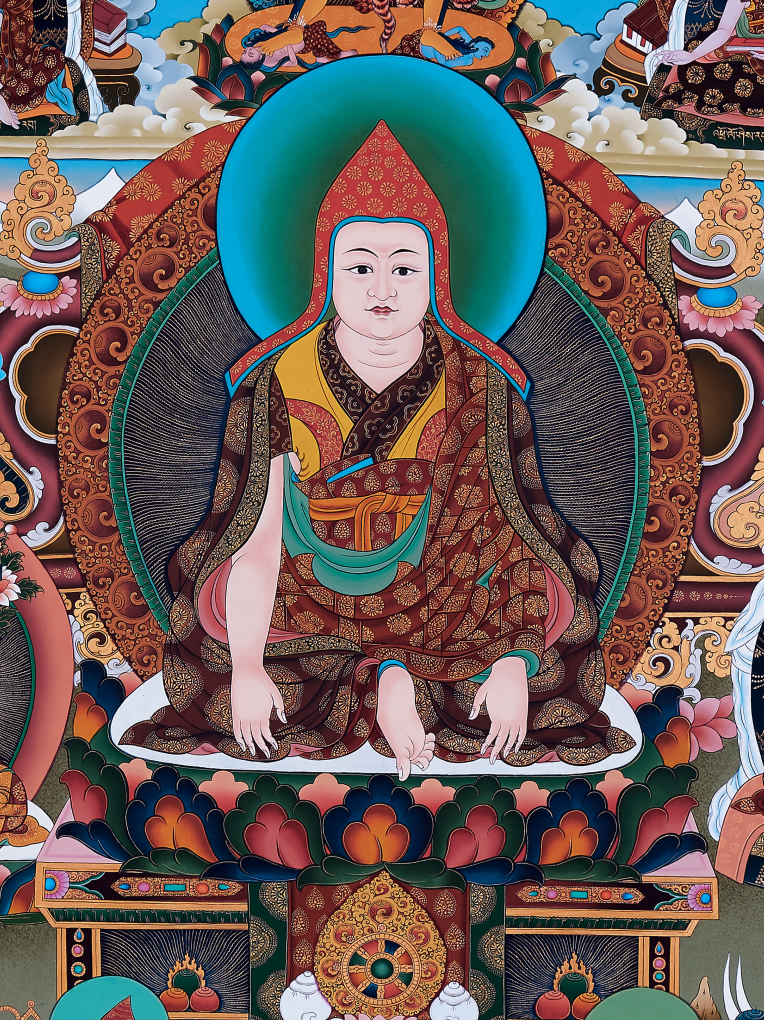
Gorampa Sönam Senge's detailed commentary on Sakya Paṇḍita's Distinguishing the Three Vows (Sdom gsum rab dbye). It was written in the Female Water-Sheep year (1463), during the month of Chaitra, at the temple of Kyemo Tsel (skyed mo tshal) in Dreg-yul Dzongkar ('bras yul rdzong dkar).
Karmapa 8th.jpg
Classical WorksAbout this item
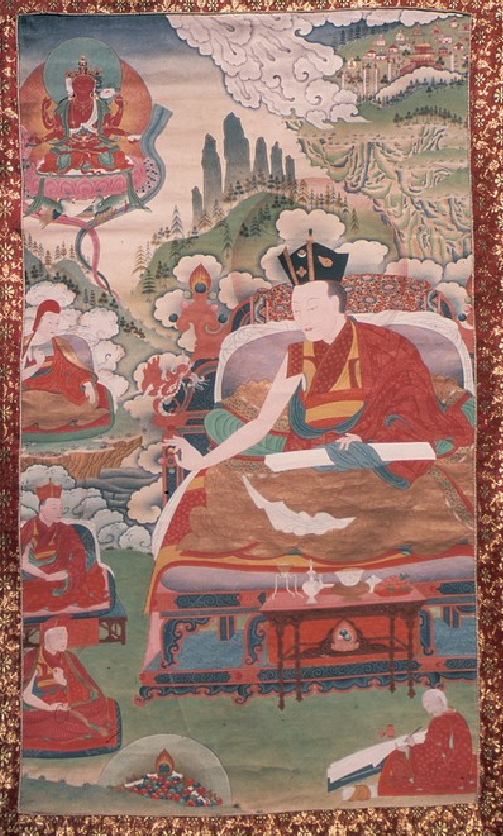
The Eighth Karmapa Mikyö Dorje's commentary on Guṇaprabha's Vinayasūtra (T. 'Dul ba'i mdo). The Vinayasūtra offers a summary or condensation of the massive Mūlasarvāstivāda vinaya. At approximately one quarter the length of this massive vinaya collection, Guṇaprabha's abridgment seems to have functioned as a kind of primer on the monastic code, omitting lengthy passages of scripture and providing the code of conduct to which monks were expected to subscribe. Mikyö Dorje's commentary spans 3 volumes (7–9) of his Collected Works. This is the first volume.


  • For a discussion of meat in tantric ritual offerings, see pages 541–44.
1 Reviews
Lindsay Rory.jpg
Articles2020About this item
Eating other beings may not seem like the most intuitive choice for those following the Mahayana Buddhist path, but that is exactly what many Buddhists have done for centuries. In Tibetan culture, the consumption of meat has been the norm, yet given the basic Buddhist prohibition against killing, meat-eating has always posed significant ethical problems. How, then, have Tibetan meat eaters justified their actions? And how have vegetarians in Tibet argued their case? In The Faults of Meat, edited by Geoffrey Barstow, we find a rich amalgam of translated works by major Tibetan authors on the topic of meat-eating, from those who vigorously argue for vegetarianism to those who carefully defend meat’s ingestion.


Read this article here.