Theg pa chen po'i blo sbyong/Full text
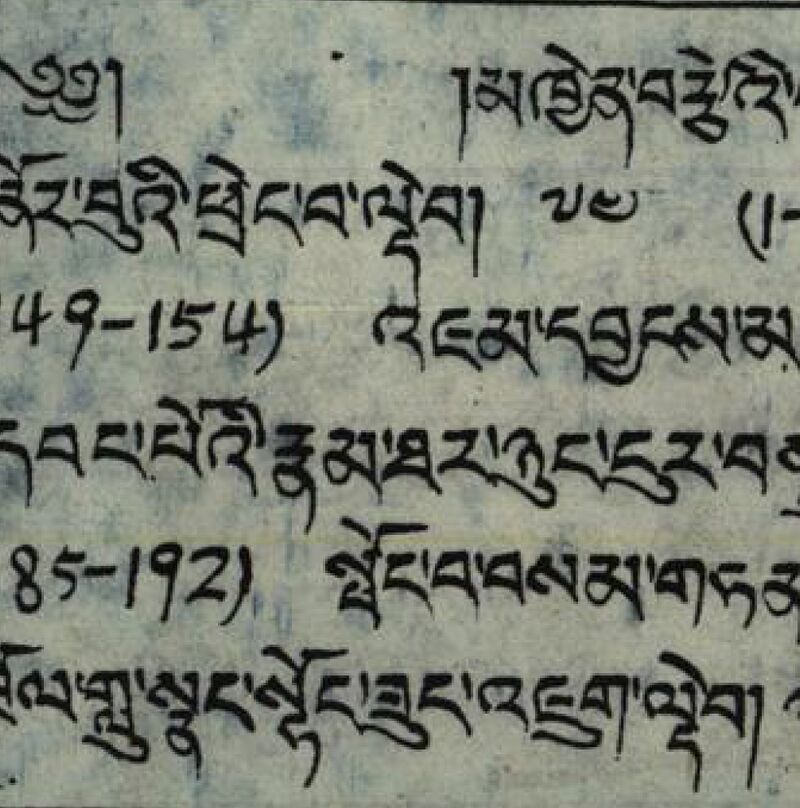
The mention of Drakmarwa in the opening stanza may be a clue to its origin. Drakmarwa was a student of an influential Kadam teacher Jayülwa Shönu Ö (1075-1138), who was in turn a student of Chengawa, one of the three Kadam brothers. Drakmarwa's lineage is known as the "Kadam lineage of instructions." Chekawa, who is the source of the seven-point instruction, on the other hand, belongs to the lineage of Potowa through to Sharawa, the lineage known as the "Kadam lineage of treatises." Interestingly, in the brief account of Chekawa's discovery of the mind training instruction found in Sangyé Gompa's Public Explication, Chekawa is reported as naming Shang Drakmarwa as a possible source when searching for the instruction. This suggests that Drakmarwa was already established as an authoritative Kadam teacher while Chekawa was on his quest.
The Lhasa edition of the Tibetan original of this work unfortunately suffers from a number of spelling corruptions . . . Given the absence of any textual support, it is difficult to speculate who the author of this eloquent work might be. The conciseness of its literary style, the extremely practical approach, and the frequent use of archaic Tibetan all seem to confirm its antiquity. Most probably the work was composed by a student of both Drakmarwa and Chekawa. So we can confidently date the text in the latter part of twelfth century at the earliest. (Thupten Jinpa, Mind Training: The Great Collection, 617–18n472)| Reference | theg pa chen po'i blo sbyong [ཐེག་པ་ཆེན་པོའི་བློ་སྦྱོང་།]. [Mahāyāna Mind Training]. |
|---|---|
| People |
