Sarvadharmasvabhāvasamatāvipañcitasamādhirājanāmamahāyānasūtraṭīkākīrtimālā

From Bodhicitta
Texts/Sarvadharmasvabhāvasamatāvipañcitasamādhirājanāmamahāyānasūtraṭīkākīrtimālā

🤓 Admin Zone 🛠️ hidden to non-admins
सर्वधर्मस्वभावसमताविपञ्चितसमाधिराजनाममहायानसूत्रटीकाकीर्तिमाला
Sarvadharmasvabhāvasamatāvipañcitasamādhirājanāmamahāyānasūtraṭīkākīrtimālā
ཆོས་ཐམས་ཅད་ཀྱི་རང་བཞིན་མཉམ་པ་ཉིད་རྣམ་པར་སྤྲོས་པའི་ཏིང་ངེ་འཛིན་གྱི་རྒྱལ་པོ་ཞེས་བྱ་བ་ཐེག་པ་ཆེན་པོའི་མདོའི་འགྲེལ་པ་གྲགས་པའི་ཕྲེང་བ
chos thams cad kyi rang bzhin mnyam pa nyid rnam par spros pa'i ting nge 'dzin gyi rgyal po zhes bya ba theg pa chen po'i mdo'i 'grel pa grags pa'i phreng ba
A Commentary on the Mahāyāna Sūtra "The King of Samādhis, the Revealed Equality of the Nature of All Phenomena," called "The Garland of Renown" (84000)
Text


Please note that many items in our library are simply pages that represent a detailed library catalog entry and citation of someone else's work, presentation, or performance. Read our General Disclaimer for more information.

Description

The Kīrtimālā ("The Garland of Fame") is a commentary on the Samādhirājasūtra attributed to the Indian scholar Mañjuśrīkīrti, surviving only in Tibetan translation. It was translated by Nagtso Lotsawa, the translator and guide of Atiśa Dīpaṃkaraśrījñāna (980–1054), and gained importance more than two hundred years after the sūtra itself had been translated into Tibetan, particularly within the circle of students who founded the Kadampa tradition.

A notable feature of the commentary is philological: Nagtso's Tibetan translation of the Kīrtimālā incorporates the earlier Tibetan translation of the sūtra itself, indicating that Mañjuśrīkīrti's original commentary was composed for the same Sanskrit recension of the sūtra already rendered into Tibetan, rather than the longer version quoted by Candrakīrti. The commentary also proved useful in modern translation work: Mañjuśrīkīrti's commentary defines the list of qualities of the samādhi given in chapter 1 of the sūtra, and—despite discrepancies between its definitions and those in chapter 40 and the Sanskrit versions—was useful in ascertaining the intended meaning of these terms. Roberts notes, however, that in China the sūtra never achieved the prominence of texts like the White Lotus of the Good Dharma, and unlike there, no commentary [on the sūtra] was translated [into Chinese].

Source: Peter Alan Roberts, trans., The King of Samādhis Sūtra (Toh 127), 84000: Translating the Words of the Buddha, Introduction, §i.19 and §i.33. https://www.tilogaard.dk/english/King_of_Samadhis_Sutra_translated_by_Peter_Alan_Roberts_84000_translating_the_words_of_the_Buddha.pdf

Reference
Mañjuśrīkīrti (slob dpon 'jam dpal grags pa). sarvadharmasvabhāvasamatāvipañcitasamādhirājanāmamahāyānasūtraṭīkākīrtimālā [सर्वधर्मस्वभावसमताविपञ्चितसमाधिराजनाममहायानसूत्रटीकाकीर्तिमाला]. chos thams cad kyi rang bzhin mnyam pa nyid rnam par spros pa'i ting nge 'dzin gyi rgyal po zhes bya ba theg pa chen po'i mdo'i 'grel pa grags pa'i phreng ba [ཆོས་ཐམས་ཅད་ཀྱི་རང་བཞིན་མཉམ་པ་ཉིད་རྣམ་པར་སྤྲོས་པའི་ཏིང་ངེ་འཛིན་གྱི་རྒྱལ་པོ་ཞེས་བྱ་བ་ཐེག་པ་ཆེན་པོའི་མདོའི་འགྲེལ་པ་གྲགས་པའི་ཕྲེང་བ]. [A Commentary on the Mahāyāna Sūtra "The King of Samādhis, the Revealed Equality of the Nature of All Phenomena," called "The Garland of Renown" (84000)]. Tengyur, RKTST 3350 http://www.rkts.org/cat.php?id=3350&typ=2.
Interconnections
1 Classical commentary of
Classical WorksAbout this item
This sūtra, much quoted in later Buddhist writings for its profound statements especially on the nature of emptiness, relates a long teaching given by the Buddha mainly in response to questions put by a young layman, Candraprabha. The samādhi that is the subject of the sūtra, in spite of its name, primarily consists of various aspects of conduct, motivation, and the understanding of emptiness; it is also a way of referring to the sūtra itself. The teaching given in the sūtra is the instruction to be dedicated to the possession and promulgation of the samādhi, and to the necessary conduct of a bodhisattva, which is exemplified by a number of accounts from the Buddha's previous lives. Most of the teaching takes place on Vulture Peak Mountain, with an interlude recounting the Buddha's invitation and visit to Candraprabha's home in Rājagṛha, where he continues to teach Candraprabha before returning to Vulture Peak Mountain. In one subsequent chapter the Buddha responds to a request by Ānanda, and the text concludes with a commitment by Ānanda to maintain this teaching in the future. (Source: 84000)
1 Partial translations
Books1990About this item
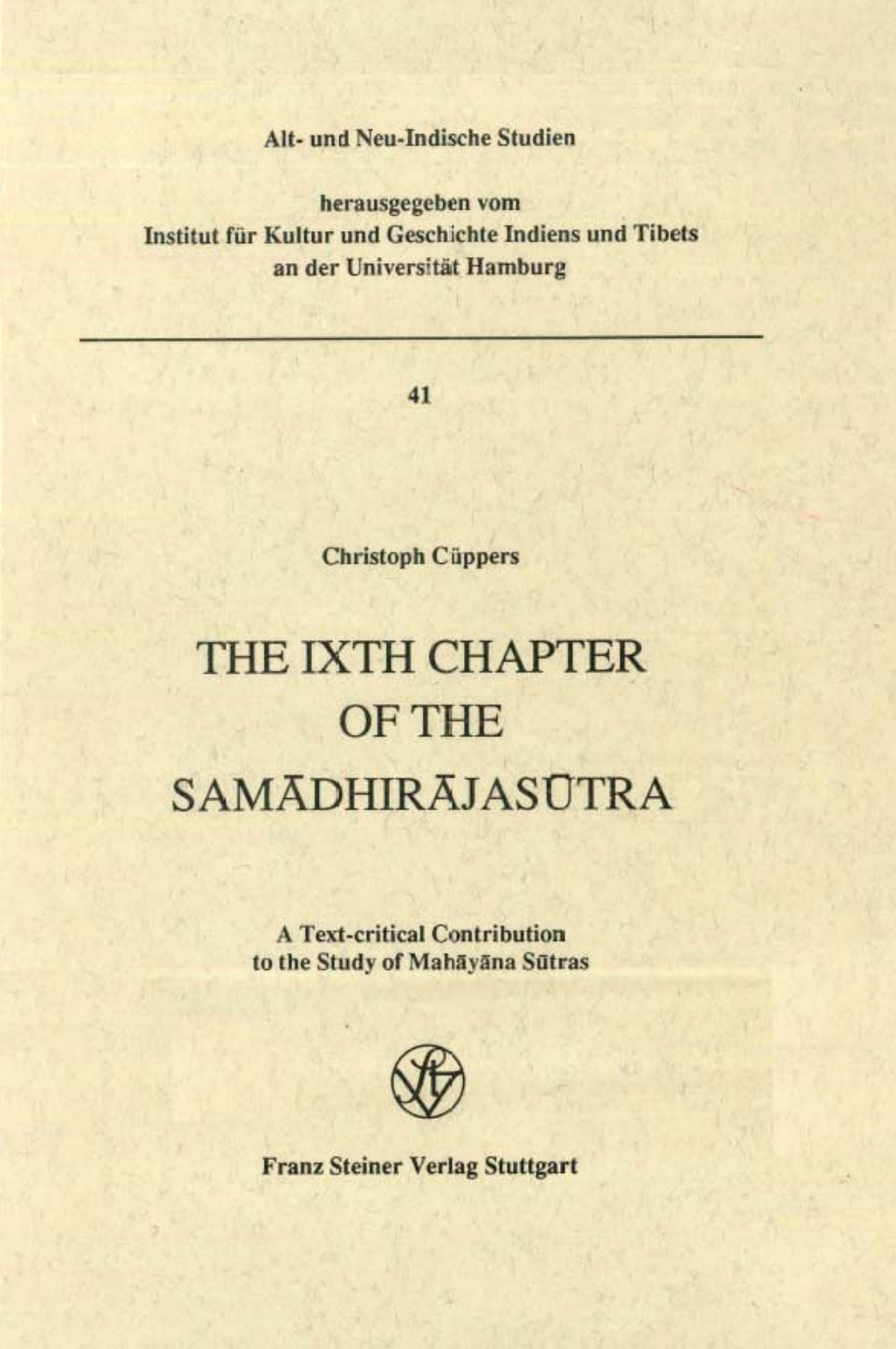
The present work is an English translation and revised version of my doctoral dissertation, and here entitled The IXth Chapter of the Samādhirājāsūtra: A Text-critical Contribution to the Study of Mahāyāna Sūtras. The Samādhirājasūtra (in the following: SR) is a relatively late canonical Mahāyāna Buddhist text. I have chosen the IXth chapter for study due to its belonging to the so-called philosophical chapters, which elucidate the illusionistic character of all phenomena (dharma); and to the fact that parts of it circulated widely as quotations in later Madhyamaka texts and other Tibetan exegetical works.
      This edition of the IXth chapter is based on a collection of twelve manuscripts from Nepal, to which is added, separately, the older version of a different redaction, as preserved in a Gilgit manuscript. The Sanskrit text is compared with the Tibetan, which in part, from Pāda IX, 28d to Pāda IX, 53, exists in two completely different translations, the canonical and a Tun Huang version. The Chinese translation by Narendrayaśas has also been taken into account, and its deviations from other versions marked in the English translation.
       Appendix A contains an edition and translation of the IXth chapter of Mañjuśrīkīrti's commentary on the SR, called Kīrtimālā, which is preserved in Tibetan translation only. In Appendix B I have given a Sanskrit and Tibetan Pāda Index of all pādas, and in Appendix C a list of the Prakrit forms occurring in the chapter and the transliteration of the colophons of the Nepalese manuscripts. (Cüppers, preface, vii)