| 🤓 Admin Zone 🛠️ hidden to non-admins | |
बोधिसत्त्वसंवरविधि
Bodhisattvasaṃvaravidhi
བྱང་ཆུབ་སེམས་དཔའི་སྡོམ་པའི་ཆོ་ག།
byang chub sems dpa'i sdom pa'i cho ga
Ritual for (Bestowing) Bodhisattva Vows (84000)
Text
Please note that many items in our library are simply pages that represent a detailed library catalog entry and citation of someone else's work, presentation, or performance. Read our General Disclaimer for more information.


Description
A formal ritual for giving rise to bodhicitta by Bodhibhadra, a prominent scholar at Nālandā and an important teacher of Atiśa.
Reference
Bodhibhadra (སློབ་དཔོན་བྱང་ཆུབ་བཟང་པོ་). Bodhisattvasaṃvaravidhi [बोधिसत्त्वसंवरविधि]. byang chub sems dpa'i sdom pa'i cho ga [བྱང་ཆུབ་སེམས་དཔའི་སྡོམ་པའི་ཆོ་ག།]. [Ritual for (Bestowing) Bodhisattva Vows (84000)]. Translated by Gnyan lo tsA ba, Sunāyaśrīmitra. Tengyur, RKTST 3308 http://www.rkts.org/cat.php?id=3308&typ=2.
Interconnections
1 Full translations

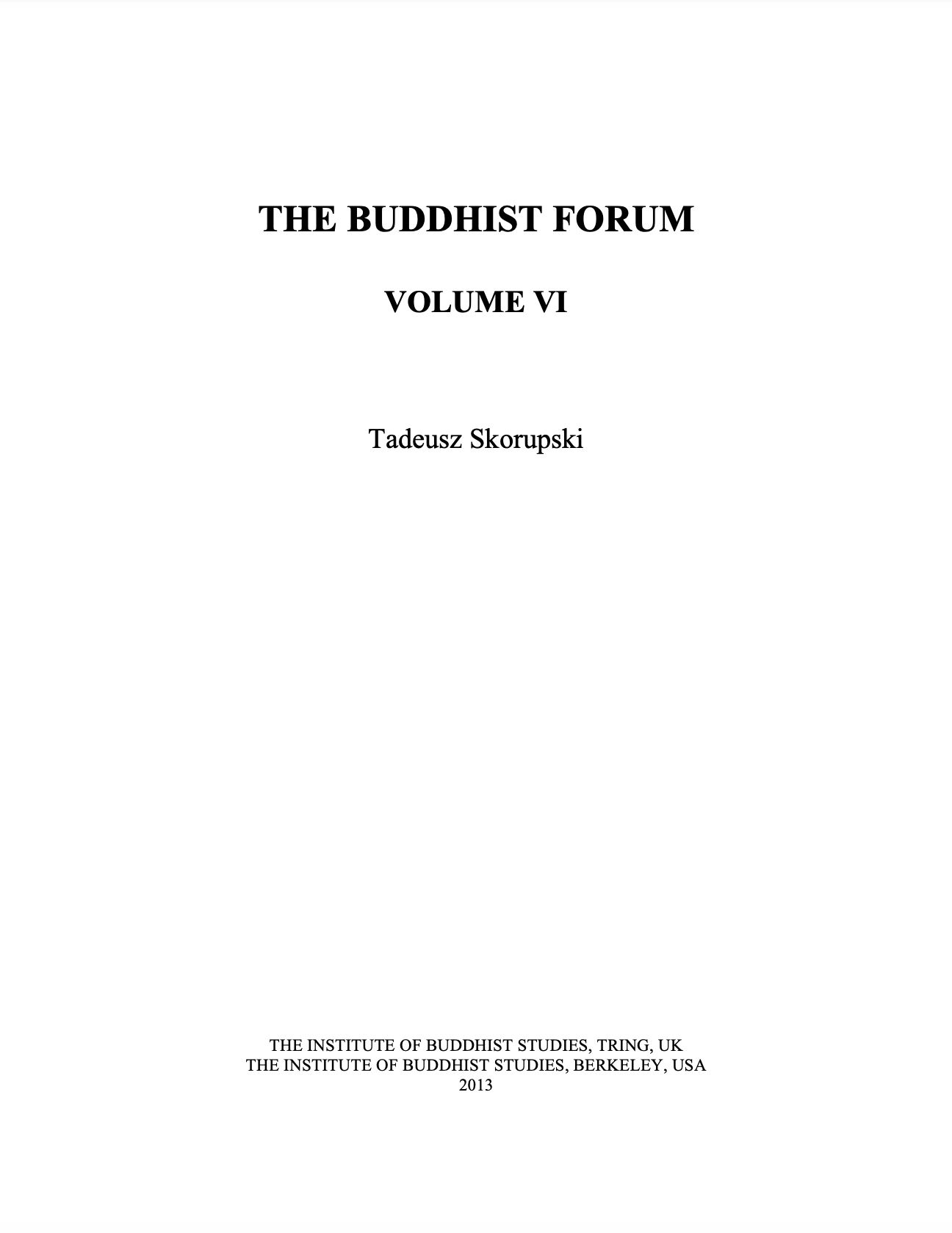
The Buddhist Forum, Volume VI, authored by Tadeusz Skorupski, brings together original scholarship and primary texts in translation tracing the Bodhisattva ideal from its earliest formulations in Indian Buddhism through its Mahāyāna and Vajrayāna elaborations. The volume opens with a wide-ranging historical survey of the Bodhisattva concept, examining its development across early Buddhist schools, the divergent positions of the Sthaviras and Mahāsāṅghikas, and its eventual reformulation as a universal path in Mahāyāna and Tantric Buddhism. This is followed by primary texts in Skorupski's translation that give practical expression to the ideals surveyed: Bodhibhadra's Bodhisattva Vow, Śākyaśrībhadra's Sevenfold Practice of the Dharma, and a series of liturgical and ritual texts encompassing eulogies of the Buddha's twelve deeds, hymns to the thirty-five confession Buddhas, devotional offerings to the Ḍākinīs, and sādhana literature covering self-generation, maṇḍala visualization, and the victorious vase. The volume further includes rites for the dying and deceased — transference of consciousness, liberation through hearing in the intermediate state, cremation ceremony, and the byang chog effigy ritual — alongside two substantial contributions: Abhayākaragupta's Jyotirmañjarī and a critical edition and study of Chapter Two of the Saṃpuṭa-tantra in Sanskrit and Tibetan. Together, these contributions illuminate the doctrinal history, devotional life, and ritual practice that constitute the living tradition of the Bodhisattva ideal across Buddhist India and Tibet.
1 Scholarship
The Buddhist Forum, Volume VI, authored by Tadeusz Skorupski, brings together original scholarship and primary texts in translation tracing the Bodhisattva ideal from its earliest formulations in Indian Buddhism through its Mahāyāna and Vajrayāna elaborations. The volume opens with a wide-ranging historical survey of the Bodhisattva concept, examining its development across early Buddhist schools, the divergent positions of the Sthaviras and Mahāsāṅghikas, and its eventual reformulation as a universal path in Mahāyāna and Tantric Buddhism. This is followed by primary texts in Skorupski's translation that give practical expression to the ideals surveyed: Bodhibhadra's Bodhisattva Vow, Śākyaśrībhadra's Sevenfold Practice of the Dharma, and a series of liturgical and ritual texts encompassing eulogies of the Buddha's twelve deeds, hymns to the thirty-five confession Buddhas, devotional offerings to the Ḍākinīs, and sādhana literature covering self-generation, maṇḍala visualization, and the victorious vase. The volume further includes rites for the dying and deceased — transference of consciousness, liberation through hearing in the intermediate state, cremation ceremony, and the byang chog effigy ritual — alongside two substantial contributions: Abhayākaragupta's Jyotirmañjarī and a critical edition and study of Chapter Two of the Saṃpuṭa-tantra in Sanskrit and Tibetan. Together, these contributions illuminate the doctrinal history, devotional life, and ritual practice that constitute the living tradition of the Bodhisattva ideal across Buddhist India and Tibet.