| 🤓 Admin Zone 🛠️ hidden to non-admins | |


Description


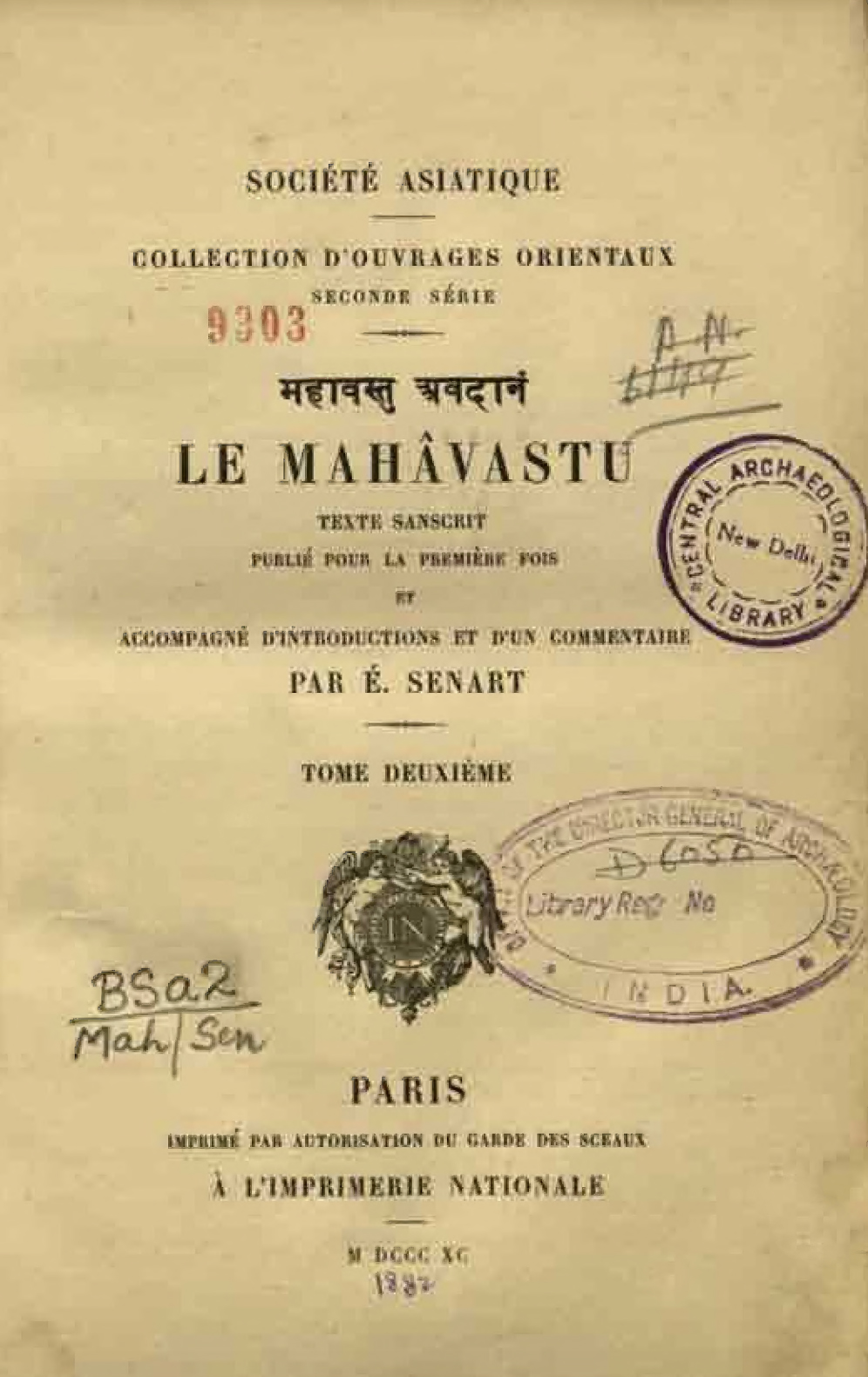
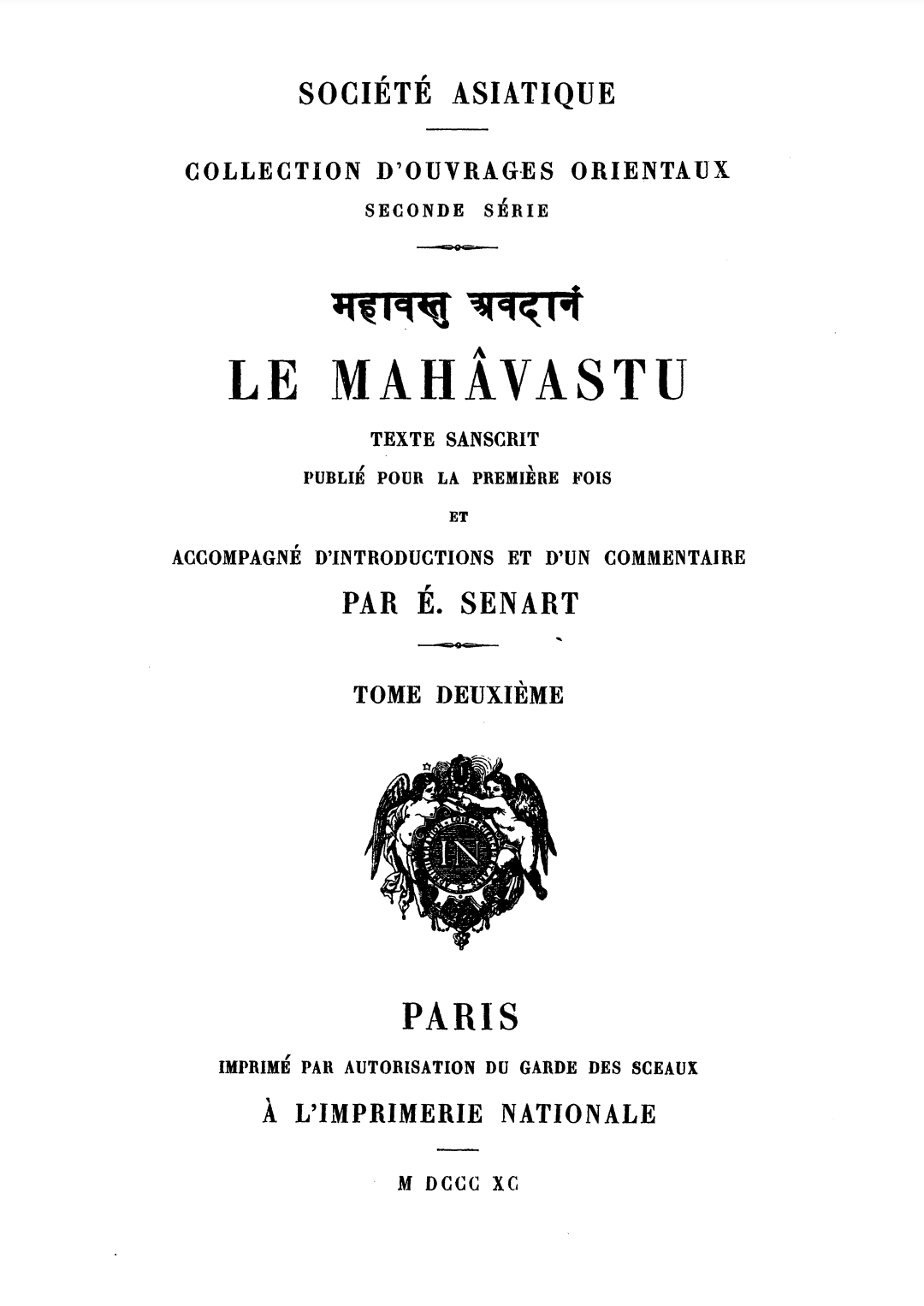
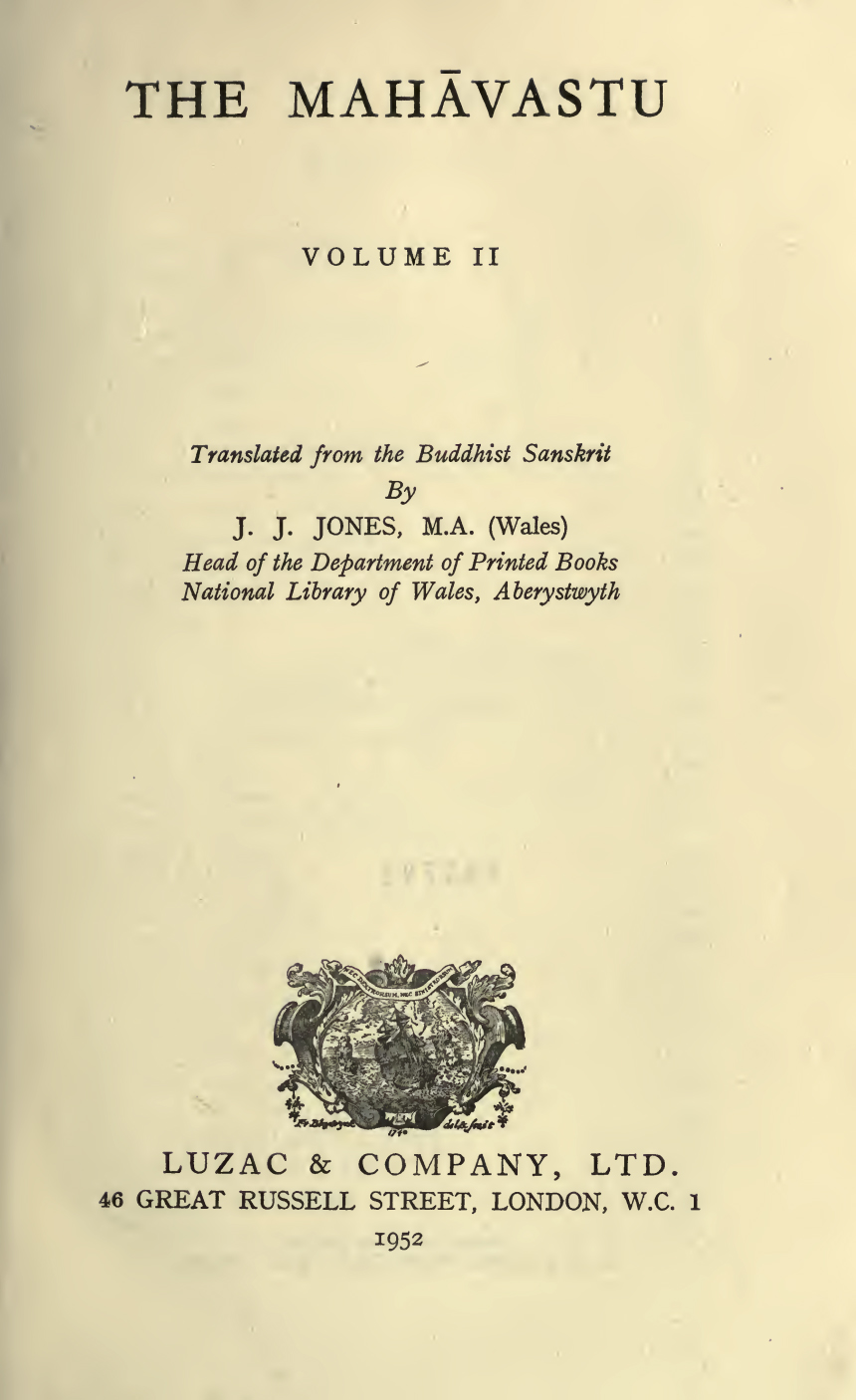
The second volume of the Mahāvastu corresponds to the second of the three sections into which, on the analogy of the Nidāna-kathā, the whole of the work may be divided. In effect, we have in this volume what corresponds to the Avidūre-nidāna, or the more recent history of Gotama the Buddha, as compared on the one hand with his history in the far-distant past when he was proclaimed as future Buddha by Dipamkara, and on the other hand with the still more recent establishment of the Buddhist Order as recounted in the latter part of the third volume.
The first volume will already have shown us, however, that we must not expect in this section to find a connected and straight-running account of Gotama's career. We have seen in that volume abundant examples of the proclivity of the compilers of the Mahāvastu to include in this canonical work of their sect every possible piece of tradition which bore on their subject. In so far as this proclivity is evident, we may say that the whole work has a certain pattern, in spite of the chaotic accumulation of all sorts of Buddhistic lore, Jātakas, Avadānas, and Sūtras. Every possible incident, for example, in Gotama's career is made the occasion for relating an edifying Jātaka or Avadāna, which is often repeated in varying versions. Whatever length of time may have separated the latest from the earliest compilers, this aim of comprehensiveness was consistently pursued, so much so that in the process the Mahāvastu lost almost all the features of a Vinaya, which it claimed to be.
This characteristic of the Mahāvastu gives it not the least of its many attractions to the student of Buddhism and its literature. For it thereby affords instructive material for the study of the growth of the legend of the Buddha. Careful analysis of the various repetitive versions, coupled with a critical comparison with the versions in other texts will often prove useful for determining…[Amazon]
The second volume of the Mahāvastu corresponds to the second of the three sections into which, on the analogy of the Nidāna-kathā, the whole of the work may be divided. In effect, we have in this volume what corresponds to the Avidūre-nidāna, or the more recent history of Gotama the Buddha, as compared on the one hand with his history in the far-distant past when he was proclaimed as future Buddha by Dipamkara, and on the other hand with the still more recent establishment of the Buddhist Order as recounted in the latter part of the third volume.
The first volume will already have shown us, however, that we must not expect in this section to find a connected and straight-running account of Gotama's career. We have seen in that volume abundant examples of the proclivity of the compilers of the Mahāvastu to include in this canonical work of their sect every possible piece of tradition which bore on their subject. In so far as this proclivity is evident, we may say that the whole work has a certain pattern, in spite of the chaotic accumulation of all sorts of Buddhistic lore, Jātakas, Avadānas, and Sūtras. Every possible incident, for example, in Gotama's career is made the occasion for relating an edifying Jātaka or Avadāna, which is often repeated in varying versions. Whatever length of time may have separated the latest from the earliest compilers, this aim of comprehensiveness was consistently pursued, so much so that in the process the Mahāvastu lost almost all the features of a Vinaya, which it claimed to be.
This characteristic of the Mahāvastu gives it not the least of its many attractions to the student of Buddhism and its literature. For it thereby affords instructive material for the study of the growth of the legend of the Buddha. Careful analysis of the various repetitive versions, coupled with a critical comparison with the versions in other texts will often prove useful for determining…[Amazon]