| 🤓 Admin Zone 🛠️ hidden to non-admins | |


Description
The text functions as a comprehensive commentary (vṛtti) that utilizes logic and debate (tarka) to explain and defend Bhāvaviveka's understanding of Madhyamaka, often known as Svātantrika.
It provides an in-depth analysis of various Buddhist and non-Buddhist philosophical systems. Notably, it refutes the Yogācāra school's view on reality and the path to Buddhahood.The text addresses important philosophical topics, including:
- The Buddha's Omniscience: Chapter 10 defends the omniscience of the Buddha against critics, using examples from the Buddha's life.
- "Non-production from Others": It refutes the Sautrāntika, Vaibhāṣika, and Vaiśeṣika schools regarding the nature of causality and existence.
- Distinction between Conventional and Ultimate Reality: Bhāviveka argues that the "imagined nature" exists conventionally, but ultimately, things are empty.
It is a vital text for understanding the development of Madhyamaka philosophy in India and its reception in Tibet.

Bhāviveka’s "Verses on the Heart of the Middle Way" (Madhyamakahṛdayakārikā) with their commentary, known as "The Flame of Reason" (Tarkajvālā), give a unique and authoritative account of the intellectual differences that stirred the Buddhist community in this creative period.
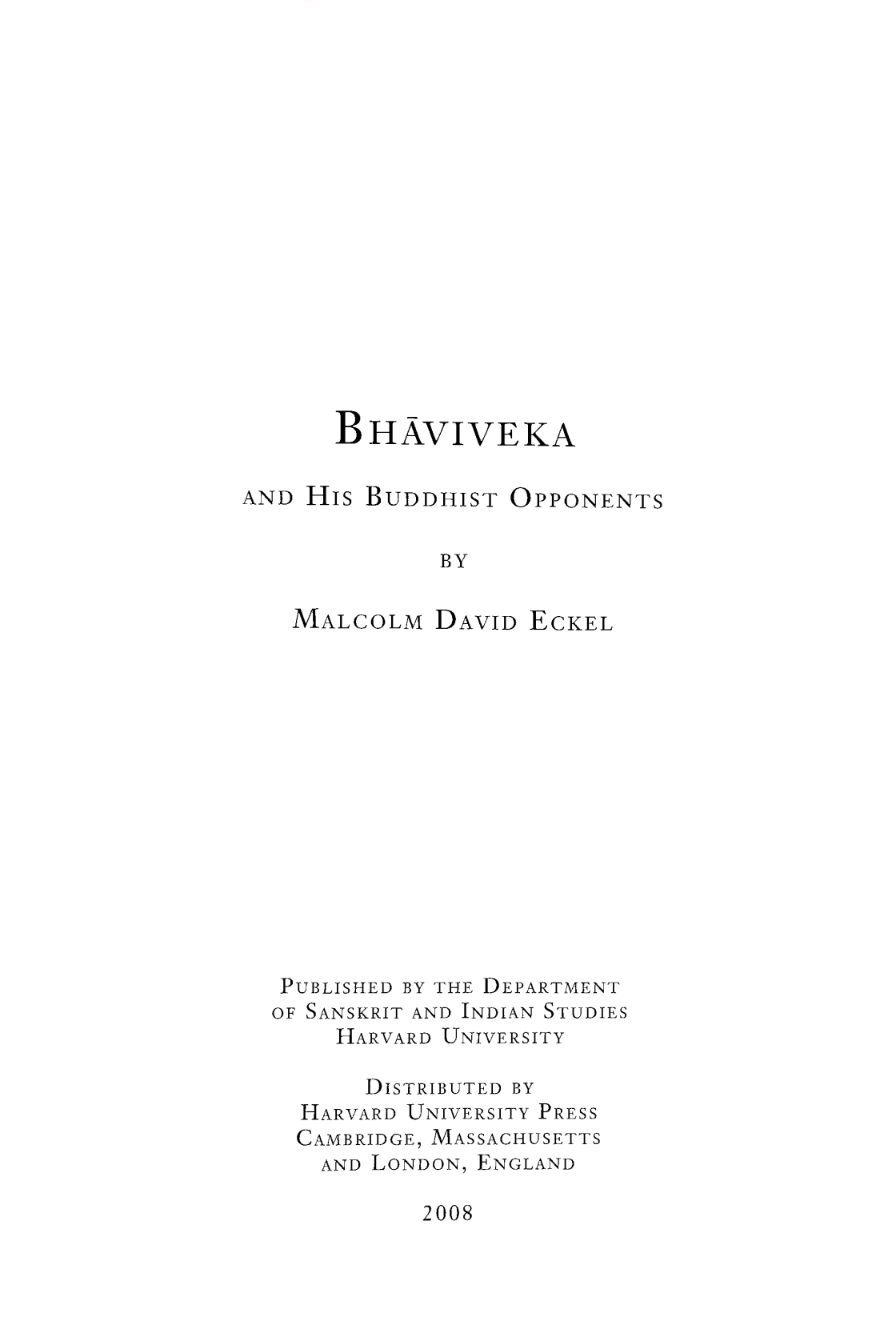
Bhāviveka and His Buddhist Opponents gives a clear and accessible translation of Chapters 4 and 5 of this text: the chapters on the Śrāvakas, or eighteen schools, and the Yogācāra, Bhāviveka’s most important Mahayana opponents. The translation is introduced by an essay that situates Bhāviveka in the intellectual context of sixth-century India, and it is accompanied by copious notes, commenting on Bhāviveka’s sources and explaining his controversial method. The book also contains a critical edition of the Sanskrit text of Bhāviveka’s verses and the Tibetan translation of the verses and commentary. (Source: Harvard University Press)
Bhāviveka’s "Verses on the Heart of the Middle Way" (Madhyamakahṛdayakārikā) with their commentary, known as "The Flame of Reason" (Tarkajvālā), give a unique and authoritative account of the intellectual differences that stirred the Buddhist community in this creative period.
Bhāviveka and His Buddhist Opponents gives a clear and accessible translation of Chapters 4 and 5 of this text: the chapters on the Śrāvakas, or eighteen schools, and the Yogācāra, Bhāviveka’s most important Mahayana opponents. The translation is introduced by an essay that situates Bhāviveka in the intellectual context of sixth-century India, and it is accompanied by copious notes, commenting on Bhāviveka’s sources and explaining his controversial method. The book also contains a critical edition of the Sanskrit text of Bhāviveka’s verses and the Tibetan translation of the verses and commentary. (Source: Harvard University Press)Bhāviveka’s "Verses on the Heart of the Middle Way" (Madhyamakahṛdayakārikā) with their commentary, known as "The Flame of Reason" (Tarkajvālā), give a unique and authoritative account of the intellectual differences that stirred the Buddhist community in this creative period.
Bhāviveka and His Buddhist Opponents gives a clear and accessible translation of Chapters 4 and 5 of this text: the chapters on the Śrāvakas, or eighteen schools, and the Yogācāra, Bhāviveka’s most important Mahayana opponents. The translation is introduced by an essay that situates Bhāviveka in the intellectual context of sixth-century India, and it is accompanied by copious notes, commenting on Bhāviveka’s sources and explaining his controversial method. The book also contains a critical edition of the Sanskrit text of Bhāviveka’s verses and the Tibetan translation of the verses and commentary. (Source: Harvard University Press)