Le'u bco brgyad pa'i tshig 'grol (Mi pham rgya mtsho)
From Bodhicitta
< Texts
Texts/Le'u bco brgyad pa'i tshig 'grol (Mi pham rgya mtsho)| 🤓 Admin Zone 🛠️ hidden to non-admins | |
ལེའུ་བཅོ་བརྒྱད་པའི་ཚིག་འགྲོལ།
le'u bco brgyad pa'i tshig 'grol
A Word-by-Word Commentary on the Eighteenth Chapter (of Long chen pa's Yid bzhin mdzod)
Text
Please note that many items in our library are simply pages that represent a detailed library catalog entry and citation of someone else's work, presentation, or performance. Read our General Disclaimer for more information.

Description
Mipham's commentary on chapter 18 of the Yid bzhin mdzod (Treasury of Wish-Fulfulling Jewels)
Reference
le'u bco brgyad pa'i tshig 'grol [ལེའུ་བཅོ་བརྒྱད་པའི་ཚིག་འགྲོལ།]. [A Word-by-Word Commentary on the Eighteenth Chapter (of Long chen pa's Yid bzhin mdzod)].
Interconnections
1 Full translations
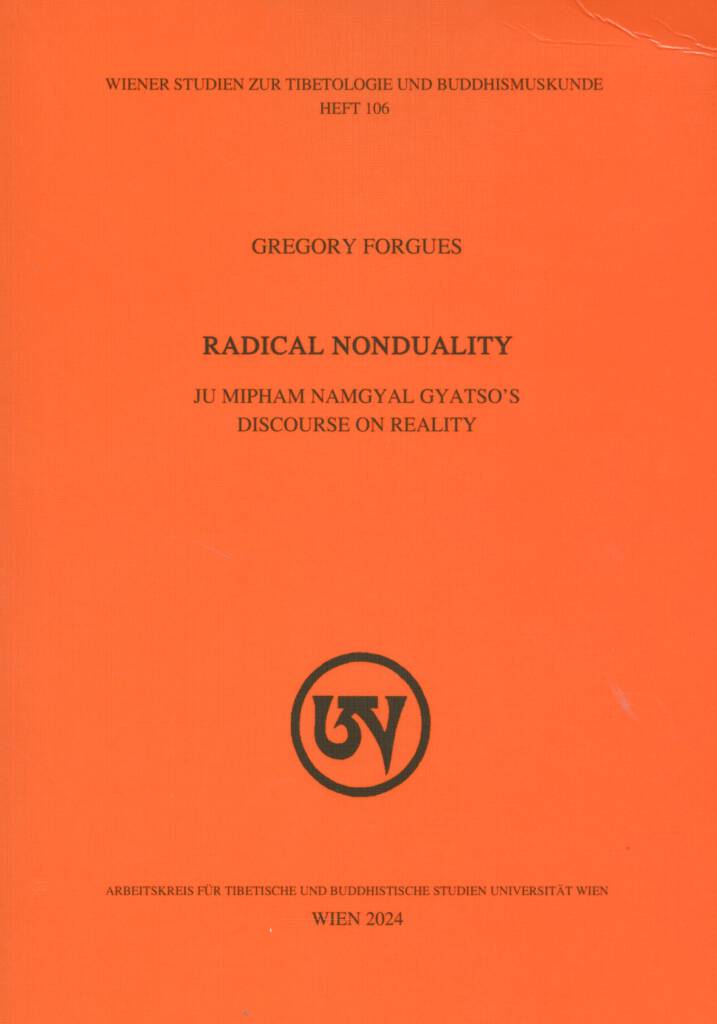
-front.jpg)
Ju Mipham (1846–1912) stands as one of the preeminent scholars within the Nyingma tradition of Tibetan Buddhism. The objective of this study is to present Mipham’s nonconceptual nondualism by analyzing his discourse with regard to the ground (gzhi), the path (lam), and the result (’bras bu).
In the initial sections of the book, the examination centers on Mipham’s teaching on the core components of the path: view, practice, and conduct. In the first part of the book, Mipham’s interpretation of the view primarily as a form of ontological nondualism is examined within the wider context of the path. This discussion presents in detail Mipham’s utilization of an array of ascending views in his discourse on the two truths. The subsequent part delves into the interplay between knowledge and liberation that shapes Mipham’s soteriological project through the central notions of practice and conduct. This exploration sheds light on how practices rooted in cognitive nondualism facilitate the actualization of ontological nondualism. The concluding part of the book shifts focus to Mipham’s soteriological nondualism in which the ground of being taken as the starting point of the path and the result of the path itself are understood to be beyond any distinction or separation. (Source: WSTB)
1 A topic of
Ju Mipham (1846–1912) stands as one of the preeminent scholars within the Nyingma tradition of Tibetan Buddhism. The objective of this study is to present Mipham’s nonconceptual nondualism by analyzing his discourse with regard to the ground (gzhi), the path (lam), and the result (’bras bu).
In the initial sections of the book, the examination centers on Mipham’s teaching on the core components of the path: view, practice, and conduct. In the first part of the book, Mipham’s interpretation of the view primarily as a form of ontological nondualism is examined within the wider context of the path. This discussion presents in detail Mipham’s utilization of an array of ascending views in his discourse on the two truths. The subsequent part delves into the interplay between knowledge and liberation that shapes Mipham’s soteriological project through the central notions of practice and conduct. This exploration sheds light on how practices rooted in cognitive nondualism facilitate the actualization of ontological nondualism. The concluding part of the book shifts focus to Mipham’s soteriological nondualism in which the ground of being taken as the starting point of the path and the result of the path itself are understood to be beyond any distinction or separation. (Source: WSTB)